



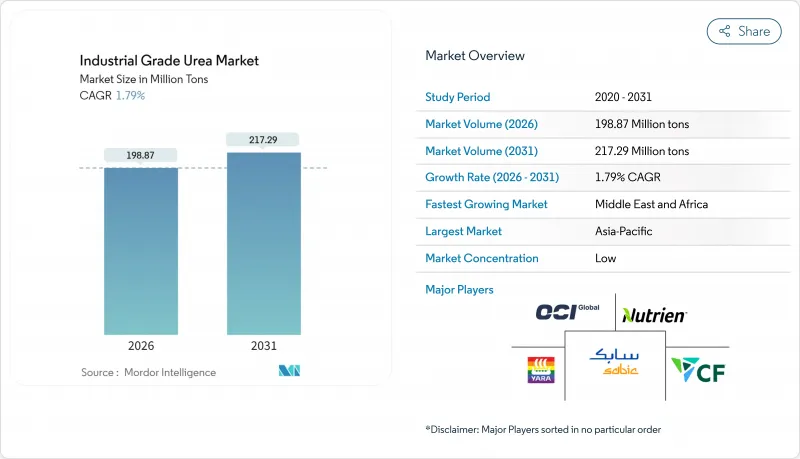
산업용 요소 시장은 2025년 1억 9,537만 톤으로 평가되었으며, 2026년 1억 9,887만 톤, 2031년까지 2억 1,729만 톤에 이를 것으로 예측됩니다. 예측기간(2026-2031년)의 CAGR은 1.79%를 나타낼 전망입니다.
시장의 완만한 성장 추세는 비용 중심의 생산 경제성과 증가하는 지속가능성에 대한 기대의 균형을 이루는 성숙한 상황을 반영합니다. 수요의 성장은 주로 농업 분야에 기인하지만, 디젤 배기액(DEF)과 엔지니어드 우드 수지로부터의 새로운 수요는 수익 기반의 다양화를 가져옵니다. 에너지 가격 변동성, 대기업 생산자 간 통합, 보다 엄격한 배출 목표가 전략적 논의의 중심을 차지하는 반면, 녹색 암모니아 통합을 목표로 하는 프로세스 혁신은 장기적인 경쟁력 확보를 약속합니다.
상용차의 배출가스 규제가 DEF의 견고한 보급을 지원하고 있으며, 중국 국가 VI규제만으로 2025년 DEF소비량은 2,500만톤에 달할 것으로 예측되고 있습니다. 유럽 기업들은 기존의 암모니아·요소 복합시설에 DEF 라인을 통합하고 있으며, CF 인더스트리즈의 블루포인트 프로젝트(2029년부터 연간 140만 톤의 저탄소 암모니아를 추가 생산)가 그 예입니다. 이것은 비료 수요의 계절 변동에 대한 방어적 헤지가 되어 프리미엄 가격 설정을 지원합니다. 북미의 함대는 EPA2027 규정에 따라 중기 수요의 지원을 더욱 강화합니다. 한편, 건설 및 광업 분야의 오프로드 기계는 대상 시장을 확대합니다. 전반적으로 DEF의 부상은 산업용 요소 시장의 일부를 고순도 제품으로 이동시키고 간접적으로 마진을 밀어 올리고 정제 인프라에 대한 투자를 촉진합니다.
유럽연합(EU)의 재생 가능 수소 비율 42%(2030년 목표)를 정한 RED III 요건은 저탄소 암모니아의 도입을 가속시켜 전해조 비용과 재생 가능 전력 확보가 새로운 수익원이 됩니다. 스타미카본의 NX Stami Green Ammonia 모듈은 닛산 50-500톤 규모로 설비투자(CAPEX)를 25-30% 삭감하여 운송거리 단축과 스코프 3 배출량 감축을 실현하는 지역 공급 거점 구축을 가능하게 합니다. 중동의 파일럿 프로젝트는 태양광 발전에 의한 전해와 요소 합성의 연계를 목표로 하고 있으며, 단일 사이트형 메가 플랜트로부터의 탈각을 시사하고 있습니다. 조기 도입 기업은 탄소 규제가 있는 수출 시장에 있어서의 컴플라이언스상의 우위성을 획득해, 저탄소 공급 체인을 요구하는 식품 및 음료 기업으로부터의 판매 계약을 확보할 수 있습니다. 장기적으로 이러한 발전은 산업용 요소 시장이 천연 가스 가격의 급등과 탄소 비용의 영향을 받는 위험을 완화시킬 수 있습니다.
스팟 가스 가격은 2022년 6.54달러/MMBtu에서 2023년 2.66달러/MMBtu로 변동하여 원료비가 현금 비용의 70-90%를 차지하는 생산자에게 영향을 주었습니다. 유럽 플랜트는 2022년 에너지 위기에서 가동률을 75%로 억제하여 무역 흐름을 중동 공급업체로 전환시켰습니다. 셰일가스를 기반으로 하는 미국 사업자는 구조적 비용 우위를 누리고 있는 반면, 순수입 지역은 가격 급등 시 마이너스 마진에 직면합니다. 헤지 전략, 듀얼 연료 대응 능력, 그린 암모니아에 대한 투자가 새로운 방어책으로 떠오르고 있지만, 이들은 많은 자본과 정책 지원이 필요합니다.
2025년 시점에서 산업용 요소 시장의 84.65%를 차지한 비료 등급은 2031년까지 연평균 복합 성장률(CAGR) 1.83%로 확대될 것으로 전망됩니다. 기술 등급 점유율은 작고 DEF 수요가 증가함에 따라 가속화되며 예측 기간 동안 130 베이시스 포인트의 점유율 확대가 예상됩니다. 사료 등급은 반추 동물의 영양 요구에 대응하며 엄격한 순도 요구 사항이 필요합니다. 풀 커패시터 반응기 등의 프로세스 혁신을 통해 설비 투자액(CAPEX)을 최대 30% 절감할 수 있어 변동하는 마진에 신속하게 대응할 수 있는 다제품 구성을 실현합니다.
유연성이 중요한 이유는 DEF와 멜라민 수요가 작물의 성장주기에서 분리되기 때문에 수익의 계절 변화를 평준화할 수 있기 때문입니다. 자동차 등급 요소 인증을 획득한 생산자는 ISO 22241의 품질 기준을 충족하고 지속적인 프리미엄 가격을 실현하고 있습니다. 한편, 비료 생산자는 보조금 제도와 환경 요인에 의한 시용량 제한의 영향을 계속 받고 있습니다. 이 차이가 예측기간을 통해 산업용 요소 시장 규모에서 기술급이 가장 빠르게 성장하는 구성요소인 이유를 뒷받침하고 있습니다.
산업용 요소 시장 보고서는 등급별(비료 등급, 기술 등급, 사료 등급), 최종 사용자 산업별(농업, 화학, 자동차, 의료 및 기타 최종 사용자 산업), 지역별(아시아태평양, 북미, 유럽, 남미, 중동, 아프리카)으로 분류됩니다. 시장 예측은 수량(톤) 단위로 제공됩니다.
아시아태평양은 인도와 중국의 작물 투입 자재 수요와 DEF(요소 수용액)의 채택 확대에 견인되어 2025년 66.10%의 점유율로 산업용 요소 시장 규모를 지배했습니다. 인도의 현지 생산 확대는 2025년까지의 자급자족을 목표로 하고 있어 수입 의존도의 삭감이 기대됩니다.
중동 및 아프리카은 사우디아라비아, 이집트, 알제리에서 저가스 가스 원료와 수출 지향 생산 능력 증강으로 2031년까지 연평균 복합 성장률(CAGR) 2.33%라는 가장 빠른 성장을 보입니다. 신규 복합시설에서는 미래를 향한 탄소 경쟁력을 확보하기 위해 그린 수소 파일럿 라인이 통합되어 있습니다. 유럽에서는 급등하는 가스 가격과 탈탄소화 정책에 따라 점유율이 축소. 여러 플랜트가 계절조업과 생산억제를 강요받아 북아프리카와 미국으로부터의 수입 의존도가 높아지고 있습니다.
북미는 풍부한 셰일 가스와 대형 차량용 DEF(디젤 배기 가스 처리제)의 보급으로 안정적인 수요를 유지하고 있습니다. 무역패턴은 계속 변화하고 있으며 정책규제를 받은 중국은 2024년 상반기 수출량이 90% 감소했습니다. 이로 인해 동남아시아와 라틴아메리카에서 스팟 공급 부족이 발생했습니다. 중동산유국은 신속하게 이 틈을 메우고, 스윙 공급자로서의 지위를 확고하게 하고 있습니다. 장기적으로는 아시아태평양이 주도권을 유지하지만 지속가능성 정책과 국내 공급 우선 정책이 대외무역을 재구축하기 때문에 성장이 완만해집니다.
The Industrial Grade Urea Market was valued at 195.37 Million tons in 2025 and estimated to grow from 198.87 Million tons in 2026 to reach 217.29 Million tons by 2031, at a CAGR of 1.79% during the forecast period (2026-2031).
The market's modest trajectory reflects a mature landscape balancing cost-driven production economics with rising sustainability expectations. Demand growth flows mainly from agriculture, yet a new pull from diesel exhaust fluid (DEF) and engineered-wood resins diversifies the revenue base. Energy-price volatility, consolidation among large producers, and stricter emissions targets dominate strategic conversations, while process innovations aimed at green ammonia integration promise longer-term competitiveness.
Commercial vehicle emission standards underpin a robust uptake of DEF, with China's National VI regulations alone expected to lift DEF consumption to 25 million tons in 2025. European players are integrating DEF lines into existing ammonia-urea complexes, illustrated by CF Industries' Blue Point project that will add 1.4 million tpy low-carbon ammonia from 2029. This defensively hedges against seasonal fertilizer swings and supports premium pricing. North American fleets following EPA 2027 rules further reinforce a medium-term demand floor, while off-road machinery in construction and mining extends the addressable market. Overall, DEF's rise shifts a portion of the industrial-grade urea market toward higher-purity products, indirectly raising margins and encouraging investments in purification infrastructure.
The European Union's RED III requirement for 42% renewable hydrogen by 2030 accelerates low-carbon ammonia adoption, turning electrolyzer costs and renewable power availability into new profit levers. Stamicarbon's NX Stami Green Ammonia modules slash CAPEX 25-30% at 50-500 t per day scale, enabling regional supply hubs that shorten freight routes and curb scope 3 emissions. Pilot projects in the Middle East aim to couple solar-powered electrolysis with urea synthesis, signaling a shift away from single-site mega-plants. Early adopters gain compliance advantages in carbon-regulated export markets and secure offtake agreements from food and beverage firms seeking lower-footprint supply chains. Over the long term, these developments could moderate the industrial-grade urea market's exposure to natural-gas price spikes and carbon costs.
Spot gas swung from USD 6.54/MMBtu in 2022 to USD 2.66/MMBtu in 2023, exposing producers whose feedstock can constitute 70-90% of cash costs. European plants curtailed utilization to 75% amid the 2022 energy crisis, redirecting trade flows toward Middle Eastern suppliers. U.S. operators with shale-based gas benefit from structural cost advantages, whereas net-importing areas confront negative margins during price spikes. Hedging strategies, dual-fuel capabilities, and green ammonia investments are emerging defenses but require substantial capital and policy support.
Other drivers and restraints analyzed in the detailed report include:
For complete list of drivers and restraints, kindly check the Table Of Contents.
Fertilizer grade accounted for 84.65% of the industrial grade urea market in 2025 and is forecast to expand at a 1.83% CAGR to 2031. The technical grade slice, while smaller, accelerates on DEF demand, potentially lifting its share by 130 basis points within the outlook period. Feed grade addresses ruminant nutrition niches with stringent purity needs. Process innovations such as pool-condenser reactors lower CAPEX by up to 30%, enabling multiproduct configurations that respond swiftly to shifting margins.
Flexibility matters because DEF and melamine demand decouple from crop cycles, smoothing revenue seasonality. Producers certified for automotive-grade urea meet ISO 22241 quality thresholds, commanding sustained premiums. In contrast, fertilizer producers remain exposed to subsidy regimes and environmentally driven application caps. This divergence underlines why technical grade is the fastest growing component of the industrial grade urea market size across the forecast.
The Industrial Grade Urea Market Report is Segmented by Grade (Fertilizer Grade, Technical Grade, and Feed Grade), End-User Industry (Agriculture, Chemical, Automotive, Medical, and Other End-User Industries), and Geography (Asia-Pacific, North America, Europe, South America, and Middle-East and Africa). The Market Forecasts are Provided in Terms of Volume (Tons)
Asia-Pacific dominated the industrial-grade urea market size with a 66.10% share in 2025, driven by India's and China's crop inputs and rising DEF uptake. Local production expansion in India aims for self-sufficiency by 2025, potentially trimming import reliance.
The Middle East and Africa region posts the fastest 2.33% CAGR through 2031, fueled by low-cost gas feedstock and export-oriented capacity additions in Saudi Arabia, Egypt, and Algeria. New complexes integrate green-hydrogen pilot lines to future-proof carbon competitiveness. Europe's share contracts amid high gas costs and decarbonization policies; several plants operate seasonally or under curtailment, increasing import reliance on North Africa and the United States.
North America maintains steady demand, benefiting from abundant shale gas and ongoing DEF adoption in heavy-duty fleets. Trade patterns continue shifting: China's H1 2024 export volumes fell 90% following policy restrictions, creating spot shortages in Southeast Asia and Latin America. Middle Eastern producers quickly captured these gaps, affirming their swing-supplier status. Over the long term, Asia-Pacific retains leadership, yet its growth moderates as sustainability policies and domestic supply priorities reshape external trade.