


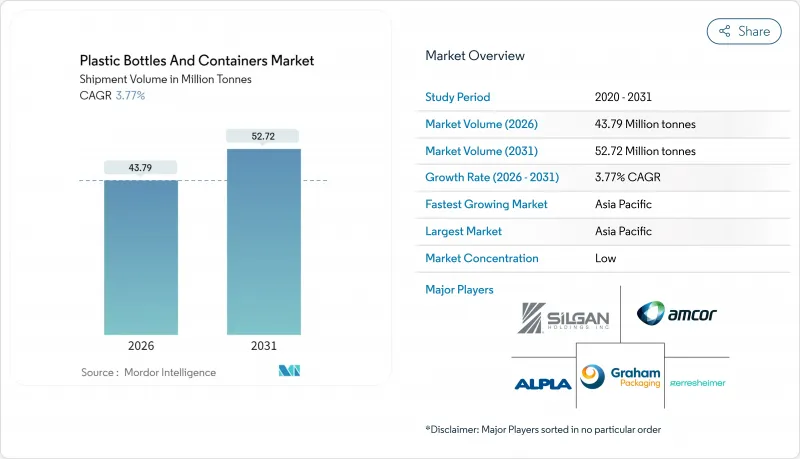
플라스틱 병 및 용기 시장 규모는 2026년에는 4,379만 톤으로 추정되고 있으며, 2025년 4,220만 톤에서 성장이 예상됩니다.
2031년 예측에서는 5,272만톤에 달하고, 2026년부터 2031년에 걸쳐 CAGR 3.77%를 나타낼 전망입니다.
음료, 가정용품, 의약품 분야로부터의 견조한 수요가 기반적인 성장을 지지하는 한편, 규제에 근거한 재생재 사용 목표가 재료 혁신을 가속시키고 있습니다. PET의 우위성, 용기 중량을 15-20% 삭감하는 경량화 노력, 그리고 전자상거래를 위한 물류 대응 설계에 대한 주력은 업계가 효율성과 순환성으로 전환하고 있음을 보여줍니다. Amcor와 Berry Global의 전체 주식 교환을 통한 합병으로 대표되는 업계 재편은 재생 PET(rPET) 조달과 고급 재활용 기술을 둘러싼 수직 통합을 강화하고 있습니다. 한편, 시장 집중도는 중간 정도로 머무르고 있기 때문에 지역 특화 기업이나 바이오의 혁신 기업이 고수익의 틈새 시장을 개척할 여지는 충분히 남아 있습니다.
브랜드 각 회사는 강도를 유지하면서 벽 두께를 줄임으로써 물류 비용과 배출량을 줄입니다. 퓨어 사이클사의 초고순도 재생 폴리프로필렌 수지는 강성을 손상시키지 않고 15-20%의 경량화를 실현합니다. 이러한 경량 용기는 여러 취급 지점에서 파손 위험이 높아지는 전자상거래 분야에서 특히 우위를 발휘합니다. FDA의 무균 가이드라인은 상온 보존 식품용으로 이러한 형태를 추천하고 있으며, 채용을 더욱 뒷받침하고 있습니다. 공급업체는 현재 유한 요소 설계 소프트웨어와 고유동성 수지를 결합하여 복잡한 리브 구조를 만들어 내하중성을 향상시키고 있으며, 컨버터 기업에 명확한 투자 회수 경로를 제공합니다.
PET와 HDPE는 시간당 10만 유닛의 생산이 가능한 대량 사출 연신 블로우 성형 라인에 의해 비용 우위성을 유지하고 있습니다. 확립된 원료조달 네트워크가 수지 가격의 변동을 완화하는 한편, 다우사 등에 의한 화학적 리사이클의 파일럿 프로젝트는 공급을 신규 석유화학제품으로부터 분리하는 것을 목표로 하고 있습니다. HDPE의 화학적 불활성은 세제 및 의약품 분야에서 수요를 확고하게 하고, 급속한 대체품으로의 이행을 막고 있습니다. 자동화된 재료 처리 사일로와 인라인 착색 시스템은 인건비와 폐기 비용을 더욱 절감하고 경쟁력 있는 단가 경제성을 보장합니다.
독일의 「일회용 플라스틱 기금법」에서는 용기 중량에 따른 제조업자 부담금이 부과되어 코스트 전가나 배합 변경을 촉구하고 있습니다. 스페인에서는 버진 폴리머에 1kg당 0.45유로(1kg당 0.49달러)의 세금을 부과하고, 영국에서는 재생재 함유율 30% 미만의 포장재에 관세를 부과하고 있습니다. 이러한 재정적 수단은 기존 형식의 이익률을 압박하고 자본을 rPET 및 리필 방식으로 재분배합니다. 컴플라이언스 추적은 특히 여러 관할 구역에서 사업을 전개하는 중소기업의 경우 관리 간접비를 증가시킵니다.
2025년 시점에서 PET는 플라스틱 병 및 용기 시장의 61.73%를 차지했고 CAGR 4.01%를 나타냈습니다. 이 규모감에 의해 수지 가격이 변동해도 단위당 비용을 지속적으로 압축하는 규모의 경제가 탄생하고 있습니다. 유럽연합(EU) 및 캐나다에서 재생재 함량의 의무화를 배경으로 PET 용도로 인한 플라스틱 병 및 용기 시장 규모는 2031년까지 505만 톤 증가가 전망됩니다. HDPE는 표백제, 세제, 일반용 의약품(OTC)을 위한 내구성이 있는 기존 소재로 계속되지만, 회수율이 낮아 순환형 경제로의 이행을 방해하고 있습니다. LDPE와 PP는 투명성·내열성의 틈새 시장을 담당하고, 바이오 유래 폴리하이드록시알카노에이트(PHA) 수지는 브랜드 파일럿 프로그램에 의해 상업규모로 점진중입니다. 칼비오사의 5만톤 규모 바이오 리사이클 플랜트(2026년 가동 예정)는 고순도 재생 PET(rPET)를 음료 순환 시스템에 공급함으로써 PET 순환형 경제의 기반을 지원합니다.
장기적으로, 효소 분해 및 용매 기반 재활용 기술은 원료의 유연성을 약속하고 색조와 기계적 특성을 유지함으로써 복합 종이 병에 대한 PET 점유율 방어를 가능하게 합니다. 따라서 투자자는 브랜드와의 인수 계약을 확보하는 탈중합 반응 장치나 플레이크 세정 라인에 자본을 집중시키고 있습니다. 그러나 확대되는 생산자 책임 비용은 재료의 다양화를 촉진하고 화장품 및 영양보조 식품 분야의 고이익률 SKU를 획득하는 틈새 바이오기반 기업의 진입 여지를 창출하고 있습니다.
2025년 생산량의 47.62%를 차지하는 사출 블로우 성형은 재현성과 얇은 성형 능력에 의해 의약품용 소형 병이나 여행 사이즈의 퍼스널케어 제품을 지지했습니다. 한편, 압출 블로우 성형은 대형 용기에서 캐비티당 생산성 우위성을 배경으로 4.36%의 연평균 복합 성장률(CAGR)로 성장을 지속하여 있습니다. 아시아태평양에 있어서 가정용·공업용 세제 관련 플라스틱 병 및 용기 시장이 확대되는 가운데, 시간당 25kg의 처리 능력을 가지는 압출 라인이 컨버터의 주력 설비가 되고 있습니다. 탄산음료에 불가결한 연신 블로우 성형은 병 1개당 1-2g의 경량화를 실현하는 넥 마무리 기술에 의해 연간 수백만 단위의 수지 코스트 삭감 효과를 계속적으로 만들어 내고 있습니다.
자동화의 진전에 의해 공정의 경계가 모호해지고 있습니다. 사출 성형 프리폼과 인라인 압출 오버레이를 조합한 하이브리드 라인에 의해 다층 산소 배리어 병의 제조가 가능하게 되어, 프리미엄인 콜드 브루 커피에 대응하고 있습니다. 신속한 금형 플레이트 교환은 다운타임을 단축하고, 위탁 포장업체는 주문형 맞춤형 드라벨링 동향에 대응하여 SKU를 신속하게 전환할 수 있습니다. 하지만 치수 공차가 ±0.05mm 이하가 필수가 되는 분야에서는 사출 성형 플랫폼이 우위성을 유지하고 있습니다.
플라스틱 병 및 용기 시장 보고서는 소재별(폴리에틸렌테레프탈레이트(PET), 고밀도 폴리에틸렌(HDPE) 등), 제조 공정별(압출 블로우 성형, 사출 블로우 성형 등), 용량 범위별(100밀리리터 미만, 100-250밀리리터 이상), 최종 사용자 업계별(음료, 식품 등), 지역별로 분류됩니다. 시장 예측은 수량(톤) 단위로 제공됩니다.
아시아태평양은 2025년 출하량의 49.62%를 차지하며 CAGR 4.49%로 증가했습니다. 이는 인도와 동남아시아의 도시 지역 소득 증가가 1인당 음료 및 퍼스널케어 제품의 소비를 밀어 올리기 때문입니다. 중국은 이미 세계 최대의 PET 수지 생산 능력을 가지고 있으며, 대규모 병 제조 거점에 인접한 재생 PET 플레이크 제조 라인에 대한 투자를 추진. 이를 통해 물류 비용과 범위 3 배출량을 줄일 수 있습니다. 인도에서는 가솔린으로의 20% 에탄올 혼합 추진에 의해 HDPE제 애드블루 용기 수요가 높아져, 지역 전체 수요량 증가에 기여하고 있습니다. 일본과 한국은 정밀 스트레치 블로우 성형 기술을 주도하여 ASEAN 지역의 가공업자에 대한 기술 라이선싱과 고수익 금형 세트 수출을 전개하고 있습니다.
유럽은 규제력을 구사하고 세계 기준을 형성하고 있습니다. EU 지령이 2030년까지 일회용 음료병의 재생재 함유율 30%를 의무화한 것으로, 보증금 반환 제도가 이미 촉진되어 2024년에는 지역 PET 회수량이 1인당 27kg에 달했습니다. 독일의 그린 도트 제도에서는 리사이클율에 연동한 수수료가 설계 단계로부터의 리사이클 대응을 촉진. 프랑스에서는 디지털 제품 여권의 시험 도입이 진행되어, 용기 고유 ID에 의한 국가 탄소 등록부에의 제휴나, 폐기물 처리비의 환경 부하 연동형 조정이 실현되고 있습니다.
북미에서는 자발적인 브랜드 공약과 주 차원의 새로운 규제가 융합되어 있습니다. 캘리포니아의 SB343 법안은 재활용 표시의 진실성을 의무화하고 소재 데이터의 투명성을 강제하고 있습니다. 미국에서는 2024년 PET병의 29.1%가 재활용되어 유럽과의 회수율 격차가 두드러졌습니다. 캐나다는 2030년까지 재생재 50% 사용을 목표로 내세워 토론토와 밴쿠버 근교에서의 세정·플레이크화 설비에 대한 투자를 가속시키고 있습니다. 한편 멕시코는 낮은 인건비를 무기에 지역의 음료 대기업에 공급하는 계약 블로우 성형 제조업체를 유치해, 중요한 니어 쇼어 거점으로서의 지위를 확립하고 있습니다.
The plastic bottles and containers market size in 2026 is estimated at 43.79 million tonnes, growing from 2025 value of 42.2 million tonnes with 2031 projections showing 52.72 million tonnes, growing at 3.77% CAGR over 2026-2031.
Robust demand from the beverages, household care, and pharmaceuticals sectors sustains baseline growth, while regulation-driven targets for recycled content accelerate material innovation. PET's dominance, lightweighting efforts that cut container weight by 15-20%, and a sharp focus on logistics-ready designs for e-commerce signal an industry pivot toward efficiency and circularity. Consolidation, exemplified by Amcor's all-stock merger with Berry Global, augments vertical integration around rPET sourcing and advanced recycling. At the same time, moderate market concentration leaves ample room for regional specialists and bio-based disruptors to carve out high-margin niches.
Brands reduce logistics costs and emissions by trimming wall thickness yet preserving strength. PureCycle's ultra-pure recycled PP resin supports 15-20% weight cuts without compromising rigidity. Such lightweight containers excel in e-commerce, where multiple handling points raise breakage risks. The FDA's aseptic guidelines endorse these formats for shelf-stable foods, further validating adoption. Suppliers now pair finite-element design software with high-flow resins to create intricate ribs that boost top-load resistance, giving converters a clear ROI path.
PET and HDPE retain a cost edge through high-volume injection stretch blow molding cells capable of 100,000 units hourly. Established feedstock networks temper resin price swings, while chemical-recycling pilots from Dow and others aim to decouple supply from virgin petrochemicals. HDPE's chemical inertness secures detergent and pharmaceutical demand, shielding it from rapid substitution. Automated material-handling silos and inline color-dosage systems further shave labor and scrap costs, ensuring competitive per-unit economics.
Germany's Single-Use Plastic Fund Act levies manufacturer fees tied to container weight, prompting cost pass-throughs and recipe changes. Spain enforces a EUR 0.45 kg (USD 0.49 kg) tax on virgin polymer, while the United Kingdom imposes duties on packaging with under 30% recycled content. These fiscal tools compress margins for legacy formats and redirect capital to rPET and refill schemes. Compliance tracking elevates administrative overhead, especially for SMEs operating across multiple jurisdictions.
Other drivers and restraints analyzed in the detailed report include:
For complete list of drivers and restraints, kindly check the Table Of Contents.
PET held 61.73% of the plastic bottles and containers market share in 2025 and is expanding at a 4.01% CAGR. That scale generates economies that continually compress cost-per-unit even as resin prices fluctuate. The plastic bottles and containers market size attributable to PET applications is projected to add 5.05 million tonnes by 2031, supported by mandatory recycled-content thresholds in the European Union and Canada. HDPE follows as a durable incumbent for bleach, detergent, and OTC medications, but lower collection rates hinder its circular momentum. LDPE and PP fill clarity- and heat-resistant niches, while bio-based polyhydroxyalkanoate (PHA) resins inch toward commercial volume thanks to brand pilot programs. Carbios' 50,000 tonne biorecycling plant, scheduled for 2026 start-up, underpins PET's circular flywheel by feeding high-purity rPET back into beverage loops.
In the longer term, enzymatic and solvent-based recycling promise feedstock flexibility that preserves color and mechanical performance, positioning PET to defend share even against composite paper bottles. Investors, therefore, channel capital into depolymerization reactors and flake-washing lines that secure brand off-take agreements. However, emerging extended producer responsibility fees favor material diversification, creating space for niche bio-based players to capture high-margin SKUs in cosmetics and nutraceuticals.
Injection blow molding delivered 47.62% of 2025 volume through repeatability and thin-wall capability, anchoring small-format bottles for pharmaceuticals and travel-size personal care. Yet extrusion blow molding is tracking a 4.36% CAGR, underpinned by its superior per-cavity output in large-volume containers. As the plastic bottles and containers market size tied to household and industrial cleaners grows across the Asia Pacific, extrusion lines capable of 25 kg hourly throughput become the converter's workhorse. Stretch blow molding, critical for sparkling beverages, continues to benefit from neck-finish lightweighting that saves 1-2 g per bottle and aggregates millions in resin savings annually.
Automation advances blur process boundaries: hybrid lines that marry injection-molded preforms with in-line extrusion overlay enable multilayer oxygen-barrier bottles, catering to premium cold-brew coffee. Rapid-change mold plates reduce downtime, letting contract packers switch SKUs quickly in response to on-demand personalized labeling trends. Even so, injection platforms retain an edge where dimensional tolerances below +-0.05 mm are mandatory.
The Plastic Bottles and Containers Market Report is Segmented by Material (Polyethylene Terephthalate (PET), High-Density Polyethylene (HDPE), and More), Manufacturing Process (Extrusion Blow Molding, Injection Blow Molding, and More), Capacity Range (Less Than 100 ML, 100 - 250 ML, and More), End-User Vertical (Beverages, Food, and More), and Geography. The Market Forecasts are Provided in Terms of Volume (Tonnes).
Asia Pacific controlled 49.62% of 2025 shipments, adding 4.49% CAGR as rising urban incomes in India and Southeast Asia lift per-capita beverage and personal-care consumption. China, already home to the world's largest PET resin capacity, channels investment into rPET flake lines co-located with mega-bottling hubs, shrinking logistic costs, and Scope 3 emissions. India's push for 20% ethanol blending in petrol elevates demand for HDPE AdBlue containers, further boosting regional volume. Japan and South Korea champion precision stretch-blow technologies, licensing these to ASEAN converters and exporting high-margin mold sets.
Europe wields regulatory muscle that shapes global standards. The EU directive mandating 30% recycled content in single-use beverage bottles by 2030 has already spurred deposit-return schemes that lifted regional PET collection to 27 kg per capita in 2024. Germany's Green Dot fees, indexed to recycled content, incentivize design-for-recycling bottle geometries. France pilots digital product passports, requiring unique container IDs that feed state carbon registries and guide eco-modulation of waste fees.
North America blends voluntary brand pledges with emerging state-level mandates. California's SB 343 dictates truth-in-recycling labeling, forcing material data transparency. The United States recycled 29.1% of PET bottles in 2024, underscoring a sizable recovery gap relative to Europe. Canada's 50% recycled-content goal for 2030 accelerates investments in wash-flake capacity near Toronto and Vancouver. Mexico, meanwhile, leverages low labor costs to attract contract blow molders supplying regional beverage giants, positioning itself as a pivotal nearshore hub.