


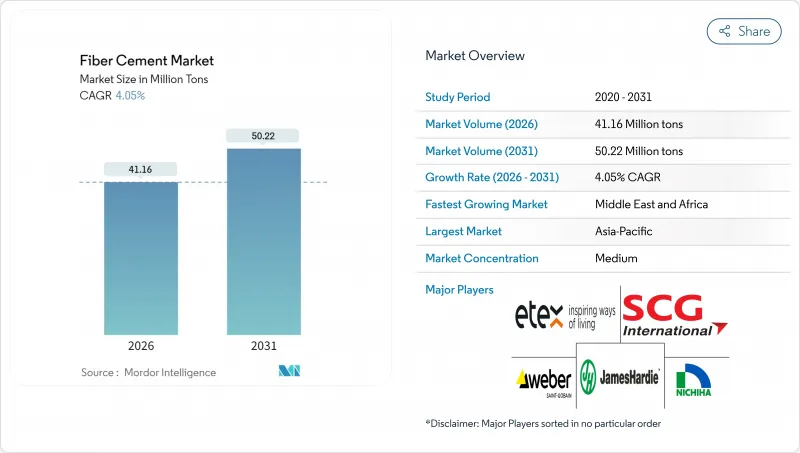
2026년 섬유 시멘트 시장 규모는 4,116만 톤으로 추정되고, 2025년 3,956만 톤에서 성장했으며, 2031년에는 5,022만 톤에 이를 것으로 예상됩니다.
2026년부터 2031년까지의 연평균 성장률(CAGR)은 4.05%를 나타낼 전망입니다.
견조한 수요는 보다 엄격한 방화 기준에의 적합을 용이하게 하는 불연성, 라이프 사이클에 있어서 교환 비용을 저감하는 뛰어난 내후성, 개인 주택의 리노베이션으로부터 대규모 상업 개발까지를 만족시키는 설계의 유연성 등의 소재 특성에 기인하고 있습니다. 공급망 파트너는 목재 사이딩과 합성 대체물의 성능 차이를 채우는 섬유 시멘트의 능력을 인식하고 있으며, 이는 전체 건설 사이클이 둔화된 경우에도 견조한 수량 성장을 지원하는 요인이 되고 있습니다. 건물 소유자는 40년에 걸친 서비스 수명을 평가하고, 보험 회사는 불연성 외벽에 대한 보험료 할인을 적용하기 때문에 산 불사 다발 지역에서의 채용 의욕이 높아지고 있습니다. 경쟁 측면에서 주요 제조업체는 유통 채널 관리를 강화하는 건설업체와 직접 계약을 가속화하는 반면, 중견 기업은 이익률 유지를 위해 합성섬유 혁신과 탄소 부정적인 배합 기술에 주력하고 있습니다.
정부의 주택 정책과 대규모 인프라 계획은 중국, 인도 및 ASEAN 국가에서 섬유 시멘트 시장의 안정적인 수요를 이끌고 있습니다. 중국에서는 2024년에 도시화율이 66.2%에 달하고, 연간 1,400만명의 도시 주민이 증가했습니다. 인도에서는 2050년까지 4억 1,600만 명의 도시 주민이 통합될 것으로 예상됩니다. 인도네시아에서는 2024년 건축 허가 건수가 8.3% 증가했으며, 태국에서는 동부 경제 회랑 구상 아래 2025년 4.2%의 성장을 기록했습니다. 섬유 시멘트를 불연성 외벽재로 분류하는 ASEAN 통일 방화 안전 기준이 지역에서의 사용을 더욱 확고하게 하고 있습니다. 인구동태의 변화, 주택지원 정책, 보다 엄격한 건축기준이 결합되어, 섬유 시멘트 시장에는 수년에 걸친 수요의 성장 기반이 확보되고 있습니다.
캘리포니아의 2024년 타이틀 24개정에 의해 450만동의 구조물을 대상으로 하는 산림 시가지 경계 지역(WUI)에서 클래스 A 외장재가 의무화되었습니다. 마찬가지로 호주 국가 건축 기준 개정은 280만호 주택에 동등한 요구 사항을 적용합니다. 2024년 국제건축기준(IBC)은 집합주택 프로젝트의 음향성능 기준을 강화하고 소리의 전달을 억제하는 고밀도 외벽재의 채용을 촉진했습니다. 노스캐롤라이나의 화재시험 데이터에 따르면 섬유 시멘트는 목재 사이딩에 비해 점화 확률이 73% 낮아 추가층 없이 18 데시벨의 소음 저감을 실현합니다. 이러한 규제로 인해 섬유 시멘트는 프리미엄 옵션에서 확장되는 관할 구역 전반에 걸친 적합 요건으로 입지를 강화하고 있습니다.
섬유 시멘트의 시공 비용은 1평방 피트당 8-12달러로, 비닐재보다 60-100% 고가입니다. 많은 지역에서 인력 부족이 심각화되고 있으며, 분진 관리용 특수 공구가 필요하기 때문에 공수가 25-35% 증가하여 가격차가 더욱 확대되고 있습니다. 관세 시나리오에 따라 수입자재 비용이 더욱 6-14% 상승할 가능성이 있으며, 2024년 구매자의 32%를 차지하는 신규 주택 구매자층의 가격차가 확대되었습니다. 비용면에서의 역풍은 유지보수 비용이 발생하기 전에 부동산을 매각하는 개발업체가 많은 집주택 프로젝트에서 가장 심각하며, 장수명의 외벽에 대한 투자 의욕을 저하시키고 있습니다.
사이딩은 2025년 시장 점유율 34.75%를 유지했습니다. 이것은 우드 톤의 섬유 시멘트가 미적 기준을 충족하는 단독 주택과 리노베이션 프로젝트에서 오랜 사용 실적을 반영합니다. 노후화된 주택 스톡으로부터의 갱신 수요가 신규 건설의 주기적인 변동으로부터 판매량을 보호해, 시공업자의 높은 숙지도가 유통 경로의 안정성을 강화하고 있습니다. 그러나 중층·고층건축물에 대한 엄격한 방화규제와 패널화건축시스템의 급속한 보급으로 클래딩은 2031년까지 연평균 복합 성장률(CAGR) 4.52%로 사이딩을 웃도는 성장이 예상됩니다. 데이터센터 건설 및 인프라 대규모 프로젝트는 불연성 외관을 자주 채택하여 건축가가 극단적 인 온도 변화를 견딜 수있는 두꺼운 섬유 시멘트 클래딩 패널을 지정하는 경향이 커지고 있습니다. 지붕재, 몰딩, 트리밍 부품은 안정적인 추가 수요를 지속적으로 만들어 내고 기존의 컬러 코팅 설비를 활용한 크로스셀링의 기회를 제조업체에 제공합니다. 이러한 진화하는 용도 구성은 섬유 시멘트 시장 전체에서 균형 잡힌 성장 요인을 지원합니다.
클래딩의 확대는 사이딩과의 역사적인 차이를 줄이고 현대적인 복합 소재의 미학에 적합한 컬러 팔레트와 표면 텍스처의 확충을 공급자에게 촉구하고 있습니다. 최신 국제건축기준법(IBC)에서 규제의 명확화는 불연성 외벽 조립체를 선호하는 성능 요건을 규정함으로써 이러한 흐름을 강화하고 있습니다. 개발자가 총 비용과 규제 준수를 종합적으로 평가하는 동안, 상업용 외관에서 섬유 시멘트의 인지도 향상은 섬유 시멘트 시장에서 중요한 성장 경로가되었습니다.
본 섬유 시멘트 시장 보고서는 용도별(사이딩, 클래딩, 몰딩·트리밍, 지붕재, 기타 용도), 최종사용자 부문별(주택, 상업, 산업·공공시설, 인프라), 지역별(아시아태평양, 북미, 유럽, 남미, 중동 및 아프리카)로 분류되고 있습니다. 시장 예측은 수량(톤) 단위로 제공됩니다.
아시아태평양은 급속한 도시화, 주택 정책 지원, 지역 전체의 엄격한 방화 기준 채택으로 2025년 수량의 42.45%를 차지했습니다. 중국에서는 연간 1,400만 명의 도시 주민이 계속 증가하고 있으며, 인도의 지하철 확장은 견조한 건축 허가 건수를 지원하고 있습니다. 인도네시아의 건축허가 건수는 2024년 8.3% 증가했으며, 태국에서는 1조 7,000억 바트(472억 달러)를 넘는 동부 경제 회랑에 대한 투자로 2025년 건설 성장률은 4.2%를 나타낼 것으로 전망됩니다. 셀룰로오스 원료에 대한 근접성과 발달한 시멘트 인프라가 비용 우위를 가져오고, 섬유 시멘트 시장 전체에서 생산 능력 투자를 유인하고 있습니다.
북미는 성숙한 시장이면서 안정적이며, 건축 기준에 따른 재건축 수요가 시장 규모를 지원하고 있습니다. 미국 서부의 대규모 산불 위험이 불연성 건축자재로의 외벽 개수를 가속화하고 있으며, 보험 회사의 우대 조치가 주택 소유자의 관심을 높이고 있습니다. 캐나다에서는 견고한 리노베이션 부문이 다세대 주택 착공의 감속을 상쇄하고 있습니다. 한편, 멕시코에서는 신흥 중산계급이 중층 주택용 내구성 외벽재 수요 증가를 견인하고 있습니다. 조립식 패널의 지속적인 혁신과 건설업체와의 직접 계약은 북미 수요를 지속적으로 지원하고 있으며, 이 지역은 섬유 시멘트 산업에서 세계 전략의 핵심 지위를 유지하고 있습니다.
중동 및 아프리카는 2031년까지 4.38%라는 가장 빠른 지역 CAGR을 달성할 전망입니다. 사우디아라비아의 '비전 2030' 메가 프로젝트(NEOM과 라인 포함)는 5,000억 달러 이상의 건설 가치를 창출하지만, 이들 모두에 엄격한 외벽 성능 기준이 적용됩니다. 아랍에미리트(UAE)과 카타르에서는 인프라 정비가 계속되고, 고층 빌딩군에서의 방화 규제가 불연성 클래딩을 추천하고 있습니다. 걸프 지역의 극단적인 기후 조건은 내후성 재료 수요를 증가시키고 섬유 시멘트의 매력이 증가하고 있습니다. 현지 생산 능력 제한으로 단기 공급이 제한될 수 있지만, 이미 발표된 합작 투자 및 공장 확장은 이러한 유망한 섬유 시멘트 시장 부문에서 병목 현상을 해결하기 위한 것입니다.
Fiber Cement Market size in 2026 is estimated at 41.16 Million tons, growing from 2025 value of 39.56 Million tons with 2031 projections showing 50.22 Million tons, growing at 4.05% CAGR over 2026-2031.
Robust demand stems from the material's non-combustible nature that eases compliance with stricter fire codes, its superior weather resistance that lowers life-cycle replacement outlays, and design flexibility that satisfies both single-family renovators and large-scale commercial developers. Supply chain partners also recognize fiber cement's ability to bridge the performance gap between wood siding and synthetic substitutes, a factor that underpins resilient volume growth even when broader construction cycles moderate. Building owners favor the product's four-decade service life, while insurers reward non-combustible facades with lower premiums, reinforcing adoption intent in wildfire-prone regions. On the competitive front, leading manufacturers accelerate direct builder agreements that tighten channel control, whereas mid-tier players focus on synthetic fiber innovation and carbon-negative formulations to defend margins.
Government housing mandates and mega-infrastructure programs stimulate steady fiber cement market demand across China, India, and ASEAN nations. China posted a 66.2% urbanization rate in 2024, adding 14 million urban residents each year, while India is expected to integrate 416 million city dwellers by 2050. Construction permit issuances in Indonesia rose 8.3% during 2024 and Thailand forecasts 4.2% sector growth in 2025 under the Eastern Economic Corridor framework. Harmonized ASEAN fire-safety standards that classify fiber cement as a non-combustible facade option further solidify regional usage. The confluence of demographic shifts, pro-housing policies, and stricter codes secures a multi-year demand runway for the fiber cement market.
California's 2024 update to Title 24 now requires Class A exteriors in Wildland-Urban Interface zones covering 4.5 million structures, while Australia's National Construction Code revision applies comparable mandates to 2.8 million dwellings. The 2024 International Building Code tightens acoustic performance benchmarks for multifamily projects, driving adoption of dense facades that limit sound transfer. North Carolina fire-test data show fiber cement exhibits 73% lower ignition probability than wood siding and achieves an 18-decibel noise reduction without extra layers. These regulations elevate fiber cement from premium option to compliance necessity across an expanding set of jurisdictions.
Fiber cement requires USD 8-12 per square foot installed, a 60-100% price premium over vinyl. Labor scarcity in many regions inflates the gap because installers need specialized dust-management tools that add 25-35% to man-hours. Tariff scenarios could raise imported input costs another 6-14%, widening the delta for first-time homebuyers who already represent 32% of 2024 purchases. Cost headwinds are most acute in multifamily projects where developers monetize properties before maintenance bills accrue, reducing willingness to pay for longer-life facades.
Other drivers and restraints analyzed in the detailed report include:
For complete list of drivers and restraints, kindly check the Table Of Contents.
Siding retained 34.75% of 2025 volume, reflecting long-standing use in detached housing and renovation projects where fiber cement's wood-like grain patterns satisfy aesthetic norms. Replacement demand from an aging housing stock cushions volume against cyclical new-build fluctuations, and wide installer familiarity fortifies channel stability. Cladding, however, is set to outpace siding with a 4.52% CAGR through 2031, propelled by stringent fire codes for mid-rise and high-rise structures and the rapid embrace of panelized construction systems. Data center builds and infrastructure megaprojects frequently select non-combustible facades, prompting architects to specify thicker fiber cement cladding panels that withstand extreme temperature swings. Roofing, moulding, and trimming components continue to deliver steady supplemental demand, offering manufacturers cross-selling opportunities that leverage existing color-coating assets. Collectively, this evolving application mix underpins balanced growth drivers across the fiber cement market.
The expansion of cladding narrows the historical gap with siding and encourages suppliers to broaden color palettes and surface textures compatible with contemporary mixed-material aesthetics. Regulatory clarity within the latest International Building Code strengthens this trajectory by codifying performance requirements that favor non-combustible exterior wall assemblies. As developers evaluate total cost and regulatory compliance holistically, fiber cement's rising profile in commercial facades becomes a pivotal growth avenue within the fiber cement market.
The Fiber Cement Market Report is Segmented by Application (Siding, Cladding, Moulding and Trimming, Roofing and Other Applications), End-User Sector (Residential, Commercial, Industrial and Institutional, and Infrastructure), and Geography (Asia-Pacific, North America, Europe, South America, and Middle East and Africa). The Market Forecasts are Provided in Terms of Volume (Tons).
Asia-Pacific commanded 42.45% of 2025 volume thanks to rapid urbanization, supportive housing policies, and region-wide adoption of stricter fire-safety codes. China continues to add 14 million urban residents annually, and India's metro expansions underpin robust permit pipelines. Indonesia's building permits rose 8.3% in 2024, while Thailand projects 4.2% construction growth for 2025 under Eastern Economic Corridor investments exceeding THB 1.7 trillion (USD 47.2 billion). Proximity to cellulose feedstock and developed cement infrastructure yields cost advantages that attract capacity investments throughout the fiber cement market.
North America represents a mature but stable arena where code-driven replacement activity sustains volume. Extensive wildfire exposure in the western United States accelerates siding upgrades to non-combustible alternatives, and insurance incentives bolster homeowner interest. In Canada, a resilient renovation segment offsets moderation in multifamily starts, while Mexico's emerging middle class drives incremental demand for durable facades in mid-rise housing. Continued innovation in prefabricated panels and direct builder contracting further supports North American volume, keeping the region central to global strategy within the fiber cement industry.
Middle East and Africa is set to achieve the fastest regional CAGR of 4.38% through 2031. Saudi Arabia's Vision 2030 megaprojects, including NEOM and The Line, add more than USD 500 billion of construction value, all subject to stringent facade performance criteria. The UAE and Qatar continue infrastructure build-outs, and fire-safety regulations in high-rise clusters favor non-combustible cladding. Climatic extremes in the Gulf place a premium on weather-resistant materials, amplifying fiber cement's appeal. Limited local production capacity may constrain near-term supply, yet joint ventures and plant expansions already announced are aimed at mitigating bottlenecks in this promising slice of the fiber cement market.