



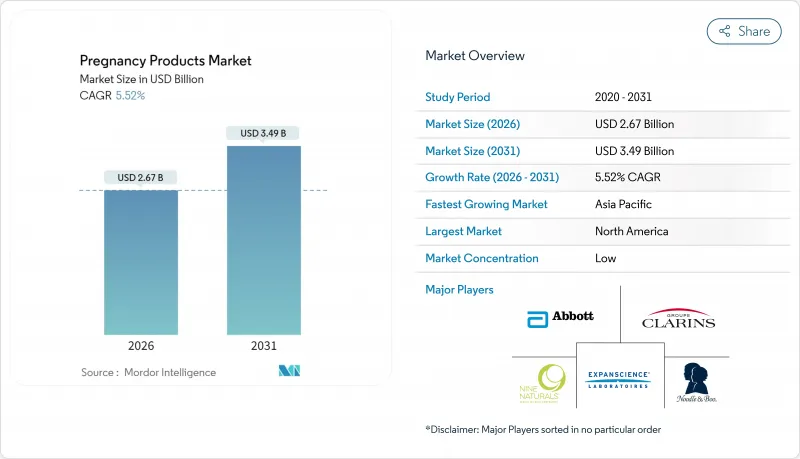
임산부 제품 시장은 2025년 25억 3,000만 달러에서 2026년에는 26억 7,000만 달러로 성장하고 2026년부터 2031년에 걸쳐 CAGR 5.52%로 성장을 지속하여 2031년까지 34억 9,000만 달러에 달할 것으로 예측됩니다.

임산부 제품 시장은 고용주가 부담하는 가족 지원 제도의 확대, 인공지능 탑재 태아 모니터링 웨어러블의 급속한 보급, 지방 소비자의 거리적 장벽을 해소하는 온라인 약국 채널의 급성장의 혜택을 받고 있습니다. 풍미가 다양한 산모용 구미로의 소비자의 이동, 임산부용 케어 스타트업에 대한 벤처 캐피탈 유입 증가, 클린 라벨 임신선 외용제에 대한 기업의 ESG에 대한 노력이 한층 더 성장의 여지를 넓히고 있습니다. 무선 태아 모니터에 대한 FDA의 인가와 디지털 임신 검사 키트의 주류화에 의해 종래의 케어 경로가 단축되어, 디지털에 익숙한 산모층에서의 도입이 촉진되고 있습니다. 경쟁의 치열성은 중간 정도를 유지하고 있으며, 다국적 건강 관리 대기업은 옴니 채널 전개를 활용하는 한편, 소비자 직접 판매 기반의 신규 참가 기업은 투명성과 구독 모델을 이용해 임산부 제품 시장에서 고객 충성도를 획득하고 있습니다.
케냐 농촌에서의 지역 재택 검사 프로그램에서는 84%의 수용률이 보고되어 양성 결과와 산전 케어 서비스의 제휴가 실현되고 있습니다. 나이지리아에서는 휴대전화와 서비스 향상 정책을 조합한 대처로 임산부의 1차 의료시설 이용률이 향상되었습니다. 그러나 키트 부족, 프라이버시 우려, 전자상거래 플랫폼에서의 위조품 유입 등의 과제로 공급망의 건전성과 환자 교육에 대한 지속적인 투자가 요구되고 있습니다.
영양학 전문가들은 태아의 뇌 발달에 필수적인 생체이용률이 높은 콜린을 하루 450mg 섭취하도록 권장하고 있으며, 각 브랜드는 조성을 개량하고 있습니다. 소매점에서는 구미 제품에 진열대 엔드캡을 할당하고 정기 구독 모델은 임산부 제품의 지속적인 수익을 지원합니다. 시장 포화의 위험은 있지만, 저탄수화물 및 식물성 제품이 개발 파이프라인을 충실하게 하여 안정적인 수요를 유지하고 있습니다.
2023년 정부감사원(GAO) 감사에서는 매출 상위 12개 제품의 임산부 영양제 중 11개 제품에서 허용범위를 초과하는 영양성분표시 오차가 확인되었습니다. Quality Supplement Manufacturing사 등에 대한 FDA의 경고에서는 불충분한 성분 검사와 위변조 위험을 지적하고 있습니다. 표시 불일치는 소비자 신뢰를 해치고, 과다 섭취나 영양 부족의 리스크를 높이기 때문에, 임산부 제품 시장의 단기적인 매출을 억제하는 요인이 되고 있습니다. 소매업체는 신뢰 회복을 위해 제3자 기관의 분석 검사와 QR 코드를 통한 추적성 의무화를 시작했습니다. 규제 강화에 따라 약제 기준을 준수하는 브랜드는 매장에서의 우선적인 진열 기회를 얻을 것으로 예상됩니다.
2025년 시점에서 임산부용 영양제는 임산부 제품 시장의 38.88%를 차지하였으며 엽산, 철분 및 콜린 섭취의 임상적 효과를 뒷받침하고 있습니다. 약국에서는 약사의 상담과 기업의 복리 후생 카드를 활용하여 안정된 판매 수량을 유지하고 있습니다. 복용 시간을 알리는 AI 탑재 앱은 복약 준수를 촉진하고 반복 구매 사이클을 통한 평생 가치를 확대합니다. 한편, FDA 인증 무선 모니터는 임산부 제품 시장에서 CAGR 6.51%의 성장이 전망되고 있습니다. 의료기관에서는 가정 내 데이터 수집을 전자 의무 기록에 통합하여 통원 횟수의 감소를 도모하고 있습니다. 조기 도입 시설에서는 고위험 임신의 감시 정밀도 향상이 나타났으며, 이는 의료 기관의 조달 예산 확대와 소비자용 직접 판매를 촉진하고 있습니다. 임신 검사 키트는 특히 진료소에 대한 접근이 제한되는 신흥 경제국에서 기초적인 수요를 유지하고 있습니다. 클린 라벨 임신선 크림은 ESG의 영향을 받고 있으며, 임부복은 상품 반품 제도와의 세트 판매에 의해 비용 압력에 대응하고 있습니다. 고밀도 메모리 폼을 사용한 임산부 베개와 고급 산후 회복 키트는 선택적 틈새 시장을 채우는 형태로 핵심 건강 카테고리를 보완하여 임산부 제품 시장을 완성하고 있습니다.
북미는 광범위한 보험 적용 범위, 고용주의 불임 치료 지원 제도, 적극적인 임산부 관리에 대한 문화적 수용성으로 2025년 수익의 34.98%를 차지했습니다. Maven Clinic과 같은 디지털 헬스의 제휴로 기업 고객의 NICE 입원률이 40%, 응급진료율이 33% 감소하는 등 구체적인 투자 대비 효과(ROI)가 입증되었습니다. 전자 약국의 풀필먼트 센터는 당일 배송에 의한 임산부 제품 제공을 실현해 편리성을 임산부 제품 시장에 제공하고 있습니다. 다만, 정부감사원(GAO)의 감사로 표시 불량이 판명되어 FDA의 검사 강화가 진행되는 가운데 규제 대응에 대한 경계감은 여전히 높은 수준에 있습니다.
아시아태평양은 2031년까지 가장 높은 5.86%의 CAGR을 달성할 것으로 예측됩니다. 이는 도시화, 가처분 소득 증가, 정부의 임산부 건강에 대한 투자에 의해 지원됩니다. 현지 브랜드는 문화적인 식습관에 맞춘 임산부용 허브 영양제를 개발하고 다국적 기업은 SKU(상품 단위)를 현지화해 전자 약국 대기업과의 제휴를 통해 지방 도시(Tier 2 도시)로의 전개를 진행하고 있습니다.
유럽에서는 지속가능성을 중시한 혁신이 꾸준한 성장을 지원하고 있습니다. 로레알의 에코디자인을 적용한 임신선 크림과 추적 가능성 확보의 조달 틀이 카테고리 기준을 확립하는 한편, GDPR(EU 개인정보보호규정)은 디지털 모니터용 엄격한 데이터 관리 규정을 규정하고 있습니다. 출생률의 저하로 인해 기업은 산후 케어와 갱년기 솔루션의 업셀에 의해 평생 가치의 확대를 도모해 여성용 헬스케어 제품 라인을 통일 브랜드 산하에 통합하는 움직임이 나타나고 있습니다. 남미 및 중동 및 아프리카는 젊은 인구와 디지털 인프라 개선으로 미성숙하면서도 유망한 시장입니다. 그러나 공급망 단편화와 높은 가격 감응도로 임산부 제품 시장의 잠재력을 극대화하려면 단계적 가격 전략이 필수적입니다.
The pregnancy products market is expected to grow from USD 2.53 billion in 2025 to USD 2.67 billion in 2026 and is forecast to reach USD 3.49 billion by 2031 at 5.52% CAGR over 2026-2031.
The pregnancy products market benefits from widening employer-funded family-building benefits, rapid uptake of artificial-intelligence fetal-monitoring wearables, and a booming e-pharmacy channel that removes distance barriers for rural consumers. Consumer migration toward flavorful prenatal gummies, rising venture-capital inflows into maternal-health start-ups, and corporate ESG commitments to clean-label stretch-mark topicals further extend the pregnancy products market runway. FDA clearances for wireless fetal monitors and mainstream adoption of digital pregnancy-test kits shorten traditional care pathways, reinforcing adoption among digitally engaged mothers. Competitive intensity remains moderate, with multinational healthcare conglomerates leveraging omnichannel footprints while direct-to-consumer newcomers use transparency and subscription models to win loyalty in the pregnancy products market.
Community home-testing programs in rural Kenya report 84% acceptance, linking positive results to antenatal care services. A Nigerian initiative that coupled mobile phones with service upgrades raised primary-facility utilization among pregnant women. Yet kit shortages, privacy worries, and counterfeit imports on e-commerce platforms require continued investment in supply-chain integrity and patient education.
Nutritionists now highlight bioavailable choline at 450 mg per day for fetal brain development, prompting brands to upgrade formulations. Retailers are dedicating shelf end-caps to gummies, while subscription models sustain recurring revenue in the pregnancy products market. Although saturation risks loom, sugar-reduced and plant-based variants keep innovation pipelines robust, supporting steady demand.
A 2023 Government Accountability Office audit found 11 of 12 top-selling prenatal supplements carried nutrient amounts outside acceptable label deviations. FDA warning letters to manufacturers such as Quality Supplement Manufacturing highlighted poor identity testing and adulteration risks. Label discrepancies erode consumer trust and raise overdose or deficiency threats, restraining near-term sales in the pregnancy products market. Retailers have begun mandating third-party assays and QR-code traceability to restore credibility. Brands aligning with pharmacopeial standards stand to gain shelf priority as regulations tighten.
Other drivers and restraints analyzed in the detailed report include:
For complete list of drivers and restraints, kindly check the Table Of Contents.
Prenatal supplements captured 38.88% pregnancy products market share in 2025, underscoring clinical consensus on folic-acid, iron, and choline intake. Pharmacies leverage pharmacist counseling and employer benefit cards to drive steady unit turnover. AI-powered apps that remind mothers of dosing windows further bolster compliance, extending lifetime value across refill cycles. In contrast, FDA-cleared wireless monitors position prenatal monitoring devices for a 6.51% CAGR, with hospitals integrating at-home data feeds into electronic records to reduce clinic visits. Early adopters tout improved high-risk pregnancy surveillance, propelling hospital procurement budgets and direct-to-consumer purchases. Pregnancy detection kits maintain baseline demand, especially in emerging economies where clinic access is limited. Clean-label stretch-mark creams ride ESG tailwinds, while maternity wear navigates cost pressure by bundling with merchandise return schemes. High-density memory-foam pregnancy pillows and luxury postpartum recovery kits fill discretionary niches, complementing core health categories and rounding out the pregnancy products market.
The Pregnancy Products Market Report is Segmented by Product Type (Prenatal Supplements, Pregnancy Detection Kits, Stretch-Mark Care Products, Maternity Wear, Pregnancy Pillows and More), Stage (Pre-Conception, Pregnancy, Post-Partum), Distribution Channel (Supermarkets/Hypermarkets, Pharmacies & Drug Stores, and More), and Geography (North America, Europe, and More). The Market Forecasts are Provided in Terms of Value (USD).
North America commands 34.98% of 2025 revenue thanks to broad insurance coverage, employer fertility perks, and cultural acceptance of proactive maternal care. Digital-health partnerships like Maven Clinic reduced NICU admissions by 40% and emergency visits by 33% for enterprise clients, demonstrating tangible ROI. E-pharmacy fulfillment centers support same-day prenatal deliveries, embedding convenience within the pregnancy products market. Regulatory alertness, however, stays high as GAO tests reveal label inaccuracies and the FDA increases inspections.
Asia-Pacific is projected to deliver the highest 5.86% CAGR through 2031, buoyed by urbanization, rising disposable income, and government investments in maternal health. Local brands tailor herbal prenatal formulas to cultural diets, while multinationals localize SKUs and partner with e-pharmacy giants to reach tier-2 cities.
Europe maintains steady growth fueled by sustainability-led innovation. L'Oreal's eco-designed stretch-mark creams and traceable sourcing frameworks set category standards, while GDPR dictates stringent data-handling rules for digital monitors. Birth-rate declines encourage companies to widen lifetime value by upselling postpartum and menopause solutions, merging women's health lines under unified brand roofs. South America and Middle East & Africa remain nascent yet promising, given youthful demographics and improving digital infrastructure; however, supply-chain fragmentation and price sensitivity necessitate tiered-pricing strategies to unlock full potential of the pregnancy products market.