


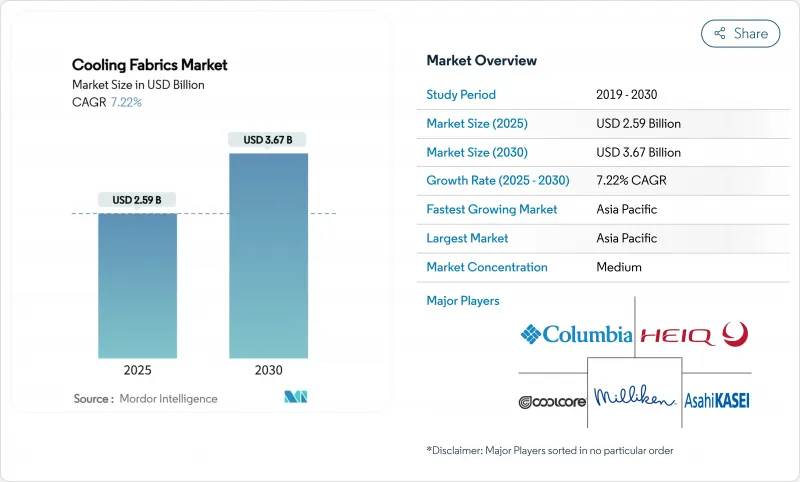
쿨링 패브릭 시장 규모는 2025년에 25억 9,000만 달러로 추정되고, 2030년에는 36억 7,000만 달러에 이를 것으로 예측되며, 예측 기간(2025-2030년) CAGR 7.22%로 성장할 전망입니다.

도시 열섬 현상의 심각화, 스포츠 및 야외 라이프 스타일의 보급, 소재 과학의 급속한 진보로 쿨링 패브릭 시장은 지속적인 확대가 예상됩니다. 합성 흡습 발산성 섬유, 수동 방사성 '메타 패브릭', 리사이클 실의 혁신이 제품 기능을 확대하는 한편, 지속가능성의 의무화가 천연 섬유의 채용을 가속시키고 있습니다. 제조업체는 무결성을 손상시키지 않으면서 코팅 및 하이브리드 마무리를 수용하는 직물 구조에서 규모의 이점을 얻었으며 군사 조달은 민간 부문에 프리미엄 제품의 보급을 자극합니다. 신흥경제국의 가격 민감성 및 세탁 후의 성능 저하는 여전히 역풍이지만, 다양한 용도에서의 채용은 이러한 제약을 웃돌고 있습니다.
운동 및 성능 스포츠웨어는 동적 냉각을 기본 기대치로 다루게 되었습니다. 각 브랜드는 상변화 소재 및 마이크로 미네랄을 반죽한 쿨맥스 에코메이드(COOLMAX EcoMade), 블러(brrr°)와 동등한 실을 채용하여 대량의 발한하에서도 지속적으로 열을 방출합니다. 시장 진출기업은 피트니스 및 야외 레크리에이션에 세계적으로 참여하고 있으며, 합성 섬유는 반복 가능한 수분 수송, 신축성, 기계적 내구성을 제공하기 때문에 우위성을 유지하고 있습니다. 테크니컬 텍스타일의 진보로 세계 섬유 수요에서 차지하는 합성사의 점유율은 19%를 넘어, 쿨링 패브릭 시장을 지원하는 스케일 이코노미가 강화되고 있습니다. 나노 하이브리드 충전재는 열전도성을 향상시키고 인공 합성 섬유는 많은 천연섬유를 능가합니다. 이와 병행하여, 재생 폴리에틸렌 테레프탈레이트(PET) 스트림은 강화된 환경 설계 규칙을 충족하면서 비용 기반을 안정화시킵니다.
다국적 아웃도어 브랜드는 독자적인 쿨링 플랫폼을 백컨트리에서 일상적인 도시 라인까지 폭넓게 전개하고 있습니다. 콜롬비아 스포츠웨어의 옴니히트 인피니티와 옴니쉐이드 기술은 이러한 크로스오버의 예입니다. 더위를 완화시키는 소재는 주변의 농촌지대보다 8.9℃도 높은 도시의 기온에 대응하여 대응 가능한 수요를 확대합니다. 브랜드가 아시아태평양 제조 클러스터를 활용하면 개발 사이클이 단축되고, 단가가 낮아지며, 고급 냉방이 주류 소비자의 손에 닿을 수 있습니다. 3D 프린팅 구조와 에어로 다이내믹 패널을 결합한 반복적인 출시는 엘리트 스포츠 학습이 라이프 스타일 의류로 이동하고 있음을 보여주고 쿨링 패브릭 시장을 확대합니다. 반구를 넘은 기술 이전이 세계적인 보급을 더욱 가속시킵니다.
패시브 방사층은 이산화티탄 나노입자, 폴리머 막, 은 나노와이어를 필요로 하기 때문에 범용 의류에 비해 재료비가 높아집니다. 특수 코팅 라인은 자본 지출을 가져오고 엄격한 품질 관리 프로토콜은 노동 집약도를 높입니다. 공정 최적화에 따라 프리미엄은 10% 가까이 떨어진 반면, 저소득 지역에서는 스티커 쇼크가 계속되고 있어 생산량은 늘어나고 있습니다. 공급업체는 연속 롤 증착을 닦고 원료 선택을 넓히고 대중 가격대에 도달해야 합니다. 규모 축소의 중단에도 불구하고 방위, 프로스포츠, 산업용 보호구(PPE) 등의 프리미엄 카테고리가 비용을 흡수하고 연구개발(R&D)의 상각을 가능하게 하고 있기 때문에 결국 가치 부문에도 파급될 것입니다.
합성사는 균일한 수분 수송과 신축성을 대규모로 실현함으로써 2024년의 쿨링 패브릭 시장 점유율의 61.19%를 차지했습니다. 합성사는 많은 특허를 받은 쿨링 케미스트리를 지지하고 있으며, 대량 생산의 스포츠웨어에 최적의 비용으로 계속하고 있습니다. 천연 섬유는 규제 당국과 소비자가 생분해성을 높게 평가하고 있기 때문에 CAGR은 8.15%입니다. 나노다이아몬드나 키토산의 미다공성으로 가공된 코튼은 현재 2-3℃의 온도 저하를 실현하고, 클로즈드 루프의 큐플러사는 식물 유래의 원료와 공업적 리사이클성을 연결하고 있습니다. 혼방 구조는 재생 셀룰로오스와 마이크로 미네랄 합성 섬유의 조합으로 촉감과 기능의 균형을 맞추고 있습니다. 따라서 투자자들은 천연 섬유의 품질을 향상시키는 진의 업그레이드와 효소에 의한 전처리에 자금을 제공하고 있어 쿨링 패브릭 시장에 널리 받아들여지는 것을 시사하고 있습니다.
하이브리드 원사의 진보는 지속가능성 목표와 성능 지표가 상호 배타적일 필요는 없다는 것을 보여줍니다. 벵베르그 큐플러는 99% 이상의 용매 회수율을 나타내며 방열 능력을 희생하지 않고 순환성을 입증합니다. 또한 재활용 코튼의 흐름은 파일럿 시험에서 버진 코튼을 내열성으로 웃돌고 있습니다. 패션그룹이 과학적 근거를 바탕으로 탄소 목표를 발표함에 따라 조달은 이러한 저환경 부하의 선택에 축족을 옮겨 에코 선호도를 측정 가능한 수요로 변환합니다. 미래의 예측은 천연 섬유의 쿨링 라인이 점유율을 확대하는 것으로 보이지만, 합성 섬유는 흡한 속건성과 신축성을 중시하는 의류의 중심 존재로 계속될 것으로 보입니다.
직물은 2024년 매출의 40.66%를 차지했으며, CAGR 8.37%로 성장하고 있습니다. 그 이유는 직물의 조밀하게 제어된 질감이 나노입자 코팅, 반사 필름, 상변화 인쇄 페이스트의 치수적으로 안정한 기재를 제공하기 때문입니다. 제직 공장은 이미 높은 처리 능력으로 작동하고 있으며 쿨링 기능을 추가하기 위한 비용 증가를 최소화할 수 있습니다. 니트는 쾌적한 신축성 및 통기성으로 액티브웨어 분야에서 강력한 비계를 유지하지만 루프 구조는 느린 기계를 요구하고 다층 코팅을 복잡하게 할 수 있습니다. 부직포는 촉각적인 드레이프성이 2차인 일회용 의료용 및 여과 틈새에서 중요성을 증가하고 있습니다.
워터 제트 직기는 에너지를 절약하면서 더 얇은 데니어를 짠 수 있습니다. 다상 직조는 기공의 형상을 조정하고 수증기 수송을 돕습니다. 동시에, 뜨개질 기계는 디지털 통제와 더 세밀한 게이지를 채택하고 표면 규칙성의 차이를 줄이고 있습니다. 니트와 직물에 전기 방사막을 겹치는 것으로, 극박의 방사 스킨이 추가되어 각 구조의 장점을 융합시킨 하이브리드 라미네이트가 탄생합니다. 비용과 다재다능성의 이점은 직물 섬유가 쿨링 패브릭 시장에서 최상위 자리를 유지하는 것으로 보이지만, 소비자의 스트레치 지향이 높아짐에 따라 니트 점유율이 떨어지기는 커녕 안정을 유지할 것으로 보입니다.
아시아태평양은 2024년에 세계 매출의 31.30%를 차지하였고, 2030년까지 CAGR 7.86%로 추이할 전망입니다. 이는 중국의 테크니컬 텍스타일 수출 규모와 5°C 의복 냉각을 실현하는 패시브 방사선 연구의 리더십에 의해 지원됩니다. 정부 보조금은 메타 패브릭의 야데지 파일럿 플랜트를 지원하고 베트남, 인도네시아, 인도의 다운스트림 의류 제조업체는 이러한 섬유를 비용 경쟁력있는 컷소라인에 통합합니다. 일본 소재 과학 에코시스템은 자외선(UV) 반사를 위한 폴리머 블렌드를 개량하고, 한국의 일렉트로닉스 분야는 체온 데이터를 모바일 기기에 보내는 스마트 텍스타일 오버레이를 추구하고 있습니다. 습도가 높은 여름에 직면하는 중산계급 인구가 증가하고 소매 인계가 강해집니다.
북미는 국방 계약 및 야외 레크리에이션 문화의 혜택을 받고 있습니다. 미국 해군용 항공 시스템 프로그램은 공급업체의 학습 곡선을 가속화하고 견고한 쿨링 패브릭을 검증합니다. 오레곤 주와 콜로라도 주에 본사를 두고 있는 아웃도어 라벨은 매년 여름에 신작 컬렉션을 발표해 소비자의 꾸준한 지지를 모으고 있습니다. 캐나다의 엄격한 한온 차이는 한면이 냉각되고 다른 한면이 보온이라는 멀티 시즌의 레이어링 컨셉을 촉구하여 제품의 실용성을 늘리고 있습니다. 멕시코는 니어쇼어 봉제지로서의 역할을 확대하고, 세계적인 물류의 혼란 속에서 브랜드에 유연성을 부여하고 있습니다.
유럽의 궤적은 환경 정책과 관련이 있습니다. 유럽 연합(EU)의 에코디자인 규정은 섬유를 우선시하고 밸류체인의 추적성 및 재활용을 촉구합니다. 아웃라스트(Outlast)와 같은 독일 공장은 NASA 태생의 상변화물질(PCM) 가공을 환경 인증 라이닝에 채용하고, 이탈리아의 방적 회사는 재활용 실의 저부하 염색을 추진하고 있습니다. 영국(UK)의 연구평의회는 나노 구조의 발광 필름에 초점을 맞춘 대학 및 산업 컨소시엄에 자금을 제공합니다. 이 지역의 에너지 비용 상승은 패시브형 개인 쿨링 수요를 강화하고 가격이 비싸지만 국내에서의 보급을 촉진합니다.
남미와 중동 및 아프리카는 급속한 도시화와 강렬한 태양광 조사에 연결되는 새로운 비즈니스 기회입니다. 브라질의 운동복 붐은 상변화 폴리에스테르의 현지 조달에 박차를 가하고 걸프 국가들은 45℃의 한낮의 더위에서 일하는 건설 작업자를 위한 쿨링 유니폼을 테스트하고 있습니다. 인프라 정비 지연 및 가처분 소득의 한계로 인해 눈의 수량은 늘어나지만 지속적인 기후 온난화는 장기적인 성장을 시사합니다. 세계 공급업체는 관세 및 물류 장애물을 극복하기 위해 현지 파트너와의 합작 투자 및 기술 라이선싱을 고려하여 쿨링 패브릭 시장이 보다 광범위한 지리적 균형을 달성할 수 있도록 합니다.
The Cooling Fabrics Market size is estimated at USD 2.59 Billion in 2025, and is expected to reach USD 3.67 Billion by 2030, at a CAGR of 7.22% during the forecast period (2025-2030).
Heightened urban heat island effects, widespread athletic and outdoor lifestyles, and rapid material-science breakthroughs position the cooling fabrics market for sustained expansion. Synthetic moisture-wicking fibers, passive radiative "metafabrics," and recycled yarn innovations are widening product capabilities while sustainability mandates accelerate natural-fiber adoption. Manufacturers gain scale advantages from woven constructions that accept coatings and hybrid finishes without compromising integrity, and military procurement is stimulating premium product diffusion into civilian segments. Price sensitivity in emerging economies and performance fade after laundering remain headwinds, yet diversified application uptake continues to outweigh these constraints.
Athleisure and performance sportswear now treat dynamic cooling as a baseline expectation. Brands integrate COOLMAX EcoMade, brrr° and comparable yarns that embed phase-change materials or micro-minerals, providing continuous heat draw-down even under heavy perspiration . Market penetration benefits from global participation in fitness and outdoor recreation, and synthetic fibers retain dominance because they deliver repeatable moisture transport, stretch and mechanical durability. Technical-textile advances lift synthetic yarns' share of global fiber demand above 19%, reinforcing scale economies that underpin the cooling fabrics market. With nanohybrid fillers improving thermal conductivity, engineered synthetics outperform many natural alternatives. In parallel, recycled Polyethylene Terephthalate (PET) streams keep cost bases stable while satisfying tightening eco-design rules.
Multinational outdoor labels channel proprietary cooling platforms into both back-country and everyday urban lines. Columbia Sportswear's Omni-Heat Infinity and Omni-Shade technologies exemplify such crossover. Heat-mitigating fabrics combat city temperatures that can sit 8.9°C higher than surrounding rural zones, broadening addressable demand. As brands leverage Asia-Pacific manufacturing clusters, they shorten development cycles and lower per-unit costs, making premium cooling attainable for mainstream consumers. Iterative launches that combine 3D-printed structures with aerodynamic panels demonstrate a migration of elite-sport learnings to lifestyle garments, thus enlarging the cooling fabrics market. Technology transfer across hemispheres further accelerates global uptake.
Passive-radiative layers call for titanium dioxide nanoparticles, polymer membranes and silver nanowires that elevate bill-of-materials costs relative to commodity apparel. Specialized coating lines introduce capital outlays, while stringent quality-control protocols add labor intensity. Although process optimization has trimmed the premium to almost 10%, sticker shock persists in lower-income regions, slowing volume. Suppliers must refine continuous-roll deposition and broaden raw-material options to reach mass-price points. Scaling pauses notwithstanding, premium categories such as defense, professional sports and industrial Personal Protective Equipment (PPE) absorb the cost, allowing research and development (R&D) amortization that should eventually spill into value segments.
Other drivers and restraints analyzed in the detailed report include:
For complete list of drivers and restraints, kindly check the Table Of Contents.
Synthetic yarns retained 61.19% of cooling fabrics market share in 2024 by delivering uniform moisture transport and stretch at scale. They underpin many patented cooling chemistries that remain cost-optimal for high-volume sportswear. Natural fibers, though, are on an 8.15% CAGR path as regulators and consumers prize biodegradability. Cotton modified with nanodiamonds or chitosan micro-porosity now attains 2-3°C temperature drops, while closed-loop cupro yarns marry plant-based feedstocks with industrial recyclability. Blended constructions pair regenerated cellulose with micro-mineral synthetics, balancing feel and function. Investors therefore finance gin upgrades and enzymatic pre-treatments that elevate natural fiber quality, pointing to broader acceptance within the cooling fabrics market.
Hybrid yarn advances demonstrate that sustainability targets and performance metrics need not be mutually exclusive. Bemberg cupro showcases solvent recovery rates exceeding 99%, illustrating circularity without sacrificing heat-dissipation capacity. Recycled cotton streams also outperform virgin cotton on thermal resistance in pilot trials. As fashion groups publish science-based carbon goals, procurement pivots toward these lower-impact options, translating eco-preference into measurable demand. Over the forecast horizon, natural-fiber cooling lines will likely take incremental share, though synthetics will remain central to rapid-wicking and stretch-critical apparel tiers.
Woven fabrics supplied 40.66% of 2024 revenue and are growing at an 8.37% CAGR because their tightly-controlled interlacings provide dimensionally stable substrates for nanoparticle coatings, reflective films and phase-change print pastes. Weaving plants already operate at high throughput, minimizing incremental cost to add cooling capability. Knits retain strong footholds in activewear thanks to comfort stretch and breathability, yet their looped structure demands slower machinery and can complicate multilayer coatings. Non-wovens gain relevance in disposable medical or filtration niches where tactile drape is secondary.
Process innovation continues to lift woven productivity, with water-jet looms delivering finer deniers while conserving energy. Multi-phase weaves adjust pore geometry, aiding moisture vapor transport. At the same time, knitting equipment adopts digital control and finer gauges, narrowing the gap in surface regularity. Electrospun membranes layered onto knits or wovens add ultra-thin emissive skins, creating hybrid laminates that fuse each construction's strengths. Cost and versatility advantages suggest woven textiles will retain top billing in the cooling fabrics market, but rising consumer appetite for stretch will keep knitted shares steady rather than declining.
The Cooling Fabrics Market Report is Segmented by Fiber Type (Natural and Synthetic), Fabric Construction (Woven, Knitted, and Non-Woven), Application (Sportswear, Protective Wear, and More), End-User Industry (Consumer, Industrial and Manufacturing, Healthcare, and More), and Geography (Asia-Pacific, North America, Europe, South America, and Middle East and Africa). The Market Forecasts are Provided in Terms of Value (USD).
Asia-Pacific held 31.30% of global revenue in 2024 and is moving at a 7.86% CAGR through 2030, anchored by China's scale in technical-textile exports and its leadership in passive-radiative research that delivers 5°C garment cooling. Government grants support pilot plants for metafabric yardage, while downstream apparel makers in Vietnam, Indonesia, and India integrate these textiles into cost-competitive cut-and-sew lines. Japan's material-science ecosystem refines polymer blends for Ultraviolet (UV) reflection, and South Korea's electronics sector pursues smart-textile overlays that feed body-temperature data to mobile devices. Rising middle-class populations confronting humid summers amplify retail pull.
North America benefits from defense contracts and an outdoor recreation culture. US Naval Air Systems programs accelerate supplier learning curves and validate ruggedized cooling fabrics. Outdoor labels headquartered in Oregon and Colorado roll new collections each summer, driving steady consumer uptake. Canada's severe temperature swings prompt multi-season layering concepts that embed cooling on one face and insulation on the other, stretching product utility. Mexico expands role as a near-shore sewing destination, giving brands flexibility amid global logistics disruptions.
Europe's trajectory intertwines with environmental policy. The European Union (EU) Ecodesign regulation prioritizes textiles, compelling value-chain traceability and recyclate usage. German mills like Outlast adapt NASA-born Phase Change Material (PCM) treatments into eco-certified linings, while Italian spinners push low-impact dyeing of recycled yarns. The United Kingdom (UK) research councils fund university-industry consortia focused on nanostructured emissive films. Higher energy costs in the region reinforce demand for passive personal cooling, stimulating domestic uptake despite premium pricing.
South America and the Middle East & Africa present emerging opportunities tied to rapid urbanization and intense solar exposure. Brazil's athletic-wear boom spurs local sourcing of phase-change infused polyester, and Gulf states test cooling uniforms for construction crews working in 45°C midday heat. Infrastructure gaps and limited disposable income temper near-term volumes, yet sustained climate warming suggests long-run growth. Global suppliers eye joint ventures and technology-licensing to local partners to overcome tariff and logistics hurdles, ensuring the cooling fabrics market achieves broader geographic balance.