


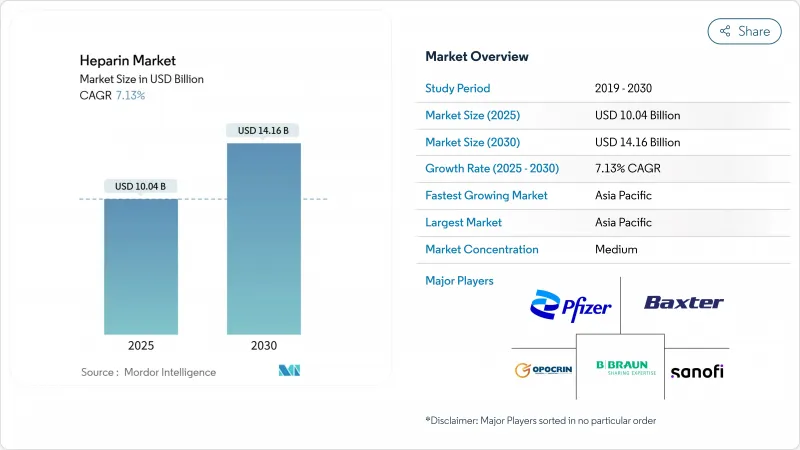
헤파린 시장 규모는 2025년에 100억 4,000만 달러로 추정되고, 2030년에는 141억 6,000만 달러에 이를 것으로 예측되며, CAGR 7.13%로 성장할 전망입니다.
수술 건수 증가, 투석 수술의 성장, 종양 치료 및 의료기기에의 폭넓은 용도에 의해 수요는 견조하게 추이합니다. 공급망의 다양화, 특히 생합성 생산으로의 전환은 아프리카 돼지열과 관련된 공급 부족이 돼지에 대한 의존도가 높아지는 위험을 밝혀내는 전략적 우선순위로 부상하고 있습니다. 암소 유래 원료의 재도입을 위한 규제 당국의 지원과 생물공학에 기초한 대체 원료에 대한 자금 제공은 전망을 더욱 강화할 것입니다. 경쟁의 중심은 포트폴리오의 확대와 지리적 전개이며, 병원이 가장 큰 구매층임에 변함이 없습니다.
심장혈관 수술과 정형외과 수술은 증가의 길을 따라가고 있으며, 두 수술 모두 예방적 항응고 요법에 의존하기 때문에 헤파린 수요는 멈추고 있습니다. 또한 말기 신부전 증가에 따라 투석 환자 수도 증가하고 있습니다. 최근의 임상시험은 헤파린 코팅 투석기와 간헐적인 생리 식염수 플러시로 출혈 위험이 높은 환자의 혈액 응고 사건이 사라졌음을 보여줍니다. 지역 항응고 요법은 일부 사례에서 산과 헤파린을 사용하지 않는 투석을 가능하게 했지만 전반적인 절차가 증가함에 따라 2027년까지 투석량이 유지됩니다.
LMWH는 예측 가능한 약동학과 제한된 모니터링의 필요성으로 임상의에 의해 지원되며 꾸준한 점유율 확대를 지원합니다. 바이오 엔지니어링에 의한 헤파린의 병행 진보는 대장균 기반 시스템에서 돼지 제품과 화학적으로 동등한 LMWH로 전환 가능한 물질을 생산하는 것으로 나타났습니다. 2025년에는 NHLBI가 미생물 생산을 확대하기 위한 미국 30만 6,656달러의 프로젝트에 자금을 제공하고 동물 유래가 아닌 소스의 기세를 강조하고 있습니다.
의약품 원약의 약 80%는 중국에서 생산되고 있으며, 시장은 질병 발생과 지정학적 행동에 노출되어 있습니다. 2019-2021년 아프리카 돼지열 위기는 공급을 압박하고 비용을 상승시켰습니다. 2025년 FDA는 BSE 프리온을 제거하는 정제 개선을 이유로 소 유래의 헤파린에 공급의 다양화를 촉진했습니다.
저분자 헤파린은 2024년 매출의 63%를 차지하는 외래 사용에 적합한 1일 1회 투여를 지원했습니다. 헤파린 시장에서는 수술 예방과 종양 치료에서 미분화 헤파린으로부터 LMWH로의 일관된 전환이 보고되었습니다. 이 부문의 생산량은 안정적이기 때문에 제조업체는 보다 안전한 침대 측 투여를 위해 주사기 유형의 확대를 진행하고 있습니다.
합성 및 생합성 헤파린은 CAGR 8.40%에서 가장 빠르게 성장하는 제품 분야로, 돼지 투입을 우회하는 미생물 및 화학 효소 경로에 대한 투자를 반영합니다. 이러한 대체품이 규모를 확대함에 따라 10년 후까지 헤파린 시장 전체의 점유율을 재구성할 수 있습니다.
돼지 점막은 2024년에는 세계 전체의 87.50%를 공급해 중국의 연해지방에 생산 거점이 있습니다. 돼지 유래 소스의 헤파린 시장 규모는 수입국의 비용을 인상하는 소군의 건강 충격 및 관세의 영향을 받기 쉽습니다. 재조합 미생물원은 CAGR 9.10%로 성장하여 공급망의 강인화를 목적으로 한 민간 자본과 공적 보조금을 매료하고 있습니다.
FDA(미국 식품의약국)의 지침이 갱신되고 최신 정제에 의해 BSE의 병원체가 제거되는 것이 입증되었기 때문에 소 유래 원료가 규제 시장으로 돌아가고 있습니다. 조기 도입 기업은 약리학적 동등성을 유지하면서 돼지 공급의 변동을 평준화하는 것을 목표로 하고 있습니다.
헤파린 시장 보고서는 제품별(미분화 헤파린, 저분자 헤파린, 기타), 공급원별(소, 기타), 투여형별(주사액, 프리필드 시린지, 기타), 투여 경로별(주사, 기타), 용도별(심부정맥혈전증, 기타), 최종 사용자별(병원, 외래수술센터, 기타), 지역별 시장 및 예측은 금액(달러)으로 제공됩니다.
북미는 2024년에 막대한 수요를 기록, 수술 건수의 많음과 만성 투석환자 증가에 의한 FDA에 의한 쇠고기 조달의 장려는 공급의 안정화를 도모하지만, 중국으로부터의 수입품에 대한 관세는 조달 리스크를 부조로 합니다. 새로운 헤파린 검사 시스템을 Ⅱ 클래스 특별 관리로 분류하면 규제 환경 강화가 입증되었습니다.
아시아태평양은 세계 매출의 32.10%를 차지했으며 CAGR은 가장 빠른 8.19%를 기록했습니다. 중국의 가공 기반은 여전히 필수적이지만 최근 정책 검토는 경쟁력을 지속하기 위해 연구 개발 및 품질 모니터링을 강화해야 합니다. 인도와 동남아시아에서는 원료 생산의 현지화를 목표로 하는 자급자족계획이 부상하고 있어 지역의 헤파린 시장 공급을 확대할 가능성이 있습니다.
인구동태의 고령화와 충실한 의료제도가 안정된 소비를 지지하고 있기 때문에 유럽은 안정된 점유율을 유지하고 있습니다. 의료기기 및 의약품의 조합에 대한 EMA의 적합성 평가에는 엄격한 안전 기준이 적용됩니다. 바이오시밀러 의약품의 개발 경로는 미국과 다르기 때문에 출시 스케줄과 저분자 브랜드 간의 경쟁 격화에 영향을 미칩니다.
The heparin market size stands at USD 10.04 billion in 2025 and is projected to reach USD 14.16 billion by 2030, reflecting a 7.13% CAGR.
Rising surgical volumes, growth in dialysis procedures, and broader applications in oncology care and medical devices keep demand strong. Supply-chain diversification, particularly the move toward biosynthetic production, is emerging as a strategic priority as African Swine Fever-related shortages revealed the risks of heavy porcine dependence. Regulatory support for re-introducing bovine-sourced heparin and funding for bioengineered alternatives further strengthen the outlook. Competitive activity centers on portfolio expansion and geographic reach, while hospitals remain the largest buying segment.
Cardiovascular and orthopedic surgeries continue to increase, and both settings rely on prophylactic anticoagulation, keeping heparin demand high. Dialysis sessions are also rising as end-stage renal disease prevalence climbs. Recent trials show that heparin-coated dialyzers plus intermittent saline flushing eliminated clotting events in high-bleeding-risk patients. Regional anticoagulation techniques now allow acid and heparin-free dialysis for select cases, yet overall procedure growth sustains volume through 2027.
Clinicians favor LMWH for its predictable pharmacokinetics and limited monitoring needs, supporting steady share gains. Parallel advances in bioengineered heparin show E. coli-based systems producing material chemically comparable to porcine products and convertible to LMWH. In 2025, the NHLBI funded a US USD 306,656 project to scale microbial production, underlining momentum for non-animal sources.
About 80% of active pharmaceutical ingredient volumes originate in China, leaving markets exposed to disease outbreaks and geopolitical actions. The 2019-2021 African Swine Fever crisis tightened supplies and lifted costs. In 2025, the FDA encouraged bovine-sourced heparin to diversify supply, citing improved purification that removes BSE prions.
Other drivers and restraints analyzed in the detailed report include:
For complete list of drivers and restraints, kindly check the Table Of Contents.
Low-molecular-weight heparin held 63% of revenues in 2024, supported by once-daily dosing that suits outpatient use. The heparin market reports consistent switching from unfractionated heparin to LMWH in surgical prophylaxis and oncology settings. The segment's steady volume has prompted manufacturers to expand syringe formats for safer bedside administration.
Synthetic and biosynthetic heparin is the fastest-growing product line at 8.40% CAGR, reflecting investment in microbial and chemo-enzymatic pathways that bypass porcine inputs. As these alternatives reach scale, they may reshape overall heparin market share by the decade's end.
Porcine mucosa supplied 87.50% of global volume in 2024, anchoring production hubs in China's coastal provinces. The heparin market size for porcine source is sensitive to herd-health shocks and tariffs that raise cost for importing countries. Recombinant microbial sources, growing at 9.10% CAGR, attract private capital and public grants aimed at supply-chain resilience.
Bovine material is returning to regulated markets after updated FDA guidance demonstrated that modern purification removes BSE agents. Early adopters aim to smooth volatility in porcine supply while maintaining pharmacologic equivalence.
Heparin Market Report is Segmented Into by Product (Unfractionated Heparin, Low Molecular Weight Heparin and More), Source (Bovine and More), Dosage Form (Injectable Solution, Pre-Filled Syringe, and More), Route of Administration (Injectable and More), Application (Deep Vein Thrombosis and More), End User (Hospitals, Ambulatory Surgical Centers and More) and Geography. The Market and Forecasts are Provided in Terms of Value (USD).
North America recorded sizable demand in 2024, driven by high surgical procedure volumes and chronic dialysis populations. FDA encouragement for bovine sourcing seeks to stabilize supplies while tariffs on Chinese imports highlight procurement risks. Classification of new heparin test systems into Class II special controls exemplifies the tightening regulatory climate.
Asia-Pacific delivered 32.10% of global revenue and posted the fastest CAGR at 8.19%. China's processing base remains indispensable, though recent policy reviews urge stronger R&D and quality oversight to ensure enduring competitiveness. Emerging self-sufficiency programs in India and Southeast Asia aim to localize API production, potentially expanding regional heparin market supply.
Europe maintains a stable share as aging demographics and well-funded health systems support steady consumption. EMA conformity assessments for device-drug combinations enforce rigorous safety standards. Biosimilar pathways differ from US practice, influencing launch timelines and competitive intensity among low-molecular-weight brands.