



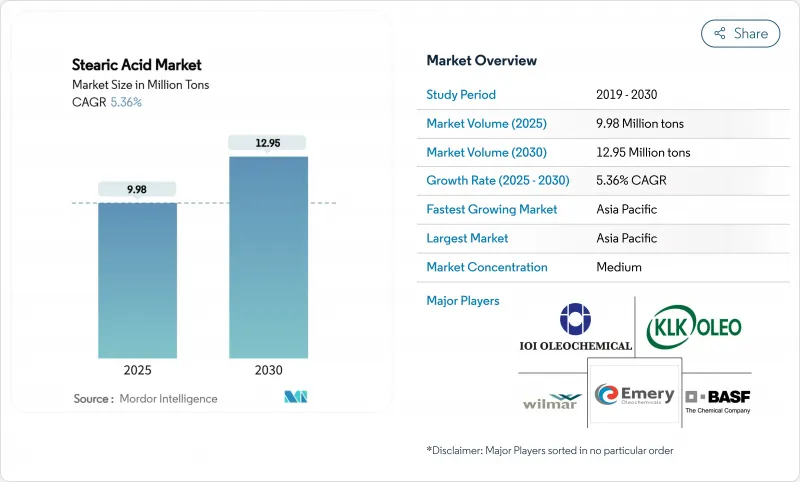
세계의 스테아르산 시장 규모는 2025년 998만 톤으로 추계되며, 예측기간 중(2025-2030년) CAGR 5.36%로 확대되어, 2030년에는 1,295만 톤에 달할 것으로 예측됩니다.

고급 퍼스널케어 제품, 생분해성 플라스틱, 특수 윤활유로의 용도 확대가 수요를 지지하는 한편, 동남아시아의 팜유 공급 체인이 통합됨에 따라 생산 비용은 상대적으로 경쟁력을 유지하고 있습니다. 지속가능한 야자유에 대한 원탁회의(RSPO) 인증을 준수하는 식물성 원료로의 전환이 가속화되고 세계 조달 모델이 재구성되었습니다. 소비자는 추적성이 있는 고순도 원료에 대가를 지불하므로 화장품 및 의약품의 프리미엄 등급이 가장 빨리 보급됩니다. 동시에, 팜유와 수지의 가격이 업스트림에서 변동하고 있기 때문에 비용 압력이 높아져, 생산자는 원료 포트폴리오를 다양화해, 에너지 효율이 높은 효소 기술을 채용하게 되어 있습니다.
클린 라벨의 동향이 고순도 스테아르산 등급의 보급을 촉진합니다. BASF의 기후 적응형 미용 제품 포트폴리오에는 재생 가능한 유화제가 소개되고 있어, 퍼스널케어 처방 담당자가 석유화학 왁스를 식물성 지방산으로 옮겨놓는 방법을 설명하고 있습니다. SMIngredients와 같은 성분 개발 회사는 "식물성 분말 오일"의 표시를 허용하는 스테아린산 유도체를 추진하고 영양 보조 식품의 정제에 널리 받아 들여지고 있습니다. 다국적 기업은 인증된 공급망을 확보합니다. Kao는 2024년에 식림지 수준까지 87%의 추적성을 달성하여 삼림파괴의 위험을 낮추고 프리미엄 소비자를 안심시킵니다. 미국 FDA에 의한 GRAS의 승인은 화장품과 외용제의 신뢰성을 계속 지원합니다. 이러한 요인이 상반되어, 스테아르산 시장의 화장품 및 의약품 급료 원료의 수량 성장은 확실한 것이 됩니다.
신흥국에서 가정 세탁의 성장이 비누와 계면활성제 수요를 높입니다. 아시아태평양은 도시화와 가처분 소득 상승에 힘입어 여전히 가장 큰 세제 시장이 되었습니다. 필리핀에 신설된 설폰화 능력에 의해 연간 4만톤의 세제 중간체가 공급되어 지방산 원료에 대한 지역적 인계가 강해집니다. 패브릭 케어와 향기의 오래 지속을 약속하는 프리미엄 세제의 포맷은 스테아르산의 배합율을 높여, 톤당의 가치를 인상하고 있습니다. 스테아르산 시장은 브랜드 소유자가 "녹색" 상품 선반을 호소하기 위해 석유 계면활성제를 바이오 대체품으로 대체함으로써 더욱 혜택을 받습니다. 장기적으로, 특히 트리플 프레스 등급에서 세제 드라이버는 예측 가능한 기준선 소비를 보장합니다.
팜유 선물은 인도네시아와 말레이시아의 바이오디젤 의무화에 대응하기 위해 2025년 초까지 1t당 4,000-4,600MYR로 추이합니다. 바이오연료 제조업체가 원료를 빼앗아 유지 화학의 마진을 침식하고 있기 때문에 수지와 사용후 식용유의 가격에도 같은 변동이 생깁니다. FAO의 식물성 기름 지수는 2025년 4월 하락했으며 해상 운송 가격도 하락했습니다. 스테아르산 생산자는 COVID 이후 원유, 콩, 팜 가격의 상관관계가 약화되고 예측 정밀도가 떨어지기 때문에 위험 회피에 어려움을 겪고 있습니다. 원재료 위험 상승은 스팟 시장에서의 구매를 제한하고, 다운스트림 프로젝트의 시작을 지연시키고, 스테아르산 시장을 억제합니다.
2024년 스테아르산 시장에서 식물성 원료의 점유율은 66.93%이며, 주요 생산자가 RSPO 인증 팜 스테아린의 생산량을 배증시키기 때문에 2030년까지 연평균 복합 성장률(CAGR) 5.59%에서 수량이 증가할 것으로 예측됩니다. 식물성 원료의 스테아르산 시장 규모는 예측 기간 동안 200만 톤 증가하고 동물성 지방 시장 규모를 초과할 것으로 예측됩니다. 말레이시아와 인도네시아의 통합 가공업자는 연속 농장, 정련소, 유지 화학 장비를 활용하여 추적성을 확보하면서 물류 비용을 최소화합니다. thyssenkrupp Uhde와 Novonesis가 개발한 효소적 에스테르화는 에너지 사용량을 60% 삭감하고 지속가능성을 높입니다.
역사적으로 고무 첨가제의 주류였던 동물 유래의 경로는 추적성과 질병 위험을 둘러싼 과제에 직면하고 있습니다. 그러나 특정 사슬 길이 분포를 필요로 하는 용도와 수지가 렌더링 산업에서 쉽게 입수할 수 있는 지역에서는 틈새 관련성을 유지하고 있습니다. 동물용 의약품의 잔류에 관한 규제가 강화되면, 더 이상의 점유율 저하는 억제될 수 있지만, 섭취는 소폭에 머무를 것으로 보입니다. 발효 기반 지질이 성숙함에 따라 스테아르산 산업에서는 향후 10년간 원료 다양화가 진행될 수 있지만, 상업적 생산량은 여전히 제한되고 있습니다.
스테아르산 시장 보고서는 원료(동물성, 식물성), 등급(트리플 프레스 스테아르산, 고무 등급 스테아르산, 식품 등급 스테아르산, 화장품 및 의약품 등급 스테아르산), 용도(플라스틱, 비누 및 세제, 기타), 지역(아시아태평양, 북미, 유럽, 남미, 중동 및 아프리카) 시장 예측은 수량(톤)으로 제공됩니다.
2024년 스테아르산 시장은 아시아태평양이 72.20%의 점유율을 차지하고 지역 정부가 특수 화학제품의 부가가치 향상을 우선하고 있기 때문에 2030년까지 연평균 복합 성장률(CAGR) 5.83%를 보일 것으로 예측됩니다. 말레이시아의 화학 산업 로드맵은 2030년까지 국내 GDP에 4.5% 기여하는 것을 목표로 하고 있으며, 유지 화학 클러스터 전체의 생산 능력 향상과 기술 도입을 지원하고 있습니다. 인도네시아에서는 B40 바이오디젤을 추진하고 있으며, 현지 팜유 수요를 증가시키고 원료 가격을 상승시킬 뿐만 아니라 정유소의 다운스트림 통합을 촉진하고 지방산 생산에 이익을 가져오고 있습니다.
북미는 엄격한 FDA 컴플라이언스와 인증된 원료에 대가를 지불하는 소비자의 준비가 있기 때문에 프리미엄 바이어로 랭크 인하고 있습니다. 정밀 발효 지질에 대한 투자는 미래의 국내 공급을 약속하지만, 현재 이 지역은 범용 원료와 고급 원료 모두 동남아시아의 수입에 의존하고 있습니다. 유럽은 지속가능성 중심 시장환경을 유지하고 있습니다. EU의 스테아르산 시장 규모는 화장품 및 식품 규제 당국이 순도와 추적성 요구를 강화하고 이익률이 높은 인증 등급 시장을 형성하고 있기 때문에 완만하면서도 일관되게 성장하고 있습니다.
남미와 중동 및 아프리카는 새로운 성장 지역입니다. 브라질의 대규모 농업 산업 기반은 지방산 에스테르의 국내 생산 능력을 지원하며 플라스틱과 세제로 수입품을 대체 할 수 있습니다. 걸프 국가에서는 새로운 석유화학 공원이 수입 팜 스테아린을 사용하는 유지 화학 트레인을 통합하여 지역 세제 수요를 받고 있습니다. 도시 인구 증가, 1인당 소득 향상, 투자 우대 조치로 이 지역은 스테아르산 시장에서 제2파 확대에 매력적인 지역이 되고 있습니다.
The Stearic Acid Market size is estimated at 9.98 Million tons in 2025, and is expected to reach 12.95 Million tons by 2030, at a CAGR of 5.36% during the forecast period (2025-2030).
Rising use in premium personal-care products, biodegradable plastics, and specialized lubricants anchors demand, while integrated palm-oil supply chains in Southeast Asia keep production costs relatively competitive. Manufacturers escalate capacity in Indonesia, Malaysia, and Thailand to secure feedstock and shorten lead times to export markets Sustainability mandates accelerate the pivot to vegetable-based inputs that meet Roundtable on Sustainable Palm Oil (RSPO) certification, reshaping global procurement models. Premium cosmetic and pharmaceutical grades register the quickest uptake as consumers pay for traceable and high-purity ingredients. At the same time, upstream volatility in palm-oil and tallow prices adds cost pressure, encouraging producers to diversify raw-material portfolios and adopt energy-efficient enzymatic technologies.
Clean-label trends drive strong uptake of high-purity stearic acid grades. BASF's climate-adaptive beauty portfolio showcases renewable emulsifiers that illustrate how personal-care formulators substitute petrochemical waxes with vegetable-based fatty acids. Ingredient developers such as SMIngredients promote stearic-acid derivatives that allow "vegetable oil powder" labelling, widening acceptance in nutraceutical tablets. Multinationals secure certified supply chains; Kao achieved 87% traceability to plantation level in 2024, lowering deforestation risks and reassuring premium consumers. The US FDA's GRAS affirmation continues to underpin confidence in cosmetic and topical use. Together these factors lock in volume growth for cosmetic- and pharma-grade material within the stearic acid market.
Household-laundry growth in emerging economies elevates soap and surfactant demand. Asia-Pacific remains the largest detergent market by volume, supported by rising urbanization and disposable incomes. New sulfonation capacity in the Philippines adds 40,000 t annual supply of detergent intermediates, increasing regional pull for fatty-acid raw materials. Premium detergent formats that promise fabric care and fragrance longevity incorporate higher stearic acid loadings, lifting value per ton. The stearic acid market benefits further as brand owners replace petroleum-based surfactants with bio-based alternatives to gain "green" shelf appeal. Over the long run, the detergents driver secures predictable baseline consumption, especially for triple-pressed grades.
Palm-oil futures hover between MYR 4,000 and 4,600 per t through early 2025 as tight supply meets biodiesel mandates in Indonesia and Malaysia. Similar swings in tallow and used-cooking-oil values arise as biofuel producers compete for feedstock, eroding oleochemical margins. Freight-rate fluctuations compound cost unpredictability; the FAO vegetable-oil index fell in April 2025 while ocean-shipping prices also declined. Stearic acid producers struggle to hedge because post-COVID correlations between crude, soybean, and palm prices weakened, reducing forecast accuracy. Elevated raw-material risk restricts spot-market buying and delays downstream project launches, restraining the stearic acid market.
Other drivers and restraints analyzed in the detailed report include:
For complete list of drivers and restraints, kindly check the Table Of Contents.
Vegetable-based inputs held 66.93% share of the stearic acid market in 2024, and volumes are forecast to rise at 5.59% CAGR through 2030 as major producers double down on RSPO-certified palm stearin. The stearic acid market size for vegetable feedstock is projected to grow by 2 million tons over the forecast, outpacing animal-fat counterparts. Integrated processors in Malaysia and Indonesia leverage contiguous plantations, refineries, and oleochemical units to minimize logistics costs while ensuring traceability. Enzymatic esterification developed by thyssenkrupp Uhde and Novonesis cuts energy use by 60%, enhancing sustainability credentials.
Animal-based routes, historically dominant in rubber additives, face image challenges over traceability and disease risk. Yet they retain niche relevance in applications requiring specific chain-length distributions and in regions where tallow is readily available from rendering industries. Regulatory tightening on veterinary drug residues could limit further share loss, but uptake will stay modest. As fermentation-based lipids mature, the stearic acid industry may witness a broader diversification of feedstock in the next decade, though commercial volumes remain limited today.
The Stearic Acid Market Report is Segmented by Feedstock (Animal-Based and Vegetable-Based), Grade (Triple-Pressed Stearic Acid, Rubber-Grade Stearic Acid, Food-Grade Stearic Acid, and Cosmetic-/Pharma-Grade Stearic Acid), Application (Plastics, Soaps and Detergents, and More), and Geography (Asia-Pacific, North America, Europe, South America, and Middle-East and Africa). The Market Forecasts are Provided in Terms of Volume (Tons).
Asia-Pacific dominated the stearic acid market in 2024 with 72.20% share and is forecast to grow at 5.83% CAGR to 2030 as regional governments prioritize specialty-chemical value addition. Malaysia's Chemical Industry Roadmap targets a 4.5% contribution to national GDP by 2030, supporting capacity upgrades and technology adoption across its oleochemical cluster. Indonesia's push toward B40 biodiesel increases local palm-oil demand, lifting feedstock prices but also encouraging refinery downstream integration that benefits fatty-acid output.
North America ranks as a premium buyer base, driven by strict FDA compliance and consumer readiness to pay for certified inputs. Investments in precision-fermentation lipids promise future local supply, but today the region depends on imports from Southeast Asia for both commodity and high-grade material. Europe maintains a sustainability-led market environment. The stearic acid market size in the EU grows modestly yet consistently as cosmetics and food regulators tighten purity and traceability demands, creating a market for high-margin certified grades.
South America and the Middle-East and Africa are emerging growth territories. Brazil's large agro-industrial base underpins domestic fatty-acid ester capacity, positioning the country to substitute imports in plastics and detergents. In the Gulf, new petrochemical parks integrate oleochemical trains that use imported palm stearin, capturing regional detergent demand. Rising urban populations, higher per-capita income, and supportive investment incentives make these geographies attractive for second-wave expansion in the stearic acid market.