ㅁ Add-on 가능: 고객의 요청에 따라 일정한 범위 내에서 Customization이 가능합니다. 자세한 사항은 문의해 주시기 바랍니다.
ㅁ 보고서에 따라 최신 정보로 업데이트하여 보내드립니다. 배송기일은 문의해 주시기 바랍니다.
한글목차
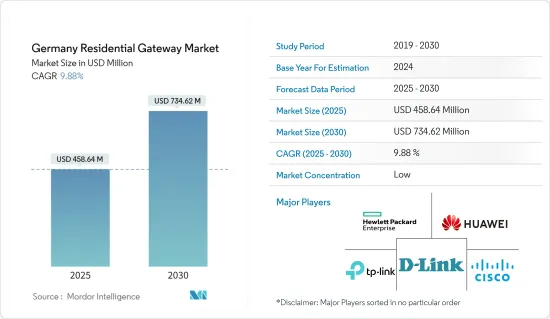
독일의 주거용 게이트웨이 시장 규모는 2025년에 4억 5,864만 달러, 2030년에는 7억 3,462만 달러에 달할 것으로 예측됩니다. 예측 기간(2025-2030년)의 CAGR은 9.88%를 나타낼 전망입니다.
독일 소비자의 인터넷과 광대역 보급률의 상승은 독일의 주거용 게이트웨이 시장의 주요 촉진요인 중 하나입니다. 가정에 인터넷 보급률이 높기 때문에 원활하고 신뢰할 수 있는 연결을 실현하는 모뎀이나 라우터 등의 주거용 게이트웨이 장비에 대한 수요가 높아지고 있습니다.
주요 하이라이트
광대역 보급률의 상승과 홈네트워크 기술의 진보로 독일에서는 주거용 게이트웨이 기기에 큰 시장 수요가 있습니다.
또, 인터넷 접속의 공유, 동시 인터넷 액세스, 가정내 오디오 및 비디오 스트리밍에 대한 수요 증가가 독일의 주거용 게이트웨이 기기 수요를 견인하고 있습니다. 또한, 독일의 소비자 사이에서 스마트 홈 경향이 변화함에 따라 가정에서의 주거용 게이트웨이 디바이스의 이용을 촉진해, 시장의 성장을 지지하고 있습니다.
게다가 재택근무와 스마트홈의 대처가 조합됨으로써 독일 전역의 가정에서 견고하고 신뢰성이 높고 성능이 높은 Wi-Fi 환경에 대한 큰 수요가 탄생하고 있어 사용자가 네트워크화된 가정을 활용할 수 있도록 하기 위해 필요한 접속 기능을 제공합니다. 주거용 게이트웨이 디바이스가 인기를 끌고 있습니다. 시장 벤더는 이 기회를 파악해, 가정 환경에서의 디바이스의 퍼포먼스를 향상시키기 위해서 필요한 속도, 신뢰성, 저지연을 실현하는 선진적 Wi-Fi 규격에 대응한 주거용 게이트웨이 디바이스를 제공합니다.
또한 독일에서는 스마트 홈 디바이스의 도입이 진행되고 있습니다.
독일에서는 개인정보 유출이 증가하고 있어 데이터 유출 건수로 2위의 나라가 되고 있습니다.
COVID-19의 대유행으로 인해 독일에서는 긴장감이 길어졌기 때문에 주거용 게이트웨이 디바이스가 대폭적으로 보급되어 온라인 게임, 원격 근무, 스트리밍 서비스용 고속 인터넷 접속에 대한 수요가 급증했습니다. 고속 및 신뢰할 수 있는 인터넷 접속에 대한 수요 증가와 스마트 홈 디바이스, 텔레비전(TV), 노트북, 스마트폰 등, 다양한 소비자용 전자 기기의 국내 주택 부문에서의 대폭적인 보급이, 독일 시장의 성장에 플러스의 영향을 주고 있습니다.
독일 주거용 게이트웨이 시장 동향
라우터가 주요 시장 점유율을 차지
스마트 디바이스, 리모트 워크, 고화질 스트리밍 증가에 따라, 독일에서는 라우터 등의 신뢰성 높은 고속 홈 네트워크 장비 수요가 급증하고 있습니다. Linksys의 Hydra Pro 6E(AXE6600)는 동시에 55대 이상의 디바이스에 멀티기가비트 스피드를 기재하고 있습니다. 마찬가지로, TP-Link의 Archer AX72 Pro 라우터는 100대 이상의 디바이스를 접속할 수 있어 MU-MIMO와 OFDMA를 서포트해 혼잡을 경감해, 평균 스루풋을 4배로 합니다.
또한 TP-Link, D-Link, AVM GmbH, Linksys와 같은 시장 진출 기업은 독일 전역의 가정에서 안정적인 고속 네트워크 연결에 대한 수요가 지속적으로 발전하고 있으며, 라우터 제공을 지속적으로 혁신하고 있습니다.
D-link는 최신 Wi-Fi 6기술과 인공지능을 조합한 것으로, Wi-Fi의 커버리지와 스피드를 향상시켜, 가정에서의 신뢰성이 높고, 효율적이고 고속인 인터넷 커버리지를 위해서 항상 최적화되고 있습니다.
DSL 라우터는 독일의 주거용 게이트웨이 시장에서 큰 수요를 얻는 것으로 분석됩니다. 이는 시장의 주요 공급업체가 다목적 연결성, 초고속 속도 및 고품질 전화 통신을 지원하는 새로운 DSL 라우터를 지속적으로 출시하는 데 도움이 됩니다. VDSL/ADSL 전화 모뎀 라우터는 최신 슈퍼 VDSL 기술(VDSL2 Profile 35b)을 사용하여 최대 350Mbps의 인터넷 속도를 제공합니다.
전반적으로 4K/8K 스트리밍, AR/VR 게임, 온라인 게임, 온라인 학습, 화상회의, 재택근무 등의 동향이 독일에서 기세를 늘리면서 Wi-Fi 6E와 Wi-Fi 7 등의 선진적인 Wi-Fi 규격을 이용하는 라우터 수요가 향후 수년간 성장할 것으로 예측됩니다.
디지털 가입자선(DSL)이 성장을 견인
독일 가정에서는 온라인 게임, 화상 통화, 스트리밍, 재택 근무 등 온라인 활동 증가로 인해 지속적인 인터넷 연결에 대한 수요가 크게 증가하고 있습니다. 디바이스를 접속하는 것으로, 인터넷 서비스 제공업체(ISP)는 독일 전역 가정에서 기존의 전화 회선을 이용한 고속 접속을 제공할 수 있기 때문에 이것이 독일의 주거용 게이트웨이 시장에 있어서의 DSL 접속 수요를 견인하고 있습니다.
모뎀은 인터넷 서비스 제공업체(ISP)에 접속하여 가정에서 인터넷을 제공하기 위해 예측 기간 중 DSL 부문에서 큰 견인력을 발휘한다고 분석되고 있습니다.
이 나라 시장 벤더는 DSL 연결을 위해 WiFi 6 등의 고급 Wi-Fi 표준을 이용한 주거용 게이트웨이 장비를 제공합니다. AX의 VDSL 35b 슈퍼 벡터링은 기존 회선에서 최대 300Mbit/s 이상의 속도를 실현합니다.
전반적으로 독일 주거용 게이트웨이 시장에서 디지털 가입자 회선(DSL) 연결 수요는 주로 독일 가정에서 DSL의 높은 보급률과 독일에서 광대역 인터넷 액세스 수요가 증가함에 따라 예측 기간 동안 성장할 것으로 분석됩니다. 2023년 현재 독일 전역의 액티브 고정 광대역 연결 수는 3,820만입니다. 또한 독일의 많은 가정이 여전히 유선전화를 사용하고 있다는 점을 감안할 때 DSL 연결 설정은 빠르고 간단하기 때문에 이 부문의 성장을 더욱 뒷받침하고 있습니다.
독일 주거용 게이트웨이 시장 개요
독일 주거용 게이트웨이 시장은 세분화된 경쟁 시장이며 Cisco Systems Inc., TP-Link Corporation Pte.Ltd., D-Link Corporation, Huawei Technologies, Hewlett Packard Enterprise Company 등의 대기업이 존재합니다. 이 시장의 진출기업은 제품을 강화하고 지속 가능한 경쟁 우위를 얻기 위해 제휴, M&A, 투자 등의 전략을 채용하고 있습니다.
2024년 3월, ZTE Corporation은 독일 베를린에서 개최된 FTTH Conference 2024에 참가했습니다. 가정 내 Wi-Fi 신호 커버리지를 개선하기 위해 ZTE Corporation은 Wi-Fi 7, XGS-PON ONT, 메쉬 Wi-Fi & FTTR, SCP(스마트 클라우드 플랫폼) 관리 플랫폼을 포함한 혁신적인 커넥티드 홈 솔루션을 발표했습니다.
2023년 10월, Linksys는 최초의 가정용 Wi-Fi 7 메쉬 시스템 「Linksys Velop Pro 7」을 발표했습니다.
기타 혜택
엑셀 형식 시장 예측(ME) 시트
3개월간의 애널리스트 서포트
목차
제1장 서론
조사의 전제조건과 시장 정의
조사 범위
제2장 조사 방법
제3장 주요 요약
제4장 시장 인사이트
시장 개요
거시경제 시나리오 분석
각국의 통신산업에 관한 규제 상황
제5장 시장 역학
시장 성장 촉진요인
IP 트래픽 급증
소비자의 인터넷과 광대역 보급률 증가
정부의 지원책과 Wi-Fi의 보급 6
시장의 과제
데이터 보안 및 프라이버시에 대한 우려 증가
주거용 게이트웨이 장비의 가격 모델과 가격 분석
Wi-Fi 규격 유형에 관한 주요 인사이트
독일에서의 주거용 게이트웨이 기기의 수출입에 관한 무역 분석
독일의 광대역 인터넷 보급에 관한 주요 지표
제6장 시장 세분화
시장 전체, 추정 및 예측
시장 전체, 추정 및 예측(금액 : 100만 달러)
시장 전체, 추정 및 예측-디바이스 대수(100만대)
제공 유형별
모뎀
라우터
익스텐더와 리피터
네트워크 스위치
기타 디바이스(무선 액세스 포인트, VoIP 아날로그 전화 어댑터, 파이버 ONT 등)
매니지드 Wi-Fi 서비스
접속 유형별
디지털 가입자선(DSL)
이더넷 케이블
파이버 케이블
제7장 경쟁 구도
독일의 주요 벤더의 시장 점유율 분석
기업 프로파일
Cisco Systems Inc.
TP-link Corporation Pte. Ltd
D-Link Corporation
Huawei Technologies Co. Ltd
Hewlett Packard Enterprise Company
ZTE Corporation
Linksys Holdings Inc.
Mikrotikls SIA
Juniper Networks Inc.
Adtran Holdings Inc.
Zyxel Communications Corp.(Unizyx Holding Corp.)
AVM Computersysteme Vertriebs GmbH
ASUSTeK Computer Inc.
제8장 투자 분석
제9장 시장 전망
SHW
영문 목차
영문목차
The Germany Residential Gateway Market size is estimated at USD 458.64 million in 2025, and is expected to reach USD 734.62 million by 2030, at a CAGR of 9.88% during the forecast period (2025-2030).
Rising internet and broadband penetration among consumers in Germany is one of the major drivers of the German residential gateway market. The high penetration of the internet in the country's households has necessitated the demand for residential gateway devices, such as modems and routers, for seamless and reliable connectivity.
Key Highlights
With increased broadband penetration and technological advances in home networking, there is a considerable market demand for residential gateway devices in Germany. Households in Germany are increasingly populated with various digital devices, multimedia applications, networked appliances, voice and data communications platforms, entertainment systems, and much more.
In addition, the rising demand for Internet connection sharing, simultaneous Internet access, and in-home audio and video streaming have driven the demand for residential gateway devices in Germany. Additionally, the shifting inclination toward smart homes among consumers in Germany has facilitated the utilization of residential gateway devices in households, thus supporting market growth.
Moreover, the combination of work-from-home and smart home initiatives is creating significant demand for robust, reliable, and performant Wi-Fi environments in households across Germany, and residential gateway devices are gaining traction to deliver the necessary connectivity features that enable users to take advantage of networked homes. Market vendors are capitalizing on the opportunity and offering residential gateway devices on advanced Wi-Fi standards to deliver the requisite speed, reliability, and low latency to improve the performance of devices in home environments.
Also, smart home devices have been increasingly adopted in Germany. Connected devices such as smart thermostats, security cameras, and voice assistants rely on a stable and high-speed internet connection, necessitating the use of advanced residential gateways.
Germany is witnessing a growing number of personal data breaches and has become the second-largest country in terms of data breaches. Data breaches' escalating frequency and severity represent a formidable restraint for the residential gateway market. As the gateway serves as the primary entry point for data into a home network, its vulnerability to cyber threats becomes a paramount concern for consumers and manufacturers alike.
The COVID-19 pandemic resulted in a significant uptake of residential gateway devices in Germany owing to prolonged lockdowns, which proliferated the demand for high-speed internet connectivity for online gaming, remote work, and streaming services. Post-pandemic, the rising demand for high-speed and reliable internet connectivity and the significant uptake of various consumer electronic devices, such as smart home devices, television (TV), laptops, and smartphones in the country's residential sector, are positively influencing the market's growth in Germany.
Germany Residential Gateway Market Trends
Routers to Hold Major Market Share
With the growth of smart devices, remote work, and high-definition streaming, the demand for reliable and high-speed home networking devices such as routers has surged in Germany. Major market vendors in the country offer routers that support many devices for 4K streaming, AR/VR gaming, online learning, smart home, and video calling. For instance, Linksys's Hydra Pro 6E (AXE6600) simultaneously provides multi-gigabit speed to more than 55 devices. Similarly, TP-Link's Archer AX72 Pro router can connect 100+ devices and supports MU-MIMO and OFDMA to reduce congestion and quadruple the average throughput.
Moreover, market players such as TP-Link, D-Link, AVM GmbH, and Linksys constantly innovate their router offerings to meet the ever-evolving demand for reliable and high-speed network connectivity in households across Germany. For instance, D-link offers the EAGLE PRO AI AX1500 Smart Router in Germany, which combines the latest Wi-Fi 6 technology with Artificial Intelligence, offering improved Wi-Fi coverage and speed that is constantly optimized and improved for reliable, efficient, and fast Internet coverage in households.
DSL routers are analyzed to gain significant demand in the German residential gateway market, supported by the continuous launch of new DSL routers by significant market vendors that support versatile connectivity, ultra-fast speed, and high-quality telephony. For instance, TP-Link's AC2100 Wi-Fi MU-MIMO VDSL/ADSL telephony modem router offers internet speeds of up to 350 Mbps using the latest Super VDSL technology (VDSL2 Profile 35b). The routers come with 4X Gigabit LAN ports that help wired devices achieve peak HD streaming and gaming performance.
Overall, as trends such as 4K/8K Streaming, AR/VR Gaming, Online Gaming, Online Learning, Video Conferencing, and Working from Home gain momentum in Germany, the demand for routers utilizing advanced Wi-Fi standards such as Wi-Fi 6E and Wi-Fi 7 will witness growth in the coming years. In addition, continuous innovation in routers by major market vendors to support the growing demand for reliable network connectivity in households will drive the demand for routers over the forecast period.
Digital Subscriber Lines (DSL) to Witness Growth
The demand for always-on internet connectivity has been increasing significantly in German households owing to growing online activities such as online gaming, video calls, streaming, and working from home. This has driven the demand for DSL connections in the German residential gateway market as the connection between DSL and residential gateway devices such as modems and routers, etc., allows internet service providers (ISPs) to offer high-speed connections over existing telephone lines in households across Germany.
By offering, modems are analyzed to witness significant traction in the DSL segment over the forecast period to connect to the Internet Service Provider (ISP) and provide internet in households. The rising demand for high-speed connections among households and significant penetration of DSL in households across Germany drive the demand for residential gateway devices such as modems to connect a router or computer to telephone lines for the internet.
Market vendors in the country offer residential gateway devices utilizing advanced Wi-Fi standards such as WiFi 6 for DSL connections. For instance, AVM GmbH offers FRITZ! Box 7590 AX utilizes WiFi 6 for high-speed home network connectivity. VDSL 35b supervectoring in FRITZ! Box 7590 AX can achieve speeds of up to 300 Mbit/s and more on conventional lines.
Overall, the demand for digital Subscriber Lines (DSL) connections in the German residential gateway market is analyzed to grow over the forecast period, primarily supported by the high penetration of DSL across households in Germany and the ever-increasing demand for broadband internet access in Germany. As of 2023, there were 38.2 million Active Fixed Broadband Connections across Germany. Furthermore, the DSL connection setup is fast and easy, considering many homes in Germany still use landline phones, thus further supporting the segment growth.
Germany Residential Gateway Market Overview
The German Residential Gateway Market is fragmented and competitive, with the presence of major players like Cisco Systems Inc., TP-Link Corporation Pte. Ltd, D-Link Corporation, Huawei Technologies Co. Ltd, and Hewlett Packard Enterprise Company. Players in the market are adopting strategies such as partnerships, mergers and acquisitions, and investments to enhance their products and gain sustainable competitive advantage.
In March 2024, ZTE Corporation participated in the FTTH Conference 2024 in Berlin, Germany. The conference brought together corporate executives, decision-makers, thought leaders, and investors from the optical communication industry. To improve Wi-Fi signal coverage at home, ZTE Corporation presented an innovative connected home solution, which includes Wi-Fi 7, XGS-PON ONT, Mesh Wi-Fi & FTTR, and SCP (Smart Cloud Platform) management platform.
In October 2023, Linksys announced that it had launched its first Wi-Fi 7 Mesh System for home connectivity, Linksys Velop Pro 7. With this launch, the company provides the Wi-Fi operating mode to date, and it delivers fast streaming, collaboration, and gaming experiences and can be set up in less than 10 minutes.
Additional Benefits:
The market estimate (ME) sheet in Excel format
3 months of analyst support
TABLE OF CONTENTS
1 INTRODUCTION
1.1 Study Assumptions and Market Definition
1.2 Scope of the Study
2 RESEARCH METHODOLOGY
3 EXECUTIVE SUMMARY
4 MARKET INSIGHTS
4.1 Market Overview
4.2 Analysis of Macro-Economic Scenarios
4.3 Regulatory Landscape Related to the Telecom Industry in the Country
5 MARKET DYNAMICS
5.1 Market Drivers
5.1.1 Rapid Growth in IP Traffic
5.1.2 Increasing Internet and Broadband Penetration Among Consumers
5.1.3 Supportive Government Initiatives and Roll-out of Wi-Fi 6
5.2 Market Challenges
5.2.1 Increasing Concerns Related to Data Security and Privacy
5.3 Analysis of Pricing Model and Pricing of Residential Gateway Devices
5.4 Key Insights On Types of Wi-Fi Standards
5.5 Trade Analysis Related to Import/Export of Residential Gateway Devices w.r.t Germany
5.6 Key Metrics Related to Broadband Internet Adoption in Germany
6 MARKET SEGMENTATION
6.1 Overall Market Estimates and Forecast
6.1.1 Overall Market Estimates and Forecast - Value in USD Million
6.1.2 Overall Market Estimates and Forecast - Device Volume in Million Units
6.2 By Offering Type
6.2.1 Modem
6.2.2 Router
6.2.3 Extenders and Repeaters
6.2.4 Network Switch
6.2.5 Other Devices (Wireless Access Point, VoIP Analog telephony adapter, Fiber ONT, etc.)
6.2.6 Managed Wi-Fi Services
6.3 By Connection Type
6.3.1 Digital Subscriber Lines (DSL)
6.3.2 Ethernet Cable
6.3.3 Fiber Cable
7 COMPETITIVE LANDSCAPE
7.1 Market Share Analysis of Major Vendors in Germany