인도네시아의 연포장 : 시장 점유율 분석, 산업 동향 및 통계, 성장 예측(2025-2030년)
Indonesia Flexible Packaging - Market Share Analysis, Industry Trends & Statistics, Growth Forecasts (2025 - 2030)
상품코드:1690100
리서치사:Mordor Intelligence
발행일:2025년 03월
페이지 정보:영문
라이선스 & 가격 (부가세 별도)
ㅁ Add-on 가능: 고객의 요청에 따라 일정한 범위 내에서 Customization이 가능합니다. 자세한 사항은 문의해 주시기 바랍니다.
ㅁ 보고서에 따라 최신 정보로 업데이트하여 보내드립니다. 배송기일은 문의해 주시기 바랍니다.
한글목차
인도네시아의 연포장 시장 규모는 2025년 45억 8,000만 달러에 이를 것으로 추정됩니다. 예측기간(2025-2030년)의 CAGR은 4.75%를 나타내고, 2030년에는 57억 7,000만 달러에 달할 것으로 예상됩니다.
주요 하이라이트
연포장은 제품 포장에 경제적이고 사용자 정의 가능한 솔루션을 제공합니다. 음식, 퍼스널케어, 의약품 등의 업계는 그 범용성으로부터 이익을 얻고 있습니다. 그 인기는 효율성과 비용 효과 때문입니다. 인도네시아에서는 경량 포장에 대한 수요 증가, 지속가능성에 대한 소비자의 의식 증가, 보존 기간과 제품 보호를 강화하는 기술의 진보 등 요인이 연포장 시장을 견인하고 있습니다.
연포장의 다양한 모양과 크기에 대한 적응성은 비용 효율성과 운송의 용이성과 함께 시장 성장을 뒷받침합니다. 인도네시아의 산업계가 점점 더 친환경적인 솔루션을 선호하게 되고, 소비자가 편의성을 추구함에 따라, 연포장 시장은 확대를 향하고 있습니다. 인도네시아의 연포장 시장은 단층 플라스틱에서 다층, 높은 배리어성, 재활용 가능한 소재로 전환하고 있는 인도네시아의 지속가능성 여행에 매우 중요합니다. 이 시장을 견인하는 것은 급증하는 인구와 저렴한 포장에 대한 수요가 증가하고 있습니다. 또한 현지 식품, 음료 및 제약 업계의 영향을 받고 있습니다.
인도네시아의 식음료 산업은 경제 성장의 핵심입니다. Permata Bank Economic Research의 보고서에 따르면 이 산업은 일관되게 인도네시아의 제조업 상황을 강화해 왔습니다. 2023년 식음료 제조업의 가동률은 전기의 74.6%에서 75.0%로 상승하여 산업 활동의 상승을 반영했습니다. 식음료 제조가 증가함에 따라 연포장 수요도 증가할 것으로 예상됩니다.
인도네시아에서는 퍼스널케어 제품 수요가 높아지고 있어 제품의 미관을 높이고 품질을 유지하며 유통 기한을 연장하는 연포장의 요구가 높아지고 있습니다. 혁신적인 연포장 디자인은 소비자를 매료시키고, 가방이나 파우치 등의 제품의 양판을 밀어 올리고 있습니다.
인도네시아의 경제 성장과 편리한 싱글서브식품에 대한 선호도 증가가 연포장 생산에 박차를 가하고 있습니다. 이에 따라 시장 벤더는 생산 능력을 확대하고 있습니다. 급성장하는 인도네시아 제조업체인 푸트라 나가 인도타마는 기존 고객과 신규 고객 모두의 비즈니스를 강화하기 위해 최첨단 기계에 투자하고 있습니다.
경제협력개발기구(OECD)와 유엔 식량농업기관(FAO)의 데이터에 따르면 2030년까지 인도네시아에서의 신선한 우유제품의 1인당 소비량은 약 3.82킬로그램에 달할 전망입니다. 많은 인도네시아인들에게 유제품은 일상적인 주식이 아니지만 신선한 우유, 치즈, 요구르트와 같은 제품은 특히 중간 소득층 가정에서 인기가 높아지고 있습니다. 소비량이 증가함에 따라 유제품용으로 조정된 연포장 수요도 증가할 것으로 예상됩니다.
플라스틱 포장 솔루션은 제조, 소매, 헬스케어 등 다양한 분야에서 응용되고 있습니다. 특히 헬스케어 분야는 그 배리어성, 보존 기간의 연장, 내구성으로부터 플라스틱 포장을 채용하고 있습니다. 그러나 일회용 플라스틱과 지속 불가능한 관행이 환경에 미치는 영향에 대한 의식이 높아지면서 소비자는 생태 풋 프린트를 고려한 제품을 요구하게 되었습니다. 이러한 소비자 심리 변화는 시장 성장에 어려움을 겪고 있습니다.
진화를 계속하는 인도네시아 시장에서는 지속가능성과 편의성을 중시하게 되어 연포장의 동향이 변화하고 있습니다. 국내 기업은 지속가능한 첨단 솔루션에 대한 투자, 재활용 소재 활용, 배출량 저감을 위한 제조 공정 채택 등을 추진하고 있으며 시장 확대의 길을 열고 있습니다.
주요 하이라이트
예를 들어, PT Charoen Pokphand Indonesia(CPI) Flexible Packaging은 BOBST와 공동으로 2019년 설립 이후 매년 10%의 성장 궤도를 그리고 있습니다. BOBST는 기재 가공, 인쇄, 컨버팅 장비의 선도적인 공급업체로, 라벨, 연포장, 골판지 산업 등 다양한 산업을 지원합니다. 이 파트너십은 매우 중요하며 oneECG(확장 색역) 기술은 주요 추진력으로 두드러집니다. 이 기술을 통해 CPI는 고품질의 연포장을 일관되게 신속하게 제공할 수 있으며, 동시에 비용을 절감하고 지속가능성을 높일 수 있습니다.
PT 히말라야 웰니스는 지속 가능한 포장을 선호합니다. 포장 실적를 최소화하기 위해 최선을 다하고 있는 이 회사는 혁신적인 소재를 통해 친환경적인 형식과 구조를 채택하고 있습니다. 이 기업의 제품 개발 프로세스는 탄소와 환경에 미치는 영향을 줄이는 데 중점을 둡니다. 이 회사는 제품 라인업의 50%를 PVC에서 재활용 가능한 PET로 전환하고 있으며 PVC에서 완전히 철수하기 위해 모든 제품을 친환경 대체품으로 대체하고 있습니다.
인도네시아의 연포장 시장 동향
포장용 필름이 현저한 성장을 이룰 전망
포장용 필름과 랩 시장은 고성능 필름에 대한 수요가 증가함에 따라 성장하고 있습니다. 다양한 최종사용자 산업이 보다 높은 배리어성을 요구하게 됨에 따라, 가공 기술의 선진 포장 필름이 채용되어, 용도에의 적합성과 비용 효율이 우수한 생산의 양쪽 모두가 확보되게 되어 있습니다.
지속가능성에 대한 주목이 높아짐에 따라 기존의 경질 포장에서 혁신적이고 유연한 솔루션으로의 전환이 진행되고 있습니다. 이러한 진화는 소비자 친화적인 포장과 제품 보호 강화에 대한 수요가 증가함에 따라, 필름과 랩에 의한 포장을 인도네시아에서 비용 효율적이고 유력한 옵션으로 자리매김하고 있습니다.
인도네시아의 소비자들은 편의점과 곧 먹을 수있는 식사를 점점 선호합니다. 이에 따라 식품 및 음료 제조업체는 열 성형 포장 필름을 채택합니다. 우수한 장벽 특성으로 알려진 이 필름은 주로 고기와 해산물과 같은 신선한 식품을 진공포장하고 신선도를 효과적으로 유지하는 데 사용됩니다.
스트레치 필름은 특히 음료, 퍼스널케어 아이템, 가정용품 등의 포장에 최적의 솔루션으로 지지를 모으고 있습니다. 인도네시아에서는 소매업 및 전자상거래 부문이 증가하는 경향이 있으며, 제품이 손상되지 않고 매장에 안전하게 도착하는 것이 중요합니다. 묶거나 보호하는 기능을 가진 스트레치 필름은 점점 더 좋아지고 있습니다. 또한 출하 및 물류 업무가 확대됨에 따라 효율적이고 비용 효율적인 결속 솔루션에 대한 수요가 높아지고 있으며 스트레치 필름이 잘하는 틈새 분야이기도합니다.
싱가포르 소매업 협회에 따르면 인도네시아의 소매업은 급성장하고 있으며, 이 나라의 GDP에 약 13% 공헌하고 있습니다. 2억 7,000만 명이 넘는 엄청난 인구, 구매력이 높은 중간소득층의 확대, 현저한 소비 습관을 가진 밀레니얼 세대가 이 나라의 소매 가능성을 뒷받침하고 있습니다. 그 결과, 포장 필름의 장점과 급성장하는 소매 부문이 결합되어 인도네시아의 연포장 시장의 성장을 뒷받침하고 있습니다.
인도네시아의 전자상거래 부문은 견고하고 안정적인 성장을 이루고 있으며 이는 엄청난 잠재력을 보여줍니다. 스트레치 필름은 전자상거래 포장에서 매우 중요한 역할을 하며, 주로 화물의 안전성을 확보하고 있습니다. 강력한 장벽 역할을 하며 운송 중에 상품이 벗어나는 것을 방지합니다. 이것은 특히 섬세하고 깨지기 쉽고 파손을 피하기 위해 세심한주의가 필요한 제품에 필수적입니다.
The International Trade Administration의 보고서에 따르면, 포장용 필름 시장 가치는 2023년 529억 3,000만 달러를 넘었고, 2028년에는 868억 1,000만 달러 이상에 달할 것으로 예측됩니다. 따라서 스트레치 필름과 같은 포장용 필름의 장점은 소매업의 확대와 함께 인도네시아의 포장용 필름 시장의 성장을 이끌고 있습니다.
식품산업이 큰 시장 점유율을 차지
식음료(F&B) 산업은 혁신과 제품 개발의 온상입니다. 이 산업은 민첩하고 적응력이 뛰어난 포장 산업에 의존합니다. 인도네시아 소비자 신뢰감 지수는 2023년에 123.8이 되어 소비 의욕이 왕성하다는 것을 보여주었습니다. 미네랄 워터와 즉석 국수가 소비자의 인기 상품의 상위에 부상했습니다.
주식 식용 식품은 식용유와 함께 인도네시아의 식생활의 핵심입니다. 포장 향신료와 커피와 같은 비주식품 눈은 지난 5년간 현저하게 지출이 증가했습니다. 요리의 간편화와 생산성 향상의 동향은 포장 향신료와 커피 소비의 지속적인 호조를 뒷받침하고 있습니다.
인도네시아의 선호도는 연포장으로 이동하고 있습니다. 이 유형의 포장은 경제적뿐만 아니라 사용자 정의도 가능하며 다양한 제품을 지원합니다. 식품 및 퍼스널케어와 같은 다목적 포장 솔루션을 필요로하는 업계에서는 연 포장이 특히 유리합니다. 그 인기 증가는 효율성과 비용 효과에 기인합니다.
인도네시아의 밀레니얼 세대 소비자들은 혼자서 운반할 수 있는 식품을 선호하며, 이는 주로 연포장 솔루션 수요를 뒷받침하고 있습니다. 이러한 선호도는 휴대성, 내구성, 경량성에서 연포장을 유력한 선택으로 하고 있습니다. 최근 인도네시아에서는 다양한 식품 품목으로 소비자 지출이 현저하게 증가하고 있습니다. 여기에는 베이커리와 시리얼 바, 요리된 음식, 커피와 핫 초콜릿 스틱과 파우치, 탈수 식품, 스낵 과자, 견과류, 향신료, 초콜릿, 과자, 아이스크림 참신, 쿠키, 케이크, 칩 등이 포함됩니다. 이러한 수요 증가는 식품 산업에서의 연포장, 특히 스탠드업 거싯과 베개 파우치의 인기를 높이고 있습니다.
특히 베개 파우치는 식품, 음식, 유제품 업계에서 채용이 급증하고 있습니다. 파우치의 매력은 합리적인 가격, 효과적인 밀봉 능력, 비용 효율적인 운송에 있습니다.
그러나 플라스틱 폐기물에 대한 환경에 대한 우려로 인해 지속 가능한 대체 포장을 제창하는 규제 강화가 시장에 큰 어려움을 겪고 있습니다. 또한, 특히 폴리에틸렌과 폴리프로필렌의 세계 원료 가격 변동은 제조업체의 이익률을 낮추고 시장 성장을 억제할 수 있습니다. 인도네시아는 플라스틱 재활용의 추진으로 전진하고 있지만, 재활용 인프라와 국민의 의식은 아직 늦어져, 효율적인 플라스틱 폐기물 관리와 지속 가능한 시장 확대를 복잡하게 하고 있습니다.
환경 의식 증가는 환경 친화적인 연포장, 특히 재활용 가능하고 생분해성이 높은 연포장의 개발을 위해 선호됩니다. 소비자 선호도의 진화와 중간소득층 확대로 급성장하고 있는 식품 및 음료산업에 의해 인도네시아는 특히 유제품, 스낵과자, 음료 등 업계에서 연포장 시장에 유리한 기회를 가져오고 있습니다.
인도네시아에서는 기업이 다양한 고품질 종이 봉투를 전개하고 있습니다. 내구성있는 소재로 만들어진이 가방은 상단에 강력한 접착 씰이 붙어있는 것이 특징입니다. 식품 포장 산업을 위해 조정된 이러한 적응성이 있는 종이 가방은 레스토랑, 호텔, 카페 및 기타 유사한 장소를 위한 이상적인 선택 역할을 합니다. 여러 크기가 있으며 특정 요구에 맞출 수 있습니다. 이 가방은 상당한 무게를 취급 할 수 있으며 음식 및 음료 서비스 분야의 매력을 높입니다. 또한 가볍고 견고합니다.
플라스틱 포장 기술의 지속적인 발전은 제품 혁신과 차별화에 대한 길을 열어줍니다. 예를 들어, 연포장에 내장된 스마트 센서는 온도, 습도 및 기타 환경 요인에 대한 데이터를 중앙 집중식 시스템으로 중계할 수 있어 연포장의 기능과 매력을 높입니다.
인도네시아의 연포장 산업 개요
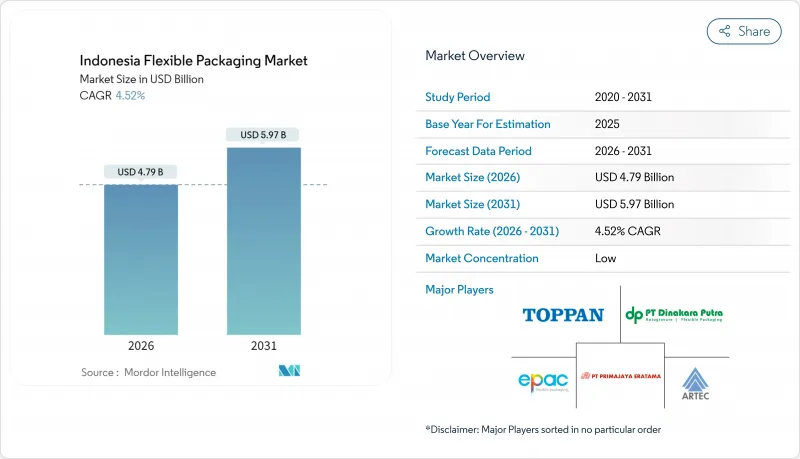
인도네시아의 연포장 시장은 여러 선수들이 존재하기 때문에 단편화됩니다. 시장의 주요 기업은 항상 진보를 가져오기 위해 노력하고 있습니다. 주요 기업으로는 PrimaJaya Eratama, PT ePac Flexibles Indonesia, PT Indonesia Toppan Group, PT Dinakara Putra, PT Artec Package Indonesia 등이 있습니다.
인도네시아에서는 PT Dolphin Food & Beverages, PT Aimfood Manufacturing Indonesia, PT RBFOOD MANUFAKTUR INDONESIA와 같은 기업과 PT Kalbe Farma Tbk, PT Kimia Farma Tbk와 같은 국내 제약 대기업 등 최종 용도의 소비자가 연증 포장을 채용 이 추세는 시장 성장에 크게 기여합니다.
기타 혜택
엑셀 형식 시장 예측(ME) 시트
3개월간의 애널리스트 서포트
목차
제1장 서론
조사의 전제조건과 시장 정의
조사 범위
제2장 조사 방법
제3장 주요 요약
제4장 시장 인사이트
시장 개요
산업 밸류체인 분석
업계의 매력도 - Porter's Five Forces 분석
공급기업의 협상력
구매자의 협상력
신규 참가업체의 위협
대체품의 위협
경쟁 기업간 경쟁 관계
인도네시아의 업계 규제와 재활용 정책
제5장 시장 역학
시장 성장 촉진요인
국내에서의 경량·소형 팩으로 변화
지속 가능한 포장 솔루션에 대한 수요 증가
시장 성장 억제요인
명확한 재활용 계획의 부족과 환경 과제
제6장 시장 세분화
제7장 재료 유형별
플라스틱
폴리에틸렌(PE)
양방향 폴리프로필렌(BOPP)
주조 폴리프로필렌(CPP)
에틸렌 비닐 알코올(EVOH)
폴리염화비닐(PVC)
기타 플라스틱
종이
금속
제8장 제품 유형별
가방 및 파우치
필름 및 랩
기타 제품 유형
제9장 최종 사용자 산업별
식품
음료
제약 및 의료
가정 및 퍼스널케어
기타 최종 사용자 산업
제10장 경쟁 구도
기업 프로파일
PrimaJaya Eratama
PT ePac Flexibles Indonesia
PT Indonesia Toppan Group
PT Dinakara Putra
PT Artec Package Indonesia
Mondi Group
PT Trias Sentosa Tbk
PT Indopoly Swakarsa Industry Tbk
PT Argha Prima Industry
PT Lotte Packaging
PT Karuniatama Polypack
PT. Masplast Poly Film
PT Polidayaguna Perkasa
제11장 투자 분석
제12장 시장 전망
KTH
영문 목차
영문목차
The Indonesia Flexible Packaging Market size is estimated at USD 4.58 billion in 2025, and is expected to reach USD 5.77 billion by 2030, at a CAGR of 4.75% during the forecast period (2025-2030).
Key Highlights
Flexible packaging offers economical and customizable solutions for product packaging. Industries such as food and beverage, personal care, and pharmaceuticals benefit from its versatility. Its popularity stems from its efficiency and cost-effectiveness. In Indonesia, the flexible packaging market is driven by factors like the growing demand for lightweight packaging, heightened consumer awareness of sustainability, and technological advancements that enhance shelf life and product protection.
The adaptability of flexible packaging to various shapes and sizes, combined with its cost-effectiveness and transport ease, fuels market growth. As Indonesian industries increasingly prioritize eco-friendly solutions and consumers demand convenience, the flexible packaging market is set for expansion. Indonesia's flexible packaging market is pivotal in the nation's sustainability journey, transitioning from single-layer plastics to multilayer, high-barrier, recyclable materials. The market is driven by the burgeoning population and the increasing demand for affordable packaging. It is also influenced by the local food, beverage, and pharmaceutical industries.
Indonesia's food and beverage industry is a cornerstone of its economic growth. As reported by Permata Bank Economic Research, this industry has consistently bolstered Indonesia's manufacturing landscape. In 2023, food and beverage manufacturing capacity utilization increased to 75.0% from 74.6% the previous quarter, mirroring a rise in industrial activities. As food and beverage manufacturing ramps up, the demand for flexible packaging is also expected to increase.
The rising demand for personal care products in Indonesia is boosting the need for flexible packaging, which enhances product aesthetics, preserves quality, and extends shelf life. Innovative flexible packaging designs attract consumers, driving up volume sales of products such as sachets and pouches.
Indonesia's economic growth and the increased appetite for convenient, single-serve foods have spurred flexible packaging production. In response, market vendors are expanding their capacities. The rapidly growing Indonesian manufacturer, Putra Naga Indotama, is investing in cutting-edge machinery to bolster business with both existing and new clientele.
According to the data from the Organisation for Economic Co-operation and Development (OECD) and the Food and Agriculture Organization (FAO), by 2030, per capita consumption of fresh dairy products in Indonesia will reach approximately 3.82 kilograms. While dairy is not a daily staple for many Indonesians, products like fresh milk, cheese, and yogurt are gaining popularity, especially among middle-income families. As consumption rises, the demand for flexible packaging tailored for dairy products is also expected to increase.
Plastic packaging solutions find applications across various sectors, including manufacturing, retail, and healthcare. The healthcare sector, in particular, has embraced plastic packaging for its barrier qualities, extended shelf life, and durability. However, growing awareness of the environmental impacts of single-use plastics and unsustainable practices has led consumers to demand products with a positive ecological footprint. This shift in consumer sentiment poses a challenge to the market's growth.
In Indonesia's evolving market, the rising emphasis on sustainability and convenience is reshaping trends in flexible packaging. Companies across the nation are channeling investments into advanced sustainable solutions, harnessing recycled materials, and adopting emission-reducing manufacturing processes, thereby unlocking avenues for market expansion.
Key Highlights
For instance, PT Charoen Pokphand Indonesia (CPI) Flexible Packaging, in collaboration with BOBST, has charted a growth trajectory of 10% annually since its 2019 inception. BOBST, a premier supplier in substrate processing, printing, and converting equipment, caters to diverse industries, including labels, flexible packaging, and corrugated industries. This partnership has been pivotal, with oneECG (Extended Color Gamut) technology standing out as a major driver. This technology empowers CPI to deliver high-quality, flexible packaging consistently and swiftly, all while curtailing costs and enhancing sustainability.
PT Himalaya Wellness Company is prioritizing sustainable packaging. Committed to minimizing its packaging footprint, the company is embracing eco-friendly formats and structures through innovative materials. The company's product development process is centered on reducing carbon and environmental impact. The company has transitioned 50% of its product range from PVC to recyclable PET and aims for a complete PVC phase-out, replacing it with eco-friendly alternatives across its portfolio.
Indonesia Flexible Packaging Market Trends
Packaging Films Are Expected to Witness Significant Growth
The market for packaging films and wraps is growing, driven by the escalating demand for high-performance films. As various end-user industries increasingly require enhanced barriers, advancements in processing technologies are poised to bolster the adoption of packaging films, ensuring both suitability for applications and cost-effective production.
Amid a rising focus on sustainability, there is a shift from traditional rigid packaging to innovative, flexible solutions. This evolution, coupled with a heightened demand for consumer-friendly packaging and enhanced product protection, positions film and wrap packaging as a leading, cost-effective alternative in the nation.
Indonesian consumers are increasingly favoring convenience foods and ready-to-eat meals. In response, food and beverage manufacturers are adopting thermoforming packaging films. Renowned for their exceptional barrier properties, these films are predominantly used for vacuum packaging perishables, such as meat and seafood, effectively preserving their freshness.
Stretch films are gaining traction as the go-to solution for bundled packaging, especially for beverages, personal care items, and household products. With Indonesia's retail and e-commerce sectors on the rise, there is a heightened focus on ensuring products arrive at stores undamaged and secure. With its bundling and protective capabilities, stretch films are becoming increasingly favored. Furthermore, as shipping and logistics operations expand, the demand for efficient and cost-effective bundling solutions rises, a niche where stretch films excel.
According to the Singapore Retailers Association, Indonesia's retail sector is rapidly growing, contributing approximately 13% to the nation's GDP. The country's vast population of over 270 million, an expanding middle-income group with enhanced purchasing power, and millennials with pronounced spending habits underscore its retail potential. Consequently, the advantages of packing films, combined with the burgeoning retail sector, are propelling the flexible packaging market's growth in Indonesia.
Indonesia's e-commerce sector is witnessing robust and consistent growth, which signals immense potential. Stretch film plays a pivotal role in e-commerce packaging, primarily ensuring the security of shipments. It acts as a formidable barrier and prevents items from shifting during transit. This becomes especially vital for delicate or fragile products that demand heightened care to avert damage.
As reported by The International Trade Administration, the market value of packaging films exceeded USD 52.93 billion in 2023, with forecasts suggesting a climb to over USD 86.81 billion by 2028. Thus, the benefits of packaging films such as stretch films, coupled with the expanding retail landscape, are driving the growth of the market for packaging films in Indonesia.
The Food Industry Holds a Major Market Share
The food and beverage (F&B) industry is a hotbed of innovation and product development. The industry relies on a nimble and adaptive packaging industry. Indonesia's consumer confidence index stood at 123.8 in 2023, indicating robust spending optimism for the upcoming year. Mineral water and instant noodles emerged as top consumer favorites.
Staple goods, alongside cooking oils, are cornerstones of the Indonesian diet. Non-staple items like packaged spices and coffee have witnessed a notable uptick in spending over the last five years. This trend toward convenient cooking and heightened productivity underscores the sustained strength of the consumption of packaged spices and coffee.
Indonesia's preference is shifting toward flexible packaging. This type of packaging is not only economical but also customizable, catering to a diverse range of products. Industries like food and beverage and personal care, which often require versatile packaging solutions, find flexible packaging particularly advantageous. Its rising popularity can be attributed to its efficiency and cost-effectiveness.
Millennial consumers in Indonesia favor single-serving and on-the-go food options, which primarily drive the demand for flexible packaging solutions. Such preferences make flexible packaging the go-to choice, given its portability, durability, and lightweight nature. In recent years, there has been a marked increase in consumer spending across a diverse range of food items in Indonesia. This includes bakery and cereal bars, ready meals, coffee or hot chocolate sticks and pouches, dehydrated foods, snack foods, nuts, spices, chocolates, sweets, ice-cream novelties, cookies, cakes, and chips. Such heightened demand has bolstered the popularity of flexible packaging items, particularly stand-up gussets and pillow pouches, in the food industry.
Pillow pouches, in particular, have seen a surge in adoption, especially within the food, beverage, and dairy industries. The appeal of pouches lies in their affordability, effective sealing capabilities, and cost-efficient transportation.
However, stricter regulations advocating for sustainable packaging alternatives, driven by environmental concerns over plastic waste, pose significant challenges to the market. Additionally, global raw material price fluctuations, especially for polyethylene and polypropylene, can reduce manufacturers' profit margins and restrain market growth. While Indonesia is making strides in promoting plastic recycling, its recycling infrastructure and public awareness still lag, complicating efficient plastic waste management and sustainable market expansion.
Rising environmental consciousness presents an opportunity for the development of eco-friendly flexible packaging, especially those that are recyclable and biodegradable. With a burgeoning food and beverage industry, which is spurred by evolving consumer preferences and an expanding middle-income group, Indonesia presents lucrative opportunities for the flexible packaging market, especially in industries like dairy, snacks, and beverages.
In Indonesia, businesses are rolling out a diverse array of high-quality paper bags. Crafted from durable materials, these bags feature a strong adhesive seal at the top. Tailored for the food packaging industry, these adaptable paper bags serve as an ideal choice for restaurants, hotels, cafes, and other similar venues. They are available in multiple sizes and can be tailored to meet specific needs. These bags can handle significant weight, enhancing their appeal in the food and beverage service sector. They are also lightweight and sturdy.
Continuous advancements in plastic packaging technologies pave the way for product innovation and differentiation. For instance, smart sensors embedded in flexible packaging can relay data on temperature, humidity, and other environmental factors to a centralized system, amplifying the functionality and allure of flexible packaging.
Indonesia Flexible Packaging Industry Overview
The flexible packaging market in Indonesia is fragmented as it has several players. The key players in the market are constantly making efforts to bring advancements. Some of the major players include PrimaJaya Eratama, PT ePac Flexibles Indonesia, PT Indonesia Toppan Group, PT Dinakara Putra, and PT Artec Package Indonesia.
End-use consumers in Indonesia, including companies like PT Dolphin Food & Beverages, PT Aimfood Manufacturing Indonesia, and PT RBFOOD MANUFAKTUR INDONESIA, and domestic pharmaceutical giants such as PT Kalbe Farma Tbk and PT Kimia Farma Tbk, are increasingly adopting flexible packaging. This trend is significantly contributing to the growth of the market.
Additional Benefits:
The market estimate (ME) sheet in Excel format
3 months of analyst support
TABLE OF CONTENTS
1 INTRODUCTION
1.1 Study Assumptions and Market Definition
1.2 Scope of the Study
2 RESEARCH METHODOLOGY
3 EXECUTIVE SUMMARY
4 MARKET INSIGHTS
4.1 Market Overview
4.2 Industry Value Chain Analysis
4.3 Industry Attractiveness - Porter's Five Forces Analysis
4.3.1 Bargaining Power of Suppliers
4.3.2 Bargaining Power of Buyers
4.3.3 Threat of New Entrants
4.3.4 Threat of Substitute
4.3.5 Intensity of Competitive Rivalry
4.4 Industry Regulations and Recycling Policies in Indonesia
5 MARKET DYNAMICS
5.1 Market Drivers
5.1.1 Shift Toward Light Weight and Smaller Pack Types in the Country
5.1.2 Rising Demand for Sustainable Packaging Solutions
5.2 Market Restraints
5.2.1 Lack of a Defined Recycling Plans Coupled with Environmental Challenges