스토리지 클래스 메모리 : 시장 점유율 분석, 산업 동향 및 통계, 성장 예측(2025-2030년)
Storage Class Memory - Market Share Analysis, Industry Trends & Statistics, Growth Forecasts (2025 - 2030)
상품코드:1630178
리서치사:Mordor Intelligence
발행일:2025년 01월
페이지 정보:영문
라이선스 & 가격 (부가세 별도)
ㅁ Add-on 가능: 고객의 요청에 따라 일정한 범위 내에서 Customization이 가능합니다. 자세한 사항은 문의해 주시기 바랍니다.
ㅁ 보고서에 따라 최신 정보로 업데이트하여 보내드립니다. 배송기일은 문의해 주시기 바랍니다.
한글목차
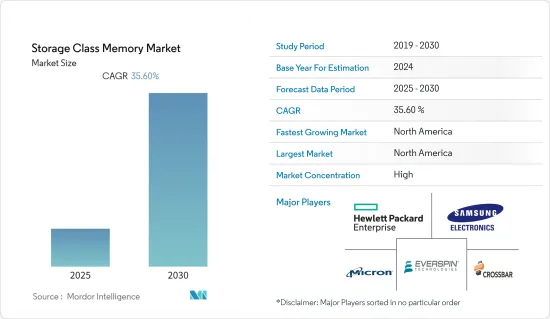
스토리지 클래스 메모리 시장은 예측 기간 동안 35.6%의 CAGR을 기록할 것으로 예상됩니다.
주요 하이라이트
스토리지 클래스 메모리(SCM)는 디스크 드라이브와 같은 회전식 기계식 스토리지에서 솔리드 스테이트 비휘발성 RAM으로 전환하는 데 있어 중요한 구성요소입니다. 결과적으로 SCM은 기존 SLC/MLC 낸드플래시 제품보다 더 높은 성능과 에너지 효율을 제공하는 솔루션을 제공할 것으로 기대되고 있습니다.
스토리지 클래스 메모리(SCM)는 낸드플래시보다 읽기 및 쓰기 속도가 빠르며, 데이터 재기록에 대한 내성이 크게 향상되어 내구성이 뛰어납니다. 또한, 데이터 재기록에 대한 내성이 크게 향상되어 내구성이 뛰어나며, NAND 플래시보다 우수한 내구성과 DRAM에 비해 GB당 비용이 저렴하다는 특징이 있습니다.
또한, SCM은 메모리에 가까운 속도로 작동할 수 있고, 내구성이 뛰어나며, 정전 시에도 지속되기 때문에 금융 거래 애플리케이션, 분석, 직접 연결 스토리지 애플리케이션, 데이터베이스와 같이 지연에 민감한 애플리케이션에 적합합니다.
대화형 데이터베이스 쿼리와 같은 빅데이터 애플리케이션에서 점점 더 많이 사용되는 인메모리 프로세싱에 대한 수요로 인해 인텔과 다른 칩 제조업체들은 메모리 대역폭을 확장하고 있습니다. 클러스터 컴퓨팅 프레임워크와 같은 분석 워크로드를 실행할 때, 인텔은 쿼리가 DRAM 스토리지의 조합보다 영구 메모리에서 8배 더 빠르게 실행된다고 주장합니다.
데이터센터 내 애플리케이션 컨테이너의 부상으로 인해 최근 영구 메모리에 대한 요구가 증가하고 있습니다. 이에 따라 시장 생태계에 존재하는 벤더들은 CPU 및 서버 활용도 향상, 분산형 애플리케이션의 빠른 배포 등 더 큰 영구 메모리 계층의 이점을 강조하고 있습니다.
디지털 데이터를 비휘발성 메모리에 저장하는 경우, 특정 오류를 감지하고 수정하는 메커니즘이 필수적입니다. 오류 수정 코드(ECC)는 디코더가 데이터 오류를 식별하고 수정할 수 있도록 데이터를 인코딩하는 것입니다.
여러 국가의 많은 최종사용자 산업이 전염병의 영향을 받아 다양한 업무가 중단되었습니다. 예를 들어, 인도에서는 봉쇄령의 도입으로 모든 부문과 활동이 중단되었습니다. 이러한 봉쇄 조치의 도입은 모든 산업에 큰 영향을 미쳤고, 대부분의 기업이 손실을 입었습니다. 인텔에 따르면 가상화 데스크톱 인프라와 가상화 스토리지 솔루션에 대한 수요가 증가함에 따라 데이터센터의 스토리지 및 메모리 제품에 대한 수요가 증가하고 있습니다. 이 두 가지 애플리케이션 유형의 스토리지 및 메모리 기능을 강화하고 속도를 높여야 하는 필요성은 COVID-19 팬데믹으로 인해 홈 오피스로 이동한 수많은 근로자와 디지털 리소스의 사용 증가에 대응하기 위한 것입니다. 인텔 비휘발성 메모리 솔루션 그룹의 1분기 매출은 전년 동기 대비 46% 증가한 13억 달러를 기록했습니다.
스토리지 클래스 메모리 시장 동향
영구 메모리 크게 성장할 전망
대화형 데이터베이스 쿼리와 같은 빅데이터 애플리케이션에서 점점 더 많이 사용되고 있는 인메모리 프로세싱에 대한 수요로 인해 인텔과 다른 칩 제조업체들은 메모리 대역폭을 확장하고 있습니다. 클러스터 컴퓨팅 프레임워크와 같은 분석 워크로드를 실행할 때, 인텔은 DRAM 스토리지의 조합보다 영구 메모리에서 쿼리를 8배 더 빠르게 실행할 수 있다고 주장합니다.
데이터센터 내 애플리케이션 컨테이너의 부상으로 인해 최근 영구 메모리에 대한 요구가 증가하고 있습니다. 이에 따라 시장 생태계 벤더들은 CPU 및 서버 활용도 향상, 분산형 애플리케이션의 빠른 전송 등 더 큰 영구 메모리 계층의 이점을 강조하고 있습니다.
퍼시스턴트 메모리는 성능과 효율성을 향상시키면서 메모리 용량을 최대 512GB까지 크게 늘릴 수 있습니다. 이러한 성능으로 인해 퍼시스턴트 메모리는 인메모리 데이터베이스, 분석, 컨텐츠 전송 네트워크와 같은 애플리케이션에 적합합니다.
퍼시스턴트 메모리는 성능과 효율성을 향상시키면서 메모리 용량을 최대 512GB까지 크게 늘릴 수 있습니다. 이러한 성능으로 인해 퍼시스턴트 메모리는 인메모리 데이터베이스, 분석, 컨텐츠 전송 네트워크와 같은 애플리케이션에 이상적입니다.
스토리지 컨트롤러는 하드 디스크나 SSD와 같은 주변 장치를 서버나 컴퓨터에 연결하는 데 사용됩니다. 컨트롤러는 일반적으로 PCIe 인터페이스를 통해 CPU와 직접 통신합니다. 스토리지 컨트롤러의 역할은 I/O 요청을 물리적 미디어에 읽고 쓸 수 있는 데이터 블록으로 변환하는 것입니다. 하드 드라이브는 메인 메모리보다 속도가 느리기 때문에 스토리지 컨트롤러는 캐시 역할도 수행하며, 하드웨어 RAID와 같은 데이터 보안 기능도 수행합니다.
2020년 8월, 마우저 일렉트로닉스는 잠재적 응용 분야에서 영구 메모리에 대한 수요가 증가함에 따라 인텔 옵테인(Intel Optane) 영구 메모리 모듈의 재고를 시작한다고 발표했습니다. 데이터 레이어로도 사용할 수 있는 대용량, 합리적인 가격의 메모리 액세스를 제공하기 위해 개발됐습니다.
북미 시장이 압도적인 시장 점유율을 차지
빅데이터 분석의 증가, 모바일 광대역의 성장, 클라우드 컴퓨팅이 북미의 새로운 데이터센터 인프라에 대한 수요를 주도하고 있습니다. 또한, 이 지역에서는 스토리지 및 메모리 시장에 새롭게 진입하는 기업 및 기술도 볼 수 있습니다.
Data Reportal에 따르면, 2022년 1월 미국 인터넷 사용자 수는 3억 7.2억 명. 2022년 초 미국 전체 인구의 92.0%가 인터넷에 접속했고, 2022년 1월 미국에는 약 3억 7.2억 명의 인터넷 사용자들이 있었습니다. 있었습니다. 당시 약 2억 7,000만 명이 소셜 미디어를 이용하고 있었습니다.
또한 2021년 3분기 미국 인터넷 사용자의 90%가 휴대전화를 통해 인터넷에 접속한 것으로 나타났습니다. 또한 미국은 가장 많은 데이터센터를 보유하고 있으며, Cloudscene에 따르면 총 2,751 개의 데이터센터가 있으며, 세계 2 위인 독일은 총 484 개에 불과합니다. 이는 세계 최대 규모인 미국의 데이터센터 시장이 스토리지 클래스 메모리의 거대한 시장임을 보여줍니다.
또한 이 지역에서는 데이터센터 업그레이드, 확장, 신설 등 데이터센터 시장에 대한 투자가 계속되고 있습니다. 예를 들어, 2022년 2월 Cologix는 CIM 그룹과 손잡고 캐나다 토론토에 새로운 데이터센터를 설립했습니다. 두 회사는 온타리오주 마컴에 5만 평방피트(4,650평방미터), 15MW 규모의 데이터센터 'TOR4'를 건설하고 운영할 계획입니다.
낮은 지연 시간, 높은 내구성, 신뢰할 수 있는 데이터 일관성을 필요로 하는 전략적 운영 애플리케이션과 데이터베이스는 퍼시스턴트 메모리의 이점을 누릴 수 있습니다. 이 기술은 가상 머신(VM) 스토리지를 가속화하고 멀티노드 분산형 클라우드 애플리케이션에 높은 성능을 제공할 수 있습니다. 이 지역의 주요 기업들은 최첨단 기술 개발에 적극적으로 나서고 있으며, 이는 시장에 큰 기회를 제공하고 있습니다.
또한, 이 지역의 빅데이터와 IoT의 확산은 차세대 모듈형 데이터센터의 규모와 범위를 크게 변화시킬 것으로 예상됩니다. 기존 경쟁으로 인해 기업들은 IT의 확장성과 용량을 진화시켜야 하는 상황에 직면해 있습니다. 데이터의 급격한 증가, 하이브리드 클라우드, 타사 데이터센터 아웃소싱으로 인해 컨테이너형 데이터센터는 최단 시간 내에 센터를 구축할 수 있는 유연성으로 인해 인기를 끌고 있습니다.
스토리지 클래스 메모리 산업 개요
스토리지 클래스 메모리 시장은 삼성, 파나소닉과 같은 대기업이 시장을 독점하고 있기 때문에 통합되어 있습니다. 또한, SCM은 높은 제조 비용으로 인해 신규 진입과 시장 점유율 확보가 어려운 상황입니다. 따라서 이러한 추세는 예측 기간 동안 지속될 것으로 예상됩니다.
2022년 8월 - Kioxia는 Linux Foundation의 Software-Enabled Flash 기술의 새로운 Software-Defined 인터페이스를 포함한 많은 개발을 발표했습니다. 이 오픈 소스 프로젝트는 기술을 더 잘 활용할 수 있는 맞춤형 플래시 스토리지를 도입하여 기존 HDD 프로토콜에서 벗어날 것입니다. 키옥시아는 또한 새로운 PCIe Gen 5 SSD 제품군과 FL6 스토리지 클래스 메모리(SCM) 업데이트도 발표했습니다.
2022년 3월 - 마이크론 테크놀로지(Micron Technology, Inc.)가 데이터센터용 최초의 수직 통합 176단 NAND SSD인 NVMeTM 기반 마이크론 7450 SSD는 2ms 이하의 서비스 품질(QoS) 지연시간, 광범위한 용량 범위, 가장 많은 폼팩터로 가장 까다로운 데이터센터 워크로드의 요구사항을 충족합니다.
기타 혜택
엑셀 형식의 시장 예측(ME) 시트
3개월간의 애널리스트 지원
목차
제1장 소개
조사 가정과 시장 정의
조사 범위
제2장 조사 방법
제3장 주요 요약
제4장 시장 역학
시장 개요
시장 성장 촉진요인과 시장 성장 억제요인 채용
시장 성장 촉진요인
NAND와 DRAM 조합에 의한 성능과 신뢰성 향상
메모리 증설에 의한 연산 능력 향상
시장 과제
높은 제조 비용
밸류체인 분석
산업의 매력 - Porter's Five Forces 분석
신규 참여업체의 위협
구매자의 교섭력
공급 기업의 교섭력
대체품의 위협
경쟁 기업 간의 경쟁 강도
COVID-19의 산업에 대한 영향
제5장 시장 세분화
용도
SSD
클라이언트 SSD
기업 SSD
영속 메모리
데이터센터
워크스테이션
지역
북미
유럽
아시아태평양
기타
제6장 경쟁 구도
기업 개요
Crossbar Inc.
Hewlett Packard Enterprise
Everspin Technologies Inc.
Western Digital Corporation
Micron Technology Inc.
Samsung Electronics Co. Ltd
Intel Corporation
Toshiba Memory Holding Corporation(Kioxia)
MemVerge
제7장 투자 분석
제8장 시장 전망
ksm
영문 목차
영문목차
The Storage Class Memory Market is expected to register a CAGR of 35.6% during the forecast period.
Key Highlights
Storage Class Memory (SCM) is a critical component in the transition from rotating mechanical storage, such as disk drives, to solid-state, non-volatile RAM. As a result, SCM promises to deliver higher-performance and more energy-efficient solutions than existing SLC/MLC NAND flash products.
Storage Class Memory (SCM) is faster for reading and writing operations than NAND flash. Furthermore, it has higher endurance properties due to being significantly more resistant to data rewrites. SCM features include advantages over NAND flash and a lower cost per GB when compared to DRAM.
Furthermore, the ability to perform at near-memory speeds, as well as ultra-high endurance and persistence through power outages, makes SCM suitable for latency-sensitive applications such as financial trading applications, analytics, direct-attached storage applications, and databases.
The demand for in-memory processing increasingly used in Big Data applications, like interactive database queries, has prompted Intel and other chipmakers to boost memory bandwidth. When running analytics workloads, such as the Spark-based cluster computing framework, Intel claims queries run eight times faster on persistent memory than on DRAM storage combinations.
The rise of application containers in data centers also has boosted requirements for persistent memory in recent years. Hence, vendors present in the market ecosystem are emphasizing the advantages of larger persistent memory tiers, including increased CPU and server utilization and the faster delivery of distributed applications.
Moving forward, when digital data is stored in non-volatile memory, it is essential to have a mechanism for detecting and correcting specific errors. Error correction code (ECC) offers to encode data so that a decoder can identify and correct errors in the data.
Many end-user industries across different nations were affected by the pandemic resulting in the shutdown of various business operations. For instance, the introduction of lockdowns in India indicated shutting down all sectors and activities. These lockdown implementations lead to a massive impact on every industry, with the majority of businesses suffering losses. According to Intel, the increased need for virtualized desktop infrastructure and virtualized storage solutions is driving demand for its storage and memory products in the data center. The need to enhance and accelerate storage and memory capabilities for the two application types has come in response to the large number of workers who moved to home offices and a rise in the use of digital resources that have been prompted by the COVID-19 pandemic. Intel's Non-Volatile Memory Solutions Group saw first-quarter revenue grow 46% year-over-year to USD 1.3 billion.
Storage Class Memory Market Trends
Persistent Memory is Expected to Grow Significantly
Demand for in-memory processing, increasingly used in big data applications like interactive database queries, has prompted Intel and other chipmakers to boost memory bandwidth. When running analytics workloads such as the Spark-based cluster computing framework, Intel claims queries run eight times faster on persistent memory than on DRAM storage combinations.
The rise of application containers in data centers has also boosted requirements for persistent memory in recent years. Hence, vendors in the market ecosystem emphasize the advantages of larger persistent memory tiers, including increased CPU and server utilization and the faster delivery of distributed applications.
Persistent memory can also significantly increase memory capacity to up to 512 Gigabytes while providing increased performance and efficiency. This performance makes persistent memory ideal for applications such as in-memory databases, analytics, and content delivery networks.
Persistent memory is also capable of significantly increasing memory capacity to up to 512 Gigabytes while providing increased performance and efficiency. This performance makes persistent memory ideal for applications such as in-memory databases, analytics, and content delivery networks.
A storage controller was used to link peripheral devices like hard drives and SSDs to a server or computer. The controller communicates with the CPU directly, typically over the PCIe interface. The storage controller's job is to translate I/O requests into data blocks for reading and writing to and from physical media. Because hard drives are slower than main memory, the storage controller also serves as a cache and performs data security features, such as hardware RAID.
With the rising demand for persistent memory in potential application areas, in August 2020, Mouser Electronics announced that it is now stocking Intel Optane persistent memory. Intel Optane persistent memory modules were developed to provide access to large, affordable memory capacity that is able to act as either volatile memory or a persistent, high-performance data tier.
North America to Hold a Prominent Share in the Market
An increase in big data analytics, growth of mobile broadband, and cloud computing are driving the demand for new data center infrastructure in the North American region. The region also witnesses new players and technology entering the storage and memory markets.
According to Data Reportal, in January 2022, there were 307.2 million internet users in the United States. At the start of 2022, 92.0% of the United States' total population had internet access. In January 2022, the United States had around 307.2 million internet users. Around 270 million people were using social media at the time.
Further, 90% of US internet users accessed the internet via their mobile phones in the third quarter of 2021. Moreover, the country hosts the maximum number of data centers. According to Cloudscene, the country has 2,751 data centers in total, while Germany, which stood at the second-highest in the world, had only 484 data centers in total. This shows the huge difference in the data center market of the United States, which is the biggest in the world; therefore, it represents a huge market for storage-class memory.
Additionally, the region is witnessing continue investment in the data center market in upgradation, expansion, and new construction of data centers. For instance, in February 2022, Cologix partnered with CIM Group to create a new data center in Toronto, Canada. The two joint venture aims to build and operate TOR4, a 50,000 square foot (4,650 square meters), 15MW data center in Markham, Ontario.
Strategic operational applications and databases requiring low latency, high durability, and reliable data consistency tend to benefit from persistent memory. The technology can accelerate virtual machine (VM) storage and deliver higher performance to multi-node, distributed cloud applications. The region's major players are actively involved in the development of cutting-edge technology, which is opening up huge opportunities for the market.
Moreover, Big Data and IoT penetration in the region is expected to significantly transform the next-generation modular data centers' size and scope. With the existing competition, organizations are under pressure to evolve IT scalability and capacity. With the exponential growth of data, hybrid cloud, and outsourcing third-party data centers, containerized data centers gain traction, owing to their flexibility in installing a center within the least possible time.
Storage Class Memory Industry Overview
The market for storage-class memory is consolidated due to the presence of major players like Samsung and Panasonic, who dominate the market with their offerings. Also, as the manufacturing cost is high for SCM, the entry for new entrants and gaining market share is challenging. Hence, the trend is expected to continue in the forecast period.
August 2022 - Kioxia announced a number of developments, including a new software-defined interface for the Linux Foundation's Software-Enabled Flash technology. The open source project departs from legacy HDD protocols by introducing customizable flash storage that uses the technology better. Kioxia also introduced a new PCIe Gen 5 SSD family and an update to its FL6 storage class memory (SCM).
March 2022 - Micron Technology, Inc. announced the release of the first 176-layer NAND SSD for data centers to be vertically integrated. The Micron 7450 SSD with NVMeTM satisfies the requirements of the most demanding data center workloads with a quality-of-service (QoS) latency of fewer than two milliseconds (ms), a wide capacity range, and the most form factors. Other storage-class memory (SCM), including 3D Xpoint.
Additional Benefits:
The market estimate (ME) sheet in Excel format
3 months of analyst support
TABLE OF CONTENTS
1 INTRODUCTION
1.1 Study Assumptions and Market Definition
1.2 Scope of the Study
2 RESEARCH METHODOLOGY
3 EXECUTIVE SUMMARY
4 MARKET DYNAMICS
4.1 Market Overview
4.2 Introduction to Market Drivers and Restraints
4.3 Market Drivers
4.3.1 Increased Performance and Reliability by Combining NAND and DRAM Features
4.3.2 Faster Computing Power with More Memory
4.4 Market Challenges
4.4.1 High Manufacturing Costs
4.5 Industry Value Chain Analysis
4.6 Industry Attractiveness - Porter's Five Force Analysis