북미의 자동 자재관리 : 시장 점유율 분석, 산업 동향 및 통계, 성장 예측(2025-2030년)
North America Automated Material Handling - Market Share Analysis, Industry Trends & Statistics, Growth Forecasts (2025 - 2030)
상품코드:1629800
리서치사:Mordor Intelligence
발행일:2025년 01월
페이지 정보:영문
라이선스 & 가격 (부가세 별도)
ㅁ Add-on 가능: 고객의 요청에 따라 일정한 범위 내에서 Customization이 가능합니다. 자세한 사항은 문의해 주시기 바랍니다.
ㅁ 보고서에 따라 최신 정보로 업데이트하여 보내드립니다. 배송기일은 문의해 주시기 바랍니다.
한글목차
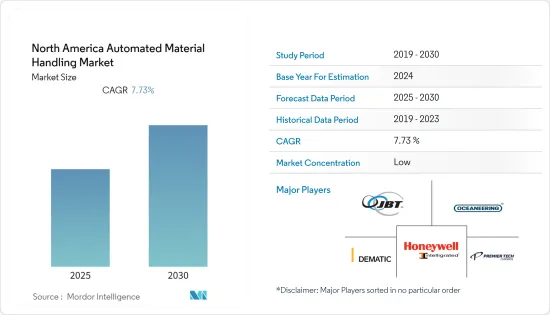
북미의 자동 자재관리 시장은 예측 기간 동안 7.73%의 CAGR을 기록할 것으로 예상됩니다.
주요 하이라이트
더 많은 기업들이 창고 내 효율성을 높이고 비용을 절감하며 시장 경쟁력을 유지하기 위해 자동화에 눈을 돌리고 있으며, 그 과정에서 직원들에게도 더 안전한 작업장을 제공합니다. 자동 자재관리의 주요 동기 중 하나는 노동 조건과 안전 조건의 개선입니다. 미국 노동 통계국에 따르면 2021년에는 미끄러짐, 넘어짐, 낙상이 휴직이 필요한 치명적이지 않은 직업 상해의 27%를 차지했습니다. 장비 및 물체와의 접촉으로 인해 직장을 쉬어야 했던 사람은 23만 5,000명이 넘습니다. 자재 취급 작업을 자동화함으로써 제조업체는 근로자를 위험한 작업이나 반복적인 작업에서 해방시킬 수 있습니다. 이를 통해 근로자가 더 생산적이고 안전하며 만족스러운 일을 할 수 있는 다른 부문에 인력을 재배치할 수 있습니다.
소매, 자동차, 식음료, 제약 및 기타 부문은 미국 내 자동 자재관리 솔루션의 가장 큰 수요처입니다. 식음료는 미국 연간 포장 출하량의 35% 이상을 차지하는 가장 큰 산업입니다.
또한, 창고 공실률이 낮고 임대료가 급등함에 따라 기업들은 점차 창고로 임대할 소규모 장소를 찾고 있습니다. 이러한 좁은 공간의 생산성을 최적화하기 위해 기업들은 보다 자동화된 솔루션을 빠르게 도입할 것으로 예상됩니다.
또한 미국의 E-Commerce 물류비용은 미국 전체 물류비용의 6.9% 이상을 차지하고 있습니다. 공급망에서 마지막 1마일의 중요성은 앞으로도 사라지지 않을 것이지만, 제조업체들은 첫 번째 마일이 없으면 마지막 1마일도 없다는 것을 인식하고 있습니다. 적절한 자재 취급 기술을 적용하면 즉각적인 ROI를 가져오는 동시에 측정 가능한 비용 절감을 실현할 수 있습니다.
COVID-19는 중소기업과 대기업을 포함한 다양한 기업에 영향을 미쳤습니다. 자동 자재관리 시스템 시장에서의 제품 수요는 전 세계적으로 어느 정도 제한되었습니다. 제품 개발의 라이프 사이클은 적은 인력과 운영상의 제약으로 인해 큰 영향을 받았습니다. 이후 봉쇄 조치가 완화되면서 수요가 어느 정도 안정화되었습니다. 기업들은 COVID-19로 인한 문제를 해결하기 위해 다양한 기술과 방법을 개발했습니다. 또한 2020년 7월 하니웰이 발표한 조사에 따르면 미국 기업의 50% 이상이 변화하는 시장 환경을 극복하기 위해 자동화에 투자할 의향이 있는 것으로 나타났습니다. 2020년 하니웰 통합 자동화 투자 설문 조사에 따르면 E-Commerce(66%), 식음료(59%), 물류(55%) 산업에서 자동화 투자에 가장 많은 관심을 보였습니다. 55%) 산업이 자동화 투자 확대의 선구자임을 강조했습니다.
북미의 자동 자재관리 시장 동향
소매/창고/물류가 큰 비중을 차지
미국은 탄탄한 E-Commerce 생태계를 자랑합니다. 미국 인구 조사국에 따르면 2022년 1월부터 3월까지 미국 소매 E-Commerce 매출은 약 2,500억 달러에 달해 전년 동기 대비 2.4% 증가했습니다. 빠르게 진화하는 소매 시장은 물류 센터가 E-Commerce 주문 처리에 대한 혁신적이고 유연하며 자동화 된 접근 방식을 찾고 사용하도록 장려하고 있습니다.
E-Commerce는 소비자들이 그 어느 때보다 빠른 배송을 요구하면서 자동화 물류 창고에 대한 수요를 크게 견인하고 있습니다. 또한, 소비자 니즈의 변화와 배송 방법의 혁신도 미국 소매 시장을 견인할 것으로 예상되며, E-Commerce 시장의 강력한 성장에 따라 미국 소매 최종사용자 부문의 AMH 장비에 대한 수요도 증가할 것으로 예상됩니다.
자동 자재관리 장비는 소매점의 백룸과 물류 센터가 조작하기 쉽고 깔끔하게 정리되어 있으면 전반적인 고객 만족도를 보장하고 구매 및 재고를보다 효율적으로 만드는 데 도움이 될 수 있습니다. 예를 들어, REB와 같은 회사는 미국 내 자재 취급 및 보관 시스템을 공급, 납품 및 설치하여 고객 만족을 충족시키는 데 주력하고 있습니다.
소매업은 컨베이어 및 분류에 대한 요구가 중요한 주요 산업 중 하나입니다. 온라인 소매업체가 상품을 분류하고 배송 효율을 높이는 데 도움이 됩니다. 또한 소매 업체들도 이 자동 자재관리 장비를 도입하여 마지막 1마일 배송을 하고 있습니다.
자동 자재관리 장비를 통해 소매업의 백룸과 물류 센터는 운영이 간편하고 깔끔하게 정리되어 전반적인 고객 만족도를 보장하고 구매 및 재고 효율성을 높일 수 있습니다. 예를 들어, REB와 같은 회사는 미국 내 소매업계를 위해 자재 취급 및 보관 시스템을 공급, 납품 및 설치하여 고객 만족을 충족시키는 데 주력하고 있습니다.
미국이 가장 큰 점유율을 차지
미국은 세계에서 가장 선진적인 경제 국가로, AMH 시장의 거대한 수요처인 미국 제조 부문은 이 지역 경제 생산량의 82%를 차지하는 압도적인 미국 경제에 의존하고 있습니다.
북미는 무역이 활발하고 E-Commerce 부문이 매우 활발하기 때문에 창고 공간에 대한 수요가 증가하고 있습니다. 또한 북미의 공항 산업은 세계 최대 규모의 공항 산업입니다. 매년 약 10억 1,150만 명의 국내외 승객에게 서비스를 제공하고 있습니다. 또한, 세계 최대 규모의 공항이 밀집한 지역인 만큼 비즈니스 모델에 혼란이 생기지 않도록 자동화 도입을 강화할 것으로 예상됩니다.
미국은 세계 최대 규모의 자동차 시장을 보유하고 있으며, 다양한 세계 자동차 제조업체와 자동차 부품 제조업체가 존재합니다. 자동차 수요 증가, 미국이 최대 수출국이자 제조국(2위)이라는 점, 투자 증가와 함께 조사 대상 시장은 미국 자동차 산업의 큰 수요를 목격할 것으로 예상됩니다.
또한, 미국 제약 산업은 제약 환경의 변화와 R&D 생산성 저하로 인해 성장이 둔화되고 있습니다. 이 지역에서는 밸류체인의 각 단계에서 디지털화와 자동화가 진행되어 제약 산업이 실험실에서 환자까지 의약품을 더 빠르게 전달할 수 있도록 돕고 있습니다. 새로운 정책 개혁은 예측 기간 동안 시장 성장에 영향을 미칠 것으로 예상됩니다. 환자 중심 의료 및 바이오시밀러와 같은 동향은 조사 대상 시장의 성장에 긍정적인 영향을 미칠 것으로 예상됩니다.
또한 이 지역의 노동 임금 상승은 자재 취급에서 노동자에 대한 의존도를 줄이는 데 도움이 되는 새로운 기술의 필요성을 발전시키고 있습니다. 캐나다 통계청에 따르면 캐나다 기업의 생산 단위당 인건비는 지난 2분기에 이어 2021년 2분기에도 2.7% 상승했습니다. 이는 지난 1년 동안 가장 높은 분기별 성장률입니다.
북미의 자동 자재관리 산업 개요
자동화 자재 취급 시장은 다양한 하드웨어, 소프트웨어 및 서비스 제공업체가 적당히 통합되어 있습니다. 그러나 Daifuku, Kardex Group, KION Group 및 JBT Corporation과 같은 주요 공급업체는 중소기업에서 대기업에 이르기까지 자동 자재관리 제품/솔루션/서비스 제공 업체로서 높은 지지를 받고 있습니다. 이들 업체들은 시장의 이점으로 인해 자재 취급 기업과의 파트너십을 갱신하고 있습니다.
2022년 7월 - JBT Corporation은 Alco-food-machines GmbH & Co.KG(Alco)를 인수했습니다. Alco는 JBT에게 이상적인 기업이며, 브랜드는 광범위한 식음료 플랫폼에 접근하고 주요 기술 및 식품 분야 전문성을 갖춘 Alco의 광범위한 식음료 플랫폼에 접근할 수 있는 이상적인 기업입니다. 식품 분야의 전문성을 가진 기업에게 매력적인 후계자 기회를 제공합니다. "고 설명했습니다.
2021년 11월 - Westfalia의 자동 보관/검색 시스템(AS/RS)과 Savanna.NET 창고 실행 시스템(WES)으로 식품 제조를 완전히 자동화하는 켄스 푸드(Kens Foods)가 애틀랜타 지역의 새로운 창고를 자동화하기 위해 Westfalia Westfalia의 기술은 입고부터 출고까지 거의 제로 터치로 모든 자재 취급을 위한 맞춤형 솔루션으로 신뢰할 수 있는 온도 제어 창고 환경을 구현하며, 입고부터 출고까지 모든 자재 취급을 위한 맞춤형 솔루션으로 설명합니다.
기타 혜택
엑셀 형식의 시장 예측(ME) 시트
3개월간의 애널리스트 지원
목차
제1장 소개
조사 가정과 시장 정의
조사 범위
제2장 조사 방법
제3장 주요 요약
제4장 시장 인사이트
시장 개요
산업의 매력 - Porter's Five Forces 분석
공급 기업의 교섭력
소비자의 협상력
신규 참여업체의 위협
대체품의 위협
경쟁 기업 간의 경쟁 강도
COVID-19의 자동 자재관리 시장에 대한 영향
제5장 시장 역학
시장 성장 촉진요인
시장 성장을 지지하는 기술 진보 증가
자동화와 자재관리 수요를 촉진하는 인더스트리 4.0 투자
E-Commerce의 급성장
시장 과제
높은 초기 비용
숙련 노동자의 부족
제6장 시장 세분화
제품 유형별
하드웨어
소프트웨어
서비스
기기 유형별
이동 로봇
무인운반차(AGV)
자동 지게차
자동 견인/트랙터/예인
유닛 로드
조립 라인
특수 용도
자율 이동 로봇(AMR)
레이저 유도차
자동 창고(ASRS)(ASRS)
고정 통로(스태커 크레인 + 셔틀 시스템)
캐러셀(수평 캐러셀 + 수직 캐러셀)
수직 리프트 모듈
자동 컨베이어
벨트
롤러
팔레트
오버헤드
팔레타이저
기존(하이 레벨 + 로 레벨)
로봇
분류 시스템
최종 이용 산업별
공항
자동차
식품 및 음료
소매/창고/배송센터/물류센터
일반 제조업
의약품
우편·소포
기타
국가별
미국
캐나다
제7장 경쟁 구도
기업 개요
JBT Corporation
Oceaneering International Inc.
Dematic Corp.
Honeywell Intelligrated
Premier Tech Chronos
DMW&H
Westfalia Technologies Inc.
OPUS Automation Inc.
Creative Automation Inc.
Remtec Automation
Shuttleworth LLC
Siggins
Cornerstone Automation Systems LLC
제8장 투자 분석
제9장 시장 전망
ksm
영문 목차
영문목차
The North America Automated Material Handling Market is expected to register a CAGR of 7.73% during the forecast period.
Key Highlights
As more businesses turn to automation to boost efficiency in the warehouse, lower costs, and stay competitive in the market, they also make the workplace safer for employees in the process. One of the main motivations for automated material handling is improving working and safety conditions. According to the United States Bureau of Labor Statistics, in 2021, slips, stumbles, and falls were the cause of 27% of nonfatal occupational injuries that required days off from work. More than 235,000 people had to take time off work as a result of equipment or object contact. Automating material handling tasks allows manufacturers to remove workers from dangerous or repetitive work. This allows them to redeploy talent to other areas of the workplace where workers can be more productive, safe, and fulfilled.
Sectors, including retail, automotive, food and beverage, and pharmaceutical, are the largest sources of demand for automated material handling solutions in the country. Food and beverage is the largest industry and represents more than 35% of US packaging shipments annually.
Additionally, owing to low vacancy and a surge in the rental prices of warehouses, enterprises are progressively looking for smaller places to rent out for warehouse purposes. In order to optimize the productivity of these narrow spaces, they are expected to deploy more automated solutions soon.
Moreover, the e-commerce logistics costs in the United States account for over 6.9% of the total US logistics costs. The importance of the last mile in the supply chain will never be lost; however, manufacturers realize that there is no last mile without the first. Applying the proper material handling technology produces measurable cost savings while bringing an immediate ROI.
The COVID-19 pandemic had an impact on a variety of businesses, including small and big manufacturers. It limited the demand for products in the automated material handling system market on a global scale to some extent. The product development life cycle was significantly impacted by a small workforce and operational constraints. After the lockdown restrictions were later eased, demand stabilized to some extent. Companies created various technologies and methods to address issues caused by COVID-19. Further, in July 2020, a study released by Honeywell suggested that over 50% of U.S. companies have shown openness to investing in automation to survive changing market conditions. The 2020 Honeywell Integrated Automation Investment Study highlighted that the e-commerce (66%); grocery, food, and beverage (59%); and logistics (55%) industries are the forerunners in investing more in automation.
North America Automated Material Handling Market Trends
Retail/Warehousing/Logistics to Hold Significant Share
The United States boasts a robust E-commerce ecosystem. According to the US Census Bureau, from January to March 2022, US retail e-commerce sales accounted for almost USD 250 billion, marking a 2.4% increase compared to the previous quarter. The rapidly evolving retail market is encouraging distribution centers to find and use innovative, flexible, and automated approaches to e-commerce order fulfillment.
E-commerce is a significant driving factor for the demand from automated distribution warehouses, as consumers seek ever-shorter delivery times. Also, changing consumer needs and innovation in delivery methods are expected to drive the US retailing market. With the e-commerce market expected to witness robust growth, the demand for AMH equipment from the US retail end-user segment is also expected to increase.
With a retail backroom or distribution center that is easy to steer and is well-organized, automated material handling equipment help ensure overall customer satisfaction and makes stocking and inventory more efficient. For instance, companies like REB furnish, deliver, and install material handling and storage systems nationwide in the United States, focusing on meeting customer satisfaction.
Retail is one of the major industries in which the requirement for conveyors and sortation is important. It helps online retailers to sort goods and enhance delivery efficiency. Furthermore, retail companies are also adopting this automated material handling equipment to perform last-mile delivery.
With a retail backroom or distribution center that is easy to steer and is well-organized, automated material handling equipment help ensure overall customer satisfaction and makes stocking and inventory more efficient. For instance, companies like REB furnish, deliver, and install material handling and storage systems for the retail sector nationwide in the United States, focusing on meeting customer satisfaction.
United States to Hold Major Share
The United States is the most advanced economy in the world. The country's manufacturing sector, which is a huge source of demand for the AMH market, hinges on the dominant US economy, accounting for 82% of the region's economic output.
The country has a high trading profile and a highly active e-commerce sector, which increases the demand for warehouse space. Moreover, the North American airport industry is one of the largest airport industries in the world. It provides services to about 1,011.5 million domestic and international passengers every year. It is also home to some of the world's biggest airports and is expected to bolster the adoption of automation to ensure no disruptions in the business model.
The United States is home to one of the largest automotive markets in the world, with the presence of various global vehicle and auto part manufacturers. With the increasing demand for automotive vehicles and the United States being one of the largest exporters and manufacturers (second-largest), coupled with increasing investment, the market studied is expected to witness significant demand from the US automotive industry.
Additionally, the US pharmaceutical industry is experiencing slow growth with the changing pharmaceutical landscape and diminished productivity in R&D. Digitalization and automation in the region, at every point along the value chain, help the pharmaceutical industry get pharmaceuticals from the lab to the patient more swiftly. New policy reforms are expected to influence market growth over the forecast period. Trends, such as patient-centric healthcare and biosimilars, is expected to positively impact the growth of the market studied.
Furthermore, the increasing labor rates in the region are also developing the need for new technologies which help in reducing the dependency on laborers for material handling. According to Statistics Canada, Labour costs per unit of output of Canadian businesses rose 2.7% in the second quarter of 2021, following slight increases in the previous two quarters. This was the highest quarterly growth rate in a year.
North America Automated Material Handling Industry Overview
The automated material handling market is moderately consolidated, with a range of hardware, software, and service providers. However, major vendors such as Daifuku Co. Ltd, Kardex Group, KION Group, JBT Corporation, and many more are highly preferred automated material handling product/solution/service providers across small and large enterprises. The firms are renewing their partnership with material handling companies due to the benefits of the market.
July 2022 - JBT Corporation acquired Alco-food-machines GmbH & Co. KG (Alco), a provider of other food processing solutions and production lines. The deployment of advanced and automated material handling equipment helps the company ensure the safety of products and employees without compromising process quality, time, and profits. Alco represents the ideal fit for JBT, where the brands approach the broad food and beverage platform and offer a compelling succession opportunity for companies with leading technology and food domain expertise.
November 2021 - Westfalia's automated storage/retrieval system (AS/RS) and Savanna.NET Warehouse Execution System (WES) will fully automate food manufacturing. Kens foods chose Westfalia Technologies to automate the new Atlanta-area warehouse. Westfalia's technology will provide a reliable, temperature-controlled warehousing environment with a customized solution addressing all material handling while delivering almost zero touches from receiving to shipping.
Additional Benefits:
The market estimate (ME) sheet in Excel format
3 months of analyst support
TABLE OF CONTENTS
1 INTRODUCTION
1.1 Study Assumptions and Market Definition
1.2 Scope of the Study
2 RESEARCH METHODOLOGY
3 EXECUTIVE SUMMARY
4 MARKET INSIGHTS
4.1 Market Overview
4.2 Industry Attractiveness - Porter's Five Forces Analysis
4.2.1 Bargaining Power of Suppliers
4.2.2 Bargaining Power of Consumers
4.2.3 Threat of New Entrants
4.2.4 Threat of Substitutes
4.2.5 Intensity of Competitive Rivalry
4.3 Impact of COVID-19 on the Automated Material Handling Market