ㅁ Add-on 가능: 고객의 요청에 따라 일정한 범위 내에서 Customization이 가능합니다. 자세한 사항은 문의해 주시기 바랍니다.
ㅁ 보고서에 따라 최신 정보로 업데이트하여 보내드립니다. 배송기일은 문의해 주시기 바랍니다.
한글목차
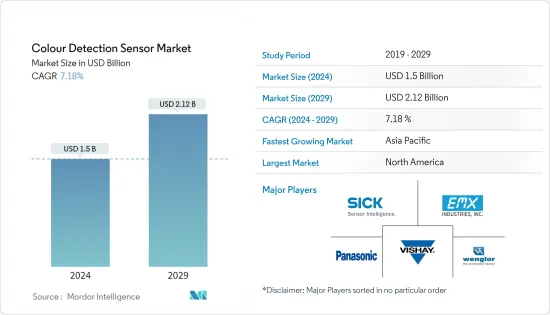
색상 감지 센서 시장 규모는 2024년에 15억 달러로 추정되고, 2029년에는 21억 2,000만 달러에 이를 것으로 예측되며, 예측 기간(2024-2029년)의 CAGR은 7.18%로 성장할 전망입니다.
색상 감지 센서는 물체에 빛을 비추고 직접 반사 또는 출력을 측정합니다. 이러한 센서 중 상당수는 통합 광원을 갖추고있어 원하는 효과를 확실하게 달성합니다. 이러한 센서는 착색된 제품의 등급화, 코딩된 마킹의 식별, 패키지에 접착제 및 데이터 코드의 존재를 확인하는 데 매우 중요합니다. 주요 용도는 진정한 색상 인식과 색상 마크 감지입니다. 진정한 색상 인식을 위해 설계된 센서는 색상이나 색조를 구별해야 하며 종종 선별 또는 일치 모드에서 작동합니다.
주요 하이라이트
확산 기술을 이용한 색상 센서는 광범위한 색상을 감지하기 위해 개발되었습니다. 이 센서는 색상 감지를 수행하기 위해 색상 감지 필터와 센서 어레이의 조합을 채택합니다. 이 데이터는 이미지와 지정된 대상의 색상을 분석합니다. 색상 측정 프로세스는 일반적으로 타겟 표면을 비추는 광원과 반사된 파장을 포착하고 측정하는 수신기를 포함합니다.
스마트폰에 색상 센서를 통합하면 색상 감지 센서의 성장에 큰 영향을 미칩니다. 스마트폰의 색상 센서는 자연광과 인공광을 구별하여 이러한 장치의 광학 렌즈 기능을 향상시킵니다. 색상 센서를 IoT 및 AI 기술과 통합하면 실시간 데이터 분석 및 의사결정이 가능해지고 용도가 더욱 향상됩니다.
색상 감지 센서는 섬유 제품과 같은 산업에서 중요한 역할을 하고, 생산에 있어서의 색의 일관성을 확보하며, 산업 자동화 및 셋업의 정평이 되고 있습니다. 음식, 상업 인쇄, 소비자 인쇄, 가전, 자동차, 의약품, 건강 관리, 화학 등 산업에서 미묘한 색상 차이를 식별하기 위해 이러한 센서의 사용이 증가하고 있습니다.
높은 초기 비용은 색상 감지 시장의 성장을 제한하는 원인이 되었습니다. 색상 감지 센서는 제조 공정에서 품질 관리와 일관성 확보, 색상 검출의 정확성과 신뢰성 향상 등 수많은 이점을 제공하는 반면, 그 비용은 채택의 장벽이 될 수 있습니다.
유행의 영향은 약해졌고, 자동화와 로봇 공학의 매력은 여전히 강하고, 다양한 산업이 이러한 기술에 대한 투자를 활발하게 하고 있습니다. IFR에 따르면, 산업용 로봇의 세계 도입 대수는 향후 수년에 급증합니다. 2026년의 설치 대수는 71만 8,000대에 이르고, 2022년의 55만 3,000대에서 증가합니다. 이러한 성장 궤도는 특히 포장, 자동차, 섬유, 헬스케어 등의 분야에서 색상 센서가 오토메이션 셋업의 중요한 요소로 각광을 받으면서 조사한 시장에 있어 유망한 이미지를 묘사하고 있습니다.
색상 감지 센서 시장 동향
식음료 산업이 최종 사용자로서 급성장
식음료 산업에서 색상과 외관은 제품 성공에 매우 중요합니다. 따라서 원재료에서 최종 제품에 이르기까지 색상 감지 센서 수요가 급증하고 있습니다. 높은 정밀도로 알려진 이 기술은 고체 및 액체에서 분말 및 과립에 이르기까지 다양한 샘플의 색상 속성을 평가할 수 있습니다.
모든 불일치를 신속하게 파악함으로써 기업은 색상의 품질 기준을 충족하고 프로세스를 간소화하고 낭비를 줄이고 이익을 높일 수 있습니다. 이러한 센서를 도입하면 최종 제품이 일관되게 원하는 시각적 기준을 충족할 수 있으며 브랜드 명성과 고객 만족을 유지하는 데 매우 중요합니다.
원료는 맛과 식감뿐만 아니라 식품에 시각적으로 호소하는 색상을 추가하는 데에도 중요합니다. 곡물, 분말, 설탕, 코코아 등 원료의 화학적 특성은 다양하기 때문에 각각에 맞는 시험 접근법이 필요합니다. 식품 가공 부서는 원료의 색상의 중요성을 인식하고 최종 제품의 색상 품질을 보장하기 위해 고도로 표준화된 방법을 선택합니다. 이러한 방법은 색상의 약간의 변화도 정확하게 감지할 수 있는 고급 색상 감지 장치를 사용하여 최종 제품의 시각적 일관성과 소비자에게 호소력을 보장합니다. 이러한 방식으로 색상의 품질에 세심한주의를 기울이는 것은 규제 기준과 소비자의 기대에 부응하는 데 필수적입니다.
식음료 산업에서 이러한 센서는 육류 생산의 안전과 품질 관리를 모니터링하는 데 도움이 됩니다. 엄격한 규제와 식품 및 식품 포장에 대한 요구가 증가함에 따라 색상 감지 센서, 특히 색상 마크 및 등록 애플리케이션이 필수적입니다.
다양한 국가에서 포장 식품의 소비도 시장 성장을 지원하는 주요 요인입니다. 예를 들어, 유기농 무역 협회(Organic Trade Association)에 따르면, 포장된 유기농 식품의 소비는 세계적으로 성장하고 있습니다. 미국에서는 연간 소비가 2018년 174억 6,000만 달러에서 2025년 250억 6,000만 달러에 이를 것으로 예측됩니다.
아시아태평양이 큰 성장을 이룰 전망
기술 주도 분야에서 전문 지식을 가진 미국이 시장을 독점하고 있습니다. 국제 무역국에 따르면 미국은 산업 자동화 장비의 세계 주요 생산국으로, 하드웨어 및 산업 및 제조 현장에서 시스템을 자동화하는 데 사용되는 구성 요소를 포함합니다.
자동차, 석유 및 가스, 전력 등 산업에 대한 지속적인 지출은 산업 자동화에 대한 수요를 증가시키고 색상 감지 센서 시장을 포함한 자동화와 관련된 시장을 뒷받침하고 있습니다.
미국에서는 최근 몇 년간 스마트 색상 카메라와 스마트 색상 센서의 매출이 크게 성장하고 있습니다. 스마트 색상 센서로 이 기술은 큰 발전을 이루었습니다. 더 나은 색 해상도를 제공합니다. 또한 많은 제조업체들이 이러한 센서 버전을 제공하고 있어 캘리브레이션된 RGB 색상 결과를 얻을 수 있습니다.
미국에서 시장의 주요 기업의 확고한 존재감과 이러한 주요 기업에 의한 색상 센서의 지속적인 개척은 시장에서 중요한 역할을 하고 있습니다. 예를 들어, 로크웰은 이 회사가 제공하는 스마트 센서를 혁신함으로써 센 서포트 폴리오를 지속적으로 개선하고 있습니다. 이 회사의 광전 센서는 산업 자동화에서 가장 견고한 것으로 인식되고 있습니다.
색상 감지 센서 산업 개요
색상 감지 센서 시장은 진입 장벽이 낮기 때문에 단편화되고 있습니다. 이 시장의 주요 기업으로는 SICK AG, EMX Industries Inc., Wenglor Sensoric GmbH, Vishay Intertechnology Inc.and Panasonic Corporation이 있습니다.
2023년 11월-SICK Ag는 색상 센서 라인업을 크게 강화하여 고해상도와 고속으로 알려진 CSS와 CSX 모델을 발표했습니다. SICK의 최신 플래그쉽 모델인 CSS는 미묘한 색조의 차이도 식별할 수 있는 압도적인 색 분해능이 특징. 미묘한 표면의 질감을 인식하는 능력에 뛰어나기 때문에 용도의 가능성이 넓어집니다.
2023년 10월-Balluff GmbH는 멕시코 아구아스칼리엔테스에 새로운 생산 시설을 개설하여 센서 및 자동화 전문가로서 탄력적인 공급망을 구축하면서 계획적인 성장을 실현합니다. 이 새로운 거점은 아메리카 지역 고객에게 높은 가용성과 빠른 배송으로 현지 생산 제품을 공급하는 데 도움이 됩니다.
기타 혜택
엑셀 형식 시장 예측(ME) 시트
3개월간의 애널리스트 서포트
목차
제1장 서론
조사의 전제조건 및 시장 정의
조사 범위
제2장 조사 방법
제3장 주요 요약
제4장 시장 인사이트
시장 개요
업계의 매력도-Porter's Five Forces 분석
공급기업의 협상력
구매자의 협상력
신규 참가업체의 위협
대체품의 위협
경쟁 기업간 경쟁 관계의 강도
산업 밸류체인 분석
기술 스냅샷
산업 자동화
가정용 전자 기기
유체 및 가스 분석
조명과 디지털 사이니지
제5장 시장 역학
시장 성장 촉진요인
다양한 산업에서 공정의 자동화
스마트폰에서 색상 센서 사용 증가
시장 성장 억제요인
초기 비용 상승
제6장 시장 세분화
유형별
휘도 센서
분자 발광 센서
RGB 센서
인쇄 마크 센서
최종 사용자 산업별
음식
헬스케어
화학
섬유
자동차
가전
기타 최종 사용자 산업
지역별
북미
유럽
아시아
호주 및 뉴질랜드
라틴아메리카
중동 및 아프리카
제7장 경쟁 구도
기업 프로파일
SICK AG
EMX Industries Inc.
Wenglor Sensoric GmbH
Vishay Intertechnology, Inc.
Panasonic Corporation
Astech Applied Sensor Technology Gmbh
Banner Engineering Corp.
Keyence Corporation
Baumer NV
Rockwell Automation Inc.
Ams-Osram AG
Datalogic SpA
Omron Corporation
SensoPart Industriesensorik GmbH
Jenoptik AG
Hamamatsu Photonics KK
Balluff GmbH
Pepperl Fuchs
제8장 투자 분석
제9장 시장 기회 및 향후 동향
AJY
영문 목차
영문목차
The Colour Detection Sensor Market size is estimated at USD 1.5 billion in 2024, and is expected to reach USD 2.12 billion by 2029, growing at a CAGR of 7.18% during the forecast period (2024-2029).
Color detection sensors emit light onto objects and measure the direct reflection or the output. Many of these sensors come equipped with integral light sources, ensuring they achieve the desired effect. These sensors are pivotal in grading-colored products, distinguishing coded markings, and verifying the presence of adhesive or data codes on packages. Their primary applications include true color recognition and color mark detection. Sensors designed for true color recognition must differentiate between colors or shades, often operating in sorting or matching modes.
Key Highlights
Color sensors, utilizing diffuse technology, have been developed to detect a broad spectrum of colors. These sensors employ a combination of color-sensitive filters and an array of sensors to conduct color sensing. This data then analyzes the colors in an image or a specified object. The color measurement process typically involves a light source that illuminates the target surface and a receiver that captures and measures the reflected wavelengths.
The integration of color sensors in smartphones significantly influences the growth of color detection sensors. Smartphone color sensors distinguish between natural and artificial light, enhancing the functionality of optical lenses in these devices. Integrating color sensors with IoT and AI technologies allows for real-time data analysis and decision-making, further improving their applications.
Color detection sensors play a crucial role in industries like textiles, ensuring color consistency in production, and are a staple in industrial automation setups. Industries spanning food and beverages, commercial and consumer printing, consumer electronics, automotive, pharmaceuticals, healthcare, and chemicals use these sensors increasingly to identify even the subtlest color variations.
The high initial costs are one factor restricting the growth of the color detection market. While color detection sensors offer numerous benefits, including ensuring quality control and consistency during manufacturing processes and enhancing accuracy and reliability in color detection, their cost can be a barrier to adoption.
While the pandemic's impact has waned, the allure of automation and robotics remains strong, prompting diverse industries to ramp up investments in these technologies. According to IFR, the global installation of industrial robots is set to surge in the coming years. 2026 installations will reach 718 thousand units, up from 553 thousand units in 2022. This growth trajectory paints a promising picture for the market studied, particularly as color sensors gain prominence as vital elements in automation setups, notably in sectors like packaging, automotive, textiles, and healthcare.
Color Detection Sensor Market Trends
Food and Beverage Industry to be the Fastest Growing End User
In the food and beverage industry, color and appearance are pivotal for a product's success. Consequently, the demand for color detection sensors has surged, from raw materials to the final product. This technology, known for its high precision, enables users to assess color attributes across various samples, from solids and liquids to powders and granules.
By swiftly pinpointing any inconsistencies, companies meet color quality standards and streamline processes, reducing waste and boosting profits. Implementing these sensors ensures that the final product consistently meets the desired visual standards, crucial for maintaining brand reputation and customer satisfaction.
Ingredients are crucial, not just for taste and texture, but also for adding visually appealing colors to food products. Given the diverse chemical properties of ingredients like grains, powders, sugar, and cocoa, each necessitates a tailored testing approach. Food processing units, recognizing the significance of ingredient color, opt for highly standardized methods to ensure the final product's color quality. These methods involve using advanced color measurement devices that may accurately detect even the slightest variations in color, ensuring that the end product is visually consistent and appealing to consumers. This meticulous attention to color quality is essential for meeting regulatory standards and consumer expectations.
In the food and beverage industry, these sensors are instrumental in monitoring safety and quality control in meat production. With stringent regulations and heightened food and beverage packaging demands, color detection sensors, especially in color mark and registration applications, have become indispensable.
Packaged food consumption across different countries is also a major factor supporting the market's growth. For instance, according to the Organic Trade Association, the consumption of packaged organic foods has been growing globally. In the United States, the annual consumption value is anticipated to reach USD 25.06 billion in 2025 from USD 17.46 billion in 2018.
Asia-Pacific Expected to Witness Major Growth
Owning its expertise in the technology-driven sectors, the United States dominates the market. According to the International Trade Administration, the United States is the primary producer of equipment for industrial automation globally, including hardware and the components used for the industrial and manufacturing settings to automate systems.
The ongoing expenditure for industries like automotive, oil and gas, and power is increasing the demand for industrial automation and boosting the market associated with automation, including the market of color detection sensors.
The significant rise in sales of smart color cameras and smart color sensors has progressed significantly in the United States over the past several years. With the smart color sensor, this technology has made massive gains. It provides a more excellent color resolution. Many manufacturers also offer versions of these sensors that may give calibrated RGB color results.
The solid presence of the market's leading players in the United States and the continuous development of color sensors by these top players play a significant role in the market. For instance, Rockwell continuously improves its sensors portfolio by innovating smart sensors offered by the company. Its photoelectric sensors are recognized as the most robust in industrial automation.
Color Detection Sensor Industry Overview
The color detection sensor market is fragmented due to low entry barriers. Some key players in the market are SICK AG, EMX Industries Inc., Wenglor Sensoric GmbH, Vishay Intertechnology Inc., and Panasonic Corporation.
In November 2023, SICK Ag unveiled a significant enhancement to its color sensor lineup, debuting the CSS and CSX models known for their high resolution and speed. The CSS, SICK's latest flagship, stands out for its unparalleled color resolution, excelling in discerning even the most subtle shade variations. Its prowess in recognizing nuanced surface textures broadens its potential applications.
In October 2023, Balluff GmbH opened its new production facility in Aguascalientes, Mexico, enabling the sensor and automation specialist to achieve its planned growth while creating resilient supply chains. The new site would help the company supply its customers in the Americas region with locally produced products with high availability and short delivery times.
Additional Benefits:
The market estimate (ME) sheet in Excel format
3 months of analyst support
TABLE OF CONTENTS
1 INTRODUCTION
1.1 Study Assumptions and Market Definition
1.2 Scope of the Study
2 RESEARCH METHODOLOGY
3 EXECUTIVE SUMMARY
4 MARKET INSIGHTS
4.1 Market Overview
4.2 Industry Attractiveness - Porter's Five Forces Analysis
4.2.1 Bargaining Power of Suppliers
4.2.2 Bargaining Power of Buyers
4.2.3 Threat of New Entrants
4.2.4 Threat of Substitute Products and Services
4.2.5 Intensity of Competitive Rivalry
4.3 Industry Value Chain Analysis
4.4 Technology Snapshot
4.4.1 Industrial Automation
4.4.2 Consumer Electronics
4.4.3 Fluid and Gas Analysis
4.4.4 Lighting and Digital Signage
5 MARKET DYNAMICS
5.1 Market Drivers
5.1.1 Process Automation across Various Industries
5.1.2 Increased Use of Color Sensors in Smartphones