


화물 운송 시장 규모는 2024년 6,277억 달러로 추정 및 예측되며, 2029년에는 7,973억 달러에 달할 것으로 예상되며, 예측 기간(2024-2029년) 동안 4.90%의 CAGR로 성장할 것으로 예상됩니다.
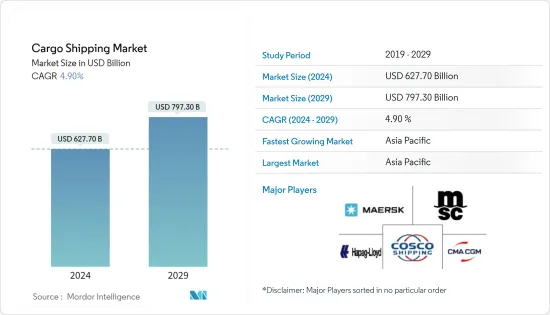
해상 화물 활동의 증가로 인해 컨테이너선, 벌크 화물 운송 및 기타 화물 운송에 대한 수요가 증가함에 따라 화물 운송 시장을 주도하고 있습니다.
선박을 통한 화물 운송 수요 증가, 무역 관련 협정 체결 급증 등의 요인이 화물 운송 시장의 성장을 보완하고 있습니다. 운송 비용과 재고 비용의 변동은 화물 운송 시장의 성장을 저해합니다. 그러나 해상 운송의 자동화, 해상 안전 기준 강화 등의 요인은 예측 기간 동안 화물 운송 시장의 성장에 기회를 제공할 것으로 예상됩니다.
해상을 통한 국경 간 거래 증가, E-Commerce 산업 성장에 따른 해상 물동량 증가, 국가 간 다양한 자유무역협정의 시행은 해상 무역 활동의 확대에 기여하고 있으며, 이는 화물 운송 시장의 성장에 긍정적인 영향을 미치고 있습니다.
세계 상선대의 선복량은 최근 수십 년 동안 꾸준히 증가하고 있는데, 이는 해상 무역의 수요 증가로 인해 한 번의 항해에서 더 많은 양을 운송하기 위해 더 큰 선박이 필요하기 때문입니다.
해상 무역 활동이 증가함에 따라 이러한 선박이 다양한 상품을 운송하기 때문에 이러한 화물 운송에 대한 더 큰 수요가 존재하여 시장의 급격한 성장에 긍정적인 영향을 미쳤습니다.
전 세계 주요 해상 화물 운송업체들은 최근 몇 년 동안 국경 간 E-Commerce 활동의 성장으로 인해 운송 물동량이 급증하는 것을 목격했습니다. 해상 운송은 여전히 장거리 운송의 주류로 화물 운송 업체의 수요가 크게 증가하고 있습니다.
이러한 E-Commerce의 급속한 발전은 해상 운송 활동의 활성화와 함께 향후 몇 년 동안 화물 운송 시장의 급격한 성장에 기여할 수 있습니다.
해상 무역의 증가와 경제 성장에 따라 화물 운송에 대한 수요는 유럽 시장에서 눈에 띄게 성장할 것으로 예상됩니다.
해운 부문은 독일 경제에서 가장 중요한 부문 중 하나입니다. 연간 매출액은 500억 유로(532억 2,000만 달러)에 달하며, 해운업에 직간접적으로 의존하는 고용자 수는 2022년 40만 명에 달할 것으로 예상됩니다.
독일에는 360개 이상의 해운회사가 약 2,700척의 선박을 운항하고 있습니다. 선주 국적별로 보면 독일은 그리스, 일본, 중국(4위)에 이어 가장 큰 상선대를 보유한 해운국입니다.
약 9개의 조선소가 독일 해군 조선 산업을 뒷받침하고 있으며, 약 2,800개의 기업이 조선 및 해양 산업에서 활약하고 있습니다. 이들 기업은 독일 조선소로부터의 납품으로 약 85%의 국내 부가가치를 창출하고 있습니다.
마찬가지로 영국 수출입의 거의 95%가 400개 이상의 영국 항구를 통해 해상으로 이루어지고 있습니다.
스페인은 유럽의 해운과 물류에 있어 필수적인 국가입니다. 스페인의 해운 산업은 도로, 철도, 항공 등 모든 부문에 걸쳐 잘 구축된 인프라 네트워크에 힘입어 유럽 내외의 효율적이고 유능한 공급 경로를 자랑합니다. 스페인에는 100개 이상의 해운회사가 있으며, 거대한 선단을 형성하고 있습니다. 스페인은 삼면이 바다로 둘러싸여 있어 항구 및 기타 해운 허브를 설치하기에 이상적인 국가입니다. 잘 연결된 시설은 이 지역의 여러 국제 공항과 연결되어 있습니다.
상기의 요인으로 인해 시장의 유럽 부문은 예측 기간 동안 성장할 것으로 예상됩니다.
화물 운송 시장은 세분화되어 있으며 많은 국제 기업들이 진출하고 있습니다. 이 부문의 주요 기업은 Maersk, MSC, CMA, COSCO, Hapag Lloyd 등입니다. 높은 진입장벽은 차량 비용의 상승과 규모의 경제의 증가로 인해 시장을 억제하고 있으며, 이는 업계의 경쟁에 영향을 미치고 있습니다. 그러나 주요 기업들은 향후 몇 년 동안 시장 점유율을 확보하기 위해 전략적 파트너십과 인수합병에 참여하고 있습니다.
The Cargo Shipping Market size is estimated at USD 627.70 billion in 2024, and is expected to reach USD 797.30 billion by 2029, growing at a CAGR of 4.90% during the forecast period (2024-2029).
The rising demand for cargo vessels such as container ships, bulk carriers, and others due to the growth in sea freight activity is driving the cargo shipping market.
Factors such as the increasing demand for cargo transportation through ships and the surge in trade-related agreements supplement the growth of the cargo shipping market. Fluctuations in transportation and inventory costs hamper the growth of the cargo shipping market. However, factors such as the anticipated trend of automation in marine transportation and an increase in marine safety norms are expected to provide opportunities for the growth of the cargo shipping market during the forecast period.
The increasing cross-border trading activity via sea, rising sea freight volumes due to the growth of the e-commerce industry, and the implementation of various free-trade agreements across nations are contributing to expanding sea trade activity, which, in turn, is positively contributing to the growth of the cargo shipping market.
The capacity of the global merchant fleet has increased steadily in recent decades, attributed to the rising demand for more seaborne trade, which calls for larger vessels to transport more volume in one trip.
With the rising seaborne trade activity, there exists a greater demand for these cargo carriers as these ships transport various goods, thereby positively impacting the surging growth of the market.
Leading ocean freight forwarders across the world are witnessing a rapid surge in the volume of freight they are transporting in recent years, owing to the growth in cross-border e-commerce activity. Since sea freight remains the dominant transportation medium to ship goods across long distances, the demand for cargo carriers shoots up extensively.
Thus, the rapid advancement in e-commerce, coupled with rising sea freight activity, may contribute to the surging growth of the cargo shipping market in the coming years.
With the increasing seaborne trade and economic growth, the demand for cargo shipping is anticipated to witness evident growth in the European market.
The marine sector is one of the most important sectors of the German economy. The annual turnover is up to EUR 50 billion (USD 53.22 billion), and the number of jobs directly or indirectly dependent on the maritime industry was up to 400,000 in 2022.
In Germany, more than 360 shipping companies operate around 2,700 seagoing vessels. According to owner nationality, Germany is the largest shipping nation after Greece, Japan, and China (ranked 4th) with its merchant fleet.
About nine shipyards support the German naval shipbuilding industry, and about 2,800 companies are active in the shipbuilding and ocean industries. The companies generate a domestic value added of approximately 85% on deliveries from German shipyards.
Likewise, almost 95% of all UK imports and exports move by sea through over 400 British ports.
Spain is vital to the shipping and logistics in Europe. Spain's shipping industry is supported by its network of maintained infrastructure across all sectors (road, rail, and air), allowing it to boast efficient and capable supply routes through Europe and beyond. Over a hundred different shipping companies in Spain make up its massive fleet. Spain is covered by water on three sides, making it ideal for establishing ports and other shipping hubs. Well-connected facilities are linked to several international airports in the region.
Owing to the abovementioned factors, the European segment of the market is expected to grow during the forecast period.
The cargo shipping market is fragmented in nature, with the presence of many international companies in the market. The top players in the segment include Maersk, MSC, CMA, COSCO, and Hapag Lloyd. High barriers to entry restrain the market due to the high cost of vehicles and increasing economies of scale, which affect competition in the industry. However, key players are involved in strategic partnerships and acquisitions to capture market share in the coming years.