


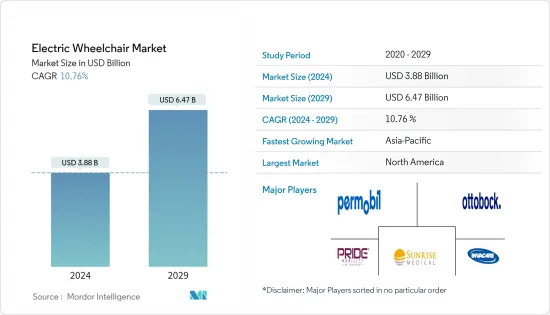
전동 휠체어 시장 규모는 2024년 38억 8,000만 달러로 추정되고, 2029년까지 64억 7,000만 달러에 이를 것으로 예측되며, 예측 기간 동안 복합 연간 성장률(CAGR) 10.76%로 성장할 전망입니다.

COVID-19의 유행은 전동 휠체어 시장에 긍정적인 영향을 미쳤습니다. 많은 병원과 보건 기관에는 바이러스 감염자가 쇄도했습니다. 따라서 2020년에는 전동 휠체어 수요가 증가했습니다. 2020년에는 전동 휠체어가 세계 약 200만 대의 판매에 도달했습니다. 이 성장은 주로 노인 인구 증가로 예측 기간 동안 지속될 것으로 예상됩니다.
장기적으로는 노인 인구 증가와 만성 질환의 만연으로 인한 장애 증가가 환자와 건강 관리 종사자의 복지를 향상시키기 위해 병원 및 건강 관리 시설에 전동 휠체어를 사용하도록 장려하는 주요 요인 이며 계속 될 것으로 예상됩니다. 조사한 시장을 위해. 또한, 전기 휠체어는 환자를 한 장소에서 다른 장소로 안전하고 편안하게 이송하기 위해 가정 의료 현장에서 사용됩니다. 그러므로 고령자 인구가 전례가 없을 정도로 증가하고 있기 때문에 병원이나 고령자 시설 등에서 전동 휠체어 수요가 높아질 것으로 예상됩니다.
주요 주요 기업은 증가하는 노인 인구에 의해 확대되는 시장 점유율을 얻기 위해 몇 가지 신제품 출시에 주력하고 있습니다.
그러므로 앞서 언급한 모든 요인들이 겹쳐지면서 세계 전동 휠체어 시장의 성장을 가속할 것으로 예상됩니다.
세계 노인 인구가 증가하고 있는 것이 전동 휠체어 시장을 견인하고 있습니다. 세계보건기구가 발표한 데이터에 따르면, 세계 인구에서 차지하는 65세 이상의 사람의 수는 2000년의 7%에서 2050년의 16%로 배증할 가능성이 있습니다. 그때까지 고령자의 수는 이 인구는 어린이(0-14세)의 인구보다 많습니다. 따라서 노인 인구 증가로 세계 시장에서 전동 휠체어를 채용할 기회가 생길 것으로 예상됩니다.
유엔은 2030년까지 노인 인구 비율이 1.04 대 1이 되어 어린이 수를 초과할 것으로 추정합니다. 인도와 같은 나라의 경제 발전으로 노인을 돌보지 못하는 젊은이들에게 많은 취업 기회가 탄생했습니다. 열심히 일하는 젊은이도, 상체의 근력이 약한 노인도 수동 휠체어는 피곤합니다.
세계 보건기구에 따르면 세계 매년 5,000만 명이 자동차 사고로 부상을 입고 있습니다. 전동 휠체어는 환자가 한 곳에서 다른 곳으로 안전하고 편안하게 이동할 수 있도록 도와줍니다. 그러므로 사고 증가로 인해 예측 기간 동안 전동 휠체어 수요가 증가할 것으로 예상됩니다.
Worldbank.org에 따르면 세계 2억 명이 넘는 사람들이 심한 장애로 고통받고 있다고 합니다. 휠체어는 장거리를 걸을 여유가 없는 장애인과 폐 및 심장혈관 질환을 가진 사람이 사용합니다. 노인 인구 증가와 만성 질환 증가는 예측 기간 동안 전동 휠체어 수요에 기여할 것으로 예상됩니다.
또한 유럽, 북미, 일본, 중국 등 급속한 인구 고령화 추세로 전동 휠체어 시장의 성장이 더욱 가속화되고 있습니다.
성장하는 전동 휠체어 시장에 대응하기 위해 주요 기업은 제조 능력을 확대하고 있습니다.
따라서 앞서 언급한 요인이 겹쳐지면 전동 휠체어가 세계에서 성장하게 됩니다.
중국과 인도는 아시아태평양에서 가장 인구가 많은 두 국가입니다. 60년 동안 2억 4,100만 명 이상의 중국인이 사는 중국은 경제가 고령화되고 있다고 생각됩니다. 또한 중국은 알루미늄 생산 거점과 국내에서 사업을 전개하고 있는 대기업 덕분에 세계 전동 휠체어의 약 75%를 생산하고 있습니다.
인도는 세계에서 두 번째로 인구가 많은 나라이며, 인구는 약 14억 명입니다. 총 인구의 약 2%가 장애를 갖고 있으며, 약 30%가 운동 장애를 갖고 있으며 지원이 필요합니다. 인도는 교통사고가 각국에서 제1위에 랭크되고 있습니다. 국가범죄기록국의 데이터에 따르면 2021년 인도에서는 42만2659건의 사고가 발생하여 15만5000명이 사망, 37만1000명이 부상을 입었습니다. 따라서 교통사고 증가로 인한 부상자 수 증가도 인도 전동 휠체어 시장의 성장에 기여할 것으로 보입니다.
예측 기간 동안 북미는 아시아태평양에 이어질 것으로 예상됩니다. 2021년 미국의 장애 통계에 의하면, 미국의 성인 6,100만명이 어떠한 장애를 안고 살고 있습니다. 이러한 장애는 노인들 사이에서 더 일반적이며, 75세 이상의 사람들의 거의 절반이 장애를 갖고 살고 있으며, 북미 전체에서 전동 휠체어 수요가 증가할 것으로 예상됩니다.
전동 휠체어 시장은 세분화되어 있으며 세계 기업와 현지 기업이 시장을 독점하고 있습니다. 주요 기업로는 OttoBock Healthcare GmbH, Invacare Corporation, Pride Mobility Products Corp., Sunrise Medical, Permobile AB 등이 있습니다.
환자에게 더욱 편안함을 제공하기 위해 주요 주요 기업은 휠체어 설계 및 인체 공학에 종사하고 있습니다.
The Electric Wheelchair Market size is estimated at USD 3.88 billion in 2024, and is expected to reach USD 6.47 billion by 2029, growing at a CAGR of 10.76% during the forecast period (2024-2029).
The COVID-19 pandemic positively impacted the electric wheelchair market. Many hospitals and health institutes were flooded with people infected with the virus. Thus, the demand for electric wheelchairs increased in 2020. In 2020 electric chairs reached sales of almost 2 million units worldwide. This growth is anticipated to continue during the forecast period, primarily due to the increasing elderly population.
Over the long term, the increase in disabilities due to a rise in the elderly population and the prevalence of chronic diseases, encouraging hospitals and healthcare facilities to use electric wheelchairs to improve the welfare of patients and healthcare workers is anticipated to remain a major driving factor for the market studied. In addition, electric wheelchairs are used in-home care settings to transfer patients safely and comfortably from one place to another. Thus, the demand for electric wheelchairs is expected to increase in hospitals and elderly care homes, owing to the unprecedented increase in the geriatric population. For instance
Major key players are focusing on launching several new products to capture the growing market share provoked by the ever-increasing geriatric population. For instance,
Thus the confluence of all the aforementioned factors is anticipated to drive growth in the global electric wheelchair market.
The growing elderly population across the world is driving the electric wheelchair market. As per the data released by the World Health Organization, the number of people aged 65 years and over may double as a proportion of the global population from 7% in 2000 to 16% in 2050. By then, the number of older adults may be greater than that of children (aged 0-14 years) in the population. Thus, an increase in the elderly population is anticipated to create an opportunity to adopt electric wheelchairs in the global market.
The United Nations estimates that by 2030, with a ratio of 1.04 to 1, the elderly population will outnumber children. Economic development in countries like India created many work opportunities for the younger population, who cannot care for the elderly. Both younger people who work hard and older people who lack upper body strength find manual wheelchairs exhausting.
According to the World Health Organization, 50 million people are injured annually due to vehicle accidents worldwide. Electric wheelchairs aid in patients' safe and comfortable movement from one area to another. Thus, the increase in accidents is expected to raise the demand for electric wheelchairs over the forecast period.
According to Worldbank.org, nearly 200 million people are suffering from significant disabilities globally. Wheelchairs are used by disabled people and people with lung and cardiovascular ailments who cannot afford to walk for long distances. The rising elderly population and the increasing number of chronic diseases are expected to contribute to the demand for electric wheelchairs during the forecast period.
Also, the trend of rapidly aging demographies like Europe, North America, Japan, and China is further accelerating the growth in the electric wheelchair market.
Key players are expanding their manufacturing capacity to address the growing market for electric wheelchairs. For instance
Thus the confluence of the aforementioned factors will drive the growth of the electric wheelchair worldwide.
China and India are the two most populated countries in the Asia-Pacific. With over 241 million Chinese individuals over 60 years, China is considered an aging economy. Moreover, China produces roughly 75% of the world's electric wheelchairs, owing to the aluminum production hubs and major players operating in the country.
India is the second most populated country in the world, with a tally of about 1.40 billion. About 2% of the total population suffers from a disability, and about 30% have a mobility impairment and need assistance. India ranks first out of all countries in road accidents. According to the National Crime Records Bureau data, 422659 accidents occurred in India in 2021, leading to 155000 deaths and 371000 injured people. Thus the rising number of injured people due to the increasing road accidents is also likely to contribute to the growth of the electric wheelchair market in India.
North America is expected to follow Asia-Pacific during the forecast period. As per the United States disability statistics for 2021, 61 million adults in the US lived with some disability. These disabilities are more common among older individuals, with almost half of those aged 75 years and older living with a disability, which is expected to increase the demand for electric wheelchairs across North America.
The electric wheelchair market is fragmented, with global and local players dominating the market. Some major players are OttoBock Healthcare GmbH, Invacare Corporation, Pride Mobility Products Corp., Sunrise Medical, and Permobil AB.
To provide additional comfort to the patients, major key players are working on the design and ergonomics of the wheelchair. For instance