Precision Swine Farming Market by System (Swine Monitoring Systems and Precision Feeding Systems), Offering (Hardware, Software, and Services), Farm Size (Small Farms, Mid-sized Farms, and Large Farms), and Region - Global Forecast to 2030
상품코드:1891774
리서치사:MarketsandMarkets
발행일:2025년 09월
페이지 정보:영문 291 Pages
라이선스 & 가격 (부가세 별도)
ㅁ Add-on 가능: 고객의 요청에 따라 일정한 범위 내에서 Customization이 가능합니다. 자세한 사항은 문의해 주시기 바랍니다.
한글목차
세계의 정밀 양돈 시장 규모는 2024년 7억 5,000만 달러에서 예측 기간 동안 CAGR 9.3%로 성장하여 2030년에는 11억 7,000만 달러에 달할 것으로 예측됩니다.
조사 범위
조사 대상 기간
2025-2030년
기준 연도
2024년
예측 기간
2025-2030년
단위
금액(달러)
부문
시스템, 제공, 농장 규모, 지역
대상 지역
북미, 유럽, 아시아태평양, 남미, 기타 지역
정밀 양돈 시장은 지속가능한 돼지고기 생산에 대한 수요 증가, 사료 효율 개선, 세계 단백질 소비 증가에 대응하기 위한 동물 건강 관리 강화에 의해 주도되고 있습니다. 생산자들은 자원 이용 최적화, 폐기물 감소, 높은 동물 복지 기준 유지를 위해 자동 급이 시스템, 기후 제어, 센서 기반 건강 모니터링과 같은 첨단 기술을 도입하고 있습니다. 이러한 변화는 주요 시장의 엄격한 환경 규제의 영향을 받아 생산자들이 배출량을 최소화하고 규제 준수를 보장하는 솔루션을 도입하도록 유도하고 있습니다.
시장을 주도하는 주요 트렌드는 IoT, AI, 클라우드 기반 플랫폼의 통합으로 동물의 행동, 사료 섭취량, 환경 조건 등을 실시간으로 모니터링할 수 있게 됩니다.
정밀 양돈 시장의 주요 제약요인 중 하나는 첨단 기술 도입에 따른 높은 초기 비용이며, 이는 수익성에 대한 불확실성을 수반하는 경우가 많습니다. 자동 급이 시스템, 건강 모니터링 기기, 농장 관리 소프트웨어의 도입은 설비, 설치, 통합에 많은 투자가 필요합니다.
"지역별 점유율은 유럽이 가장 큰 규모를 보이고, 예측 기간 동안 아시아태평양이 가장 빠르게 성장할 것으로 예상됩니다."
유럽이 가장 큰 점유율을 차지하고 있으며, 그 주요 요인은 선진 양돈 기술의 조기 도입, 강력한 규제 프레임워크, 지속가능성에 대한 집중적인 노력에 기인합니다. 이 지역에서는 생산성 향상과 높은 수준의 동물 복지를 유지하기 위해 자동화, 기후 제어, 데이터 기반 건강 모니터링 시스템 도입이 활발히 이루어지고 있습니다. 정부의 지원과 엄격한 환경 규제는 사료 효율을 최적화하고 폐기물을 줄이며 돼지고기 생산의 환경적 부담을 줄이는 정밀 솔루션에 대한 투자를 더욱 촉진하고 있습니다. 잘 구축된 인프라와 숙련된 인력 확보는 중규모 및 대규모 농장에서의 광범위한 도입을 지원하며 유럽 시장에서의 선도적 지위를 강화하고 있습니다.
한편, 아시아태평양은 양돈 산업의 급속한 산업화와 주식의 단백질 공급원으로서 돼지고기 수요 증가를 배경으로 예측 기간 동안 가장 빠른 성장이 예상됩니다. 중국, 베트남, 태국에서는 증가하는 소비 및 수출 수요에 대응하기 위해 전통적인 소규모 농가에서 기술적으로 진보된 시스템으로 전환이 진행되고 있습니다. 이 지역에서는 질병 발생, 자원 제약, 식품 안전 문제 등의 문제가 지속되고 있어 정밀농업 솔루션으로의 전환이 가속화되고 있습니다. 국제적인 기술 제공업체들의 투자 확대와 정부 주도의 양돈업 현대화 정책으로 인해 아시아태평양이 세계 시장의 주요 성장 동력으로 자리매김하고 있습니다.
세계의 정밀 양돈 시장을 조사했으며, 시장 개요, 시장 성장에 영향을 미치는 각종 영향요인 분석, 기술·특허 동향, 법·규제 환경, 사례 분석, 시장 규모 추정 및 예측, 각종 부문별, 지역별, 주요 국가별 상세 분석, 경쟁 구도, 주요 기업 개요 등의 정보를 정리하여 전해드립니다.
목차
제1장 소개
제2장 조사 방법
제3장 주요 요약
제4장 주요 인사이트
제5장 시장 개요
거시경제 지표
인구 증가에 의한 식량 수요 증가
세계의 사료 생산량 증가
시장 역학
성장 촉진요인
성장 억제요인
기회
과제
AI/생성형 AI가 정밀 양돈 시장에 미치는 영향
농업용 정밀 양돈의 생성형 AI 활용
AI/생성형 AI의 영향에 관한 사례 연구 분석
제6장 업계 동향
2025년 미국 관세의 영향 - 정밀 양돈 시장
밸류체인 분석
무역 분석
기술 분석
가격 분석
생태계 분석
고객의 사업에 영향을 미치는 동향/디스럽션
특허 분석
2025-2026년의 주요 회의와 이벤트
규제 상황
Porter's Five Forces 분석
주요 이해관계자와 구입 기준
투자와 자금 조달 시나리오
사례 연구 분석
제7장 정밀 양돈 시장 : 시스템 유형별
정밀 급이 시스템
돼지 모니터링 시스템
제8장 정밀 양돈 시장 : 용도별
급이 관리
돼지 식별과 추적
돼지 건강 모니터링/질병 조기 발견
백신 접종과 약제 투여
농장/축사 기후 제어와 모니터링
기타
육종·유전자 관리
동물 선별과 계량 관리
제9장 정밀 양돈 시장 : 제공별
하드웨어
자동 급이 시스템
식별 태그/EID(귀 태그, 스마트 칼라)
센서(습도, 온도)
카메라
무바늘 주사 시스템
사운드 기반 PLF 디바이스(마이크/사운드토크)
기타
소프트웨어
클라우드
온프레미스
AI와 데이터 분석
서비스
시스템 통합과 컨설팅
매니지드 서비스
유지관리와 지원
제10장 정밀 양돈 시장 : 성장 단계별
번식
분만·임신
육성기
사육기
비육기
제11장 정밀 양돈 시장 : 최종사용자별
상업 농장
계약 농장
소규모 농장
제12장 정밀 양돈 시장 : 농장 규모별
소규모 농장
중규모 농장
대규모 농장
산업용/초대규모 농장
제13장 정밀 양돈 시장 : 지역별
북미
미국
캐나다
멕시코
유럽
독일
프랑스
스페인
네덜란드
덴마크
영국
이탈리아
기타
아시아태평양
중국
일본
한국
호주와 뉴질랜드
기타
남미
브라질
아르헨티나
기타
세계 기타 지역
아프리카
중동
제14장 경쟁 구도
개요
주요 기업의 전략/유력 기업
연간 매출 분석
시장 점유율 분석
기업 평가 매트릭스 : 주요 기업
기업 평가 매트릭스 : 스타트업/중소기업
기업 평가와 재무 지표
브랜드/제품 비교
경쟁 시나리오와 동향
제15장 기업 개요
주요 기업
CTB, INC.
GUANGZHOU YINGZI TECHNOLOGY CO., LTD.
MERCK & CO. INC.
BOEHRINGER INGELHEIM INTERNATIONAL GMBH
SKIOLD GROUP
GRAIN & PROTEIN TECHNOLOGIES
BIG DUTCHMAN
MUNTERS
VDL AGROTECH BV
ACUSHOT NEEDLE FREE
PULSE NEEDLEFREE SYSTEMS
HENKE SASS WOLF GMBH
EN-CO SOFTWARE ZRT
LUDA.FARM AB
MICROFAN
기타 기업
JYGA TECHNOLOGIES
WEDA DAMMANN & WESTERKAMP GMBH
BIG HERDSMAN MACHINERY CO., LTD
MAXIMUS
OSBORNE INDUSTRIES INC.
SERKET
ERRA TECNIRAM
HOLSCHER+LEUSCHNER GMBH & CO. KG
ASSERVA
TROUW NUTRITION
제16장 인접 시장과 관련 시장
제17장 부록
KSM
영문 목차
영문목차
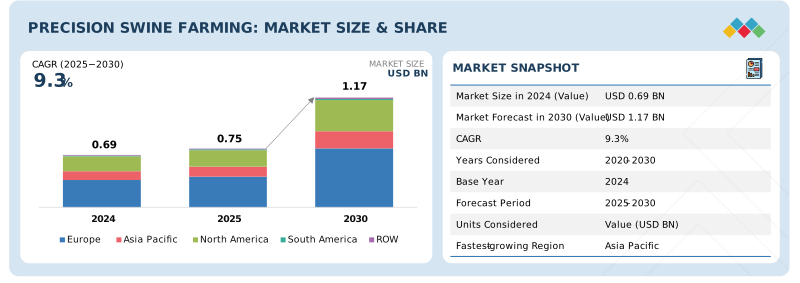
The global market for precision swine farming is estimated to be valued at USD 0.75 billion in 2024 and is projected to reach USD 1.17 billion by 2030, at a CAGR of 9.3% during the forecast period.
Scope of the Report
Years Considered for the Study
2025-2030
Base Year
2024
Forecast Period
2025-2030
Units Considered
Value (USD)
Segments
System, Offering, Farm Size, and Region
Regions covered
North America, Europe, Asia Pacific, South America, and RoW
The precision swine farming market is being fueled by the growing demand for sustainable pork production, improved feed efficiency, and enhanced animal health management to address the rising global consumption of protein. Farmers are adopting advanced technologies, such as automated feeding systems, climate control, and sensor-based health monitoring, to optimize resource utilization, reduce waste, and maintain high standards of animal welfare. This shift is also influenced by stringent environmental regulations in key markets, pushing producers to adopt solutions that minimize emissions and ensure compliance.
A key trend driving the market is the integration of IoT, artificial intelligence (AI), and cloud-based platforms, which allow real-time monitoring of animal behavior, feed intake, and environmental conditions.
One major restraint in the precision swine farming market is the high upfront cost of adopting advanced technologies, which is often paired with uncertainty about returns. Implementing automated feeding systems, health monitoring devices, and farm management software requires a significant investment in equipment, installation, and integration.
"Offering segment is projected to grow at a significant rate during the forecast period"
The offering segment of the precision swine farming market is anticipated to register substantial growth over the forecast period, supported by the rising adoption of advanced hardware, software, and service solutions that enhance farm productivity and operational efficiency. Hardware components, including automated feeders, ventilation and climate control systems, and sensor-based monitoring devices, form the foundation of precision farming by enabling accurate data collection and real-time management of animal health, feeding, and housing.
Concurrently, software platforms integrated with IoT and cloud technologies are gaining momentum, delivering predictive analytics, performance insights, and decision-support tools to optimize production outcomes. Service offerings, such as installation, training, and ongoing maintenance, further strengthen adoption by ensuring seamless system integration and sustained performance. The growing emphasis on sustainability, compliance with stringent environmental regulations, and rising labor costs are also accelerating investment in these solutions. As a result, the offering segment is expected to play a pivotal role in driving overall market growth and delivering long-term value to swine producers worldwide.
"Large farms are expected to hold the largest share in the farm size segment during the forecast period"
The large farm segment is expected to hold the largest share of the farm size category in the precision swine farming market during the forecast period due to its higher capacity to invest in advanced technologies and infrastructure. Large-scale operations benefit significantly from automated feeding systems, climate control, health monitoring, and integrated data analytics, which allow them to achieve economies of scale, reduce labor dependency, and maximize productivity. These farms are better positioned to comply with stringent environmental and animal welfare regulations by adopting precision solutions that optimize feed utilization, minimize waste, and lower emissions.
Furthermore, the rising global demand for pork is driving large producers to focus on efficiency and sustainability, thus accelerating technology adoption. Strategic collaborations with technology providers and access to financing provide large farms a competitive edge in implementing cutting-edge solutions. Together, these factors guarantee that the large farm segment stays the main source of market revenues throughout the forecast period.
"Europe holds the largest share, while Asia Pacific is expected to be the fastest-growing market during the forecast period"
Europe accounts for the largest share of the precision swine farming market, primarily due to its early adoption of advanced swine farming technologies, strong regulatory framework, and emphasis on sustainability. The region has been at the forefront of implementing automation, climate control, and data-driven health monitoring systems to improve productivity while maintaining high standards of animal welfare. Government support and strict environmental regulations have further encouraged swine producers to invest in precision solutions that optimize feed efficiency, reduce waste, and minimize the ecological footprint of pork production. Established infrastructure and access to skilled labor support the widespread adoption across medium and large-scale farms, reinforcing Europe's leading market position.
Meanwhile, the Asia Pacific is poised to be the fastest-growing region during the forecast period, driven by the rapid industrialization of swine farming and increasing demand for pork as a staple protein source. China, Vietnam, and Thailand are transitioning from traditional smallholder farming to more technologically advanced systems to meet rising consumption and export needs. The region faces persistent challenges such as disease outbreaks, resource constraints, and food safety concerns, which are accelerating the shift toward precision farming solutions. Growing investments by international technology providers, along with government initiatives to modernize swine farming, are further fueling adoption, positioning Asia Pacific as a key growth engine for the global market.
Break-up of Primaries
In-depth interviews were conducted with chief executive officers (CEOs), directors, and other executives from various key organizations operating in the precision swine farming market:
By Company Type: Tier 1 - 25%, Tier 2 - 45%, and Tier 3 - 30%
By Designation: Directors- 20%, Managers - 50%, Executives - 30%
By Region: North America - 25%, Europe - 30%, Asia Pacific - 20%, South America - 15%, and Rest of the World - 10%
Prominent companies in the market include Nedap N.V. (Netherlands), CTB, Inc. (US), Merco & Co. Inc. (US), Boehringer Ingelheim International GmbH. (Germany), YingZi (China), Hotraco (Netherlands), VDL Agrotech (Netherlands), AcuShot Needle Free (Canada), Pulse NeedleFree Systems (US), and Henke Sass Wolf (Germany).
Other players include Big Dutchman (Germany), Pigbrother (Hungary), Luda.Farm AB. (Sweden), AGCO Corporation (US), Microfan (Netherlands), Jyga Technologies (Canada), WEDA - Dammann & Westerkamp GmbH (Germany), Big herdsman (China), MS Schippers (Netherlands), Osborne Industries INC. (US), Serket (Netherlands), PIC (US), Holscher Leuschner GmbH & Co. KG (Germany), Asserva (France), and Trouw Nutrition (Netherlands).
Research Coverage
This research report categorizes the precision swine farming market by offering (hardware, software & services), system type (swine monitoring systems, precision feeding systems), farm size (small farms, mid-sized farms, large farms), and region (North America, Europe, Asia Pacific, South America, and Rest of the World). The scope of the report covers detailed information regarding drivers, restraints, challenges, and opportunities influencing the growth of the precision swine farming market.
A detailed analysis of the key industry players was done to provide insights into their business overview, services, key strategies, contracts, partnerships, agreements, new service launches, mergers and acquisitions, and recent developments associated with the precision swine farming market. This report covers the competitive analysis of upcoming startups in the swine farming market ecosystem. Furthermore, the study also covers industry-specific trends such as technology analysis, ecosystem and market mapping, and patent and regulatory landscape, among others.
Reasons to Buy this Report
The report will help market leaders/new entrants in this market with information on the closest approximations of the revenue numbers for the overall precision swine farming and the subsegments. It will help stakeholders understand the competitive landscape and gain more insights to better position their businesses and plan suitable go-to-market strategies. The report also helps stakeholders understand the pulse of the market and provides them with information on key market drivers, restraints, challenges, and opportunities.
It provides insights into the following pointers:
Analysis of key drivers (Implementation of IoT- and AI-enabled devices for swine monitoring), restraints (High upfront cost and marginal return on investment), opportunities (Rising adoption of swine monitoring technology in developing countries), and challenges (Global warming and other environmental concerns) influencing the growth of the precision swine farming market
New Product Launch/Innovation: Detailed insights into research & development activities and new product launches in the precision swine farming market
Market Development: Comprehensive information about lucrative markets - analysis of the precision swine farming market across varied regions
Market Diversification: Exhaustive information about new services, untapped geographies, recent developments, and investments in the precision swine farming market
Competitive Assessment: In-depth assessment of market shares, growth strategies, product offerings, brand/product comparisons, and product footprints of leading players such as Nedap N.V. (Netherlands), CTB, Inc. (US), Merco & Co. Inc. (US), Boehringer Ingelheim International GmbH. (Germany), YingZi (China), and others in the precision swine farming market
TABLE OF CONTENTS
1 INTRODUCTION
1.1 STUDY OBJECTIVES
1.1.1 MARKET DEFINITION
1.2 MARKET SCOPE
1.2.1 MARKET SEGMENTATION
1.2.2 INCLUSIONS AND EXCLUSIONS
1.3 YEARS CONSIDERED
1.4 UNIT CONSIDERED
1.4.1 CURRENCY/VALUE UNIT
1.5 STAKEHOLDERS
1.6 SUMMARY OF CHANGES
2 RESEARCH METHODOLOGY
2.1 RESEARCH DATA
2.1.1 SECONDARY DATA
2.1.1.1 List of major secondary sources
2.1.1.2 Key data from secondary sources
2.1.2 PRIMARY DATA
2.1.2.1 Key data from primary sources
2.1.2.2 Key industry insights
2.1.2.3 Breakdown of primaries
2.2 MARKET SIZE ESTIMATION
2.2.1 BOTTOM-UP APPROACH
2.2.2 TOP-DOWN APPROACH
2.2.2.1 Approach to estimate market size using top-down analysis
2.3 DATA TRIANGULATION
2.4 RESEARCH ASSUMPTIONS
2.5 RESEARCH LIMITATIONS AND RISK ASSESSMENT
3 EXECUTIVE SUMMARY
4 PREMIUM INSIGHTS
4.1 ATTRACTIVE OPPORTUNITIES FOR PLAYERS IN PRECISION SWINE FARMING MARKET
4.2 EUROPE: PRECISION SWINE FARMING MARKET, BY SYSTEM TYPE AND COUNTRY
4.3 PRECISION SWINE FARMING MARKET, BY COUNTRY
4.4 PRECISION SWINE FARMING MARKET, BY APPLICATION AND REGION
4.5 PRECISION SWINE FARMING MARKET, BY OFFERING AND REGION
4.6 PRECISION SWINE FARMING MARKET, BY SYSTEM TYPE AND REGION
4.7 PRECISION SWINE FARMING MARKET, BY END USER AND REGION
5 MARKET OVERVIEW
5.1 INTRODUCTION
5.2 MACROECONOMIC INDICATORS
5.2.1 RISE IN FOOD DEMAND FROM GROWING POPULATION
5.2.2 INCREASE IN GLOBAL FEED PRODUCTION
5.3 MARKET DYNAMICS
5.3.1 DRIVERS
5.3.1.1 Utilization of precision feeding techniques in swine farming
5.3.1.2 Surging labor costs and rising demand for automation in swine industry
5.3.1.3 Increasing focus on real-time monitoring and early disease detection
5.3.1.4 Need for real-time health monitoring
5.3.2 RESTRAINTS
5.3.2.1 High upfront cost and marginal return on investment
5.3.2.2 Lack of technological awareness among swine farmers
5.3.2.3 Connectivity limitations in rural areas
5.3.2.4 Suitability and adaptation to existing farm infrastructure
5.3.3 OPPORTUNITIES
5.3.3.1 Increasing adoption of swine monitoring technology in emerging economies
5.3.3.2 Surge in pig meat production
5.3.3.3 Customization for small-scale farmers
5.3.4 CHALLENGES
5.3.4.1 Stringent government regulations and trade barriers
5.3.4.2 Environmental concerns regarding swine production
5.4 IMPACT OF AI/GEN AI ON PRECISION SWINE FARMING MARKET
5.4.1 INTRODUCTION
5.4.2 USE OF GENERATIVE AI IN AGRICULTURAL PRECISION SWINE FARMING
5.4.3 CASE STUDY ANALYSIS FOR IMPACT OF AI/GEN AI
5.4.3.1 PigCHAMP: Transforming Breeding Decisions with AI and Data Analytics
5.4.3.2 FarmSee: Real- AI-powered Vision for Autonomous Swine Monitoring
6 INDUSTRY TRENDS
6.1 INTRODUCTION
6.2 IMPACT OF 2025 US TARIFF - PRECISION SWINE FARMING MARKET
6.2.1 INTRODUCTION
6.2.2 KEY TARIFF RATES
6.2.3 PRICE IMPACT ANALYSIS
6.2.4 IMPACT ON COUNTRY/REGION
6.2.4.1 US
6.2.4.2 Europe
6.2.4.3 Asia Pacific
6.2.5 IMPACT ON END-USE INDUSTRIES
6.3 VALUE CHAIN ANALYSIS
6.3.1 RESEARCH AND PRODUCT DEVELOPMENT
6.3.2 MANUFACTURERS
6.3.3 TECHNOLOGY PROVIDERS
6.3.4 SYSTEM INTEGRATORS
6.3.5 MARKETING AND SALES
6.3.6 END USERS
6.4 TRADE ANALYSIS
6.4.1 EXPORT SCENARIO OF HS CODE 8436
6.4.2 IMPORT SCENARIO OF HS CODE 8436
6.5 TECHNOLOGY ANALYSIS
6.5.1 KEY TECHNOLOGIES
6.5.1.1 Automated real-time monitoring systems
6.5.1.2 Environmental sensors and climate control actuators
6.5.2 COMPLEMENTARY TECHNOLOGIES
6.5.2.1 IoT-based farm management platforms
6.5.2.2 Augmented reality (AR) tools
6.5.3 ADJACENT TECHNOLOGIES
6.5.3.1 Genetics and genomic selection platforms
6.5.3.2 Cold-chain and supply chain traceability systems
6.6 PRICING ANALYSIS
6.6.1 INTRODUCTION
6.6.2 AVERAGE PRICING TREND OF PRECISION FEEDING SYSTEMS, BY SYSTEM TYPE, 2020-2024
6.6.3 AVERAGE PRICING TREND OF PRECISION FEEDING SYSTEMS, BY REGION, 2020-2024
6.6.4 AVERAGE PRICING RANGE OF PRECISION FEEDING SYSTEMS, BY KEY PLAYER, 2024
6.7 ECOSYSTEM ANALYSIS
6.7.1 DEMAND SIDE
6.7.2 SUPPLY SIDE
6.8 TRENDS/DISRUPTIONS IMPACTING CUSTOMER BUSINESS
6.9 PATENT ANALYSIS
6.10 KEY CONFERENCES & EVENTS, 2025-2026
6.11 REGULATORY LANDSCAPE
6.11.1 REGULATORY BODIES, GOVERNMENT AGENCIES, AND OTHER ORGANIZATIONS
6.11.2 NORTH AMERICA
6.11.3 EUROPE
6.11.4 ASIA PACIFIC
6.11.4.1 Japan
6.12 PORTER'S FIVE FORCES ANALYSIS
6.12.1 THREAT OF NEW ENTRANTS
6.12.2 THREAT OF SUBSTITUTES
6.12.3 BARGAINING POWER OF SUPPLIERS
6.12.4 BARGAINING POWER OF BUYERS
6.12.5 INTENSITY OF COMPETITIVE RIVALRY
6.13 KEY STAKEHOLDERS AND BUYING CRITERIA
6.13.1 KEY STAKEHOLDERS IN BUYING PROCESS
6.13.2 BUYING CRITERIA
6.14 INVESTMENT AND FUNDING SCENARIO
6.15 CASE STUDY ANALYSIS
6.15.1 ENHANCING SWINE HEALTH AND FARM EFFICIENCY WITH PULSE FX NEEDLE-FREE INJECTION TECHNOLOGY
6.15.2 HOTRACO AGRI'S THOMAS CLIMATE & FEEDING CONTROL SYSTEM
6.15.3 SWINETECH, METAFARMS, AND JYGA TECHNOLOGIES REVOLUTIONIZE SWINE PRODUCTION WITH THE MODERN TECH STACK INTEGRATION
7 PRECISION SWINE FARMING MARKET, BY SYSTEM TYPE
7.1 INTRODUCTION
7.2 PRECISION FEEDING SYSTEMS
7.2.1 OPTIMIZED FEED EFFICIENCY, REDUCED COSTS, AND ENHANCED GROWTH PERFORMANCE THROUGH PRECISION SYSTEMS
7.3 SWINE MONITORING SYSTEMS
7.3.1 REAL-TIME HEALTH INSIGHTS AND EARLY DISEASE DETECTION THROUGH SWINE MONITORING SYSTEMS
8 PRECISION SWINE FARMING MARKET, BY APPLICATION
8.1 INTRODUCTION
8.2 FEEDING MANAGEMENT
8.2.1 OPTIMIZING FEED CONVERSION AND REDUCING PRODUCTION COSTS
8.3 SWINE IDENTIFICATION & TRACKING
8.3.1 ENABLING TRACEABILITY, BIOSECURITY, AND HERD MANAGEMENT EFFICIENCY
8.4 SWINE HEALTH MONITORING/EARLY DISEASE DETECTION
8.4.1 FACILITATING EARLY DISEASE DETECTION AND ENHANCED ANIMAL WELFARE
8.5 VACCINATION & DRUG DELIVERY
8.5.1 ENABLING PRECISION DOSING AND REDUCED LABOR IN HERD HEALTH PROGRAMS
8.6 FARM/BARN CLIMATE CONTROL & MONITORING
8.6.1 HELPING MAINTAIN OPTIMAL HOUSING CONDITIONS FOR PRODUCTIVITY AND WELFARE
8.7 OTHER APPLICATIONS
8.7.1 BREEDING/GENETIC MANAGEMENT
8.7.2 ANIMAL SORTING & WEIGHING MANAGEMENT
9 PRECISION SWINE FARMING MARKET, BY OFFERING
9.1 INTRODUCTION
9.2 HARDWARE
9.2.1 INCREASING ADOPTION OF SENSORS, AUTOMATED FEEDERS, AND SMART HOUSING EQUIPMENT TO DRIVE SEGMENT