



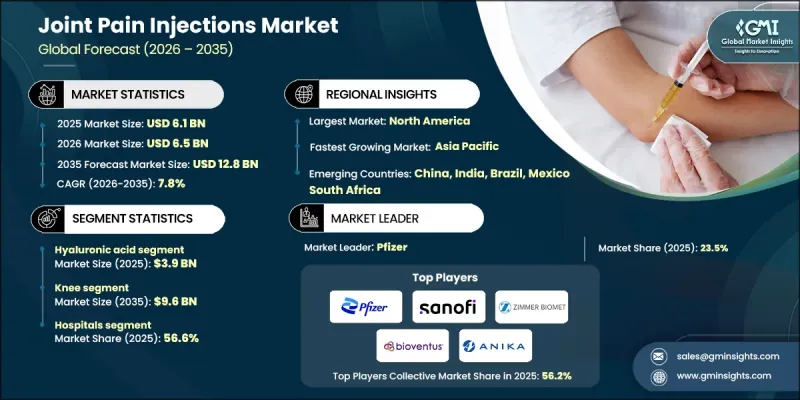
세계의 관절통 주사 시장은 2025년에 61억 달러로 평가되었으며, 2035년까지 CAGR 7.8%로 성장하여 128억 달러에 달할 것으로 예측됩니다.
시장 성장은 장기적인 장애와 삶의 질 저하의 주요 원인으로 작용하는 근골격계 질환의 전 세계적인 부담 증가에 의해 뒷받침되고 있습니다. 관절 관련 질환이 이동성과 일상 생활 기능을 점차 제한함에 따라, 수술적 개입 없이 통증 완화를 제공하는 치료법에 대한 수요가 지속적으로 증가하고 있습니다. 관절통 주사는 퇴행성 질환이나 외상 관련 질환을 앓고 있는 환자의 염증 감소, 불편감 완화, 관절 가동범위 회복을 목적으로 하는 최소침습적 치료법입니다. 시장은 단기적인 증상 관리보다는 조직 복구와 기능 회복에 초점을 맞춘 첨단 재생의료 및 생물학적 주사 솔루션으로 꾸준히 이동하고 있습니다. 좋은 임상 결과와 환자의 이동성 개선이 이러한 치료법에 대한 신뢰를 높이고 있습니다. 고령화에 따른 관절염 유병률의 증가와 신체 활동량이 많은 사람들의 관절 손상 증가도 성장을 견인하고 있습니다. 젊은 층의 환자들도 활동 수준을 유지하고 수술을 늦추기 위해 주사 치료를 채택하고 있으며, 이는 기존의 노화에 따른 사용을 넘어 시장 확대로 이어지고 있습니다.
| 시장 범위 | |
|---|---|
| 시작 연도 | 2025년 |
| 예측 연도 | 2026-2035년 |
| 개시 금액 | 61억 달러 |
| 예측 금액 | 128억 달러 |
| CAGR | 7.8% |
히알루론산 부문은 2025년 39억 달러에 달했습니다. 이 부문은 관절의 윤활도 향상, 마찰 최소화, 퇴행성 관절 질환의 이동성 향상에 대한 확고한 역할로 인해 확고한 입지를 유지하고 있습니다. 우수한 안전성 프로파일, 높은 임상적 수용성, 의료 현장에서의 폭넓은 활용성 등이 광범위한 채택을 뒷받침하고 있습니다. 관절 퇴행성 질환의 진단율이 증가함에 따라 히알루론산 기반 주사 요법에 대한 지속적인 수요가 더욱 강화되고 있습니다.
슬관절 부문은 2035년까지 96억 달러에 달할 것으로 예상됩니다. 이러한 성장은 고령화, 생활습관 관련 요인, 대사성 건강 상태에 따른 슬관절 퇴행성 질환의 발생률 증가에 기인합니다. 치료 횟수가 많고 여러 가지 주사 요법 옵션을 사용할 수 있어 슬관절은 가장 빈번하게 치료되는 관절로 자리매김하고 있으며, 임상 진료 및 외래 진료 시설에서 우위를 점하고 있습니다.
북미 관절통 주사제 시장은 2025년 47.1%의 점유율을 차지하며 주요 지역 시장으로서의 지위를 유지할 것으로 예상됩니다. 이러한 우위는 관절 질환을 앓고 있는 대규모 환자 기반, 첨단 의료 인프라, 혁신적인 주사 요법의 광범위한 보급에 의해 뒷받침되고 있습니다. 유리한 상환 제도, 높은 의료비 지출, 높은 환자 인식, 비수술적 치료 접근법의 조기 도입이 지역 전체 시장 성장을 지속적으로 견인하고 있습니다. 주요 업계 참여자들의 존재는 이 지역의 주도적 위치를 더욱 강화시키고 있습니다.
The Global Joint Pain Injections Market was valued at USD 6.1 billion in 2025 and is estimated to grow at a CAGR of 7.8% to reach USD 12.8 billion by 2035.
Market growth is supported by the increasing global burden of musculoskeletal disorders, which remain a major cause of long-term disability and reduced quality of life. As joint-related conditions increasingly limit mobility and daily function, demand continues to rise for treatment options that offer pain relief without surgical intervention. Joint pain injections represent minimally invasive therapies designed to reduce inflammation, relieve discomfort, and restore joint movement in patients affected by degenerative and injury-related conditions. The market is steadily shifting toward advanced regenerative and biologic injection solutions that focus on tissue repair and functional recovery rather than short-term symptom control. Positive clinical outcomes and improved patient mobility have strengthened confidence in these therapies. Growth is further supported by rising arthritis prevalence among aging populations and increasing joint injuries among physically active individuals. Younger patients are also adopting injectable treatments to maintain activity levels and postpone surgical procedures, broadening the market beyond traditional age-related use.
| Market Scope | |
|---|---|
| Start Year | 2025 |
| Forecast Year | 2026-2035 |
| Start Value | $6.1 Billion |
| Forecast Value | $12.8 Billion |
| CAGR | 7.8% |
The hyaluronic acid segment reached USD 3.9 billion in 2025. This segment maintains a strong position due to its established role in improving joint lubrication, minimizing friction, and enhancing movement in degenerative joint conditions. Its favorable safety profile, strong clinical acceptance, and broad availability across healthcare settings continue to support widespread adoption. Increasing diagnosis rates of joint degeneration further reinforce the sustained demand for hyaluronic acid-based injection therapies.
The knee segment is projected to reach USD 9.6 billion by 2035. This growth is driven by the rising occurrence of knee joint degeneration associated with aging populations, lifestyle-related factors, and metabolic health conditions. High treatment volumes and the availability of multiple injectable therapy options have positioned the knee as the most frequently treated joint, strengthening its dominance across clinical practices and outpatient care facilities.
North America Joint Pain Injections Market accounted for 47.1% share in 2025, maintaining its position as the leading regional market. This dominance is supported by a large patient base affected by joint disorders, advanced healthcare infrastructure, and widespread use of innovative injection therapies. Favorable reimbursement frameworks, high healthcare spending, strong patient awareness, and early adoption of non-surgical treatment approaches continue to drive market growth across the region. The presence of major industry participants further enhances regional leadership.
Key companies operating in the Joint Pain Injections Market include Zimmer Biomet Holdings, Sanofi, Pfizer, Stryker Corporation, Anika Therapeutics, SEIKAGAKU CORPORATION, Bioventus, Arthrex, OrthogenRx, Lifecore Biomedical, Pacira BioSciences (Flexion), Emcyte Corporation, Cipla, and Ferring. Companies in the joint pain injections market are implementing targeted strategies to strengthen market positioning and sustain growth. Significant investments are being made in research and development to advance biologic and regenerative injection technologies with improved clinical outcomes. Strategic collaborations with healthcare providers and orthopedic specialists are expanding treatment accessibility and clinical adoption. Firms are also focusing on portfolio diversification to address multiple joint types and disease stages. Geographic expansion into emerging markets and strengthening distribution networks remain key priorities.