공항 수하물 스캐너 시장 : 시장 기회, 성장 요인, 산업 동향 분석 및 예측(2026-2035년)
Airport Cabin Baggage Scanner Market Opportunity, Growth Drivers, Industry Trend Analysis, and Forecast 2026 - 2035
상품코드:1936531
리서치사:Global Market Insights Inc.
발행일:2026년 01월
페이지 정보:영문 180 Pages
라이선스 & 가격 (부가세 별도)
ㅁ Add-on 가능: 고객의 요청에 따라 일정한 범위 내에서 Customization이 가능합니다. 자세한 사항은 문의해 주시기 바랍니다.
한글목차
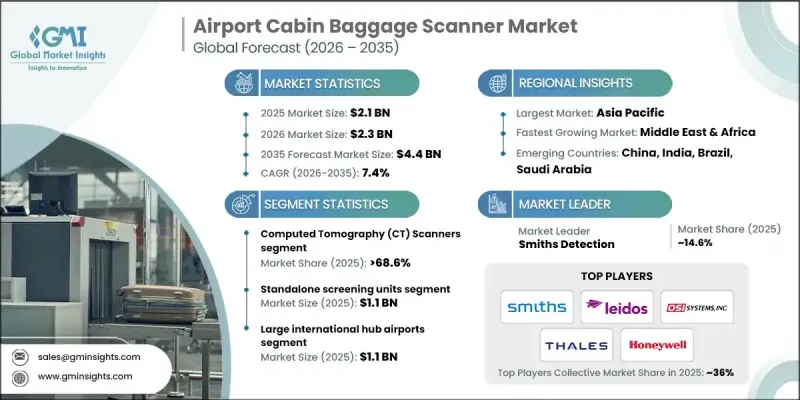
세계의 공항 수하물 스캐너 시장은 2025년에 21억 달러로 평가되었고, 2035년까지 연평균 복합 성장률(CAGR) 7.4%로 성장할 전망이며, 44억 달러에 이를 것으로 예측됩니다.
시장 성장은 세계 항공 여객 수 증가, 항공 보안 기준 강화, 첨단 이미징 기술의 급속한 보급, 공항 인프라 갱신에 대한 투자 확대로 인한 것입니다. 동향은 공항이 여객 처리 능력 향상 및 검지 정밀도 강화를 양립시키기 위해 보안 검사장을 재설계하는 가운데 신규 도입보다 기존 시스템의 갱신이 시장 확대의 주인이 되고 있음을 보여줍니다. 규제 당국의 협조적인 추진과 인공지능(AI) 및 컴퓨터 단층촬영(CT) 기술의 진보가 함께 보안 검사 업무가 재구성되고 있습니다. AI 탑재 CT 스캐너는 위협 검출의 일관성을 향상시키고, 오경보를 줄이며, 화상 분석을 가속시킴으로써 검사 포인트의 효율화 및 인원 부담의 경감을 실현하고 있습니다. 승객 수가 계속 증가함에 따라 공항은 운영 효율성과 엄격한 보안 요구 사항의 균형을 유지하기 위해 차세대 검사 시스템에 대한 투자를 확대하고 있으며 세계 항공 허브의 업데이트 주기가 가속화되고 있습니다.
시장 범위
시작 연도
2025년
예측 연도
2026-2035년
시작 시 가치
21억 달러
예측 금액
44억 달러
CAGR
7.4%
2025년 시점에서 컴퓨터 단층 촬영 장치(CT 스캐너) 부문은 68.6%의 점유율을 차지하고 있습니다. 시장 차별화는 고급 이미지 재구성, 물질 식별, 대규모 이미지 데이터 세트에서 훈련된 AI 기반 위협 인식 등 소프트웨어 기능에 의해 점차 추진되고 있습니다. 공급업체는 고객이 적은 시설을 위한 소형 시스템에서 통합 원격 검사 및 워크플로 최적화를 갖춘 완전 자동화 스크리닝 레인에 이르기까지 확장 가능한 솔루션을 제공합니다. 조달 패턴은 개별 스캐너에서 완전한 스크리닝 레인 에코시스템으로 전환되었으며 운영 성능 및 수명 주기 가치를 향상시키는 통합 하드웨어, 소프트웨어 및 장기 서비스 지원을 제공하는 공급업체가 우수합니다.
독립형 스크리닝 유닛은 2025년에 11억 달러 시장 규모를 창출해 도입 형태 중 가장 큰 점유율을 차지했습니다. 공항에서는 여객 처리율 향상 및 혼잡 완화를 목적으로 CT 스캐너와 트레이 처리 자동화를 통합한 자동화 스크리닝 구성의 도입이 가속화되고 있습니다. 이 시스템은 더 높은 처리 능력, 검사 지연 감소, 보다 일관된 스크리닝 성능을 제공합니다. 제조업체 각사는 트래픽이 높은 항공 환경의 진화하는 요구를 충족시키기 위해 신뢰할 수 있는 대용량 독립형 유닛 개발에 주력하고 있습니다. 이들은 최소한의 다운타임, 원활한 시스템 통합, 견고한 자동화를 실현합니다.
북미의 공항 수하물 스캐너 시장은 2025년에 38.8%의 점유율을 차지했으며, 지역별 시장에서 선두가 되었습니다. 이 지역의 성장은 강력한 규제 무결성, 지속적인 자금 조달 및 다양한 규모의 공항에서 협력적인 현대화 이니셔티브에 의해 지원됩니다. 시장 특징으로는 기존의 X선 시스템에서 첨단 CT 기반 솔루션으로의 가속적인 대체가 진행되고 있는 것 외에도 디지털 인프라, 노동력 최적화, 원격 스크리닝 기능에 대한 광범위한 투자가 이루어지고 있습니다. 이러한 요인은 첨단 수하물 스크리닝 기술에 대한 안정적인 수요 및 장기적인 시장 안정성에 기여합니다.
목차
제1장 조사 방법 및 범위
제2장 주요 요약
제3장 업계 인사이트
생태계 분석
공급자의 상황
이익률
비용 구조
각 단계에서의 부가가치
밸류체인에 영향을 주는 요인
혁신
업계에 미치는 영향요인
성장 촉진요인
CT 방식의 기내 수하물 스캐너 도입에 관한 규제 요건 강화
여객 수송량 증가가 체크 포인트의 용량 확대 촉진
AI 및 자동화가 업무 효율화 추진
정부 및 다자간 자금에 의한 지원이 시장 성장 가속
승객 중심의 대처가 시큐리티 기기 수요 촉진
업계의 잠재적 위험 및 과제
높은 자본 요건이 시장 성장 억제
체크 포인트의 인프라 제약이 스캐너 확대 억제
시장 기회
신흥 시장에서의 사업 확대
스마트 공항 생태계와의 통합
성장 가능성 분석
규제 상황
북미
유럽
아시아태평양
라틴아메리카
중동 및 아프리카
Porter's Five Forces 분석
PESTEL 분석
기술 및 혁신 동향
현재의 기술 동향
신흥 기술
가격 동향
과거 가격 분석(2022-2024년)
가격 동향의 요인
지역별 가격 변동
가격 예측(2026-2035년)
가격 전략
신흥 비즈니스 모델
컴플라이언스 요건
지속가능성 대책
소비자 심리 분석
특허 및 지적재산 분석
지정학적 및 무역 동향
제4장 경쟁 구도
서문
기업의 시장 점유율 분석
지역별
북미
유럽
아시아태평양
라틴아메리카
중동 및 아프리카
주요 기업의 경쟁 벤치마킹
재무실적 비교
수익
이익률
연구개발
제품 포트폴리오 비교
넓은 제품 라인
기술
혁신
지리적 존재 비교
세계 전개 분석
서비스 네트워크의 커버율
지역별 시장 침투율
경쟁 포지셔닝 매트릭스
리더 기업
챌린저
팔로워
틈새 기업
전략적 전망 매트릭스
주요 발전(2022-2025년)
합병 및 인수
제휴 및 공동 사업
기술적 진보
확대 및 투자 전략
지속가능성에 대한 노력
디지털 전환의 대처
신흥 및 스타트업 경쟁의 동향
제5장 시장 추계 및 예측 : 기술별(2022-2035년)
X선 기반 스캐너
단일 시야 X선
듀얼뷰 X선
멀티뷰 X선
컴퓨터 단층 촬영(CT) 스캐너
표준 해상도 CT
고해상도 CT(EDS-CB 준거)
전용 기내 수하물 감지 시스템
액체 폭발물 감지 시스템(LEDS)
폭발물 미량 검출(ETD)
기타
제6장 시장 추계 및 예측 : 통합 레벨별(2022-2035년)
독립형 스크리닝 유닛
통합형 자동 스크리닝 레인 시스템
네트워크 접속형 및 원격 스크리닝 대응 시스템
제7장 시장 추계 및 예측 : 용도별(2022-2035년)
주요 국제 허브 공항
지역 공항 및 국내 공항
정부 및 군사 시설
프라이빗 및 법인용 항공 터미널
제8장 시장 추계 및 예측 : 지역별(2022-2035년)
북미
미국
캐나다
유럽
영국
독일
프랑스
이탈리아
스페인
러시아
기타 유럽
아시아태평양
중국
인도
일본
한국
ANZ
기타 아시아태평양
라틴아메리카
브라질
멕시코
기타 라틴아메리카
중동 및 아프리카
사우디아라비아
남아프리카
아랍에미리트(UAE)
기타 중동 및 아프리카
제9장 기업 프로파일
Adani Systems, Inc.
Analogic Corporation
Astrophysics Inc.
Autoclear LLC
Aventura Technologies
Bosch Security Systems
CEIA & Associates
CEIA SpA
Garrett Metal Detectors
Gilardoni SpA
Honeywell International
L3Harris Technologies
Leidos Holdings, Inc.
NEC Corporation
Nuctech Company Limited
OSI Systems(Rapiscan Systems)
QinetiQ Group
Safeway Inspection Systems
Smiths Detection(Smiths Group)
Surescan Corporation
Thales Group
Thruvision
Unisys Corporation
Vanderlande Industries
VOTI Detection
AJY
영문 목차
영문목차
The Global Airport Cabin Baggage Scanner Market was valued at USD 2.1 billion in 2025 and is estimated to grow at a CAGR of 7.4% to reach USD 4.4 billion by 2035.
Market growth is driven by rising global air travel volumes, tighter aviation security standards, rapid adoption of advanced imaging technologies, and increasing investments in airport infrastructure upgrades. Growth trends indicate that market expansion is primarily supported by the replacement of legacy systems rather than first-time installations, as airports redesign security checkpoints to accommodate higher passenger throughput while enhancing detection accuracy. A coordinated push from regulatory bodies, combined with advancements in artificial intelligence and computed tomography technology, is reshaping security screening operations. AI-enabled CT scanners are improving threat detection consistency, reducing false alarms, and accelerating image analysis, which improves checkpoint efficiency and reduces staffing strain. As passenger volumes continue to rise, airports are increasingly investing in next-generation screening systems to balance operational efficiency with stringent security requirements, accelerating the replacement cycle across global aviation hubs.
Market Scope
Start Year
2025
Forecast Year
2026-2035
Start Value
$2.1 Billion
Forecast Value
$4.4 Billion
CAGR
7.4%
The computed tomography scanners segment held 68.6% share in 2025. Market differentiation is increasingly driven by software capabilities, including advanced image reconstruction, material discrimination, and AI-based threat recognition trained on large image datasets. Vendors are offering scalable solutions ranging from compact systems for lower-traffic facilities to fully automated screening lanes with integrated remote inspection and workflow optimization. Procurement patterns are shifting from individual scanners to complete screening lane ecosystems, favoring suppliers that deliver integrated hardware, software, and long-term service support to improve operational performance and lifecycle value.
The standalone screening units generated USD 1.1 billion in 2025, holding the largest share within deployment types. Airports are increasingly adopting automated screening configurations that integrate CT scanners with tray handling automation to improve passenger processing rates and reduce congestion. These systems support higher throughput, lower inspection delays, and more consistent screening performance. Manufacturers are focusing on developing reliable, high-capacity standalone units with minimal downtime, seamless system integration, and robust automation to meet the evolving needs of high-traffic aviation environments.
North America Airport Cabin Baggage Scanner Market accounted for 38.8% share in 2025, making it the leading regional market. Growth in the region is supported by strong regulatory alignment, sustained funding, and coordinated modernization initiatives across airports of varying sizes. The market is characterized by accelerated replacement of conventional X-ray systems with advanced CT-based solutions, alongside broader investments in digital infrastructure, workforce optimization, and remote screening capabilities. These factors are contributing to consistent demand for advanced baggage screening technologies and long-term market stability.
Key companies operating in the Global Airport Cabin Baggage Scanner Market include Thales Group, Smiths Detection (Smiths Group), OSI Systems (Rapiscan Systems), Leidos Holdings, Inc., Nuctech Company Limited, L3Harris Technologies, Astrophysics Inc., Analogic Corporation, Vanderlande Industries, CEIA S.p.A., Autoclear LLC, Garrett Metal Detectors, Safeway Inspection Systems, VOTI Detection, Gilardoni S.p.A., Aventura Technologies, Surescan Corporation, Adani Systems, Inc., Unisys Corporation, NEC Corporation, Honeywell International, Bosch Security Systems, Thruvision, and QinetiQ Group. Companies in the airport cabin baggage scanner market are strengthening their market position by investing in advanced AI-driven detection software and next-generation CT imaging technologies. Manufacturers are expanding integrated product portfolios that combine hardware, automation, and analytics to deliver complete screening solutions. Long-term service contracts, system upgrades, and lifecycle support are being prioritized to secure recurring revenue.
Table of Contents
Chapter 1 Methodology and Scope
1.1 Market scope and definition
1.2 Research design
1.2.1 Research approach
1.2.2 Data collection methods
1.3 Data mining sources
1.3.1 Global
1.3.2 Regional/Country
1.4 Base estimates and calculations
1.4.1 Base year calculation
1.4.2 Key trends for market estimation
1.5 Primary research and validation
1.5.1 Primary sources
1.6 Forecast model
1.7 Research assumptions and limitations
Chapter 2 Executive Summary
2.1 Industry snapshot
2.2 Key market trends
2.2.1 Technology trends
2.2.2 Integration level trends
2.2.3 Application trends
2.2.4 Regional trends
2.3 TAM Analysis, 2025-2034 (USD Million)
2.4 CXO perspectives: Strategic imperatives
2.4.1 Executive decision points
2.4.2 Critical success factors
2.5 Future outlook and strategic recommendations
Chapter 3 Industry Insights
3.1 Industry ecosystem analysis
3.1.1 Supplier Landscape
3.1.2 Profit Margin
3.1.3 Cost structure
3.1.4 Value addition at each stage
3.1.5 Factors affecting the value chain
3.1.6 Disruptions
3.2 Industry impact forces
3.2.1 Growth drivers
3.2.1.1 Rising regulatory mandates on CT-based cabin baggage scanner adoption
3.2.1.2 Passenger traffic growth is driving checkpoint capacity expansion
3.2.1.3 AI and automation are driving operational efficiency
3.2.1.4 Government and multilateral funding are accelerating market growth