빗물 저장 시장 : 시장 기회, 성장 요인, 산업 동향 분석 및 예측(2026-2035년)
Rainwater Harvesting Market Opportunity, Growth Drivers, Industry Trend Analysis, and Forecast 2026 - 2035
상품코드:1936505
리서치사:Global Market Insights Inc.
발행일:2026년 01월
페이지 정보:영문 219 Pages
라이선스 & 가격 (부가세 별도)
ㅁ Add-on 가능: 고객의 요청에 따라 일정한 범위 내에서 Customization이 가능합니다. 자세한 사항은 문의해 주시기 바랍니다.
한글목차
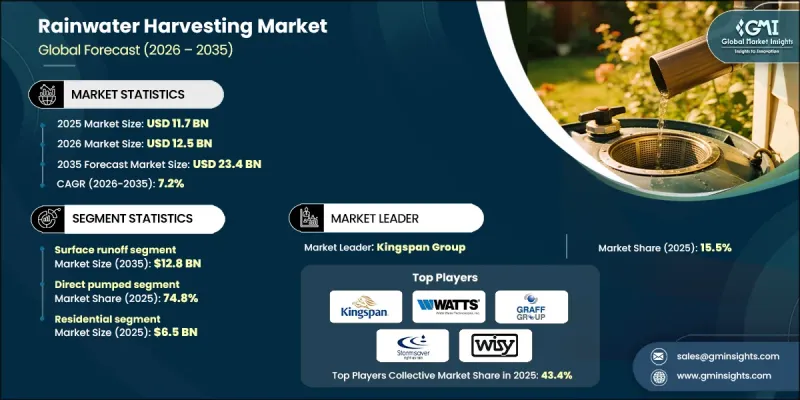
세계의 빗물 저장 시장은 2025년 117억 달러로 평가되었고, 2035년까지 연평균 복합 성장률(CAGR) 7.2%로 성장할 전망이며, 234억 달러에 이를 것으로 예측됩니다.
성장의 배경에는 담수 자원에 대한 압력 증가 및 장기적인 물 안보 솔루션에 대한 수요 증가가 있습니다. 빗물 저장 시스템은 물 부족, 지하수 고갈, 강우량 불균일 등의 과제를 해결하면서 기존의 물 공급에 대한 의존도를 줄입니다. 인프라 계획과 자원 관리에 있어서 지속가능성이 우선사항이 됨에 따라 도입은 계속 증가하고 있습니다. 각 지역 정부는 빗물 수집 및 재사용을 촉진하는 규제, 인센티브 및 건축 기준을 통해 시장 성장을 지원합니다. 도시화, 기후 변화, 인구 증가는 분산형 물 시스템의 필요성을 더욱 높여주고 있습니다. 저장, 여과, 배수의 기술적 진보는 시스템의 효율성과 신뢰성을 향상시켜 빗물 저장을 다양한 용도에 적합하게 하고 있습니다. 책임있는 물 이용에 대한 의식이 높아지는 가운데, 빗물 저장은 환경 보전을 지원하면서, 복수의 최종 용도 분야에 걸쳐 안정된 물에 대한 액세스를 확보하는 실용적이고 비용 효율적인 해결책으로서 대두하고 있습니다.
시장 범위
시작 연도
2025년
예측 연도
2026-2035년
시작 시 가치
117억 달러
예측 금액
234억 달러
CAGR
7.2%
지표 유출 부문은 2025년에 66억 달러 시장 규모를 창출하였으며, 2035년까지 128억 달러에 이를 것으로 예측됩니다. 이 부문은 대량의 빗물을 포착하고 주택, 농업, 산업, 환경 용도 등 폭넓은 용도에 대응할 수 있기 때문에 급속히 확대되고 있습니다. 도시 지역의 빗물 관리 규제 강화가 진행됨에 따라 인프라 프로젝트는 유출 통제, 지하수 함양 및 홍수 대책 솔루션이 우선하기 때문에이 부문의 도입이 가속화되고 있습니다.
직접 펌프 시스템 부문은 2025년에 74.8%의 점유율을 차지했습니다. 이 시스템은 설치가 간편하고 비용 효율적이며 다양한 건축 유형에 적응할 수 있기 때문에 선택되었습니다. 최소한의 구조 요건 및 안정적인 성능으로 초기 투자를 억제한 효율적인 물 재사용 솔루션을 요구하는 주택 소유자와 상업 시설 운영자에게 매력적인 선택이 되었습니다.
미국 빗물 저장 시장은 2025년에 77.9%의 점유율을 차지했습니다. 적극적인 절수 정책, 반복되는 가뭄 상황, 급속한 도시 개발이 시장 우위를 지원합니다. 물 부족에 대한 내성을 요구하는 주택, 농업, 산업 유저층에 있어서 도입은 확대를 계속하고 있습니다. 높은 소비자 의식 및 확립된 제조업체의 존재는 시장의 주도적 입장을 더욱 강화하고 있습니다.
목차
제1장 조사 방법 및 범위
제2장 주요 요약
제3장 업계 인사이트
생태계 분석
공급자의 상황
이익률
각 단계에서의 부가가치
밸류체인에 영향을 주는 요인
업계에 미치는 영향요인
성장 촉진요인
담수 수요 증가
심각화하는 물 부족
급속한 기술 진보
업계의 잠재적 위험 및 과제
높은 초기 투자액 및 유지 관리에 대한 어려움
간헐성 및 운용상의 과제
기회
지속 가능한 물 솔루션에 대한 강한 수요
기술 진보 및 비용 저하
성장 가능성 분석
장래 시장 동향
기술 및 혁신 동향
현재 기술 동향
신흥 기술
가격 동향
제품별
지역별
규제 상황
규격 및 컴플라이언스 요건
지역별 규제 프레임워크
인증기준
무역 통계
주요 수입국
주요 수출국
갭 분석
리스크 평가 및 경감책
Porter's Five Forces 분석
PESTEL 분석
제4장 경쟁 구도
서문
기업의 시장 점유율 분석
지역별
기업 매트릭스 분석
주요 시장 기업의 경쟁 분석
경쟁 포지셔닝 매트릭스
주요 발전
합병 및 인수
제휴 및 협업
신제품 발매
확대 계획
제5장 시장 추계 및 예측 : 수확 방법별(2022-2035년)
지표 유출
옥상 빗물
제6장 시장 추계 및 예측 : 제품별(2022-2035년)
빗물 저장 시스템
건식 시스템
습식 시스템
그린 루프 시스템
모듈식 탱크 시스템
지하 저장 및 저수조 시스템
제7장 시장 추계 및 예측 : 설비별(2022-2035년)
직접 펌프 방식
간접 펌프 방식
간접 중력 방식
제8장 시장 추계 및 예측 : 용도별(2022-2035년)
주택용
상업용
산업용
농업 분야
제9장 시장 추계 및 예측 : 저장 용량별(2022-2035년)
1,000리터 미만
1,000-10,000리터
10,000-50,000리터
50,000리터 이상
제10장 시장 추계 및 예측 : 유통 채널별(2022-2035년)
온라인
오프라인
제11장 시장 추계 및 예측 : 지역별(2022-2035년)
북미
미국
캐나다
유럽
독일
프랑스
영국
이탈리아
스페인
아시아태평양
중국
인도
일본
한국
호주
라틴아메리카
브라질
멕시코
아르헨티나
중동 및 아프리카
남아프리카
사우디아라비아
아랍에미리트(UAE)
제12장 기업 프로파일
Atlantis Corporation
Bushman USA
Climate Inc
DAB Pumps
Enduramaxx
Graf Group
Grundfos
Heritage Tanks
JoJo Tanks
Kingspan Group
Norwesco
Snyder Industries
Stormsaver Ltd
Watts Water Technologies
Wisy AG
AJY
영문 목차
영문목차
The Global Rainwater Harvesting Market was valued at USD 11.7 billion in 2025 and is estimated to grow at a CAGR of 7.2% to reach USD 23.4 billion by 2035.
Growth is driven by mounting pressure on freshwater resources and the growing need for long-term water security solutions. Rainwater harvesting systems reduce reliance on traditional water supplies while addressing challenges related to water scarcity, groundwater depletion, and uneven rainfall distribution. Adoption continues to rise as sustainability becomes a priority within infrastructure planning and resource management. Governments across regions support market growth through regulations, incentives, and building requirements that encourage rainwater collection and reuse. Urbanization, climate variability, and population growth further intensify the need for decentralized water systems. Technological improvements in storage, filtration, and distribution enhance system efficiency and reliability, making rainwater harvesting suitable for diverse applications. As awareness of responsible water usage grows, rainwater harvesting emerges as a practical and cost-effective solution that supports environmental conservation while ensuring consistent access to water across multiple end-use sectors.
Market Scope
Start Year
2025
Forecast Year
2026-2035
Start Value
$11.7 Billion
Forecast Value
$23.4 Billion
CAGR
7.2%
The surface runoff segment generated USD 6.6 billion in 2025 and is expected to reach USD 12.8 billion by 2035. This segment expands rapidly due to its ability to capture large volumes of rainwater and support a wide range of uses, including residential, agricultural, industrial, and environmental applications. Increasing enforcement of stormwater management regulations in urban areas accelerates adoption, as infrastructure projects prioritize runoff control, groundwater recharge, and flood mitigation solutions.
The direct pumped systems segment held 74.8% share in 2025. These systems gain preference due to their straightforward installation, cost efficiency, and adaptability to various building types. Their minimal structural requirements and reliable performance make them an attractive option for homeowners and commercial property operators seeking efficient water reuse solutions with lower initial investment.
United States Rainwater Harvesting Market held a 77.9% share in 2025. Market dominance is supported by proactive water conservation policies, recurring drought conditions, and rapid urban development. Adoption continues to grow across residential, agricultural, and industrial users seeking resilience against water shortages. Strong consumer awareness and the presence of established manufacturers further reinforce market leadership.
Key companies operating in the Global Rainwater Harvesting Market include Kingspan Group, Graf Group, Atlantis Corporation, Norwesco, Bushman USA, Grundfos, Watts Water Technologies, Enduramaxx, JoJo Tanks, Snyder Industries, Stormsaver Ltd, Wisy AG, Heritage Tanks, DAB Pumps, and Climate Inc. Companies in the rainwater harvesting market strengthen their competitive position by investing in advanced storage, filtration, and pumping technologies that improve system efficiency and durability. Many players focus on modular and scalable designs to meet varying residential, commercial, and industrial requirements. Expanding distribution networks and offering turnkey installation services enhance customer accessibility. Manufacturers emphasize compliance with regulatory standards and sustainability certifications to build trust. Strategic partnerships with construction firms and infrastructure developers support large-scale adoption.
Table of Contents
Chapter 1 Methodology & Scope
1.1 Market scope and definition
1.2 Research design
1.2.1 Research approach
1.2.2 Data collection methods
1.3 Data mining sources
1.3.1 Global
1.3.2 Regional/Country
1.4 Base estimates and calculations
1.4.1 Base year calculation
1.4.2 Key trends for market estimation
1.5 Primary research and validation
1.5.1 Primary sources
1.6 Forecast model
1.7 Research assumptions and limitations
Chapter 2 Executive Summary
2.1 Industry 360° synopsis
2.2 Key market trends
2.2.1 Regional
2.2.2 Harvesting Process
2.2.3 Product
2.2.4 Installation
2.2.5 Application
2.2.6 Storage Capacity
2.2.7 Distribution Channel
2.3 CXO perspectives: Strategic imperatives
2.3.1 Key decision points for industry executives
2.3.2 Critical success factors for market players
2.4 Future outlook and strategic recommendations
Chapter 3 Industry Insights
3.1 Industry ecosystem analysis
3.1.1 Supplier landscape
3.1.2 Profit margin
3.1.3 Value addition at each stage
3.1.4 Factor affecting the value chain
3.2 Industry impact forces
3.2.1 Growth drivers
3.2.1.1 Increasing demand of freshwater
3.2.1.2 Rising water scarcity
3.2.1.3 Rapid technology advancement
3.2.2 Industry pitfalls & challenges
3.2.2.1 High initial investment and intensive maintenance requirement
3.2.2.2 Intermittency and operational challenges
3.2.3 Opportunities
3.2.3.1 Strong demand for sustainable water solutions
3.2.3.2 Technological advancements and cost declines