철도 관리 시스템 시장의 기회, 성장 촉진요인, 업계 동향 분석 및 예측(2026-2035년)
Railway Management Systems Market Opportunity, Growth Drivers, Industry Trend Analysis, and Forecast 2026 - 2035
상품코드:1928998
리서치사:Global Market Insights Inc.
발행일:2026년 01월
페이지 정보:영문 245 Pages
라이선스 & 가격 (부가세 별도)
ㅁ Add-on 가능: 고객의 요청에 따라 일정한 범위 내에서 Customization이 가능합니다. 자세한 사항은 문의해 주시기 바랍니다.
한글목차
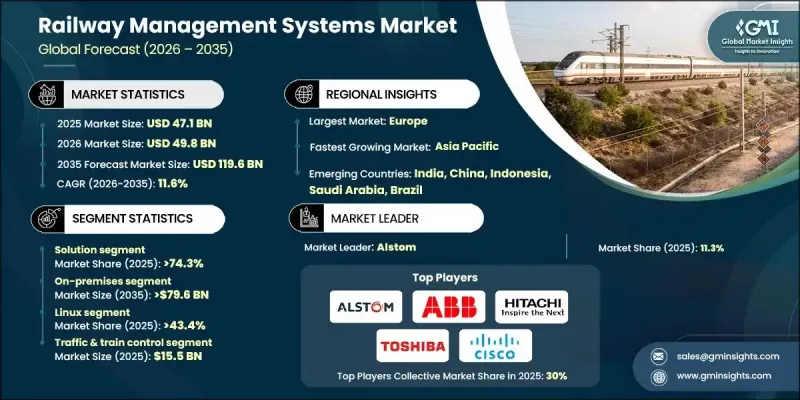
세계의 철도 관리 시스템 시장은 2025년에 471억 달러로 평가되었으며, 2035년까지 CAGR 11.6%로 성장하여 1,196억 달러에 달할 것으로 예측됩니다.
시장 성장은 급속한 도시화와 인구 밀도 증가에 의해 주도되고 있습니다. 이로 인해 대중교통 시스템에 부하가 걸리고, 효율적이고 지속가능한 철도 운영의 필요성이 높아지고 있습니다. 도시 지역에서는 증가하는 통근자 수 대응, 도로 정체 완화, 화물 운송 최적화를 위해 고도의 철도 관리 솔루션이 요구되고 있습니다. 사업자들은 운영 효율성과 안전성 향상을 위해 자동화, 실시간 모니터링, 데이터 기반 의사결정에 대한 투자를 진행하고 있습니다. 디지털 기술, IoT 기기, AI 탑재 시스템 도입으로 예지보전, 자동 스케줄링, 자산 관리 개선이 가능해졌습니다. 이러한 혁신은 운영 효율성을 높일 뿐만 아니라 에너지 사용의 최적화와 운행 장애에 대한 신속한 대응을 보장함으로써 보다 지속가능한 철도 네트워크 구축에 기여하고 있습니다.
시장 범위
시작 연도
2025년
예측 연도
2026-2035
개시시 가치
471억 달러
예측 금액
1,196억 달러
CAGR
11.6%
2025년 온프레미스 부문은 68.2%의 점유율을 차지하고 2035년까지 796억 달러에 달할 것으로 예측됩니다. 온프레미스 시스템은 운영자가 완전한 통제권을 유지하고, 규제 요건을 준수하며, 데이터 주권을 유지할 수 있기 때문에 국가 철도 네트워크와 레거시 시스템에 여전히 중요합니다. 이 환경은 복잡한 철도 운영을 효율적으로 관리하는 데 필수적인 신뢰성, 운영상의 보안, 사용자 정의 옵션을 제공합니다.
리눅스 부문은 2025년 43.4%의 점유율을 차지하며 205억 달러의 가치가 있을 것으로 예상됩니다. 리눅스는 오픈 소스의 유연성, 높은 보안성, 비용 효율성으로 인해 지배적인 위치를 차지하고 있습니다. 이러한 적응성을 통해 사업자는 교통 관리, 예지보전, 실시간 모니터링을 위한 맞춤형 솔루션을 개발할 수 있습니다. 이 플랫폼의 사이버 위협에 대한 내성과 안정적인 성능은 여객 및 화물 네트워크의 효율성 유지에 필수적인 철도 운영의 연속성을 보장합니다.
미국 철도 관리 시스템 시장은 2025년 98억 5,000만 달러로 평가되었습니다. 이러한 성장은 광범위한 화물 철도 인프라, 현대화 이니셔티브, 장거리 화물 운송을 효율적으로 관리할 수 있는 첨단 소프트웨어 애플리케이션에 대한 수요에 의해 뒷받침되고 있습니다. 이 분야는 네트워크 최적화, 자산 모니터링, 교통 관리에 중점을 두어 전국 철도 네트워크의 운영 신뢰성을 향상시키고 지연을 줄이는 데 중점을 두고 있습니다.
목차
제1장 조사 방법
제2장 주요 요약
제3장 업계 인사이트
생태계 분석
공급업체 상황
이익률 분석
비용 구조
각 단계의 부가가치
밸류체인에 영향을 미치는 요인
디스럽션
업계에 대한 영향요인
성장 촉진요인
급속한 도시화와 인구 증가
철도 업계의 디지털화 진전
세계의 스마트 시티 확대 동향
AI 및 클라우드 기반 서비스 채용 확대
철도 분야의 정부 자금·투자 급증
업계의 잠재적 리스크와 과제
초기 투자액이 고액
보수상 과제
시장 기회
신흥 시장의 인프라 정비
민관 제휴 모델
성장 가능성 분석
규제 상황
북미
미국 : 연방 철도국(FRA)에 의한 열차 제어 시스템(PTC) 및 철도 안전 규제
캐나다 : 운송 성 철도 안전 관리 시스템(SMS) 규제
유럽
영국 : RSSB 규격 및 ETCS 준거
독일 : EN 50126/50128/50129기능 안전 규격
프랑스 : ERTMS와 ETCS 상호운용성 프레임워크
이탈리아 : 철도 솔루션용 ISO 9001품질 관리 시스템
아시아태평양
중국 : 국가 철도국(NRA) 신호·제어 기준
일본 : 철도 제어 시스템 기능 안전기준
인도 : RDSO(철도 개발 서비스 기구) 및 인도 철도 안전기준
라틴아메리카
브라질 : ABNT 철도 신호·제어 규격
멕시코 : NOM 철도 안전 및 운영 기준
아르헨티나 : 철도 부품용 ISO 9001품질 관리 시스템
중동 및 아프리카
아랍에미리트 : EN 및 IEC 철도 안전기준
남아프리카공화국 : 철도 신호 시스템용 기능 안전기준
Porters 분석
PESTEL 분석
기술과 혁신 동향
현재 기술 동향
신기술
비용 내역 분석
특허 분석
지속가능성과 환경면
지속가능한 대처
폐기물 절감 전략
생산의 에너지 효율
친환경적인 대처
사용 사례
오퍼레이터 유형별 총소유비용(TCO)과 투자 이익률(ROI)
가격 책정, 상업 및 계약 모델
하드웨어·소프트웨어·서비스 비용과 매출 구성
도입 경제성과 구현 리스크
제4장 경쟁 구도
소개
기업의 시장 점유율 분석
북미
유럽
아시아태평양
라틴아메리카
중동 및 아프리카
주요 시장 기업 경쟁 분석
경쟁 포지셔닝 매트릭스
전략적 전망 매트릭스
주요 발전
인수합병
제휴·협업
신제품 발매
사업 확대 계획과 자금 조달
제5장 시장 추정 및 예측 : 구성요소별, 2022-2035
솔루션
철도 운행 관리 시스템
시설 관리 솔루션
수익 관리 솔루션
티켓 관리 솔루션
인력 관리 솔루션
철도 자동화 관리 솔루션
철도 교통 관리 시스템
지능형 신호 솔루션
실시간 열차 운행 계획·경로 스케줄링 솔루션
집중형 교통 제어 솔루션
철도 자산 관리 시스템
열차 정보 솔루션
궤도 감시 솔루션
철도 제어 시스템
포지티브 트레인 컨트롤(PTC) 솔루션
통신 기반 열차 제어 솔루션
통합 제어 시스템
철도 보수 관리 시스템
차량 정비 계획 솔루션
보수 관리 솔루션용 예측 분석
승객 정보 시스템(PIS)
철도 보안
기타
서비스
연수·컨설팅
시스템 통합 및 도입
서포트 및 보수
제6장 시장 추정 및 예측 : 도입 모델별, 2022-2035
온프레미스
클라우드
제7장 시장 추정 및 예측 : 운영체제별, 2022-2035
QNX
Linux
VxWorks
기타
제8장 시장 추정 및 예측 : 지역별, 2022-2035
북미
미국
캐나다
유럽
독일
영국
프랑스
이탈리아
스페인
러시아
북유럽 국가
포르투갈
크로아티아
베네룩스
아시아태평양
중국
인도
일본
호주
한국
싱가포르
태국
인도네시아
베트남
라틴아메리카
브라질
멕시코
아르헨티나
콜롬비아
중동 및 아프리카
남아프리카공화국
사우디아라비아
아랍에미리트
튀르키예
제9장 기업 개요
세계 기업
ABB
Alstom
Amadeus IT
Atos
Cisco Systems
Fujitsu
General Electric(GE Transportation)
Hexagon
Hitachi Rail
Huawei Technologies
IBM
Thales
지역 플레이어
Indra Sistemas
Mitsubishi Electric
Siemens Mobility
Trimble
CAF
Stadler Rail
Kyosan Electric
Emerging/Disruptor Players
GAO RFID
Wabtec
Toshiba
Passio Technologies
Rayhawk
KSM
영문 목차
영문목차
The Global Railway Management Systems Market was valued at USD 47.1 billion in 2025 and is estimated to grow at a CAGR of 11.6% to reach USD 119.6 billion by 2035.
Market growth is driven by rapid urbanization and increasing population density, which are putting pressure on public transportation systems and intensifying the need for efficient and sustainable railway operations. Cities require advanced railway management solutions to handle growing commuter volumes, reduce road congestion, and optimize freight transportation. Operators are investing in automation, real-time monitoring, and data-driven decision-making to enhance operational efficiency and safety. The adoption of digital technologies, IoT devices, and AI-enabled systems is enabling predictive maintenance, automated scheduling, and improved asset management. These innovations not only boost operational efficiency but also contribute to more sustainable railway networks by optimizing energy use and ensuring timely responses to operational disruptions.
Market Scope
Start Year
2025
Forecast Year
2026-2035
Start Value
$47.1 Billion
Forecast Value
$119.6 Billion
CAGR
11.6%
In 2025, the on-premises segment captured 68.2% share and is expected to reach USD 79.6 billion by 2035. On-premises systems remain crucial for national rail networks and legacy systems as they allow operators to retain full control, comply with regulatory requirements, and maintain data sovereignty. This environment provides reliability, operational security, and customization options essential for managing complex railway operations efficiently.
The Linux segment accounted for 43.4% share in 2025, valued at USD 20.5 billion. Linux dominates due to its open-source flexibility, high security, and cost-effectiveness. Its adaptability allows operators to develop customized solutions for traffic management, predictive maintenance, and real-time monitoring. The platform's resilience against cyber threats and stable performance ensure uninterrupted railway operations, a critical requirement for maintaining efficiency across both passenger and freight networks.
U.S. Railway Management Systems Market was valued at USD 9.85 billion in 2025. The growth is supported by extensive freight rail infrastructure, modernization initiatives, and demand for advanced software applications to manage long-haul freight traffic efficiently. The sector emphasizes network optimization, asset monitoring, and traffic management to enhance operational reliability and reduce delays across the nation's rail network.
Major players operating in the Global Railway Management Systems Market include Thales, Alstom, Hitachi Rail, IBM, Huawei Technologies, ABB, Cisco Systems, Siemens Mobility, Toshiba, and Indra Sistemas. Companies in the Railway Management Systems Market are strengthening their positions by investing in research and development to enhance software solutions, integrating AI and IoT for predictive analytics, and expanding automation capabilities. Strategic collaborations with rail operators and technology providers enable broader deployment and faster adoption of advanced systems. Firms are also focusing on cybersecurity solutions to protect critical infrastructure and maintain trust. Geographic expansion into high-growth regions, acquisition of complementary technology companies, and development of modular, scalable systems allow companies to cater to diverse operational requirements.
Table of Contents
Chapter 1 Methodology
1.1 Research approach
1.2 Quality commitments
1.2.1 GMI AI policy & data integrity commitment
1.3 Research trail & confidence scoring
1.3.1 Research trail components
1.3.2 Scoring components
1.4 Data collection
1.4.1 Partial list of primary sources
1.5 Data mining sources
1.5.1 Paid sources
1.6 Base estimates and calculations
1.6.1 Base year calculation
1.7 Forecast
1.8 Research transparency addendum
Chapter 2 Executive Summary
2.1 Industry 360° synopsis, 2022 - 2035
2.2 Key market trends
2.2.1 Regional
2.2.2 Component
2.2.3 Deployment Model
2.2.4 Operating System
2.3 TAM Analysis, 2025-2034
2.4 CXO perspectives: Strategic imperatives
2.4.1 Executive decision points
2.4.2 Critical success factors
2.5 Future outlook & strategic recommendations
Chapter 3 Industry Insights
3.1 Industry ecosystem analysis
3.1.1 Supplier landscape
3.1.2 Profit margin analysis
3.1.3 Cost structure
3.1.4 Value addition at each stage
3.1.5 Factor affecting the value chain
3.1.6 Disruptions
3.2 Industry impact forces
3.2.1 Growth drivers
3.2.1.1 Rapid urbanization and demographic growth
3.2.1.2 Rising digitalization in the railway industry
3.2.1.3 Growing trend of smart cities across the globe
3.2.1.4 Increasing adoption of AI & cloud-based services
3.2.1.5 Surge in government fundings & investments in railway sector
3.2.2 Industry pitfalls & challenges
3.2.2.1 High initial investments
3.2.2.2 Maintenance challenges
3.2.3 Market opportunities
3.2.3.1 Emerging Market Infrastructure Development
3.2.3.2 Public-Private Partnership Models
3.3 Growth potential analysis
3.4 Regulatory landscape
3.4.1 North America
3.4.1.1 United States: FRA Positive Train Control (PTC) and Rail Safety Regulations
3.4.1.2 Canada: Transport Canada Railway Safety Management System (SMS) Regulations
3.4.2 Europe
3.4.2.1 United Kingdom: RSSB Standards and ETCS Compliance
3.4.2.2 Germany: EN 50126/50128/50129 Functional Safety Standards
3.4.2.3 France: ERTMS and ETCS Interoperability Framework
3.4.2.4 Italy: ISO 9001 Quality Management Systems for Rail Solutions
3.4.3 Asia Pacific
3.4.3.1 China: National Railway Administration (NRA) Signaling and Control Standards
3.4.3.2 Japan: Functional Safety Standards for Railway Control Systems
3.4.3.3 India: RDSO and Indian Railway Safety Standards
3.4.4 Latin America
3.4.4.1 Brazil: ABNT Railway Signaling and Control Standards
3.4.4.2 Mexico: NOM Railway Safety and Operational Standards
3.4.4.3 Argentina: ISO 9001 Quality Management Systems for Rail Components
3.4.5 Middle East & Africa
3.4.5.1 United Arab Emirates: EN and IEC Railway Safety Standards
3.4.5.2 South Africa: Functional Safety Standards for Railway Signaling
3.5 Porter';s analysis
3.6 PESTEL analysis
3.7 Technology and innovation landscape
3.7.1 Current technological trends
3.7.2 Emerging technologies
3.8 Cost breakdown analysis
3.9 Patent analysis
3.10 Sustainability and environmental aspects
3.10.1 Sustainable practices
3.10.2 Waste reduction strategies
3.10.3 Energy efficiency in production
3.10.4 Eco-friendly Initiatives
3.11 Use cases
3.12 Total Cost of Ownership (TCO) & ROI by operator type