Water Taxi Market Opportunity, Growth Drivers, Industry Trend Analysis, and Forecast 2026 - 2035
상품코드:1913425
리서치사:Global Market Insights Inc.
발행일:2025년 12월
페이지 정보:영문 230 Pages
라이선스 & 가격 (부가세 별도)
ㅁ Add-on 가능: 고객의 요청에 따라 일정한 범위 내에서 Customization이 가능합니다. 자세한 사항은 문의해 주시기 바랍니다.
한글목차
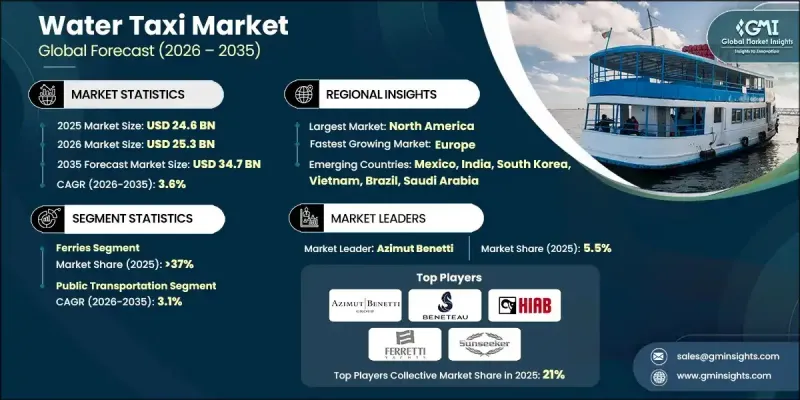
세계의 수상 택시 시장은 2025년 246억 달러로 평가되었으며, 2035년까지 연평균 복합 성장률(CAGR) 3.6%로 성장해 347억 달러에 이를 것으로 예측됩니다.
시장 확대의 배경은 도시 지역의 혼잡 심각화와 인구 밀집 도시의 대체 이동 수단에 대한 수요 증가를 포함합니다. 수상 택시는 도로 교통을 우회하고 도시와 도시 간 네트워크의 미사용 수로를 활용하여 이동 시간을 단축하는 효과적인 옵션으로 점점 더 잘 알려져 있습니다. 급속한 도시 개발과 지속적인 교통 체증은 공공 기관 및 교통 계획 담당자에게 기존 교통 시스템에 수상 이동 수단을 통합하도록 촉구하고 있습니다. 육상 인프라 확장에 비해 수상 운송은 적은 자본 투자와 짧은 개발 기간을 필요로 하므로 효율적인 이동 솔루션을 요구하는 도시들에게 매력적인 선택이 되었습니다. 수상 택시는 연료 소비를 줄이고 장기적인 유지 보수 요구 사항을 줄임으로써 비용 우위를 제공하는 동시에 지속가능성 목표 달성을 지원합니다. 적은 운행 중단으로 대량의 승객을 수송할 수 있는 능력도 그 매력을 높이고 있습니다. 정책 지원 확대, 인센티브 프로그램, 민간 부문의 참여가 함께 안정적이고 경제적이고 환경 친화적인 교통 수단으로 시장 인지도가 더욱 향상되었습니다.
시장 범위
시작 연도
2025년
예측 연도
2026-2035년
시작 규모
246억 달러
예측 금액
347억 달러
CAGR
3.6%
대중교통 부문은 2026년부터 2035년까지 연평균 복합 성장률(CAGR) 3.1%를 보일 것으로 예측됩니다. 도시와 관광지에서 승객이 더 빠른 이동 수단을 선호하는 경향이 수요를 지원합니다. 기존 육상 운송을 대체하는 수상 이동 수단을 촉진하는 정부 주도 노력은 도입을 뒷받침하고 장기적인 산업 성장을 지원합니다.
2025년 시점에서 디젤 구동 수상 택시가 가장 큰 점유율을 차지했습니다. 디젤 추진 시스템은 높은 빈도 운행과 장거리 항로에서의 운영 효율성과 비용 효율성이 높기 때문에 여전히 널리 채택되고 있습니다. 대체 추진 기술이 계속 발전하고 있는 가운데, 특히 승객 수가 많은 선박을 운항하는 사업자들에게 신뢰할 수 있는 성능과 관리 가능한 운영 비용을 요구하는 경우, 디젤 시스템은 여전히 실용적인 솔루션을 제공합니다.
북미의 수상 택시 시장은 2035년까지 99억 달러 규모에 이를 것으로 예측되며, 2026년부터 2035년까지 연평균 복합 성장률(CAGR) 2.1%로 성장할 전망입니다. 이 지역은 여객 수송 서비스를 지원하는 광범위한 내륙 및 해안 수로를 가지고 있습니다. 시장 성장의 주요 원동력은 미국과 캐나다에서 안정적인 수요이며, 수상 택시는 도시와 해안의 이동성 구상에서 보완적인 교통 수단으로 점점 인식되고 있습니다.
목차
제1장 조사 방법
제2장 주요 요약
제3장 업계 인사이트
생태계 분석
공급자의 상황
이익률
비용 구조
각 단계에서의 부가가치
밸류체인에 영향을 주는 요인
혁신
업계에 미치는 영향요인
성장 요인
도시 수변의 혼잡 완화
연안 및 내륙 관광의 성장
스마트 시티 수상 교통 이니셔티브의 확대
지속가능한 저배출 이동성에 대한 수요 증가
업계의 잠재적 위험 및 과제
높은 초기 자본 및 선박 조달 비용
날씨 의존성과 계절적 운항
시장 기회
전기식 및 자율 항행식 수상 택시의 도입
도시형 멀티모달 교통 시스템과의 통합
신흥 연안 도시 및 하천 연안 도시에 확대
도시 수상 모빌리티의 관민 연계
성장 가능성 분석
규제 상황
북미
항만 및 수로안전법
존스법(국내 무역용)
하와이주 행정규칙집 - 수상택시 운항
유럽
선박안전규칙(Schiffssicherheitsverordnung)
독일 내 수항로 교통 규칙
해운책임법
아시아태평양
내륙선박법, 2021년
해상교통안전법
베트남의 해상 운수법
내수운송관리에 관한 규제
라틴아메리카
BR do Mar(법률 제14.301/2022호)
국가 해사국(DPC)
FMM(Forma Migratoria Multiple)
중동 및 아프리카
두바이 도로 교통국(RTA)
해양 관광 선박의 분류 규제
Porter's Five Forces 분석
PESTEL 분석
기술과 혁신 동향
현재의 기술 동향
신흥기술
가격 동향
지역별
제품별
생산 통계
생산 거점
소비 거점
수출과 수입
비용 내역 분석
지속가능성과 환경영향
환경 영향 평가
사회적 영향과 지역사회 공헌
거버넌스와 기업의 사회적 책임
지속 가능한 금융과 투자 동향
전동화 및 대체 추진 시스템의 영향 분석
총소유비용 비교 : 전기식 대 디젤식 대 하이브리드식
충전 인프라의 제약과 해결책
배터리 항속 거리, 다운타임 및 루트 계획에 미치는 영향
전기선박에 대한 정부의 장려책과 보조금
수상 택시용 장기 탈탄소화 로드맵
플릿 경제성과 총소유비용(TCO) 분석
선박유형 및 추진방식별 설비투자(CAPEX) 대 운영비(OPEX) 비교
TCO 비교 : 전기식 대 디젤식 대 하이브리드식 수상 택시
유지보수, 배터리 교체 및 수명 주기 비용에 미치는 영향
사업자를 위한 투자 회수 기간과 ROI 향상 요인
OEM이 소유 비용 절감을 위해 활용할 수 있는 설계상의 궁리
사례 연구
전망과 기회
제4장 경쟁 구도
소개
기업의 시장 점유율 분석
북미
유럽
아시아태평양
라틴아메리카
중동 및 아프리카
주요 시장 기업의 경쟁 분석
경쟁 포지셔닝 매트릭스
전략적 전망 매트릭스
주요 발전
인수합병
제휴 및 협업
신제품 발매
사업 확대 계획과 자금 조달
제5장 시장 추계 및 예측 : 제품별, 2022-2035년
요트
크루즈
세일보트
페리
쌍동선
제6장 시장 추계 및 예측 : 추진력별, 2022-2035년
전기식
디젤
하이브리드
기타
제7장 시장 추계 및 예측 : 서비스별, 2022-2035년
정기편 서비스
온디맨드 서비스
제8장 시장 추계 및 예측 : 여객 정원별, 2022-2035년
12명 이하
12명 이상
제9장 시장 추계 및 예측 : 예약 방법별, 2022-2035년
온라인
오프라인
제10장 시장 추계 및 예측 : 사업별, 2022-2035년
도시간
시내
제11장 시장 추계 및 예측 : 용도별, 2022-2035년
대중교통기관
레저 및 관광
비즈니스 및 기업용 운송
개인용
기타
제12장 시장 추계 및 예측 : 지역별, 2022-2035년
북미
미국
캐나다
유럽
독일
영국
프랑스
이탈리아
스페인
러시아
북유럽 국가
베네룩스
아시아태평양
중국
인도
일본
한국
ANZ
싱가포르
말레이시아
인도네시아
베트남
태국
라틴아메리카
브라질
멕시코
아르헨티나
콜롬비아
중동 및 아프리카
남아프리카
사우디아라비아
아랍에미리트(UAE)
제13장 기업 프로파일
글로벌 기업
Beneteau
Azimut Benetti
Brunswick
Ferretti
Sunseeker
Austal
Candela
Damen Shipyards
Fincantieri
Princess Yachts
Bavaria Yachtbau
American Sail
Catalina Yachts
Cargotec
Hiab
Hornblower
지역 기업
Thames Clippers
NY Waterway
Artemis
Seastreak
Greenline Yachts
Greenbay Marine
신흥기업
E-lixr
Navier
Callboats
The Water Taxi Company
Flying Fish
JHS
영문 목차
영문목차
The Global Water Taxi Market was valued at USD 24.6 billion in 2025 and is estimated to grow at a CAGR of 3.6% to reach USD 34.7 billion by 2035.
Market expansion is driven by rising urban congestion and the increasing need for alternative mobility solutions in densely populated cities. Water taxis are increasingly recognized as an effective option for reducing travel time by bypassing road traffic and utilizing underused waterways within urban and intercity networks. Rapid urban development and persistent traffic bottlenecks are encouraging public authorities and transport planners to integrate water-based mobility into existing transit ecosystems. Compared with land-based infrastructure expansion, water transport requires lower capital investment and shorter development timelines, making it an attractive option for cities seeking efficient mobility solutions. Water taxis also offer cost advantages through lower fuel consumption and reduced long-term maintenance requirements while supporting sustainability objectives. Their ability to transport a high volume of passengers with fewer operational disruptions strengthens their appeal. Growing policy support, incentive programs, and private sector participation are further enhancing the market's visibility as a reliable, economical, and environmentally conscious transportation mode.
Market Scope
Start Year
2025
Forecast Year
2026-2035
Start Value
$24.6 Billion
Forecast Value
$34.7 Billion
CAGR
3.6%
The public transportation segment is forecast to grow at a CAGR of 3.1% from 2026 to 2035, owing to its suitability for routine commuting and urban travel needs. Demand is supported by passengers prioritizing faster transit options within cities and tourism-driven locations. Government-backed initiatives promoting water-based mobility as a substitute for traditional land transport are reinforcing adoption and supporting long-term industry growth.
The diesel-powered water taxis accounted for the largest share in 2025. Diesel propulsion remains widely adopted due to its operational efficiency and cost-effectiveness for high-frequency operations and longer routes. While alternative propulsion technologies continue to evolve, diesel systems currently provide a practical solution for operators seeking dependable performance and manageable operating expenses, particularly for vessels handling higher passenger volumes.
North America Water Taxi Market is projected to reach USD 9.9 billion by 2035, growing at a CAGR of 2.1% between 2026 and 2035. The region benefits from extensive inland and coastal waterways that support passenger transport services. Market growth is primarily driven by steady demand in the United States and Canada, where water taxis are increasingly viewed as a complementary mode of transportation within urban and coastal mobility frameworks.
Key companies active in the Global Water Taxi Market include Austal, Brunswick, Ferretti, Azimut Benetti, Hornblower, Bavaria Yachts, Beneteau, Sunseeker, Catalina Yachts, and Hiab. Companies operating in the Global Water Taxi Market are focusing on fleet modernization, operational efficiency, and strategic partnerships to strengthen their market position. Manufacturers and operators are investing in fuel-efficient vessel designs and exploring alternative propulsion technologies to align with sustainability goals. Expansion into high-potential urban corridors and tourism-centric locations remains a core growth strategy. Firms are also enhancing passenger experience through improved vessel comfort, digital ticketing systems, and integrated route planning. Collaboration with municipal authorities and private infrastructure developers is helping secure long-term operating contracts.
Table of Contents
Chapter 1 Methodology
1.1 Market scope and definition
1.2 Research design
1.2.1 Research approach
1.2.2 Data collection methods
1.3 Data mining sources
1.3.1 Global
1.3.2 Regional/Country
1.4 Base estimates and calculations
1.4.1 Base year calculation
1.4.2 Key trends for market estimation
1.5 Primary research and validation
1.5.1 Primary sources
1.6 Forecast
1.7 Research assumptions and limitations
Chapter 2 Executive Summary
2.1 Industry 3600 synopsis
2.2 Key market trends
2.2.1 Regional
2.2.2 Product
2.2.3 Propulsion
2.2.4 Service
2.2.5 Passenger Capacity
2.2.6 Booking Mode
2.2.7 Operation
2.2.8 Application
2.3 TAM analysis, 2026-2035
2.4 CXO perspectives: Strategic imperatives
2.4.1 Executive decision points
2.4.2 Critical success factors
2.5 Future outlook and recommendations
Chapter 3 Industry Insights
3.1 Industry ecosystem analysis
3.1.1 Supplier landscape
3.1.2 Profit margin
3.1.3 Cost structure
3.1.4 Value addition at each stage
3.1.5 Factor affecting the value chain
3.1.6 Disruptions
3.2 Industry impact forces
3.2.1 Growth drivers
3.2.1.1 Urban waterfront congestion reduction
3.2.1.2 Growth in coastal and inland tourism
3.2.1.3 Expansion of smart city water transport initiatives
3.2.1.4 Rising demand for sustainable and low-emission mobility
3.2.2 Industry pitfalls and challenges
3.2.2.1 High initial capital and vessel procurement costs
3.2.2.2 Weather dependency and seasonal operations
3.2.3 Market opportunities
3.2.3.1 Adoption of electric and autonomous water taxis
3.2.3.2 Integration with multimodal urban transport systems
3.2.3.3 Expansion in emerging coastal and riverfront cities
3.2.3.4 Public-private partnerships for urban water mobility
3.3 Growth potential analysis
3.4 Regulatory landscape
3.4.1 North America
3.4.1.1 Ports and Waterways Safety Act
3.4.1.2 Jones Act (for domestic trade)
3.4.1.3 Hawaii Administrative Rule Code - Water taxi operations