Truck Bedliners Market Opportunity, Growth Drivers, Industry Trend Analysis, and Forecast 2026 - 2035
상품코드:1892796
리서치사:Global Market Insights Inc.
발행일:2025년 12월
페이지 정보:영문 220 Pages
라이선스 & 가격 (부가세 별도)
ㅁ Add-on 가능: 고객의 요청에 따라 일정한 범위 내에서 Customization이 가능합니다. 자세한 사항은 문의해 주시기 바랍니다.
한글목차
세계의 트럭 베드라이너 시장은 2025년에 6억 9,960만 달러로 평가되었고, 2035년까지 연평균 복합 성장률(CAGR) 6.3%로 성장하여 12억 7,000만 달러에 이를 것으로 예측됩니다.
시장의 성장세는 개인용, 상업용, 레저용을 불문하고 전 세계적으로 픽업트럭이 보급되고 있는 것에 기인합니다. 차량 보유량 증가는 픽업트럭 문화를 더욱 강화시켰고, 이는 직접적으로 화물칸 보호 솔루션에 대한 수요를 증가시켰습니다. 카시트 라이너는 차량의 상태를 유지하고 장기적인 가치 유지를 위한 필수 액세서리로 널리 인식되고 있습니다. OEM 제조업체와 애프터마켓 기업 모두 교체 주기가 길어지고 전체 사용자층에서 커스터마이징으로 꾸준히 전환하는 추세의 혜택을 누리고 있습니다. 소비자들은 픽업트럭을 다기능 자산으로 인식하는 경향이 강해지고 있으며, 내구성, 외관, 실용성을 높이는 액세서리에 대한 지출이 증가하고 있습니다. 화물칸 라이너는 가장 실용적이고 저렴한 업그레이드 중 하나로 널리 받아들여지고 있습니다. 액세서리 소매 네트워크의 확대, DIY의 확산, 제품의 광범위한 가용성, 특히 선진 시장과 급성장하는 도시 지역에서 수요를 더욱 자극하고 있습니다. 상업용 차량 운영업체도 크게 기여하고 있으며, 내구성이 뛰어난 적재함 보호는 차량의 수명을 연장하고 지속적인 유지보수 비용을 절감하여 비용 효율적인 투자로 적재함 라이너의 가치를 높이고 있습니다.
시장 범위
개시 연도
2025년
예측 연도
2026-2035년
개시 연도 시장 규모
6억 9,960만 달러
예측 금액
12억 7,000만 달러
CAGR
6.3%
픽업트럭 오너들은 기능성과 외관을 모두 향상시키기 위해 차량 커스터마이징을 계속하고 있습니다. 베드 라이너는 높은 보호 성능과 가성비로 인해 점점 더 많은 선택을 받고 있습니다. 설치의 용이성과 직접 설치 솔루션에 대한 소비자의 신뢰도가 높아지면서 애프터마켓에서의 보급 확대가 이루어지고 있습니다. 상업용 운영자들은 마모 관련 비용을 절감하기 위해 내구성을 중시하고 있으며, 이는 전체 차량용도에서 안정적인 수요를 뒷받침하고 있습니다.
경트럭 부문은 2025년 57%의 점유율을 차지할 것으로 예상되며, 2026년부터 2035년까지 연평균 복합 성장률(CAGR) 7%로 확대될 것으로 전망됩니다. 이 부문이 선두를 달리고 있는 배경에는 높은 개인 소유율, 액세서리 지출 증가, 커스터마이징 트렌드의 강세, 전기 픽업 모델의 보급 확대 등이 있습니다. 이러한 요인은 대규모 생산 능력과 광범위한 지역에서 일관되게 높은 베드 라이너 장착률로 인해 더욱 강화되었습니다.
OEM 부문은 2026년부터 2035년까지 연평균 5.7%의 성장률을 보일 것으로 예측됩니다. OEM 장착형 베드 라이너는 통합된 착용감, 보증의 무결성, 구매자의 편의성 향상을 제공합니다. 이 부문의 성장은 경트럭 생산량 증가, 프리미엄 공장 장착형 액세서리 제공, 품질 및 규제 기준을 충족하기 위한 공급업체 파트너와의 협력 확대에 힘입어 성장세를 보이고 있습니다.
미국 트럭 베드 라이너 시장은 2025년 2억 6,190만 달러에 달할 것으로 예측됩니다. 미국 내 수요는 가혹한 사용 환경에 적합한 내구성 코팅 솔루션에 대한 선호로 인해 지속적으로 형성되고 있습니다. 이러한 성장은 픽업트럭의 높은 보급률, 차량 맞춤화 증가, 차량 개인화에 대한 소비자의 높은 관심에 힘입어 성장세를 보이고 있습니다. 제조업체들은 성능과 내구성을 유지하면서 공장 출고 시 차량 디자인과 시각적으로 조화를 이루도록 설계된 마감재로 이에 대응하고 있습니다.
목차
제1장 조사 방법
시장 범위와 정의
조사 설계
조사 접근
데이터 수집 방법
데이터 마이닝 소스
세계
지역별/국가별
기본 추정치와 계산
기준연도 계산
시장 추정 주요 동향
1차 조사와 검증
1차 정보
예측 모델
조사의 전제조건과 제한 사항
제2장 주요 요약
제3장 업계 인사이트
생태계 분석
공급업체 상황
이익률
비용 구조
각 단계별 부가가치
밸류체인에 영향을 미치는 요인
파괴적 변화
업계에 대한 영향요인
성장 촉진요인
업계의 잠재적 리스크&과제
시장 기회
성장 가능성 분석
규제 상황
세계
환경 규제
배출 규제 요건
폐기물 처리 규제
노동 안전 위생 기준
국제 노동 기관(ILO) 기준
자동차 OEM 기준
북미
유럽
아시아태평양
라틴아메리카
중동 및 아프리카
Porter's Five Forces 분석
PESTEL 분석
기술과 혁신 동향
현재 기술 동향
폴리우레탄 화학과 배합 설계
폴리우레아 화학과 배합 설계
하이브리드 시스템 기술
용도 기기 기술
신기술
자기치유 코팅 기술
나노테크놀러지 강화 코팅
항균 및 항세균 솔루션
변색성 및 서모크로믹 마감
가격 분석
전문 설치 가격 결정
프리미엄 서비스 가격 결정
DIY 제품 가격 결정
롤 온 키트 가격 분석
침대 매트 및 러 가격 결정
드롭 인 라이너 가격 결정
E-Commerce와 소매가격 비교
OEM 공장 설치 가격
생산 통계
생산 거점
소비 거점
수출입
비용 내역 분석
제조 비용 구조
설치·시공 비용
유통·채널 비용
마케팅 및 판매 비용
부문별 수익성 분석
비용 최적화 전략
특허 분석
지속가능성과 환경면
지속가능한 대처
폐기물 감축 전략
생산 에너지 효율
친환경 이니셔티브
탄소발자국에 관한 고려사항
소비자 행동과 커스터마이즈 동향
커스터마이즈 시장 개요
색과 마무리 선호도
질감·표면 커스터마이즈
기능 커스터마이즈
인구통계별 퍼스널라이제이션 동향
신흥 커스터마이즈 기술
지역별 구매 선호도와 사용 패턴
상업용과 개인용 부문 구성 비율
지역별 사용 패턴 분석
사용 빈도와 유지관리
제4장 경쟁 구도
서론
기업의 시장 점유율 분석
북미
유럽
아시아태평양
라틴아메리카
중동 및 아프리카
주요 시장 기업의 경쟁 분석
경쟁 포지셔닝 매트릭스
전략적 전망 매트릭스
주요 발전
인수합병(M&A)
제휴 및 협업
신제품 발매
사업 확대 계획과 자금조달
제5장 시장 추산 및 예측 : 유형별, 2022-2035
주요 동향
Drop-in bedliners
Spray-on bedliners
Bed mats & rugs
Roll-on/brush-on bedliners
Hybrid/custom-fitted bedliners
제6장 시장 추산 및 예측 : 재료별, 2022-2035
주요 동향
폴리우레탄
폴리우레아
고무
복합재료/폴리에틸렌
에폭시 수지계 배합제
제7장 시장 추산 및 예측 : 차량별, 2022-2035
주요 동향
소형 트럭
중형 트럭
대형 트럭
제8장 시장 추산 및 예측 : 판매채널별, 2022-2035
주요 동향
OEM
애프터마켓
온라인 소매
판매점
제9장 시장 추산 및 예측 : 최종 용도별, 2022-2035
주요 동향
자동차
군 및 방위 분야
에너지(석유, 가스, 광업)
건설
농업
소매업 및 전자상거래
기타
애프터마켓
제10장 시장 추산 및 예측 : 지역별, 2022-2035
주요 동향
북미
미국
캐나다
유럽
독일
영국
프랑스
이탈리아
스페인
북유럽 국가
러시아
폴란드
루마니아
아시아태평양
중국
인도
일본
한국
ANZ
베트남
인도네시아
라틴아메리카
브라질
멕시코
아르헨티나
중동 및 아프리카
남아프리카공화국
사우디아라비아
아랍에미리트(UAE)
제11장 기업 개요
Global companies
ArmorThane
BASF
Dee Zee
DualLiner
Husky Liners
LINE-X
PPG Industries
Rhino Linings
Rugged Liner
Ultimate Linings
U-POL(RAPTOR)
WeatherTech
지역 제조업체
Aeroklas
Armadillo Liners
BedRug
Bullet Liner
Lund International
OKULEN
Penda Corporation
Scorpion Protective Coatings
SPEEDLINER
Tuff Liner
Vortex Liners
신흥 제조업체
AL’s Liner
Durabak
Herculiner
Iron Armor
POR-15
LSH
영문 목차
영문목차
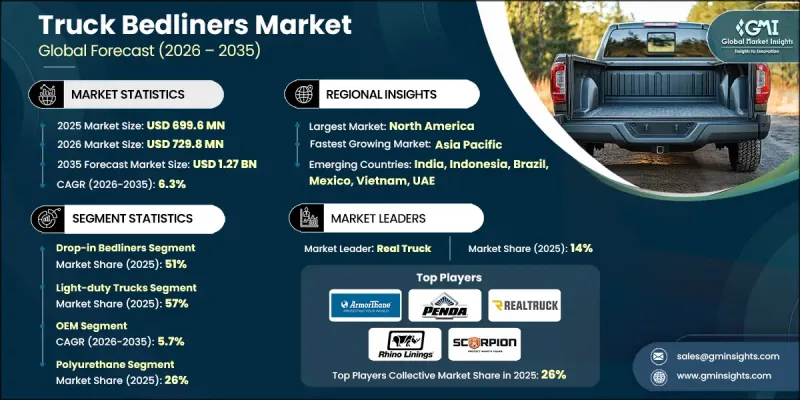
The Global Truck Bedliners Market was valued at USD 699.6 million in 2025 and is estimated to grow at a CAGR of 6.3% to reach USD 1.27 billion by 2035.
Market momentum is driven by the rising global adoption of pickup trucks across personal, commercial, and recreational use. Increasing vehicle ownership continues to strengthen pickup truck culture, which directly fuels demand for protective cargo bed solutions. Bedliners are widely viewed as essential accessories that help preserve vehicle condition while supporting long-term value retention. Both OEM and aftermarket participants benefit from longer replacement timelines and a steady shift toward customization across user segments. Consumers increasingly view pickup trucks as multifunctional assets, prompting higher spending on accessories that enhance durability, appearance, and usability. Bedliners remain among the most practical and affordable upgrades, supporting their widespread acceptance. Growth in accessory retail networks, expanding do-it-yourself adoption, and broader product availability further stimulate demand, particularly in developed markets and fast-growing urban regions. Commercial fleet operators also contribute significantly, as durable bed protection helps extend vehicle service life and reduce ongoing maintenance expenses, reinforcing bedliners as a cost-efficient investment.
Market Scope
Start Year
2025
Forecast Year
2026-2035
Start Value
$699.6 Million
Forecast Value
$1.27 Billion
CAGR
6.3%
Pickup owners continue to personalize their vehicles to improve both functionality and visual appeal. Bedliners are increasingly selected for their protective performance and value proposition. Easier installation options and growing consumer confidence in self-installation solutions support rising aftermarket penetration. Commercial operators prioritize durability to limit wear-related expenses, reinforcing steady demand across fleet applications.
The light-duty truck segment accounted for a 57% share in 2025 and is projected to grow at a CAGR of 7% between 2026 and 2035. This segment leads due to higher personal ownership rates, increased spending on accessories, strong customization trends, and the growing presence of electric pickup models. These factors are reinforced by large-scale production capabilities and consistently high bedliner attachment rates across a broad geographic footprint.
The OEM segment is expected to grow at a CAGR of 5.7% from 2026 to 2035. OEM-installed bedliners offer integrated fitment, warranty alignment, and added convenience for buyers. Segment growth is supported by rising light truck production volumes, premium factory-installed accessory offerings, and expanding collaboration with supplier partners to meet quality and regulatory standards.
US Truck Bedliners Market reached USD 261.9 million in 2025. Demand in the US continues to be shaped by preferences for durable coating solutions suited for intensive use. Growth is supported by high adoption of pickup trucks, increased fleet customization, and strong consumer focus on vehicle personalization. Manufacturers are responding with finishes designed to align visually with factory vehicle designs while maintaining performance durability.
Key companies active in the Global Truck Bedliners Market include LINE-X, WeatherTech, Rhino Linings, DualLiner, Truck Hero (BedRug), Rugged Liner, Penda Corporation (Pendaliner), Ultimate Linings, SPEEDLINER (Industrial Polymers), and Scorpion Protective Coatings. Companies in the Global Truck Bedliners Market strengthen their competitive position through product innovation, expanded distribution networks, and strategic partnerships. Manufacturers invest in advanced materials to improve durability, appearance, and environmental performance. Many players focus on expanding OEM relationships to secure factory-fitment opportunities while also enhancing aftermarket reach through specialized retailers and installer networks. Brand differentiation is reinforced through customization options, improved installation efficiency, and consistent product quality. Geographic expansion into high-growth regions supports volume gains, while marketing strategies emphasize durability, long-term cost savings, and vehicle value preservation. Continuous investment in manufacturing efficiency and customer support further helps companies defend market share and build long-term brand loyalty.
Table of Contents
Chapter 1 Methodology
1.1 Market scope and definition
1.2 Research design
1.2.1 Research approach
1.2.2 Data collection methods
1.3 Data mining sources
1.3.1 Global
1.3.2 Regional/Country
1.4 Base estimates and calculations
1.4.1 Base year calculation
1.4.2 Key trends for market estimation
1.5 Primary research and validation
1.5.1 Primary sources
1.6 Forecast model
1.7 Research assumptions and limitations
Chapter 2 Executive Summary
2.1 Industry 3600 synopsis
2.2 Key market trends
2.2.1 Regional
2.2.2 Type
2.2.3 Material
2.2.4 Vehicle
2.2.5 Sales channel
2.2.6 End use
2.3 TAM analysis, 2026-2035
2.4 CXO perspectives: Strategic imperatives
2.4.1 Executive decision points
2.4.2 Critical success factors
2.5 Future outlook
2.6 Strategic recommendations
Chapter 3 Industry Insights
3.1 Industry ecosystem analysis
3.1.1 Supplier landscape
3.1.2 Profit margin
3.1.3 Cost structure
3.1.4 Value addition at each stage
3.1.5 Factor affecting the value chain
3.1.6 Disruptions
3.2 Industry impact forces
3.2.1 Growth drivers
3.2.1.1 Rising pickup truck sales
3.2.1.2 Growth in aftermarket customization
3.2.1.3 Increasing demand for vehicle protection
3.2.1.4 Advancements in spray-on coating materials
3.2.2 Industry pitfalls and challenges
3.2.2.1 Volatile raw material costs
3.2.2.2 Competition from low-cost alternatives
3.2.3 Market opportunities
3.2.3.1 Expansion in emerging pickup markets
3.2.3.2 OEM partnership integration
3.2.3.3 Development of eco-friendly coatings
3.2.3.4 Growth in commercial fleet upfitting
3.3 Growth potential analysis
3.4 Regulatory landscape
3.4.1 Global
3.4.1.1 Environmental regulations
3.4.1.2 Emissions control requirements
3.4.1.3 Waste disposal regulations
3.4.1.4 Occupational health & safety standards
3.4.1.5 International labor organization standards