무선 EV 배터리 모니터링 시장 기회, 성장요인, 업계 동향 분석 및 예측(2025-2034년)
Wireless EV Battery Monitoring Market Opportunity, Growth Drivers, Industry Trend Analysis, and Forecast 2025 - 2034
상품코드:1892701
리서치사:Global Market Insights Inc.
발행일:2025년 12월
페이지 정보:영문 220 Pages
라이선스 & 가격 (부가세 별도)
ㅁ Add-on 가능: 고객의 요청에 따라 일정한 범위 내에서 Customization이 가능합니다. 자세한 사항은 문의해 주시기 바랍니다.
한글목차
세계의 무선 EV 배터리 모니터링 시장은 2024년에 5억 4,370만 달러로 평가되었고, 2034년까지 연평균 복합 성장률(CAGR) 14.6%로 성장하여 20억 7,000만 달러에 이를 것으로 예측됩니다.
자동차 업계에서는 경량화, 에너지 밀도 향상, 모듈식 배터리 구성의 실현을 목표로 전기차 플랫폼의 재설계가 가속화되고 있습니다. 무선 배터리 모니터링 시스템은 무거운 배선이 필요 없고, 조립 공정의 신속성, 유연한 모듈식 아키텍처를 실현할 수 있어 차세대 EV 플랫폼에 최적화된 솔루션입니다. 소프트웨어 정의 차량(SDV)에서는 더 깊은 데이터 가시성, 안전한 클라우드 연결성, 무선 업데이트(OTA) 기능에 대한 수요가 증가하고 있습니다. 무선 BMS 시스템은 풍부한 원격 측정 및 예측 분석 기능을 제공하여 고급 안전 모델링과 효율적인 에너지 관리를 실현합니다. 데이터 기반 아키텍처로 전환하는 OEM 제조업체에게 무선 모니터링은 전략적 목표에 부합하는 솔루션입니다. 또한, 그리드, 가정용 및 산업용 저장 용도를 위한 EV 이차전지 모니터링의 중요성이 증가하고 있습니다. 무선 솔루션은 통합의 복잡성을 줄이고, 비용을 최소화하며, 적응형 에너지 저장 모니터링, 스마트 충전 솔루션, 차량 및 개인 소비자를 위한 최적화된 에너지 공급에 대한 수요 증가에 대응할 수 있습니다.
시장 범위
개시 연도
2024년
예측 기간
2025-2034년
개시 연도 시장 규모
5억 4,370만 달러
예측 금액
20억 7,000만 달러
CAGR
14.6%
하드웨어 부문은 2024년 57%의 점유율을 차지했습니다. 배터리의 전동화, 대용량 팩의 복잡성 증가에 따라 열악한 자동차 환경에서도 견딜 수 있는 견고한 센서 노드, 게이트웨이 모듈, 안테나, 프로세싱 유닛에 대한 요구가 증가하고 있습니다.
단거리 무선 부문은 2034년까지 연평균 복합 성장률(CAGR) 11.9%를 보일 것으로 예측됩니다. 블루투스, BLE 및 기타 저전력 단거리 통신 프로토콜은 안정적인 데이터 전송, 저전력 소비, 모듈 설계와의 호환성을 제공하며, 배터리 팩 내부 통신에서 여전히 필수적인 요소입니다. 이러한 기술은 전자기 간섭, 셀 수 증가, 엄격한 안전 기준과 같은 문제에 대응하고 있습니다.
미국 무선 EV 배터리 모니터링 시장은 2024년 1억 4,260만 달러 규모로 75.8%의 점유율을 차지할 것으로 예측됩니다. 강력한 연방 및 주정부 정책이 전기차 보급을 가속화하고 있으며, 전기차 구매 및 충전 인프라 구축에 대한 인센티브를 제공하는 프로그램이 시행되고 있습니다. 정책 목표인 배터리 비용 절감과 급속 충전의 실현은 첨단 모니터링 기술에 대한 수요를 더욱 촉진하고 있습니다.
목차
제1장 조사 방법
시장 범위와 정의
조사 설계
조사 접근
데이터 수집 방법
데이터 마이닝 소스
세계
지역별/국가별
기본 추정치와 계산
기준연도 계산
시장 추정 주요 동향
1차 조사와 검증
1차 정보
예측
조사의 전제조건과 제한 사항
제2장 주요 요약
제3장 업계 인사이트
생태계 분석
공급업체 상황
이익률 분석
비용 구조
각 단계별 부가가치
밸류체인에 영향을 미치는 요인
파괴적 변화
업계에 대한 영향요인
성장 촉진요인
업계의 잠재적 리스크&과제
시장 기회
성장 가능성 분석
규제 상황
북미
유럽
아시아태평양
라틴아메리카
중동 및 아프리카
Porter's Five Forces 분석
PESTEL 분석
기술과 혁신 동향
현재 기술 동향
신기술
가격 동향
지역별
제품별
시장 가격 전략과 경제성
가격 모델 비교(자본 지출대 운영 지출, 구독 대영구 라이선스)
원가 가산 방식 및 가치 기반 가격 결정 전략
수량 할인 및 단계적 가격 체계
지역별 가격 변동과 지방 분권 요인
고객 부문별 유닛 경제성과 마진 분석
투자수익률(ROI) 및 회수기간 계산
번들링 및 크로스 셀링(cross-selling) 기회
생산 통계
생산 거점
소비 허브
수출입
비용 내역 분석
특허 분석
지속가능성과 환경면
탄소발자국 평가
순환형 경제에의 통합
전자 폐기물 관리 요건
그린 제조 구상
시스템 아키텍처 분석
배터리 모니터링의 요건
화학성분별
용도별
배터리 형상과 모니터링에 대한 영향
배터리 열화 메커니즘과 모니터링에 대한 영향
무선 모니터링과의 열관리 통합
제조 및 품질관리에 관한 고려사항
배터리 제조 무선 BMS 통합
인라인 시험 및 시운전
제조 제품 비율과 결함 감지
확장성과 자동화
총 소유비용(TCO) 모델
초기 비용 구성요소
제조 비용 절감
운영 비용 절감
수명주기 종료시 가치
총 소유비용(TCO) 손익분기점 분석
상호운용성과 표준화 현황
통신 프로토콜 규격
BMS 데이터 규격
기능 안전기준
사이버 보안 기준
업계 제휴 구상
지역 규제 조화 대처
데이터 관리 및 분석 프레임워크
데이터 수집과 사전 처리
엣지 처리와 클라우드 처리 아키텍처 비교
배터리 상태 추정 알고리즘
이상 감지 및 진단
예지보전 및 플릿 분석
디지털 트윈 구현
시험 및 검증 프로토콜
무선 링크 성능 시험
환경 시험
EMI/EMC 시험
기능 안전 시험
사이버 보안 시험
가속 수명 시험
제4장 경쟁 구도
서론
기업의 시장 점유율 분석
북미
유럽
아시아태평양
라틴아메리카
중동 및 아프리카
주요 시장 기업의 경쟁 분석
경쟁 포지셔닝 매트릭스
전략적 전망 매트릭스
주요 발전
인수합병(M&A)
제휴 및 협업
신제품 발매
사업 확대 계획과 자금조달
제5장 시장 추산 및 예측 : 컴포넌트별, 2021-2034
주요 동향
하드웨어
소프트웨어
서비스
제6장 시장 추산 및 예측 : 통신기술별, 2021-2034
주요 동향
근거리 무선통신(Bluetooth)
장거리 통신/LPWAN
독자 개발 RF스택
하이브리드 아키텍처
제7장 시장 추산 및 예측 : 배터리 화학별, 2021-2034
주요 동향
리튬 이온 배터리
납축전지
니켈수소전지
고체 배터리
기타
제8장 시장 추산 및 예측 : 차량별, 2021-2034
주요 동향
승용차
해치백
세단
SUV
상용차
소형 차량
중형차
대형 차량
제9장 시장 추산 및 예측 : 지역별, 2021-2034
주요 동향
북미
미국
캐나다
유럽
독일
영국
프랑스
이탈리아
스페인
북유럽 국가
러시아
아시아태평양
중국
인도
일본
호주
한국
싱가포르
말레이시아
태국
라틴아메리카
브라질
멕시코
아르헨티나
중동 및 아프리카(MEA)
남아프리카공화국
사우디아라비아
아랍에미리트(UAE)
제10장 기업 개요
세계 기업
Analog Devices(ADI)
Texas Instruments(TI)
NXP Semiconductors
Infineon Technologies
Renesas Electronics
STMicroelectronics
Dukosi
Cavli Wireless
u-blox
Quectel Wireless Solutions
Robert Bosch
Continental
Denso
Hitachi Astemo
Marelli
LG Innotek
Visteon
ABB E-mobility
BP Pulse
Siemens eMobility
지역 기업
Sunwoda EVB
EVE Energy
Ficosa
Sensata Technologies
Hyundai Mobis
신규 기업
Dragonfly Energy
WeaveGrid
Twaice
VoltaIQ
Ampeco
LSH
영문 목차
영문목차
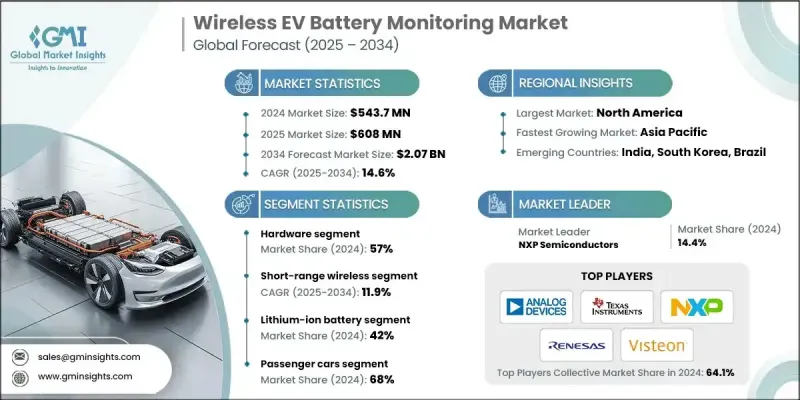
The Global Wireless EV Battery Monitoring Market was valued at USD 543.7 million in 2024 and is estimated to grow at a CAGR of 14.6% to reach USD 2.07 billion by 2034.
The automotive sector is increasingly redesigning electric vehicle platforms to reduce weight, improve energy density, and allow modular battery configurations. Wireless battery monitoring eliminates heavy wiring, speeds up assembly, and supports flexible, modular architecture, making it a preferred solution for next-generation EV platforms. Software-defined vehicles demand deeper data visibility, secure cloud connectivity, and over-the-air update capabilities. Wireless BMS systems offer rich telemetry and predictive analytics support, enabling advanced safety modeling and efficient energy management. OEMs transitioning to data-driven architectures find wireless monitoring aligned with their strategic goals. Additionally, monitoring second-life EV batteries for grid, home, and industrial storage applications is gaining importance. Wireless solutions reduce integration complexity, minimize costs, and meet the growing demand for adaptable energy storage monitoring, smart charging solutions, and optimized energy delivery for fleets and individual consumers.
Market Scope
Start Year
2024
Forecast Year
2025-2034
Start Value
$543.7 Million
Forecast Value
$2.07 Billion
CAGR
14.6%
The hardware segment held 57% share in 2024. Rising battery electrification and the growing complexity of high-capacity packs are driving demand for robust sensor nodes, gateway modules, antennas, and processing units capable of withstanding harsh automotive environments.
The short-range wireless segment is expected to grow at a CAGR of 11.9% through 2034. Bluetooth, BLE, and other low-power short-range protocols remain vital for internal battery-pack communications, offering stable data transfer, low energy consumption, and compatibility with modular designs. These technologies address challenges such as electromagnetic interference, increasing cell counts, and stringent safety standards.
U.S. Wireless EV Battery Monitoring Market held a 75.8% share, generating USD 142.6 million in 2024. Strong federal and state initiatives are accelerating EV adoption, with programs providing incentives for EV purchases and charging infrastructure deployment. Policy targets lower battery costs and faster charging further drive demand for advanced monitoring technologies.
Key players operating in the Global Wireless EV Battery Monitoring Market include Analog Devices, Texas Instruments, LG Innotek, Marelli, NXP Semiconductors, Renesas, Visteon, ABB E-mobility, BP Pulse, and Siemens eMobility. Companies in the Wireless EV Battery Monitoring Market are strengthening their position by investing in R&D to develop advanced sensor nodes, gateway modules, and antenna systems that can handle high-capacity EV batteries. Many firms focus on short-range wireless protocols and IoT-enabled solutions to improve modularity, data accuracy, and energy efficiency. Strategic collaborations with OEMs, fleet operators, and energy providers help expand deployment and secure long-term contracts. Cloud integration and predictive analytics capabilities are being enhanced to support software-defined vehicles and over-the-air updates.
Table of Contents
Chapter 1 Methodology
1.1 Market scope and definition
1.2 Research design
1.2.1 Research approach
1.2.2 Data collection methods
1.3 Data mining sources
1.3.1 Global
1.3.2 Regional/Country
1.4 Base estimates and calculations
1.4.1 Base year calculation
1.4.2 Key trends for market estimation
1.5 Primary research and validation
1.5.1 Primary sources
1.6 Forecast
1.7 Research assumptions and limitations
Chapter 2 Executive Summary
2.1 Industry 360° synopsis, 2021 - 2034
2.2 Key market trends
2.2.1 Regional
2.2.2 Component
2.2.3 Communication technology
2.2.4 Battery chemistry
2.2.5 Vehicle
2.3 TAM Analysis, 2025-2034
2.4 CXO perspectives: Strategic imperatives
2.4.1 Executive decision points
2.4.2 Critical success factors
2.5 Future outlook and strategic recommendations
Chapter 3 Industry Insights
3.1 Industry ecosystem analysis
3.1.1 Supplier landscape
3.1.2 Profit margin analysis
3.1.3 Cost structure
3.1.4 Value addition at each stage
3.1.5 Factor affecting the value chain
3.1.6 Disruptions
3.2 Industry impact forces
3.2.1 Growth drivers
3.2.1.1 Accelerating Global EV Adoption
3.2.1.2 Regulatory Mandates for Battery Safety & Monitoring
3.2.1.3 Cost Reduction Imperatives
3.2.1.4 Weight & Volume Optimization
3.2.1.5 Thermal Runaway Safety Concerns
3.2.2 Industry pitfalls and challenges
3.2.2.1 High Initial Implementation Costs & R&D Investment
3.2.2.2 Lack of Standardization & Interoperability
3.2.3 Market opportunities
3.2.3.1 Multi-Modal Sensor Fusion for Superior Thermal Runaway Detection
3.2.3.2 Energy-Autonomous Wireless Nodes with Energy Harvesting