스마트 전기 식품 폐기물 퇴비화 기계 시장 기회, 성장 촉진요인, 업계 동향 분석 및 예측(2026-2035년)
Smart Electric Food Waste Composting Machine Market Opportunity, Growth Drivers, Industry Trend Analysis, and Forecast 2026 - 2035
상품코드:1892653
리서치사:Global Market Insights Inc.
발행일:2025년 12월
페이지 정보:영문 210 Pages
라이선스 & 가격 (부가세 별도)
ㅁ Add-on 가능: 고객의 요청에 따라 일정한 범위 내에서 Customization이 가능합니다. 자세한 사항은 문의해 주시기 바랍니다.
한글목차
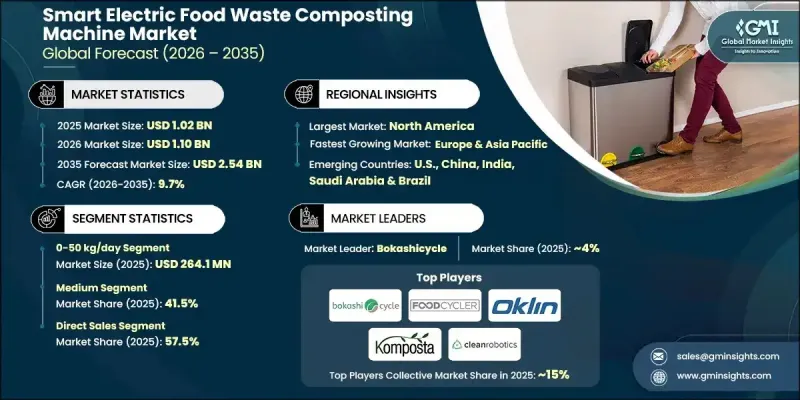
세계의 스마트 전기 식품 폐기물 퇴비화 기계 시장은 2025년에 10억 2,000만 달러로 평가되었으며, 2035년까지 CAGR 9.7%로 성장하여 25억 4,000만 달러에 달할 것으로 예측됩니다.
이 산업의 성장은 전 세계 음식물 쓰레기의 증가와 각국 정부의 환경 규제 강화에 따른 시급성 증가에 힘입어 성장하고 있습니다. 매립지에서 폐기물을 전환하라는 법적 압력과 순환 경제 원칙을 지원하는 정책이 결합되어 온실가스 배출량 감소와 컴플라이언스 기준 달성에 기여하는 첨단 퇴비화 기술로의 전환이 가속화되고 있습니다. 환경 영향에 대한 사회적 인식이 계속 높아지면서 조직이 ESG 프레임워크에 폐기물 감축 노력을 포함시키면서 스마트 퇴비화 시스템에 대한 관심이 급증하고 있습니다. 시장 전반에 걸쳐 지속가능성이 강조되면서 장기적인 환경 목표를 지원하는 혁신적이고 효율적이며 측정 가능한 퇴비화 솔루션의 도입이 강화되고 있습니다.
시장 범위
시작 연도
2025년
예측 연도
2026-2035
시작 가치
10억 2,000만 달러
예측 금액
25억 4,000만 달러
CAGR
9.7%
0-50kg/일 처리 용량 부문은 2025년 2억 6,410만 달러의 시장 규모를 기록했으며, 2026년부터 2035년까지 CAGR 10%로 확대될 것으로 예상됩니다. 이러한 성장의 배경에는 주택, 소형 상업 공간, 그리고 저렴한 가격과 설치가 용이한 장비를 선호하는 소규모 시설의 높은 수용성이 있습니다. 도시 지역의 인구 밀도 증가와 소규모 주거 공간의 증가도 대규모 인프라 없이 가정 내 음식물쓰레기를 관리하는 소형 시스템의 매력을 높이고 있습니다.
직접 판매 채널은 2025년에 57.5%의 점유율을 차지했으며, 2025년부터 2034년까지 CAGR 10%로 성장할 것으로 예상됩니다. 이 채널은 가격 책정, 커스터마이징, 구매 후 지원에서 제조업체에게 큰 통제권을 제공하며, 기술적으로 진보된 제품에 매우 가치 있는 요소입니다. 구매자는 적절한 설치, 교육 및 지속적인 서비스를 보장하기 위해 생산자와의 직접 조정을 선호하는 경향이 있으며, 그 결과 신뢰성이 향상되고 운영 성과가 개선되는 것으로 나타났습니다.
미국의 스마트 전기 음식물쓰레기 퇴비화 기계 시장은 2025년에 3억 4,630만 달러 규모를 기록했으며, 2026년부터 2035년까지 연평균 9.3%로 성장할 것으로 예상됩니다. 이 시장의 선도적 지위는 강력한 규제 조치, 첨단 폐기물 관리 인프라, 지속가능성에 대한 소비자의 관심 증가로 뒷받침되고 있습니다. 음식물쓰레기 감량과 매립지 유기물 유입 억제를 목적으로 한 규제가 본 기술 도입에 유리한 환경을 조성하였습니다. 국내의 광범위한 상업시설 네트워크는 ESG 요구사항에 대응하고 장기적인 폐기 비용 절감을 위해 현장 퇴비화 기술에 지속적으로 투자하고 있습니다.
목차
제1장 조사 방법과 범위
제2장 주요 요약
제3장 업계 인사이트
생태계 분석
공급업체 상황
이익률
각 단계의 부가가치
밸류체인에 영향을 미치는 요인
업계에 대한 영향요인
성장 촉진요인
세계의 식품 폐기물 증가와 규제 압력 상승
소비자 및 기업의 지속가능성에 대한 대처 증가
퇴비화 기술의 진보와 제품 혁신
업계의 잠재적 리스크와 과제
높은 초기 자본 투자액과 유지 관리 비용
개발도상 지역의 인지도와 도입 부족
성장 가능성 분석
향후 시장 동향
기술과 혁신 동향
현재 기술 동향
신기술
가격 동향
지역별
기술별
규제 상황
규격 및 컴플라이언스 요건
지역별 규제 프레임워크
인증 기준
Porters 분석
PESTEL 분석
제4장 경쟁 구도
소개
기업의 시장 점유율 분석
지역별
북미
유럽
아시아태평양
라틴아메리카
중동 및 아프리카
기업 매트릭스 분석
주요 시장 기업 경쟁 분석
경쟁 포지셔닝 매트릭스
주요 발전
인수합병
제휴·협업
신제품 발매
확대 계획
제5장 시장 추정 및 예측 : 기술별, 2022-2035
주요 동향
미생물 시스템
하이브리드 미생물·열 시스템
탈수/분쇄 시스템
제6장 시장 추정 및 예측 : 용량별, 2022-2035
주요 동향
0-50 kg/일
50-100 kg/일
101-300 kg/일
301-500 kg/일
501-1,000 kg/일
1,000 kg/일 초과
제7장 시장 추정 및 예측 : 가격별, 2022-2035
주요 동향
저가격대
중가격대
고가격대
제8장 시장 추정 및 예측 : 최종 용도별, 2022-2035
주요 동향
주거용
상업용
오피스
음식점
호텔
식품 가공 센터
퇴비화 시설
기타(슈퍼마켓, 군사/광산 캠프 등)
제9장 시장 추정 및 예측 : 유통 채널별, 2022-2035
주요 동향
직접 판매
간접 판매
제10장 시장 추정 및 예측 : 지역별, 2022-2035
주요 동향
북미
미국
캐나다
유럽
독일
영국
프랑스
이탈리아
스페인
아시아태평양
중국
인도
일본
한국
호주
인도네시아
말레이시아
라틴아메리카
브라질
멕시코
아르헨티나
중동 및 아프리카
사우디아라비아
아랍에미리트
남아프리카공화국
제11장 기업 개요
Bhor
Bokashicycle
CleanRobotics
Earth Care
EcoRich
FoodCycler
Fornnax
Full Circle
Green Planet
HotBin
Komposta
Mitsubishi Electric
NatureMill
Oklin
Ridan
Tidy Planet
KSM
영문 목차
영문목차
The Global Smart Electric Food Waste Composting Machine Market was valued at USD 1.02 billion in 2025 and is estimated to grow at a CAGR of 9.7% to reach USD 2.54 billion by 2035.
Growth in this industry is propelled by the rising volume of food waste worldwide and the increasing urgency for governments to tighten environmental regulations. Legislative pressures requiring waste diversion from landfills, paired with policies supporting circular economy principles, are accelerating the shift toward advanced composting technologies that help lower greenhouse gas emissions and meet compliance standards. As public awareness of environmental impact continues to increase and organizations integrate waste-reduction commitments into ESG frameworks, interest in smart composting systems has surged. This market-wide push toward sustainability is reinforcing the adoption of innovative, efficient, and measurable composting solutions that support long-term environmental goals.
Market Scope
Start Year
2025
Forecast Year
2026-2035
Start Value
$1.02 Billion
Forecast Value
$2.54 Billion
CAGR
9.7%
The 0-50 kg/day capacity segment generated USD 264.1 million in 2025 and is projected to rise at a CAGR of 10% between 2026 and 2035. Its momentum stems from strong acceptance in residential environments, compact commercial spaces, and smaller institutions that prioritize affordable, easy-to-install equipment. Growing urban density and the rising number of smaller living spaces have also increased the appeal of compact systems designed to manage household food waste without major infrastructure.
The direct sales channel captured a 57.5% share in 2025 and is expected to grow at a CAGR of 10% during 2025-2034. This channel offers manufacturers greater control over pricing, customization, and post-purchase support, factors that are highly valuable for technologically advanced products. Buyers often prefer direct coordination with producers to ensure proper installation, training, and ongoing service, resulting in higher reliability and better operational outcomes.
United States Smart Electric Food Waste Composting Machine Market generated USD 346.3 million in 2025 and is projected to grow at a 9.3% CAGR from 2026 to 2035. Its leadership is anchored in strong regulatory measures, advanced waste-management infrastructure, and heightened consumer focus on sustainability. Mandates designed to reduce food waste and divert organic materials from landfills have created favorable conditions for adoption. The country's extensive network of commercial establishments continues to invest in on-site composting technologies to meet ESG expectations and reduce long-term disposal expenses.
Key companies participating in the Global Smart Electric Food Waste Composting Machine Market include Bhor, Bokashicycle, CleanRobotics, Earth Care, EcoRich, FoodCycler, Fornnax, Full Circle, Green Planet, HotBin, Komposta, Mitsubishi Electric, NatureMill, Oklin, Ridan, and Tidy Planet. Companies in the Global Smart Electric Food Waste Composting Machine Market rely on several core strategies to reinforce their competitive position. Many focus on continuous product innovation, improving energy efficiency, processing speed, and automation capabilities to meet stricter regulatory demands. Manufacturers are also broadening their distribution networks by strengthening partnerships and expanding direct-to-customer channels to improve market reach. Investment in after-sales services, training programs, and long-term maintenance packages helps build customer loyalty and ensures reliable system performance.
Table of Contents
Chapter 1 Methodology & Scope
1.1 Market scope and definition
1.2 Research design
1.2.1 Research approach
1.2.2 Data collection methods
1.3 Data mining sources
1.3.1 Global
1.3.2 Regional/Country
1.4 Base estimates and calculations
1.4.1 Base year calculation
1.4.2 Key trends for market estimation
1.5 Primary research and validation
1.5.1 Primary sources
1.6 Forecast model
1.7 Research assumptions and limitations
Chapter 2 Executive Summary
2.1 Industry 3600 synopsis
2.2 Key market trends
2.2.1 Regional
2.2.2 Technology
2.2.3 Capacity
2.2.4 Price
2.2.5 End use
2.2.6 Distribution channel
2.3 CXO perspectives: Strategic imperatives
2.3.1 Key decision points for industry executives
2.3.2 Critical success factors for market players
2.4 Future outlook and strategic recommendations
Chapter 3 Industry Insights
3.1 Industry ecosystem analysis
3.1.1 Supplier landscape
3.1.2 Profit margin
3.1.3 Value addition at each stage
3.1.4 Factor affecting the value chain
3.2 Industry impact forces
3.2.1 Growth drivers
3.2.1.1 Rising global food waste and regulatory pressure
3.2.1.2 Increasing consumer and corporate sustainability initiatives
3.2.1.3 Advancements in composting technology and product innovation
3.2.2 Industry pitfalls & challenges
3.2.2.1 High initial capital investment and maintenance costs
3.2.2.2 Limited awareness and adoption in developing regions