음료 유리병 재활용 시장 : 시장 기회, 성장 요인, 업계 동향 분석 및 예측(2025-2034년)
Beverage Glass Recycling Market Opportunity, Growth Drivers, Industry Trend Analysis, and Forecast 2025 - 2034
상품코드:1885857
리서치사:Global Market Insights Inc.
발행일:2025년 11월
페이지 정보:영문 210 Pages
라이선스 & 가격 (부가세 별도)
ㅁ Add-on 가능: 고객의 요청에 따라 일정한 범위 내에서 Customization이 가능합니다. 자세한 사항은 문의해 주시기 바랍니다.
한글목차
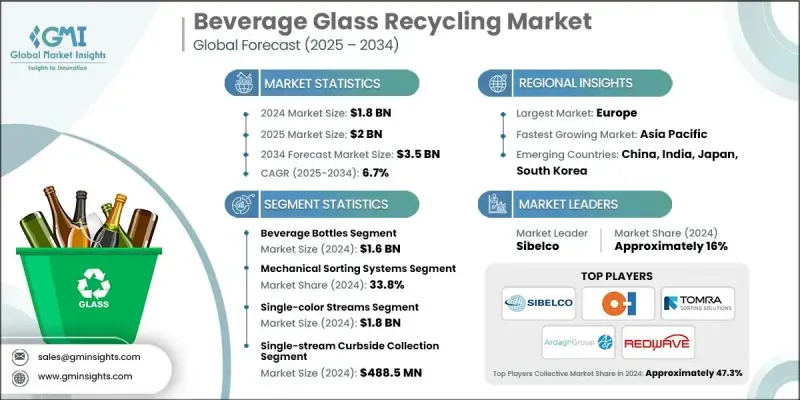
세계의 음료 유리병 재활용 시장은 2024년에 18억 달러로 평가되었고, 2034년까지 연평균 복합 성장률(CAGR) 6.7%로 성장할 전망이며, 35억 달러에 이를 것으로 예측되고 있습니다.
음료 유리병 재활용은 기계 선별, 광학 선별, 첨단 세정 기술에 의해 알코올 음료 및 비알코올 음료의 소비 후 보틀 및 병을 고품질의 칼렛(유리 분말)으로 변환하기 때문에 순환형 경제의 틀에 있어서 중요한 요소가 되고 있습니다. 이 정제된 칼렛은 버진 글라스(미사용 유리)와 동등한 성능 특성을 유지하고 있어 제조 현장에서의 폭넓은 사용을 지지하고 있습니다. 유럽은 강력한 규제 구조, 높은 회수율, 안정적인 원료 품질을 확보하는 확립된 시스템에 의해 계속해서 주요 지역으로서의 지위를 유지하고 있습니다. 북미에서는 수집 모델의 차이가 있는 반면, 견조한 성장을 나타내고 있으며, 새로운 정책 동향이 회수 효율의 향상을 지속적으로 촉진하고 있습니다. 한편 아시아태평양에서는 높은 인구 밀도, 주요 브랜드에서의 수요 증가, 정부 주도의 지속가능성 시책에 의해 급속한 확대가 진행되고 있습니다. 추적 가능성 및 디지털 검증 시스템에 관한 규제의 진전은 투명성을 촉진하고, 재활용 업자에게 데이터 품질의 향상 및 신뢰성이 높은 재생재 함량 인증의 확보를 촉구함으로써 시장 구조를 형성하고 있습니다. 지원 자금 조달 메커니즘은 또한 재활용 사업자 및 유리 제조 업체 간의 장기 공급 계약을 강화하고 있습니다.
시장 범위
시작 연도
2024년
예측 연도
2025-2034년
시작 시 가치
18억 달러
예측 금액
35억 달러
CAGR
6.7%
기계식 선별 시스템 부문은 2024년에 6억 2,250만 달러의 수익을 창출했으며, 33.8%의 점유율을 차지했습니다. 이러한 시스템은 여전히 안정적인 성능, 안정적인 처리 능력 및 높은 분리 정밀도를 제공하기 때문에 여전히 주류입니다. 내구성이 뛰어난 설계, 자동화된 처리 능력, 효율적인 스크리닝 프로세스를 통해 안정적인 성능이 필수적인 대량의 혼합 재료를 다루는 대규모 작업에 특히 효과적입니다.
단색 스트림 부문은 2024년에 18억 달러를 차지해 96%라는 큰 점유율을 유지했으며, 2025-2034년 6.6%의 연평균 복합 성장률(CAGR)이 전망되고 있습니다. 이러한 스트림은 우수한 품질 및 처리 용이성으로 인해 색 분리 부문을 선도합니다. 제어된 색 선별은 용융 효율을 향상시키고 오염을 줄이며 재생 유리의 가치를 높이기 위해 균일한 색조와 고순도를 요구하는 고급 제조 공정과 폐쇄 루프 재활용 용도 분야에 이상적인 방법입니다.
북미의 음료 유리병 재활용 시장은 2025-2034년 연평균 복합 성장률(CAGR) 6.3%로 성장할 것으로 예측됩니다. 지속 가능한 포장에 대한 기업의 노력 강화 및 순환형 전략의 보급 확대가 음료, 식품 유통 및 고급 포장 분야에 있어서 고품질 재생 유리 수요를 밀어 올리고 있습니다. 환경 문제에 대한 관심과 고급 재활용 인프라로의 전환은 또한 신규 유리 생산에서 재생 유리 대체품으로의 장기적인 전환을 뒷받침하고 있습니다.
목차
제1장 조사 방법 및 범위
제2장 주요 요약
제3장 업계 인사이트
생태계 분석
공급자의 상황
이익률
각 단계에서의 부가가치
밸류체인에 영향을 주는 요인
혁신
업계에 미치는 영향요인
성장 촉진요인
과제 및 어려움
기회
성장 가능성 분석
규제 상황
북미
유럽
아시아태평양
라틴아메리카
중동 및 아프리카
Porter's Five Forces 분석
PESTEL 분석
가격 동향
지역별
용기 유형별
장래 시장 동향
기술 및 혁신 동향
현재의 기술 동향
신흥 기술
특허 상황
무역 통계(HS코드)(참고 : 무역 통계는 주요 국가에서만 제공됨)
주요 수입국
주요 수출국
지속가능성 및 환경면
지속가능한 대처
폐기물 감축 전략
생산에 있어서의 에너지 효율
환경에 배려한 대처
탄소발자국 고려
제4장 경쟁 구도
서문
기업의 시장 점유율 분석
지역별
북미
유럽
아시아태평양
라틴아메리카
중동 및 아프리카
기업 매트릭스 분석
주요 시장 기업의 경쟁 분석
경쟁 포지셔닝 매트릭스
주요 발전
합병 및 인수
제휴 및 협업
신제품 발매
사업 확대 계획
제5장 시장 추계 및 예측 : 용기 유형별(2021-2034년)
주요 동향
음료용 병
맥주병(브라운, 그린, 투명)
와인 병(보르도, 부르고뉴, 라인 스타일)
스피릿 및 리큐어 병
청량 음료 및 물병
음료용 항아리
주스 스무디용 항아리
특수 음료 용기
메이슨 항아리 스타일의 음료 용기
광구 용기의 용도
제6장 시장 추계 및 예측 : 처리 기술 유형별(2021-2034년)
주요 동향
기계식 선별 시스템
광학 선별 기술
자기 분리 및 와전류 분리
AI 기반 로봇 선별
고급 세정 및 선광 시스템
제7장 시장 추계 및 예측 : 유리색별(2021-2034년)
주요 동향
단색 스트림
플린트 및 투명 유리(순도 95-100%)
호박색 유리(90-100% 순도)
녹색 유리(70-100% 순도)
특수색(파랑, 검정, 기타)
혼합색 스트림
2색 혼합
삼색 혼합(3-mix)
제8장 시장 추계 및 예측 : 수집 시스템 유형별(2021-2034년)
주요 동향
싱글 스트림 호별 수집
듀얼 스트림 호별 수집
보증금 반환 시스템(DRS)
반입 센터 및 편리성 향상 프로그램
상업 수집 시스템
제9장 시장 추계 및 예측 : 지역별(2021-2034년)
주요 동향
북미
미국
캐나다
유럽
독일
영국
프랑스
스페인
이탈리아
기타 유럽
아시아태평양
중국
인도
일본
호주
한국
기타 아시아태평양
라틴아메리카
브라질
멕시코
아르헨티나
기타 라틴아메리카
중동 및 아프리카
사우디아라비아
남아프리카
아랍에미리트(UAE)
기타 중동 및 아프리카
제10장 기업 프로파일
Sibelco
OI(Owens-Illinois)
TOMRA Sorting Solutions
Ardagh Group
REDWAVE
Sesotec GmbH
Reiling Group
SCHOTT AG
Visy Glass
Vetropack Group
Gallo Glass Company
Momentum Recycling
Mid America Recycling
Ripple Glass
AJY
영문 목차
영문목차
The Global Beverage Glass Recycling Market was valued at USD 1.8 billion in 2024 and is estimated to grow at a CAGR of 6.7% to reach USD 3.5 billion by 2034.
Beverage glass recycling has become a key component of circular economy frameworks, as it transforms post-consumer bottles and jars from alcoholic and non-alcoholic beverages into high-quality cullet through mechanical screening, optical sorting, and advanced cleaning technologies. This refined cullet maintains the performance characteristics of virgin glass, supporting its widespread use in manufacturing. Europe remains the leading region due to strong regulatory structures, high recovery rates, and established systems that ensure consistent input quality. North America shows solid growth despite variations in collection models, and new policy developments continue to enhance recovery efficiency. Meanwhile, the Asia Pacific region is expanding rapidly thanks to population density, rising demand from major brands, and government-backed sustainability measures. Regulatory advancements related to traceability and digital verification systems are shaping market structures by promoting transparency and incentivizing recyclers to improve data quality and ensure reliable recycled-content certification. Supportive funding mechanisms also strengthen long-term supply contracts between recycling operations and glass manufacturers.
Market Scope
Start Year
2024
Forecast Year
2025-2034
Start Value
$1.8 Billion
Forecast Value
$3.5 Billion
CAGR
6.7%
The mechanical sorting systems segment generated USD 622.5 million in 2024 and accounted for a 33.8% share. These systems remain dominant because they offer reliable performance, consistent throughput, and high separation accuracy. Their durable design, automated handling capabilities, and efficient screening processes make them particularly effective for large-scale operations managing high volumes of mixed materials, where consistent performance is essential.
The single-color streams segment accounted for USD 1.8 billion in 2024 and held a substantial share of 96%, with an expected CAGR of 6.6% from 2025 to 2034. These streams lead the color-separation segment due to the superior quality and processing ease they provide. Controlled color sorting improves melt efficiency, reduces contamination, and enhances the value of recycled glass, making this method ideal for premium manufacturing processes and closed-loop recycling applications that depend on uniform color and high purity.
North America Beverage Glass Recycling Market is projected to grow at a CAGR of 6.3% from 2025 to 2034. Increasing corporate commitments to sustainable packaging and broader adoption of circular strategies continue to push demand for high-quality recycled glass in beverages, food distribution, and premium packaging. Environmental concerns and the transition toward more advanced recycling infrastructure also support the long-term shift from virgin glass production to recycled alternatives.
Key companies active in the Global Beverage Glass Recycling Market include Sibelco, O-I (Owens-Illinois), TOMRA Sorting Solutions, Ardagh Group, REDWAVE, Sesotec GmbH, Reiling Group, SCHOTT AG, Visy Glass, Vetropack Group, Gallo Glass Company, Momentum Recycling, Mid America Recycling, and Ripple Glass. Companies in the Beverage Glass Recycling Market rely on several strategies to reinforce their competitiveness and expand market presence. Many are investing in cutting-edge optical sorting systems, real-time monitoring tools, and automated contamination detection to deliver higher-purity cullet. Strategic partnerships with beverage brands and container manufacturers help secure long-term supply contracts and stable revenue streams. Firms are also adopting digital tracking and data-integration technologies that support recycled-content verification and regulatory compliance.
Table of Contents
Chapter 1 Methodology & Scope
1.1 Market scope and definition
1.2 Research design
1.2.1 Research approach
1.2.2 Data collection methods
1.3 Data mining sources
1.3.1 Global
1.3.2 Regional/Country
1.4 Base estimates and calculations
1.4.1 Base year calculation
1.4.2 Key trends for market estimation
1.5 Primary research and validation
1.5.1 Primary sources
1.6 Forecast model
1.7 Research assumptions and limitations
Chapter 2 Executive Summary
2.1 Industry 360° synopsis
2.2 Key market trends
2.2.1 Container type
2.2.2 Processing technology type
2.2.3 Glass color
2.2.4 Collection system type
2.2.5 Regional trends
2.3 TAM Analysis, 2025-2034
2.4 CXO perspectives: Strategic imperatives
2.4.1 Executive decision points
2.4.2 Critical success factors
2.5 Future Outlook and Strategic Recommendations
Chapter 3 Industry Insights
3.1 Industry ecosystem analysis
3.1.1 Supplier landscape
3.1.2 Profit margin
3.1.3 Value addition at each stage
3.1.4 Factor affecting the value chain
3.1.5 Disruptions
3.2 Industry impact forces
3.2.1 Drivers
3.2.2 Pitfalls & Challenges
3.2.3 Opportunities
3.3 Growth potential analysis
3.4 Regulatory landscape
3.4.1 North America
3.4.2 Europe
3.4.3 Asia Pacific
3.4.4 Latin America
3.4.5 Middle East & Africa
3.5 Porter's analysis
3.6 PESTEL analysis
3.7 Price trends
3.7.1 By region
3.7.2 By container type
3.8 Future market trends
3.9 Technology and Innovation landscape
3.9.1 Current technological trends
3.9.2 Emerging technologies
3.10 Patent Landscape
3.11 Trade statistics (HS code) ( Note: the trade statistics will be provided for key countries only)
3.11.1 Major importing countries
3.11.2 Major exporting countries
3.12 Sustainability and environmental aspects
3.12.1 Sustainable practices
3.12.2 Waste reduction strategies
3.12.3 Energy efficiency in production
3.12.4 Eco-friendly initiatives
3.13 Carbon footprint consideration
Chapter 4 Competitive Landscape, 2024
4.1 Introduction
4.2 Company market share analysis
4.2.1 By region
4.2.1.1 North America
4.2.1.2 Europe
4.2.1.3 Asia Pacific
4.2.1.4 LATAM
4.2.1.5 MEA
4.3 Company matrix analysis
4.4 Competitive analysis of major market players
4.5 Competitive positioning matrix
4.6 Key developments
4.6.1 Mergers & acquisitions
4.6.2 Partnerships & collaborations
4.6.3 New Product Launches
4.6.4 Expansion Plans
Chapter 5 Market Estimates and Forecast, By Container Type, 2021-2034 (USD Million & Kilo Tons)