


세계의 스마트 산업용 조명기구 시장은 2024년에 32억 달러로 평가되었고, 2034년까지 연평균 복합 성장률(CAGR) 14.8%로 성장할 전망이며, 122억 달러에 이를 것으로 예측됩니다.

이러한 급성장은 산업 환경에서 에너지 절약, 비용 효율성, 환경 친화성이 뛰어난 조명 솔루션에 대한 수요 증가를 지원합니다. 산업 시설에서는 운영 비용 절감 및 이산화탄소 배출량 감소에 대한 압력이 높아지고 스마트 LED 조명 시스템이 효과적인 솔루션을 제공합니다. 이러한 시스템은 모션 감지, 자동 조광, 자연광 이용과 같은 첨단 기술을 통합하여 상당한 에너지 절약 효과와 운영상의 이점을 제공합니다. 에너지 비용의 상승과 지속가능성에 대한 노력이 도입을 더욱 촉진하고 있으며, 기업은 환경 목표를 달성하면서 장기적인 절약을 목표로 하고 있습니다. 세계 각국의 정부는 보다 엄격한 에너지 효율 기준을 시행하고, 비효율적인 조명을 단계적으로 폐지하며, 스마트 조명의 도입을 촉진하기 위한 인센티브를 제공합니다. 이러한 정책은 에너지 규제 준수가 운영 지속에 필수적인 산업 환경에서 특히 큰 영향력을 가지고 있습니다.
| 시장 범위 | |
|---|---|
| 시작 연도 | 2024년 |
| 예측 연도 | 2025-2034년 |
| 시작 시 가치 | 32억 달러 |
| 예측 금액 | 122억 달러 |
| CAGR | 14.8% |
LED 스마트 조명기구 부문은 2024년에 11억 달러를 차지하였으며, 2025-2034년 연평균 복합 성장률(CAGR) 15.1%로 성장할 것으로 예측됩니다. LED 기술의 성숙은 기존 조명에 비해 높은 루멘 출력, 발열량 감소 및 유지보수 수요 감소를 가능하게 했습니다. 센서와 인텔리전트 컨트롤러와의 통합이 진행됨으로써, 모션 센서, 일광 수확, 자동 조광 등의 기능이 실현되어, 이들에 의해 현저한 에너지 절약과 운용 효율의 향상을 도모하고 있습니다. LED 부품 및 제조 비용의 저하로 중소기업을 포함한 폭넓은 산업 사용자가 이용하기 쉬워지고 있습니다.
제조 시설 부문은 31.1%의 점유율을 차지하였으며, 2034년까지 연평균 복합 성장률(CAGR) 15.5%로 성장할 것으로 예측됩니다. 산업 제조 환경에서는 가혹한 조건을 견디고 연속 운전이 가능하며 작업 흐름 요구에 따라 동적으로 조정할 수 있는 조명 시스템이 필요합니다. 센서 통합 스마트 조명 솔루션은 재실 상황, 작업 특화형 요구, 주위 광량에 따른 자동 조정을 가능하게 하고, 에너지 소비를 삭감하는 동시에, 작업자에게 일관된 최적의 조명 환경을 보장함으로써 생산성 및 안전성을 향상시킵니다.
미국의 스마트 산업용 조명기구 시장은 2024년에 10억 달러로 평가되었고, 2025-2034년 연평균 복합 성장률(CAGR) 15.3%로 성장할 것으로 예측됩니다. 제조업체 및 산업 운영자는 에너지 효율을 높이고 운영 비용을 줄이며 엄격한 환경 규제에 대응하기 위해 지능형 조명 시스템의 도입을 가속화하고 있습니다. 국가 수준의 지속가능성 이니셔티브와 탄소 감축 목표가 기존 조명에서 IoT 대응 스마트 LED 솔루션으로의 전환을 추진하고 있습니다. 주요 시장 기업의 존재, 활발한 연구 개발, 에너지 절약 개수에 대한 정부의 우대 조치가 함께 시장 확대에 유리한 환경이 갖추어져 있습니다.
세계 스마트 산업용 조명기구 시장의 주요 기업으로는 Cima Lighting, Zumtobel Group, Holofane, Acuity Brands, Luminis Lighting, Eaton, Cree Lighting, AGC Lighting, LSI Industries, GE Current, Panasonic Lighting, Dialight, Osram(amsOSOSRAM), PureLiFi, Hubbell Lighting, Signify, SuperBrightLEDs, Lumefficient 등을 들 수 있습니다. 스마트 산업용 조명기구 시장의 기업은 경쟁 우위를 강화하기 위해 기술 혁신 및 제품 차별화를 적극 추진하고 있습니다. 진화하는 산업 요구에 부응하는 에너지 절약형, IoT 대응, 지능형 조명 솔루션의 도입을 위한 연구개발에 많은 투자를 하고 있습니다. 산업 사업자, 시스템 통합자, 정부 주도 대처와의 전략적 제휴에 의해 시장 침투의 가속 및 규제 준수를 확보하고 있습니다. 지역별 제조 및 유통 네트워크의 확대에 의해 증가하는 수요에 효율적으로 대응하는 능력이 강화되고 있습니다. 또한 지속가능성을 중시한 마케팅, 제품 커스터마이징, 스마트 조명 서비스 제공을 통해 기업 고객의 획득을 도모하고 있습니다.
.11.10. LSI Industries
.11.15. PureLiFi
The Global Smart Industrial Lighting Fixtures Market was valued at USD 3.2 billion in 2024 and is estimated to grow at a CAGR of 14.8% to reach USD 12.2 billion by 2034.
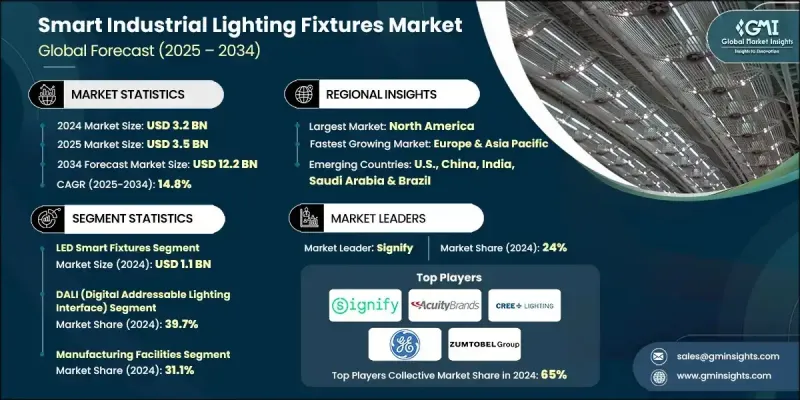
The surge is fueled by the growing demand for energy-efficient, cost-effective, and environmentally responsible lighting solutions in industrial settings. Industrial facilities face increasing pressure to cut operational expenses and reduce carbon emissions, and smart LED lighting systems provide an effective solution. These systems incorporate advanced technologies such as motion detection, automated dimming, and daylight harvesting, offering substantial energy savings and operational benefits. Rising energy costs and sustainability initiatives further drive adoption, as businesses aim to achieve long-term savings while meeting environmental targets. Governments worldwide are enforcing stricter energy efficiency standards, phasing out inefficient lighting, and offering incentives to encourage smart lighting adoption. These policies are especially impactful in industrial environments where compliance with energy regulations is critical for uninterrupted operations.
| Market Scope | |
|---|---|
| Start Year | 2024 |
| Forecast Year | 2025-2034 |
| Start Value | $3.2 Billion |
| Forecast Value | $12.2 Billion |
| CAGR | 14.8% |
The LED smart fixtures segment accounted for USD 1.1 billion in 2024 and is forecasted to grow at a CAGR of 15.1% from 2025 to 2034. The maturity of LED technology has enabled higher lumen output, reduced heat production, and lower maintenance demands compared to traditional lighting. Increasing integration with sensors and intelligent controllers allows features like motion sensing, daylight harvesting, and automated dimming, which together drive notable energy savings and operational efficiency. Falling costs of LED components and production have expanded accessibility to a wider range of industrial users, including smaller enterprises.
The manufacturing facilities segment held a 31.1% share and is expected to grow at a CAGR of 15.5% through 2034. Industrial manufacturing environments demand lighting systems that can endure harsh conditions, provide continuous operation, and adjust dynamically to workflow requirements. Smart lighting solutions with sensor integration enable automated adjustments based on occupancy, task-specific needs, and ambient lighting, reducing energy consumption while improving productivity and safety by ensuring consistent, optimal illumination for workers.
U.S. Smart Industrial Lighting Fixtures Market was valued at USD 1 billion in 2024 and is anticipated to grow at a CAGR of 15.3% from 2025 to 2034. Manufacturers and industrial operators are increasingly adopting intelligent lighting systems to enhance energy efficiency, cut operational costs, and comply with strict environmental regulations. National sustainability initiatives and carbon reduction goals are driving the transition from conventional lighting to IoT-enabled and smart LED solutions. The presence of major market players, robust research and development, and government incentives for energy-efficient upgrades have created favorable conditions for market expansion.
Key companies in the Global Smart Industrial Lighting Fixtures Market include Cima Lighting, Zumtobel Group, Holophane, Acuity Brands, Luminis Lighting, Eaton, Cree Lighting, AGC Lighting, LSI Industries, GE Current, Panasonic Lighting, Dialight, Osram (ams OSRAM), PureLiFi, Hubbell Lighting, Signify, SuperBrightLEDs, and Lumefficient. Companies in the Smart Industrial Lighting Fixtures Market are actively pursuing technology innovation and product differentiation to strengthen their competitive position. They are investing heavily in research and development to introduce energy-efficient, IoT-enabled, and intelligent lighting solutions that meet evolving industrial requirements. Strategic collaborations with industrial operators, system integrators, and government initiatives allow companies to accelerate market penetration and ensure regulatory compliance. Expanding regional manufacturing and distribution networks enhances their ability to meet rising demand efficiently. Firms are also leveraging sustainability-driven marketing, product customization, and smart lighting service offerings to attract enterprise clients.
.11.10. LSI Industries
.11.15. PureLiFi