



세계의 재생에너지 보험 시장은 2024년 81억 달러로 평가되었고, 2034년까지 연평균 복합 성장률(CAGR) 11.5%로 성장할 전망이며, 235억 달러에 이를 것으로 예측됩니다.

세계의 재생에너지 투자 가속화에 따라 청정에너지 자산을 보호하기 위한 전문적인 보험 요구가 커지고 있습니다. 정부, 기업, 투자자들은 태양광 발전소, 풍력 발전 프로젝트, 에너지 저장 시설에 많은 자본을 투입하고 있으며, 자연 재해, 기계적 고장, 건설 중단 등의 위험에 대한 견고한 보호가 필요합니다. 재생에너지 보험은 이러한 자산의 보호, 프로젝트 연속성 확보, 투자자 및 개발자의 재무적 신뢰성 향상에 매우 중요한 역할을 합니다. 이런 유형의 보험은 풍력, 태양광, 수력, 바이오에너지 등 다양한 기술 분야에서 위험을 줄이기 위해 설계되었으며 물적 손해, 사업 중단, 배상 책임, 환경 위험 등을 다룹니다. 재생에너지 인프라가 확대됨에 따라 보험사는 업계의 요구에 부응하는 혁신적인 솔루션과 맞춤형 서비스를 전개하고 있습니다. 게다가 규제 및 정책의 틀이 강화되어 개발업체에 대해 특정 보험계약 체결이 의무화되는 경우가 증가하고 있어 환경기준 및 안전기준의 준거가 확보되고 있습니다. 이러한 조치는 리스크 관리를 강화할 뿐만 아니라 재생에너지 프로젝트의 재무적 지속가능성을 높이고 세계 자금 조달 및 투자 기회에 더욱 매력적입니다.
| 시장 범위 | |
|---|---|
| 시작 연도 | 2024년 |
| 예측 연도 | 2025-2034년 |
| 시작 시 가치 | 81억 달러 |
| 예측 금액 | 235억 달러 |
| CAGR | 11.5% |
풍력 기술 부문은 2034년까지 11.9%의 연평균 복합 성장률(CAGR)을 보일 것으로 예측됩니다. 대규모의 기술적으로 고급 풍력 발전 설비의 도입이 증가하는 가운데, 부품 고장, 유지 보수 지연, 가동 정지에 따른 위험으로부터 전문적인 보험의 필요성이 높아지고 있습니다. 보험사는 성능보증, 설비 고장, 사업 중단을 커버하는 특화형 보험 상품으로 대응하여 프로젝트 소유자 및 운영자에게 안정성 및 재무적 보호를 제공합니다.
상업 및 산업 부문은 2034년까지 12.2%의 연평균 복합 성장률(CAGR)을 나타낼 전망입니다. 태양광, 풍력, 축전 시스템을 포함한 상업 및 산업 분야에서의 재생에너지 설비 증가가 보험 보호 수요를 견인하고 있습니다. 고가치의 재생에너지 자산은 설비 고장, 기상 관련 손해, 도난 등 다양한 운영 위험에 직면하고 있습니다. 맞춤형 보험 솔루션은 비즈니스 연속성을 보장하고 재무 투자를 보호하며 예기치 않은 손실에 대한 노출을 줄임으로써이 분야에서 청정 에너지 기술의 급속한 보급을 지원합니다.
아시아태평양의 재생에너지 보험 시장은 2034년까지 연평균 복합 성장률(CAGR) 11.9%로 확대될 전망입니다. 개발도상국에서 재생에너지 용량 확대가 가속화되고 있는 가운데, 지역별 리스크에 대응하는 보험의 필요성이 높아지고 있습니다. 다양한 환경 조건 하에서 태양광 및 풍력 인프라의 급증을 받아 보험사는 송전망 중단, 건설 지연, 설비 손실에 대한 보상 범위의 개발을 진행하고 있습니다. 지역 전반에 걸친 보험 계약의 보급 확대는 재생에너지 프로젝트의 장기적인 회복력 및 지속가능성을 강화하고 있습니다.
세계의 재생에너지 보험 시장에서 사업을 전개하는 주요 기업으로는 RSA Insurance, Allianz Global Corporate & Specialty, Axis Capital, Marsh McLennan, Chubb, Aon, Zurich Insurance, Gallagher, kWh Analytics, Descartes Underwriting, Horton Group, Liberty Specialty Markets, Munich Re, Swiss Re, Tokio Marine Kiln, Travelers, and Willis Towers Watson (WTW) 등이 포함됩니다. 세계 재생에너지 보험 시장의 기업은 시장에서의 존재감을 확대하기 위해 혁신, 협업, 디지털 전환을 추진하고 있습니다. 보험사는 재생에너지 기술 및 기후 변화와 관련된 새로운 위험에 대응하는 맞춤형 보험 상품을 개발 중입니다. 프로젝트 개발자, 에너지 투자자 및 정부 기관과의 전략적 제휴로 통합 보험 솔루션 제공 능력이 강화되었습니다. 많은 기업들이 데이터 분석 및 예측 모델링을 활용하여 프로젝트 성능 평가, 효율적인 보험금 청구 관리, 가격 설정 최적화를 진행하고 있습니다.
The Global Renewable Energy Insurance Market was valued at USD 8.1 billion in 2024 and is estimated to grow at a CAGR of 11.5% to reach USD 23.5 billion by 2034.
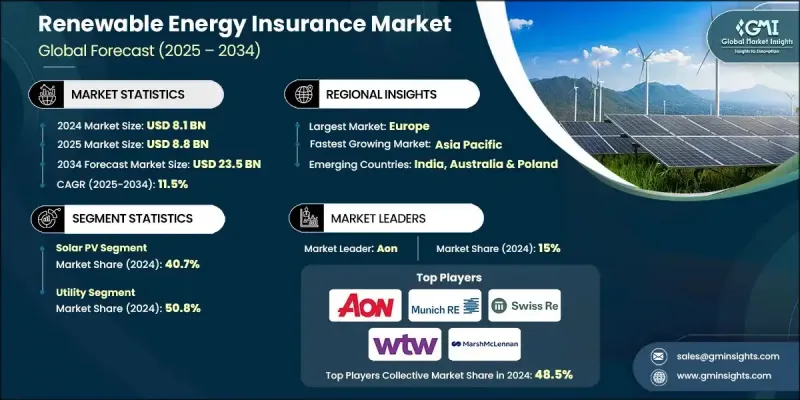
The accelerating investment in renewable energy worldwide is driving the need for specialized insurance coverage designed to protect clean energy assets. Governments, corporations, and investors are allocating substantial capital toward solar farms, wind projects, and energy storage facilities, which require robust protection against risks such as natural catastrophes, mechanical breakdowns, and construction disruptions. Renewable energy insurance plays a vital role in safeguarding these assets, ensuring project continuity, and improving financial confidence among investors and developers. This type of coverage is tailored to mitigate risks across technologies, including wind, solar, hydro, and bioenergy, covering property damage, business interruption, liability, and environmental exposure. As renewable infrastructure expands, insurers are launching innovative solutions and customized services to support industry needs. Moreover, regulatory and policy frameworks are reinforcing the requirement for developers to secure specific insurance policies, ensuring compliance with environmental and safety standards. These measures not only strengthen risk management but also make renewable energy projects more financially sustainable and attractive for global financing and investment opportunities.
| Market Scope | |
|---|---|
| Start Year | 2024 |
| Forecast Year | 2025-2034 |
| Start Value | $8.1 Billion |
| Forecast Value | $23.5 Billion |
| CAGR | 11.5% |
The wind technology segment is projected to register an 11.9% CAGR through 2034. The increasing deployment of large and technologically advanced wind installations has heightened the need for specialized insurance due to risks associated with component failures, maintenance delays, and operational downtime. Insurers are responding with targeted policies covering performance guarantees, equipment malfunctions, and business interruptions, providing stability and financial protection for project owners and operators.
The commercial and industrial category is set to witness a CAGR of 12.2% by 2034. Growing renewable installations across commercial and industrial sectors, including solar, wind, and storage systems, are propelling the demand for insurance protection. High-value renewable assets face various operational risks such as equipment failure, weather-related damage, and theft. Tailored insurance solutions ensure business continuity, secure financial investments, and reduce exposure to unforeseen losses, thereby supporting the sector's rapid adoption of clean energy technologies.
Asia Pacific Renewable Energy Insurance Market will grow at 11.9% CAGR by 2034. Increasing renewable capacity expansion across developing economies is fueling the need for insurance that addresses region-specific risks. The surge in solar and wind infrastructure in diverse environmental conditions has prompted insurers to develop coverage for grid interruptions, construction delays, and equipment losses. Expanding policy adoption across the region is enhancing the long-term resilience and viability of renewable projects.
Leading companies operating in the Global Renewable Energy Insurance Market include RSA Insurance, Allianz Global Corporate & Specialty, Axis Capital, Marsh McLennan, Chubb, Aon, Zurich Insurance, Gallagher, kWh Analytics, Descartes Underwriting, Horton Group, Liberty Specialty Markets, Munich Re, Swiss Re, Tokio Marine Kiln, Travelers, and Willis Towers Watson (WTW). Companies within the Global Renewable Energy Insurance Market are pursuing innovation, collaboration, and digital transformation to expand their market presence. Insurers are developing customized policies that address evolving risks related to renewable technologies and climate change. Strategic alliances with project developers, energy investors, and government bodies are enhancing their ability to offer integrated coverage solutions. Many are leveraging data analytics and predictive modeling to assess project performance, manage claims efficiently, and optimize pricing.