



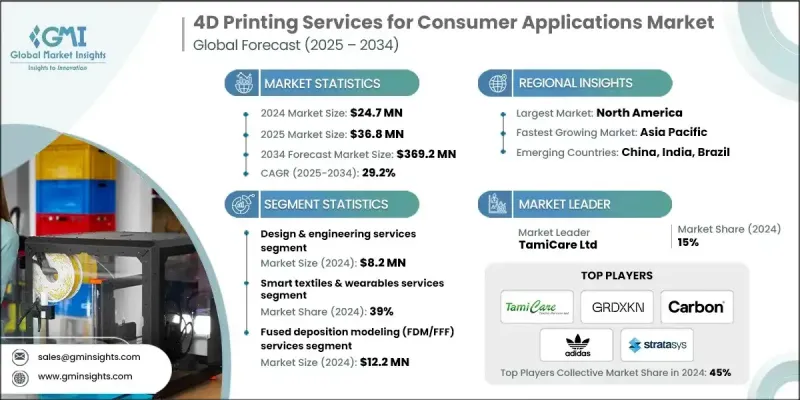
세계의 소비자용 4D 프린팅 서비스 시장은 2024년 2,470만 달러로 평가되었으며, 2034년까지 연평균 복합 성장률(CAGR) 29.2%를 나타내 3억 6,920만 달러에 이를 것으로 예측됩니다.
소비자용 4D 프린팅의 성장 가능성은 적응성, 개인화 및 지속가능성을 갖춘 제품에 대한 관심 증가로 인해 발생합니다. 기존의 3D 프린팅과 달리 4D 프린팅은 온도·빛·습도 등의 환경 요인에 따라 형상이나 기능을 변용시키는 스마트 재료를 활용합니다. 이 기술은 적응형 의류, 자기 조립 가구, 응답성이 있는 가정용품 등의 분야에서 소비자 지향의 혁신을 가능하게 하는 길을 열고 있습니다. 기술 진보가 계속되고 있는 가운데, 연구기관, 스타트업, 기존 기술 제공업체는 기능성과 효율성의 향상을 목적으로 한 신소재나 제조 공정의 탐구를 진행하고 있습니다. 확장성과 비용에 관한 과제가 완화되기 시작하면서 시장은 개념 개발에서 실용 단계로 점진적으로 전환하고 있습니다. 인터랙티브하고 커스터마이징 가능한 제품에 대한 소비자 수요 증가는 일상적인 소비자 영역에서 4D 프린팅 기술의 보다 광범위한 보급을 촉진할 것으로 예측됩니다.
| 시장 범위 | |
|---|---|
| 시작 연도 | 2024년 |
| 예측 연도 | 2025-2034년 |
| 시작 가치 | 2,470만 달러 |
| 예측 금액 | 3억 6,920만 달러 |
| CAGR | 29.2% |
2024년 설계 및 엔지니어링 서비스 분야는 820만 달러의 수익을 창출했습니다. 이 분야의 주도적 지위는 프로젝트 연계 증가와 재료 과학, 변형 역학, 제품 설계에 있어서 전문적인 지견의 필요성에 기인합니다. 업계가 보다 복잡한 용도로 진전하는 동안, 서비스 제공업체는 진화하는 고객의 요구에 대응하기 위해 기술 능력을 강화하고 있습니다. 수탁 제조 서비스에 대한 관심 증가는 시장이 생산 규모의 사업으로 전환하기 시작하고 있음을 보여주며 상업적 성숙에 대한 길을 강조합니다.
스마트 텍스타일 및 웨어러블 분야는 2024년 39%의 점유율을 차지했습니다. 이 분야에는 환경 자극과 사용자 특유의 조건에 적응하도록 설계된 고급 텍스타일 응용 기술이 포함됩니다. 성능 기반 의류, 의료 섬유, 적응형 패션 아이템 등의 제품은 편안함, 기능성, 효율성을 제공하기 위해 4D 인쇄 기술을 점점 더 활용하고 있습니다. 패션, 피트니스 및 기술의 융합은 반응형 웨어러블 제품에 대한 소비자 관심을 증가시키고 있으며, 이 범주 내에서 상업적 기회가 확대되고 있습니다.
미국의 소비자용 4D 프린팅 서비스 시장은 2024년 84%의 점유율을 차지하여 800만 달러의 수익을 창출했습니다. 북미는 선진 재료 및 적층 조형 기술의 연구·혁신·상업화의 주요 거점으로 계속되고 있습니다. 이 지역은 연구 개발에 대한 강력한 투자, 활발한 학술 연계, 기술 이전과 산업 발전을 촉진하는 정부의 지원책 등의 혜택을 받고 있습니다. 첨단 인프라, 지적 재산 보호, 차세대 제조에 대한 노력으로 소비자 시장을 위한 4D 프린팅 서비스의 확대를 견인하는 주요 기업로서의 지위를 확립하고 있습니다.
세계의 소비자용 4D 프린팅 서비스 시장에 참가하는 주요 기업으로는 Carbon, Inc., Nervous System Inc., TamiCare Ltd., HP Inc., Mitsubishi Chemical Corporation, Formlabs Inc., Stratasys Ltd., GRDXKN, Self-Assembly Lab (MIT), Adidas AG - Innovation Lab 등을 들 수 있습니다. 이러한 업계 선수들은 소비자를 위해 특화된 고급 4D 프린팅 솔루션을 제공하기 위해 조사, 파트너십 및 소재 혁신에 주력하고 있습니다. 소비자용 4D 프린팅 서비스 시장에서 사업을 전개하는 기업은 세계 존재감을 강화하기 위해 혁신과 협업에 중점을 두고 있습니다. 많은 기업들이 스마트 소재의 기능 향상과 형상 변화의 응답성 개선을 목적으로 연구 개발에 많은 투자를 하고 있습니다. 기술 공급자, 연구 기관, 패션 및 소비재 브랜드간의 제휴로 적응형 제품의 상업화가 가속화되고 있습니다. 또한 증가하는 소비자 수요에 대응하기 위해 지속 가능한 제조 공정과 확장 가능한 생산 방법에 중점을 둡니다. 설계 컨설팅, 프로토타입 및 수탁 제조를 포함한 서비스 포트폴리오 확장도 중요한 전략 중 하나입니다.
The Global 4D Printing Services for Consumer Applications Market was valued at USD 24.7 million in 2024 and is estimated to grow at a CAGR of 29.2% to reach USD 369.2 million by 2034.
The growth potential of 4D printing in consumer applications lies in the increasing interest in adaptive, personalized, and sustainable products. Unlike conventional 3D printing, 4D printing utilizes smart materials capable of transforming their shapes and functions in response to environmental factors such as temperature, light, or humidity. This technology is paving the way for consumer-oriented innovations in areas like adaptive apparel, self-assembling furniture, and responsive home products. As advancements continue, research institutions, startups, and established technology providers are exploring new materials and production processes aimed at improving functionality and efficiency. The market is gradually transitioning from conceptual development to practical implementation as issues related to scalability and cost have begun to ease. The growing consumer appetite for interactive and customizable products is expected to drive wider adoption of 4D printing technologies in the everyday consumer space.
| Market Scope | |
|---|---|
| Start Year | 2024 |
| Forecast Year | 2025-2034 |
| Start Value | $24.7 Million |
| Forecast Value | $369.2 Million |
| CAGR | 29.2% |
In 2024, the design and engineering services segment generated USD 8.2 million. This segment's leadership is attributed to the increasing number of project collaborations and the need for specialized expertise in materials science, transformation mechanics, and product design. Service providers are enhancing their technical capabilities to support evolving client demands as the industry progresses toward more complex applications. The growing interest in contract manufacturing services signals that the market is beginning to move toward production-scale operations, highlighting its path toward commercial maturity.
The smart textiles and wearables segment held a 39% share in 2024. This segment includes advanced textile applications designed to adapt to environmental stimuli or user-specific conditions. Products such as performance-based clothing, medical textiles, and adaptive fashion items are increasingly leveraging 4D printing technologies to deliver comfort, functionality, and efficiency. Consumer interest in responsive wearables is expanding, driven by the convergence of fashion, fitness, and technology, creating a growing commercial opportunity within this category.
U.S. 4D Printing Services for Consumer Applications Market held 84% share, generating USD 8 million in 2024. North America remains a leading hub for research, innovation, and commercialization of advanced materials and additive manufacturing technologies. The region benefits from strong investment in R&D, robust academic collaboration, and supportive government initiatives that encourage technology transfer and industrial development. Its advanced infrastructure, intellectual property protections, and commitment to next-generation manufacturing have positioned it as a key player in driving the expansion of 4D printing services for consumer markets.
Prominent companies participating in the Global 4D Printing Services for Consumer Applications Market include Carbon, Inc., Nervous System Inc., TamiCare Ltd., HP Inc., Mitsubishi Chemical Corporation, Formlabs Inc., Stratasys Ltd., GRDXKN, Self-Assembly Lab (MIT), and Adidas AG - Innovation Lab. These industry players are focusing on research, partnerships, and material innovations to deliver advanced 4D printing solutions tailored for consumer use. Companies operating in the 4D Printing Services for Consumer Applications Market are focusing on innovation and collaboration to strengthen their global presence. Many are investing heavily in research and development to advance smart material capabilities and improve shape-shifting responsiveness. Partnerships between technology providers, research institutions, and fashion or consumer goods brands are enabling faster commercialization of adaptive products. Firms are also emphasizing sustainable manufacturing processes and scalable production methods to meet growing consumer demand. Expanding service portfolios to include design consulting, prototyping, and contract manufacturing is another key strategy.