산업용 발전 장비 시장 : 기회, 성장 요인, 업계 동향 분석 및 예측(2025-2034년)
Industrial Power Generation Equipment Market Opportunity, Growth Drivers, Industry Trend Analysis, and Forecast 2025 - 2034
상품코드:1871217
리서치사:Global Market Insights Inc.
발행일:2025년 10월
페이지 정보:영문 250 Pages
라이선스 & 가격 (부가세 별도)
ㅁ Add-on 가능: 고객의 요청에 따라 일정한 범위 내에서 Customization이 가능합니다. 자세한 사항은 문의해 주시기 바랍니다.
한글목차
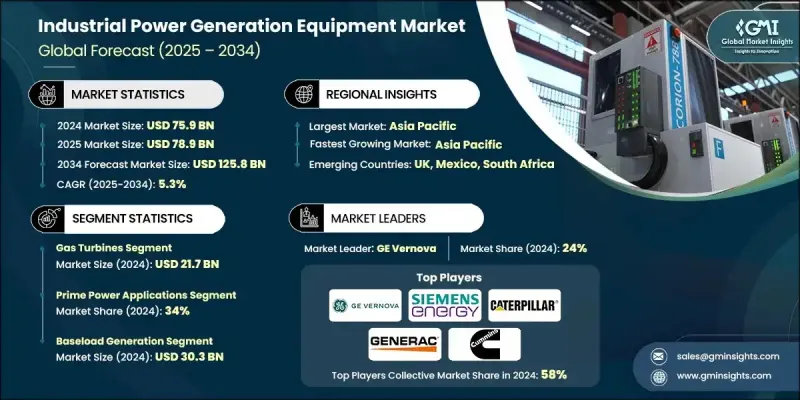
세계의 산업용 발전 장비 시장은 2024년 759억 달러로 평가되었으며, 2034년까지 연평균 복합 성장률(CAGR) 5.3%로 성장하여 1,258억 달러에 이를 것으로 예측됩니다.
시장 성장은 산업 분야 전반에 걸쳐 효율적이고 신뢰할 수 있으며 환경 친화적인 에너지 솔루션에 대한 수요 증가로 추진되고 있습니다. 디젤 및 가스 발전기와 같은 기존 시스템도 여전히 중요하지만 재생에너지와 디지털 기술의 통합을 위한 명확한 전환이 진행되고 있습니다. 산업이 지속가능성 목표 달성을 향해 진화함에 따라 에너지 감시 기능의 강화, 배출가스 제어, 재생가능 에너지와의 호환성을 갖춘 발전시스템의 채용이 확대되고 있습니다. 또한 전력 출력을 안정화시키고 가동의 연속성을 확보하기 위해서는 에너지 저장 기술도 필수적이 되고 있습니다. 특히 원격지나 서비스가 잘 보급되지 않는 지역에 있어서, 송전망에 의존하지 않는 전력 수요 증가가, 계속해서 수요를 견인하고 있습니다. 동시에 인프라의 현대화와 세계 지속가능성 정책이 하이브리드 시스템의 기회를 창출하고 있습니다. 전망은 밝고 시장은 첨단 시스템의 고가의 초기 비용, 지역별 규제 불통일, 지속적인 공급망 혼란 등의 과제에 직면하고 있습니다. 이러한 장벽에도 불구하고 강인하고 깨끗한 에너지 인프라에 대한 정부의 강력한 지원과 확대되는 산업용도가 함께 다양한 지역과 섹터에 걸친 시장의 장기적인 성장 기반은 유지되고 있습니다.
시장 범위
시작 연도
2024년
예측 기간
2025-2034년
시작 금액
759억 달러
예측 금액
1,258억 달러
CAGR
5.3%
가스 터빈 부문은 높은 운영 효율성과 대규모 산업 환경에서의 적응성으로 인해 2024년에 큰 점유율을 차지했습니다. 신속한 시동 시간, 배출 가스 감소, 복합 사이클 및 열병합 설비의 탁월한 성능은 산업용도에 이상적인 선택입니다. 공급 체인의 박멸은 특히 천연 가스 공급 상황과 주요 제조업체의 생산 능력 제약으로 인해 이 부문에 계속 영향을 미칩니다. 그러나 수소, 천연가스, 혼합연료 등 여러 유형의 연료로 작동할 수 있는 특성은 연료공급환경의 변화 속에서도 안정적인 도입을 지원하고 있습니다.
2024년에 주전원 용도 부문은 34%의 점유율을 차지했으며 주요 이용 사례 카테고리가 되었습니다. 이러한 이점은 산업환경과 안정적인 송전망에 접근하기 어려운 지역에서 무정전전원공급(UPS) 수요 증가에 의해 견인되고 있습니다. 에너지 인프라가 발달되지 않거나 불안정한 지역은 특히 원격지에서 운영하는 산업에 큰 성장 기회를 제공합니다. 석유 및 가스 플랫폼, 광산 사업, 원격지 제조 플랜트 등의 시설은 오프 그리드 환경에서도 가동률과 안전성을 확보하고 운영 신뢰성을 유지하기 위해 프라임 파워 시스템에 크게 의존하고 있습니다.
미국 산업용 발전 장비 시장은 2024년 80.4%의 점유율을 차지해 165억 달러 시장 규모를 형성했습니다. 이 나라의 주도적 지위는 특히 지방이나 서비스가 미치지 못하는 지역에 있어서 노후화된 인프라의 근대화, 국내 제조의 확대, 전력망의 내장해성 향상을 위한 대처에 의해 지지되고 있습니다. 산업 활동의 국내 회귀와 구식 에너지 시스템의 갱신에 대한 투자는 첨단 발전 솔루션 수요를 끌어 올리고 있습니다. 새로운 인프라 프로젝트 및 데이터센터의 전력 수요 증가도 지역 전반에 걸쳐 지속적인 시설 도입을 지원하는 요인이되었습니다.
산업용 발전 장비 업계의 주요 기업으로는 Yanmar Holdings, Siemens Energy AG, Kohler Co., Mitsubishi Heavy Industries, Doosan Fuel Cell, FuelCell Energy Inc., Wartsila Corporation, General Electric (GE Vernova), Rolls-Royce Power Systems, Caterpillar Inc., MTU Onsite Energy, Cummins Inc., Kirloskar Oil Engines, Generac Holdings Inc., Bloom Energy Corporation 등을 들 수 있습니다. 산업용 발전 장비 분야의 기업은 그 지위를 강화하기 위해 하이브리드 시스템의 제공 확대나 디지털 에너지 관리 툴의 통합 등, 적대적인 전략을 실시했습니다. 많은 기업들이 연료의 유연성이 높고 배출량을 줄이는 기술을 개발하기 위한 R&D에 투자하고 있습니다. 또한 세계 제조업체는 프로젝트의 실행 능력과 장기적인 서비스 능력을 강화하기 위해 유틸리티 공급자 및 산업 고객과 전략적 파트너십을 맺고 있습니다. 특히 개발도상지역에서의 지리적 확대와 서비스 및 지원 네트워크의 업그레이드는 기업이 새로운 계약을 획득하여 고객 유지율 향상에 기여하고 있습니다.
목차
제1장 조사 방법과 범위
제2장 주요 요약
제3장 업계 인사이트
생태계 분석
공급자의 상황
이익률
각 단계에서의 부가가치
밸류체인에 영향을 주는 요인
업계에 미치는 영향요인
성장 촉진요인
세계 에너지 수요 증가
청정 에너지로의 전환
설비에 있어서의 기술적 진보
업계의 잠재적 위험 및 과제
많은 자본 투자가 필요
공급망의 혼란과 자재 부족
기회
신재생에너지 통합 확대
인프라 근대화 이니셔티브
성장 가능성 분석
장래 시장 동향
기술과 혁신의 상황
현재의 기술 동향
신흥기술
가격 동향
지역별
제품 유형별
규제 상황
규격 및 컴플라이언스 요건
지역별 규제 프레임워크
인증기준
Porter's Five Forces 분석
PESTEL 분석
제4장 경쟁 구도
소개
기업의 시장 점유율 분석
지역별
기업 매트릭스 분석
주요 시장 기업의 경쟁 분석
경쟁 포지셔닝 매트릭스
주요 발전
인수합병
제휴 및 협력관계
신제품 발매
확대 계획
제5장 시장 추계 및 예측 : 제품 유형별, 2021-2034년
주요 동향
가스터빈
항공기 파생형 가스 터빈
대형 가스 터빈
수소 대응 및 듀얼 연료 터빈
왕복동 엔진
디젤 엔진
천연가스엔진
듀얼 연료 및 플렉서블 연료 엔진
고속 엔진과 중속 엔진의 비교
배출 가스 제어 및 후처리 시스템
증기 터빈
열전병급 증기 시스템
폐열 회수 증기 발생기
연료전지
양성자 교환막(PEM) 연료전지
고체 산화물형 연료전지
용융탄산염형 연료전지
하이브리드 연료전지 시스템 및 통합
배터리 에너지 저장 시스템(BESS)
리튬 이온 배터리 시스템
플로우 배터리 시스템 및 장시간 축전
하이브리드 발전기 및 축전지 시스템
그리드 규모 에너지 저장 통합
하이브리드 및 첨단 시스템
발전기 및 축전 하이브리드 구성
연료전지 터빈 하이브리드 시스템
재생에너지 및 열 하이브리드 플랜트
모듈형 및 컨테이너형 솔루션
제6장 시장 추계 및 예측 : 용량별, 2021-2034년
주요 동향
베이스로드 발전
피크 발전
열전병급(CHP)
비상용 전원
제7장 시장 추계 및 예측 : 연료원별, 2021-2034년
주요 동향
터빈(가스, 증기, 풍력)
엔진(디젤, 가스)
보일러
열교환기
전력 변압기
제8장 시장 추계 및 예측 : 용도별, 2021-2034년
주요 동향
비상용 및 긴급 전원
주 전원 용도
피크 셰이빙 및 부하 관리
계통 서비스 및 부대 설비
분산형 발전 및 마이크로그리드
제9장 시장 추계 및 예측 : 최종 이용 산업별, 2021-2034년
주요 동향
데이터센터 및 IT 인프라
의료시설
제약 및 연구기관
제조업
석유 및 가스 산업
제10장 시장 추계 및 예측 : 유통채널별, 2021-2034년
주요 동향
직접 판매
간접 판매
제11장 시장 추계 및 예측 : 지역별, 2021-2034년
주요 동향
북미
미국
캐나다
유럽
독일
영국
프랑스
이탈리아
스페인
아시아태평양
중국
일본
인도
호주
한국
라틴아메리카
브라질
멕시코
아르헨티나
중동 및 아프리카
남아프리카
사우디아라비아
아랍에미리트(UAE)
제12장 기업 프로파일
General Electric(GE Vernova)
Siemens Energy AG
Caterpillar Inc.
Cummins Inc.
Rolls-Royce Power Systems
Mitsubishi Heavy Industries
Wartsila Corporation
Generac Holdings Inc.
Kohler Co.
MTU Onsite Energy
Kirloskar Oil Engines
Yanmar Holdings
Bloom Energy Corporation
FuelCell Energy Inc
Doosan Fuel Cell
JHS
영문 목차
영문목차
The Global Industrial Power Generation Equipment Market was valued at USD 75.9 Billion in 2024 and is estimated to grow at a CAGR of 5.3% to reach USD 125.8 Billion by 2034.
Market growth is fueled by increasing demand for efficient, reliable, and environmentally conscious energy solutions across industrial sectors. While traditional systems like diesel and gas generators remain relevant, there's a clear shift toward integrating renewable energy and digital technologies. As industries evolve to meet sustainability targets, power generation systems with enhanced energy monitoring, emissions control, and renewable energy compatibility are seeing broader adoption. Energy storage technologies are also becoming essential to stabilize power output and ensure operational continuity. The push for grid-independent power, especially in remote and underserved regions, continues to drive demand. Simultaneously, infrastructure modernization and global sustainability policies are creating opportunities for hybrid systems. Although the outlook is promising, the market faces some challenges, such as high upfront costs for advanced systems, inconsistent regional regulations, and ongoing supply chain disruptions. Despite these hurdles, strong government backing for resilient and clean energy infrastructure, combined with expanding industrial applications, continues to position the market for long-term growth across diverse geographic and sectoral landscapes.
Market Scope
Start Year
2024
Forecast Year
2025-2034
Start Value
$75.9 Billion
Forecast Value
$125.8 Billion
CAGR
5.3%
The gas turbines segment held a significant share in 2024 owing to their high operational efficiency and adaptability in large-scale industrial environments. Their fast startup times, reduced emissions, and superior performance in combined cycle and cogeneration setups make them ideal for industrial applications. Supply chain pressures continue to affect this segment, especially with natural gas availability and limited production capacity among leading manufacturers. Nonetheless, their ability to run on multiple fuel types such as hydrogen, natural gas, and blended alternatives supports consistent deployment across changing fuel supply dynamics.
The prime power applications segment accounted for a 34% share in 2024, making it the leading use-case category. This dominance is driven by growing demand for uninterrupted power supply in industrial environments and areas without stable grid access. Regions with underdeveloped or unreliable energy infrastructure present significant growth opportunities, especially for industries that operate in remote zones. Facilities such as oil and gas platforms, mining operations, and remote manufacturing plants rely heavily on prime power systems to maintain operational reliability, ensuring uptime and safety even in off-grid conditions.
U.S. Industrial Power Generation Equipment Market held an 80.4% share in 2024, contributing USD 16.5 Billion. The country's lead position is supported by efforts to modernize outdated infrastructure, expand domestic manufacturing, and improve grid resilience, particularly in rural and underserved communities. Investments in reshoring industrial activity and upgrading legacy energy systems have boosted the need for advanced power generation solutions. Rising power demand from new infrastructure projects and data centers also underpins sustained equipment deployment across the region.
Leading players in the industrial power generation equipment industry include Yanmar Holdings, Siemens Energy AG, Kohler Co., Mitsubishi Heavy Industries, Doosan Fuel Cell, FuelCell Energy Inc., Wartsila Corporation, General Electric (GE Vernova), Rolls-Royce Power Systems, Caterpillar Inc., MTU Onsite Energy, Cummins Inc., Kirloskar Oil Engines, Generac Holdings Inc., and Bloom Energy Corporation. To strengthen their position, companies in the industrial power generation equipment space are implementing targeted strategies such as expanding hybrid system offerings and integrating digital energy management tools. Many are investing in R&D to develop more fuel-flexible and emission-reducing technologies. Global manufacturers are also forming strategic partnerships with utility providers and industrial customers to enhance project execution and long-term service capabilities. Geographic expansion, especially in developing regions, along with upgrades to service and support networks, is helping firms secure new contracts and improve customer retention.
Table of Contents
Chapter 1 Methodology and Scope
1.1 Market scope and definition
1.2 Research design
1.2.1 Research approach
1.2.2 Data collection methods
1.3 Data mining sources
1.3.1 Global
1.3.2 Regional/Country
1.4 Base estimates and calculations
1.4.1 Base year calculation
1.4.2 Key trends for market estimation
1.5 Primary research and validation
1.5.1 Primary sources
1.6 Forecast model
1.7 Research assumptions and limitations
Chapter 2 Executive Summary
2.1 Industry 360° synopsis
2.2 Key market trends
2.2.1 Regional
2.2.2 Product type
2.2.3 Capacity
2.2.4 Fuel source
2.2.5 Application
2.2.6 End use industry
2.2.7 Distribution channel
2.3 CXO perspectives: strategic imperatives
2.3.1 Key decision points for industry executives
2.3.2 Critical success factors for market players
2.4 Future outlook and strategic recommendations
Chapter 3 Industry Insights
3.1 Industry ecosystem analysis
3.1.1 Supplier landscape
3.1.2 Profit margin
3.1.3 Value addition at each stage
3.1.4 Factor affecting the value chain
3.2 Industry impact forces
3.2.1 Growth drivers
3.2.1.1 Rising global energy demand
3.2.1.2 Transition toward cleaner energy
3.2.1.3 Technological advancements in equipment
3.2.2 Industry pitfalls & challenges
3.2.2.1 High capital investment requirements
3.2.2.2 Supply chain disruptions and material shortages
3.2.3 Opportunities
3.2.3.1 Expansion of renewable energy integration
3.2.3.2 Infrastructure modernization initiatives
3.3 Growth potential analysis
3.4 Future market trends
3.5 Technology and innovation landscape
3.5.1 Current technological trends
3.5.2 Emerging technologies
3.6 Price trends
3.6.1 By region
3.6.2 By product type
3.7 Regulatory landscape
3.7.1 Standards and compliance requirements
3.7.2 Regional regulatory frameworks
3.7.3 Certification standards
3.8 Porter's analysis
3.9 PESTEL analysis
Chapter 4 Competitive Landscape, 2024
4.1 Introduction
4.2 Company market share analysis
4.2.1 By region
4.2.1.1 North America
4.2.1.2 Europe
4.2.1.3 Asia Pacific
4.2.1.4 Latin America
4.2.1.5 Middle East and Africa
4.3 Company matrix analysis
4.4 Competitive analysis of major market players
4.5 Competitive positioning matrix
4.6 Key developments
4.6.1 Mergers & acquisitions
4.6.2 Partnerships & collaborations
4.6.3 New product launches
4.6.4 Expansion plans
Chapter 5 Market Estimates and Forecast, By Product Type, 2021 - 2034 (USD Billion) (Thousand Units)
5.1 Key trends
5.2 Gas turbines
5.2.1 Aeroderivative gas turbines
5.2.2 Heavy-duty gas turbines
5.2.3 Hydrogen-capable & dual-fuel turbines
5.3 Reciprocating engines
5.3.1 Diesel engines
5.3.2 Natural gas engines
5.3.3 Dual-fuel & flexible fuel engines
5.3.4 High-speed vs medium-speed engine
5.3.5 Emissions control & after-treatment systems
5.4 Steam turbines
5.4.1 Combined heat & power steam systems
5.4.2 Waste heat recovery steam generators
5.5 Fuel cells
5.5.1 Proton exchange membrane (PEM) fuel cells
5.5.2 solid oxide fuel cells
5.5.3 Molten carbonate fuel cells
5.5.4 Hybrid fuel cell systems & integration
5.6 Battery energy storage systems (BESS)
5.6.1 Lithium-ion battery systems
5.6.2 Flow battery systems & long-duration storage
5.6.3 Hybrid generator-battery system
5.6.4 Grid-scale energy storage integration
5.7 Hybrid & advanced systems
5.7.1 Generator-storage hybrid configurations
5.7.2 Fuel cell-turbine hybrid systems
5.7.3 Renewable-thermal hybrid plants
5.7.4 Modular & containerized solutions
Chapter 6 Market Estimates and Forecast, By Capacity, 2021 - 2034 (USD Billion) (Thousand Units)
6.1 Key trends
6.2 Baseload generation
6.3 Peak generation
6.4 Combined heat and power (CHP)
6.5 Emergency power
Chapter 7 Market Estimates and Forecast, By Fuel Source, 2021 - 2034 (USD Billion) (Thousand Units)
7.1 Key trends
7.2 Turbines (gas, steam, wind)
7.3 Engines (diesel, gas)
7.4 Boilers
7.5 Heat exchangers
7.6 Power transformers
Chapter 8 Market Estimates and Forecast, By Application 2021 - 2034 (USD Billion) (Thousand Units)
8.1 Key trends
8.2 Standby/emergency power
8.3 Prime power applications
8.4 Peak shaving & load management
8.5 Grid services & ancillary
8.6 Distributed generation & microgrids
Chapter 9 Market Estimates and Forecast, By End Use Industry, 2021 - 2034 (USD Billion) (Thousand Units)
9.1 Key trends
9.2 Data centers & IT infrastructure
9.3 Healthcare facilities
9.4 Pharmaceutical & research
9.5 Manufacturing industries
9.6 Oil & gas industry
Chapter 10 Market Estimates and Forecast, By Distribution Channel, 2021 - 2034 (USD Billion) (Thousand Units)
10.1 Key trends
10.2 Direct sales
10.3 Indirect sales
Chapter 11 Market Estimates and Forecast, By Region, 2021 - 2034 (USD Billion) (Thousand Units)