


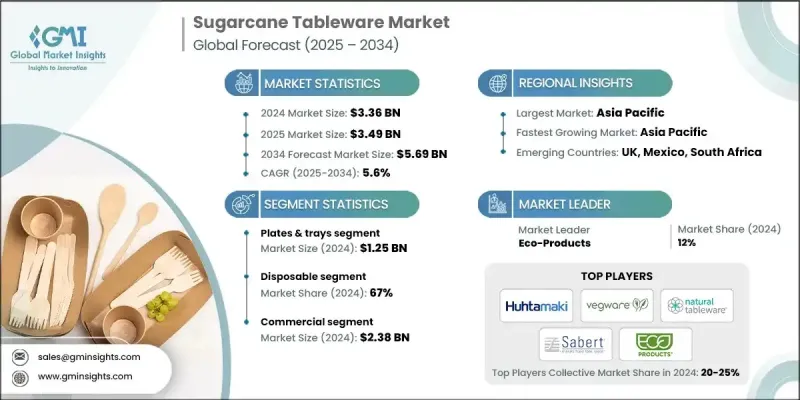
세계의 사탕수수 식기 시장은 2024년 33억 6,000만 달러로 평가되었으며, 2034년까지 연평균 복합 성장률(CAGR) 5.6%로 성장해 56억 9,000만 달러에 이를 것으로 예측되고 있습니다.

이 시장 성장은 도시화의 진전, 라이프 스타일 변화, 빠른 서비스 레스토랑, 클라우드 주방, 온라인 식품 배달 플랫폼의 보급 확대에 힘입어 세계적인 외식 산업의 급속한 확대와 밀접한 관련이 있습니다. 소비자가 편의성과 위생 측면을 점점 더 중시함에 따라 일회용 환경 친화적 인 포장재에 대한 수요가 계속 증가하고 있습니다. 생분해성과 퇴비화가 가능한 사탕수수 식기는 기존의 플라스틱 및 발포 스티롤 일회용 제품의 지속 가능한 대체품으로 부상하고 있습니다. 이는 환경부하의 저감과 지속가능성을 중시한 규제에 대한 대응을 목표로 하는 외식 브랜드의 환경목표를 지원하는 것입니다. 사탕수수의 부산물인 바가스를 이용하는 것으로, 농업 폐기물을 재생 가능한 일회용 제품의 원료로 전환합니다. 이 기술은 폐기물 감소에 기여할 뿐만 아니라 세계의 외식 산업을 위한 친환경 대체품을 확장 가능한 규모로 공급합니다. 규제기준의 강화와 소비자의 그린솔루션 지향의 높아짐에 따라 선진국 및 신흥국 시장 양쪽에서 사탕수수 유래 식기의 채용이 가속될 것으로 예측됩니다.
| 시장 범위 | |
|---|---|
| 시작 연도 | 2024년 |
| 예측 기간 | 2025-2034년 |
| 시작 금액 | 33억 6,000만 달러 |
| 예측 금액 | 56억 9,000만 달러 |
| CAGR | 5.6% |
2024년, 플레이트 및 트레이 부문은 12억 5,000만 달러의 매출을 창출했습니다. 이 제품은 범용성과 기관용 케이터링, 패스트 푸드, 음식점 등 다양한 푸드서비스 형태로 광범위하게 사용함으로써 시장을 선도하고 있습니다. 넓고 내구성 있는 디자인으로 건조 식품에서 반 유동성 식품에 이르기까지 다양한 식품을 보유 할 수있어 편리하고 위생성을 유지합니다. 플레이트와 트레이는 일회용이기 때문에 대량의 신속한 대응이 요구되는 식품 환경에 특히 적합하며 품질과 외관을 손상시키지 않고 효율성과 빠른 회전 속도를 지원합니다. 게다가, 퇴비화 가능하고 내열성이라는 특성은 지속가능한 외식산업용도의 가치를 더욱 높여주고 있습니다.
2024년 현재, 일회용 제품 부문은 67%의 점유율을 차지했습니다. 일회용으로 퇴비화 가능한 식기에 대한 선호도가 높아지고 있는 배경에는 소비자가 편의성과 지속가능성의 균형을 요구하는 자세가 반영되어 있습니다. 사탕수수 바가스 섬유로 만들어진 이러한 일회용 제품은 석유 유래 플라스틱을 대체하는 환경 친화적인 선택 역할을 합니다. 생분해성과 퇴비화 가능한 특성으로 안전성, 청결, 폐기물 감축을 중시하는 케이터링 서비스, 시설내 식당, 테이크아웃 사업에 최적입니다. 실용성을 저해하지 않고 환경 부하를 경감하고 싶은 소비자가 이러한 제품에 점점 주목하고 있기 때문에 외식산업 전반에 있어서 시장에서의 주도적 지위가 더욱 강화되고 있습니다.
미국 사탕수수 식기 시장은 2024년에 78.2%의 점유율을 차지하고 7억 3,000만 달러의 매출을 창출했습니다. 미국 시장의 견고한 지위는 여러 주에서 첨단 환경 규제와 일회용 플라스틱 금지 조치에 의해 지원되며 지속 가능한 대체품에 대한 수요를 견인하고 있습니다. 이 규제 상황과 퇴비화 가능 인증에 대한 의식의 고조가 함께 레스토랑, 소매점, 공공시설에서의 채용을 촉진하고 있습니다. 특히 도시 지역과 환경 의식이 높은 지역의 미국 소비자는 자신의 친환경 가치에 따라 생분해 식기를 선택하는 경향이 강해지고 있습니다. 정책 지원과 소비자 의식의 융합은 미국 시장 성장을 지속적으로 추진하고 있습니다.
세계 사탕수수 식기 시장에서 사업을 전개하고 있는 주요 기업으로는 GreenGood, Pactiv Evergreen, BioMass Packaging, EcoSave, Natural Tableware, Huhtamaki Group, Bio Futura BV, PalmLeaf Tech, Hefty Tableware, Biotrem, Product Paper Products, Eco Guardian, Enviroware, Sabert, Rousselot Biomedical 등이 있습니다.
시장에서의 지위를 강화하기 위해 주요 기업들은 혁신, 생산 능력 확대, 지속가능성에 초점을 맞춘 전략을 시행하고 있습니다. 많은 기업들이 제품의 강도, 내열성, 퇴비화 가능성을 높이기 위한 첨단 제조 공정에 투자하고 있습니다. 외식 체인과 소매업체와의 제휴는 브랜드 인지도와 유통 네트워크의 향상에 기여하고 있습니다. 또한 기업은 소비자의 신뢰를 구축하기 위해 에코 인증 및 지구 환경 기준 준수를 우선합니다.
The Global Sugarcane Tableware Market was valued at USD 3.36 Billion in 2024 and is estimated to grow at a CAGR of 5.6% to reach USD 5.69 Billion by 2034.
The market growth is closely tied to the rapid expansion of the global foodservice industry, fueled by rising urbanization, evolving lifestyles, and the growing popularity of quick-service restaurants, cloud kitchens, and online food delivery platforms. As consumers increasingly prioritize convenience and hygiene, demand for disposable and eco-friendly packaging continues to rise. Sugarcane tableware, which is biodegradable and compostable, has emerged as a sustainable replacement for traditional plastic and foam-based disposables. It supports the environmental goals of foodservice brands striving to reduce their ecological footprint and comply with sustainability-driven regulations. The use of sugarcane bagasse, a fibrous by-product of sugar extraction, transforms agricultural waste into a renewable material for disposable products. This approach not only mitigates waste but also provides a scalable supply of eco-friendly alternatives for global foodservice operations. As regulatory standards tighten and consumer preferences shift toward green solutions, the adoption of sugarcane-based tableware is expected to accelerate in both developed and emerging markets.
| Market Scope | |
|---|---|
| Start Year | 2024 |
| Forecast Year | 2025-2034 |
| Start Value | $3.36 Billion |
| Forecast Value | $5.69 Billion |
| CAGR | 5.6% |
In 2024, the plates and trays segment generated USD 1.25 Billion. These products dominate due to their versatility and widespread use across foodservice formats, including institutional catering, fast food, and dining establishments. Their broad and durable design allows them to hold a range of food items from dry to semi-liquid while maintaining convenience and hygiene. The single-use nature of plates and trays makes them particularly well-suited to high-volume and fast-paced food environments, supporting efficiency and quick turnover without compromising quality or presentation. Their compostable and heat-resistant properties further enhance their value for sustainable foodservice applications.
The disposable segment held 67% share in 2024. The growing preference for single-use, compostable tableware reflects consumers' desire to balance convenience with sustainability. Made from sugarcane bagasse fibers, these disposable products serve as an environmentally sound alternative to petroleum-based plastics. Their biodegradability and compostable attributes make them ideal for catering services, institutional dining, and takeout operations that emphasize safety, cleanliness, and waste reduction. Consumers who want to reduce their environmental footprint without sacrificing practicality are increasingly gravitating toward these products, reinforcing their market leadership across foodservice channels.
United States Sugarcane Tableware Market held 78.2% share and generated USD 0.73 Billion in 2024. The U.S. market's strong position is supported by progressive environmental regulations and bans on single-use plastics in several states, driving demand for sustainable alternatives. This regulatory landscape, combined with heightened awareness of compostable certifications, is encouraging adoption across restaurants, retail outlets, and institutions. American consumers particularly those in urban, environmentally conscious areas are more inclined to choose biodegradable tableware options that align with their eco-friendly values. The convergence of policy support and consumer awareness continues to propel market growth across the country.
Key players operating in the Global Sugarcane Tableware Market include GreenGood, Pactiv Evergreen, BioMass Packaging, EcoSave, Natural Tableware, Huhtamaki Group, Bio Futura B.V., PalmLeaf Tech, Hefty Tableware, Biotrem, Vegware, Eco-Products, Sustainable Earth, Green Paper Products, Eco Guardian, Enviroware, Sabert, and Rousselot Biomedical.
To strengthen their market position, leading companies are implementing strategies focused on innovation, capacity expansion, and sustainability. Many are investing in advanced manufacturing processes to enhance product strength, heat resistance, and compostability. Partnerships with foodservice chains and retailers are helping improve brand visibility and distribution networks. Companies are also prioritizing eco-certifications and compliance with global environmental standards to build consumer trust.