


세계의 로봇 카테터 내비게이션 시스템 시장은 2024년에 2억 3,150만 달러로 평가되었고, 2034년까지 연평균 복합 성장률(CAGR)은 10.3%를 나타낼 것으로 예측되며 6억 1,010만 달러에 달할 전망입니다.

최소 침습 수술 절차에 대한 선호도 증가, 로봇 기술 발전, 심혈관 및 신경학적 질환 발생률 증가로 인해 시장이 성장세를 보이고 있습니다. 중재적 치료에서 높은 정밀도, 안전성 및 효율성에 대한 수요 증가 역시 시장 성장을 촉진하고 있습니다. 로봇 카테터 내비게이션 시스템은 로봇 팔 또는 첨단 전기기계식 및 자기 유도 시스템을 활용하여 복잡한 시술 중 의사가 카테터를 탁월한 정확도로 원격 제어할 수 있게 합니다. 이러한 기술은 복잡한 해부학적 경로를 탐색할 때 안정성과 정밀도를 향상시킵니다. 인공지능, 3D 시각화, 햅틱 피드백, 실시간 영상 기술의 통합은 시스템 성능을 한층 향상시켜 시술 결과를 개선하고 있습니다. 하이브리드 로봇 시스템의 확산, 심장 및 전기생리학 부문에서의 활용 확대, 병원과 의료기기 제조사 간의 협력은 시장 침투를 가속화하고 있습니다. 또한 비용 효율적인 의료 서비스와 첨단 영상 및 매핑 솔루션에 대한 관심은 다양한 의료 부문에서 시장 진화와 채택을 지속적으로 주도하고 있습니다.
| 시장 범위 | |
|---|---|
| 시작 연도 | 2024년 |
| 예측 기간 | 2025-2034년 |
| 시작 금액 | 2억 3,150만 달러 |
| 예측 금액 | 6억 1,010만 달러 |
| CAGR | 10.3% |
2024년 기준, 장비 부문이 66.7%의 점유율을 차지했습니다. 이러한 우위는 로봇 내비게이션 기술의 지속적인 발전, 최소 침습적 시술의 증가, 정밀 영상 및 매핑 기술에 대한 의존도 상승과 연관됩니다. 제조업체들은 카테터 조작성, 유연성 및 실시간 대응 능력을 향상시키기 위해 로봇 플랫폼을 지속적으로 업그레이드하고 있으며, 이는 특히 까다로운 혈관 환경에서 시술 결과와 성공률을 개선합니다.
심장학 응용 부문은 2024년 1억 3,070만 달러 규모였으며, 2025-2034년 동안 연평균 복합 성장률(CAGR) 10.4%로 성장할 것으로 전망됩니다. 심장학은 전 세계적으로 심장 부정맥 및 관련 질환의 유병률이 증가함에 따라 가장 큰 점유율을 차지합니다. 로봇 카테터 시스템은 절제 치료 시 탁월한 정밀도를 제공하여 카테터의 정확한 위치 설정을 보장하고, 치료 오류를 줄이며, 환자 결과를 개선합니다. 부정맥 치료의 향상된 정확도는 중재적 심장학 부문에서 이러한 시스템의 광범위한 임상적 채택으로 이어졌습니다.
미국의 로봇 카테터 내비게이션 시스템 시장은 2024년 9,030만 달러로 평가되었습니다. 미국은 선진 의료 인프라, 로봇 보조 시스템의 광범위한 도입, 연구 기관 및 전문 병원의 강력한 입지라는 이점을 누리고 있습니다. 이러한 시설들은 정밀도와 환자 안전성을 향상시켜 복잡한 중재적 시술을 용이하게 하는 고급 영상, 매핑 및 내비게이션 도구를 통합합니다. 병원 역량의 지속적인 업그레이드와 첨단 로봇 치료에 대한 환자 선호도 증가는 해당 지역 전반에 걸친 시장 확장에 더욱 기여하고 있습니다.
세계의 로봇 카테터 내비게이션 시스템 시장에서 활동하는 주요 기업으로는 존슨앤드존슨, 보스턴 사이언티픽, 스테레오택시스, 지멘스 헬시니어스, 바이오트로닉, 마이크로포트, 로보캐스, 테루모, 인튜이티브 서지컬, 카테터 프레시전, 마그네텍스, 클리어포인트 뉴로 등이 있습니다. 로봇 카테터 내비게이션 시스템 시장의 선도 기업들은 혁신, 전략적 제휴, 포트폴리오 확장을 결합하여 시장 입지를 강화하고 있습니다. 지속적인 연구개발 투자를 통해 정밀도 향상, 영상 통합, AI 기반 내비게이션 기능을 갖춘 첨단 로봇 시스템이 개발되고 있습니다. 기업들은 병원 및 연구 센터와 협력하여 심장학 및 신경학 부문에 최적화된 차세대 시스템의 시험 및 상용화를 추진 중입니다. 전략적 합병, 인수합병 및 기술 파트너십은 기업들의 글로벌 시장 진출 및 제품 포트폴리오 확장에 기여하고 있습니다.
The Global Robotic Catheter Navigation System Market was valued at USD 231.5 million in 2024 and is estimated to grow at a CAGR of 10.3% to reach USD 610.1 million by 2034.
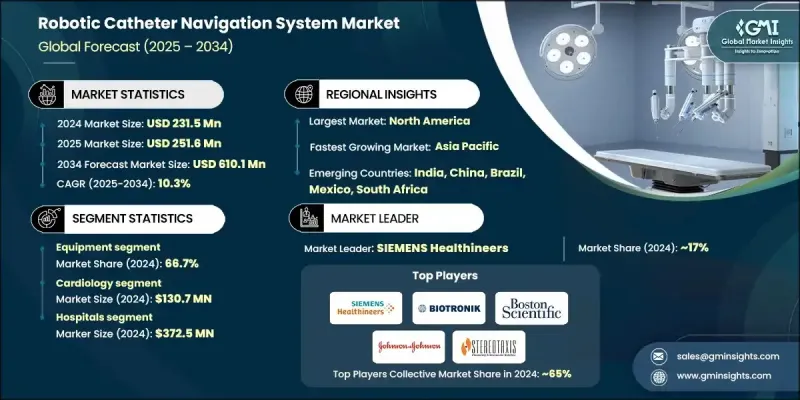
The market is gaining momentum due to the rising preference for minimally invasive surgical procedures, advancements in robotic technologies, and growing incidences of cardiovascular and neurological conditions. The increasing demand for higher precision, safety, and efficiency in interventional treatments is also propelling market growth. Robotic catheter navigation systems enable physicians to remotely control catheters with exceptional accuracy during complex procedures, using robotic arms or advanced electromechanical and magnetic guidance systems. These technologies enhance stability and precision when navigating intricate anatomical pathways. Integration of artificial intelligence, 3D visualization, haptic feedback, and real-time imaging has further elevated the system's capabilities, leading to improved procedural outcomes. The growing adoption of hybrid robotic systems, expanding use in cardiac and electrophysiology applications, and collaborations between hospitals and device manufacturers are accelerating market penetration. Moreover, the focus on cost-effective healthcare and advanced imaging and mapping solutions continues to shape the market's evolution and adoption across multiple medical disciplines.
| Market Scope | |
|---|---|
| Start Year | 2024 |
| Forecast Year | 2025-2034 |
| Start Value | $231.5 Million |
| Forecast Value | $610.1 Million |
| CAGR | 10.3% |
In 2024, the equipment segment held 66.7% share. This dominance is linked to the continuous technological progress in robotic navigation, increased usage of minimally invasive procedures, and growing reliance on precise imaging and mapping technologies. Manufacturers are consistently upgrading robotic platforms to enhance catheter maneuverability, flexibility, and real-time response capabilities, which in turn improve procedural outcomes and success rates, especially in challenging vascular environments.
The cardiology application segment was valued at USD 130.7 million in 2024, and is projected to grow at a CAGR of 10.4% during 2025-2034. Cardiology represents the largest share due to the increasing prevalence of cardiac arrhythmias and related disorders worldwide. Robotic catheter systems offer exceptional precision during ablation therapies, ensuring accurate positioning of catheters, reducing treatment errors, and improving patient outcomes. The enhanced accuracy in treating arrhythmias has led to broader clinical adoption of these systems in interventional cardiology.
United States Robotic Catheter Navigation System Market was valued at USD 90.3 million in 2024. The country benefits from advanced healthcare infrastructure, extensive adoption of robotic-assisted systems, and strong presence of research institutions and specialty hospitals. These facilities integrate high-end imaging, mapping, and navigation tools, which facilitate complex interventional procedures with improved precision and patient safety. The continuous upgrade of hospital capabilities and increased patient preference for advanced robotic treatments are further contributing to market expansion across the region.
Key companies active in the Global Robotic Catheter Navigation System Market include Johnson & Johnson, Boston Scientific, Stereotaxis, Siemens Healthineers, BIOTRONIK, MicroPort, Robocath, Terumo, Intuitive Surgical, Catheter Precision, MAGNETECS, and ClearPoint Neuro. Leading players in the Robotic Catheter Navigation System Market are adopting a combination of innovation, strategic alliances, and portfolio expansion to strengthen their market position. Continuous investments in research and development are driving the creation of advanced robotic systems with enhanced precision, imaging integration, and AI-based navigation capabilities. Companies are collaborating with hospitals and research centers to test and commercialize next-generation systems optimized for cardiology and neurology applications. Strategic mergers, acquisitions, and technology partnerships are helping firms expand their global footprint and product offerings.