실험실 재배 커피 생산 시스템 시장 : 기회, 성장 요인, 업계 동향 분석 및 예측(2025-2034년)
Lab-Grown Coffee Production Systems Market Opportunity, Growth Drivers, Industry Trend Analysis, and Forecast 2025 - 2034
상품코드:1871102
리서치사:Global Market Insights Inc.
발행일:2025년 10월
페이지 정보:영문 210 Pages
라이선스 & 가격 (부가세 별도)
ㅁ Add-on 가능: 고객의 요청에 따라 일정한 범위 내에서 Customization이 가능합니다. 자세한 사항은 문의해 주시기 바랍니다.
한글목차
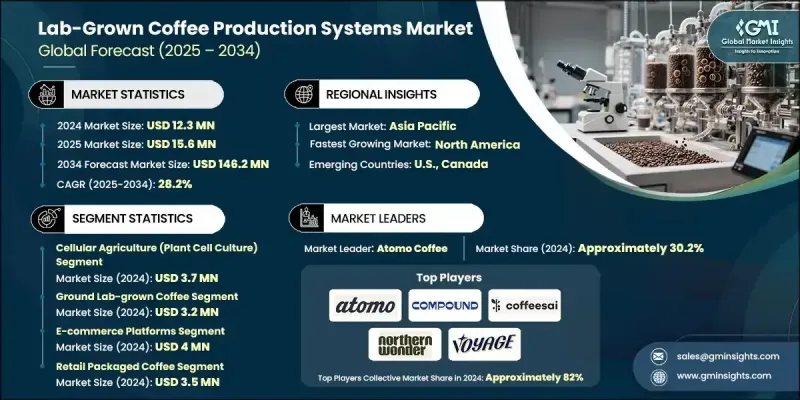
세계의 실험실 재배 커피 생산 시스템 시장은 2024년 1,230만 달러로 평가되었고, 2034년까지 연평균 복합 성장률(CAGR)은 28.2%를 나타낼 것으로 예측되며 1억 4,620만 달러에 달할 전망입니다.
지속 가능하고 윤리적인 커피 대안에 대한 글로벌 수요 증가로 시장이 급속히 확장되고 있습니다. 소비자들은 산림 파괴, 과도한 물 사용, 개발도상국에서의 노동 착취 등 전통적 커피 재배와 연관된 환경적, 사회적 영향에 대한 인식을 점차 높여가고 있습니다. 이러한 인식 확산에 따라 실험실 재배 커피로의 전환이 가속화되며, 이는 탄소 발자국 감소와 글로벌 지속가능성 및 ESG 목표와 부합하는 투명하고 윤리적인 공급망을 제공합니다. 또한 주요 커피 생산국에서 경작지 감소와 토양 황폐화, 기상 패턴 불규칙성, 작물 수확량 감소 등 기후 관련 문제들이 가속화되면서 통제된 환경에서의 커피 생산으로의 전환이 더욱 촉진되고 있습니다. 실험실 기반 시스템은 지리적, 기후적 제약과 무관하게 일관된 품질과 안정적인 생산량을 바탕으로 연중 생산이 가능해 지속 가능한 커피 생산을 위한 매력적인 솔루션으로 부상하고 있습니다.
시장 범위
시작 연도
2024년
예측 연도
2025-2034년
시작 금액
1,230만 달러
예측 금액
1억 4,620만 달러
CAGR
28.2%
세포 농업 부문은 2024년 370만 달러 규모였으며, 2025-2034년 연평균 27.9%의 성장률을 보일 것으로 예상됩니다. 이 접근법은 최적화된 실험실 환경에서 커피 세포를 배양하여 기존 재배 방식의 커피가 지닌 진정한 풍미와 향을 재현할 수 있게 합니다. 이 방법은 안정적인 생산, 배치 간 일관성 확보, 농업 변수에 대한 의존도 감소를 보장합니다. 특히 정밀 발효를 통한 미생물 생합성 기술도 주목받고 있는데, 이는 전통적 농업 방식에 비해 적은 천연 자원으로 커피 풍미 분자와 카페인을 효율적으로 합성하고 더 빠른 처리 시간을 제공하기 때문입니다.
분쇄 실험실 재배 커피 부문은 2024년 320만 달러 규모를 기록했으며, 2034년까지 연평균 복합 성장률(CAGR) 28.6%로 성장할 것으로 예상됩니다. 지속 가능하고 편리한 커피 제품의 인기가 높아지면서 이 포맷에 대한 수요가 증가하고 있습니다. 환경을 의식하는 소비자들은 친환경 가치와 부합하면서도 익숙한 추출 경험을 제공하는 통원두 및 분쇄 실험실 재배 커피 제품을 점점 더 많이 선택하고 있습니다. 이러한 제품의 온라인 및 전문 소매 채널에서의 접근성은 구매 결정 시 지속가능성을 우선시하는 소비자들 사이에서 꾸준한 인기 상승에 기여하고 있습니다.
북미의 실험실 재배 커피 생산 시스템 시장은 지속가능하고 윤리적으로 조달된 음료에 힘입어 2024년 300만 달러 규모로 평가되었습니다. 가처분 소득 증가와 기후 친화적 소비에 대한 강한 관심이 소매, 즉석 음료, 외식 서비스 부문 전반에 걸쳐 실험실 재배 커피 도입을 촉진하고 있습니다. 시장 성장은 기술 발전, 신식품에 대한 유리한 규제 체계, 푸드테크 혁신 기업들의 증가하는 투자에 힘입고 있습니다. 해당 지역의 성숙한 전자상거래 플랫폼과 소비자 직거래 구독 모델은 제품 접근성을 더욱 가속화하고 있습니다. 생명공학 기업과 커피 브랜드 간의 협력도 제품 개발과 상업적 확장성을 강화하고 있습니다.
세계의 실험실 재배 커피 생산 시스템 시장에서 사업을 전개하는 주요 기업으로는 컴파운드 푸즈(Compound Foods), 보야지 푸즈(Voyage Foods), 아토모 커피(Atomo Coffee), 커피사이(Coffeesai, Pluri Biotech), 노던 원더(Northern Wonder) 등이 있습니다. 실험실 재배 커피 생산 시스템 시장 기업들은 시장 입지를 확대하고 강화하기 위한 전략적 계획을 추진 중입니다. 선도 기업들은 확장 가능하고 비용 효율적인 커피 생산을 위한 세포 농업 및 발효 기술 정교화를 위해 연구개발(R&D)에 막대한 투자를 하고 있습니다. 상용화 가속화와 시장 접근성 향상을 위해 생명공학 기관, 음료 브랜드, 유통업체와의 전략적 협력이 구축되고 있습니다. 기업들은 일관된 풍미 품질을 보장하면서 자원 소비를 최소화하는 지속 가능한 생산 모델 구축에도 주력하고 있습니다. 소비자 직거래 플랫폼, 온라인 유통, 구독형 배송 시스템으로의 확장은 접근성과 브랜드 인지도를 높이고 있습니다.
목차
제1장 조사 방법
시장 범위와 정의
조사 설계
조사 접근
데이터 수집 방법
데이터 마이닝 소스
세계
지역별/국가별
기본 추정치와 계산
기준연도 계산
시장 추정에서의 주요 동향
1차 조사 및 검증
1차 정보
예측 모델
조사의 전제조건과 제한 사항
제2장 주요 요약
제3장 업계 인사이트
생태계 분석
공급자의 상황
이익률
각 단계에서의 부가가치
밸류체인에 영향을 주는 요인
혁신
업계에 미치는 영향요인
성장 촉진요인
업계의 잠재적 억제요인 및 과제
공급망의 복잡성
시장 기회
성장 가능성 분석
규제 상황
북미
유럽
아시아태평양
라틴아메리카
중동 및 아프리카
Porter's Five Forces 분석
PESTEL 분석
가격 동향
지역별
제품별
장래 시장 동향
기술과 혁신의 상황
현재의 기술 동향
신흥기술
특허 상황
무역 통계(주 : 무역 통계는 주요 국가에서만 제공됨)
주요 수입국
주요 수출국
지속가능성과 환경적 측면
지속가능한 실천
폐기물 감축 전략
생산에서의 에너지 효율
환경에 배려한 대처
탄소발자국에 관한 고려 사항
제4장 경쟁 구도
소개
기업의 시장 점유율 분석
지역별
북미
유럽
아시아태평양
라틴아메리카
중동 및 아프리카
기업 매트릭스 분석
주요 시장 기업의 경쟁 분석
경쟁 포지셔닝 매트릭스
주요 발전
합병 및 인수
제휴 및 협력관계
신제품 발매
사업 확대 계획
제5장 시장 추계 및 예측 : 기술별(2021-2034년)
주요 동향
세포 농업(식물 세포 배양)
현탁 배양
바이오리액터 배양 식물 세포
정밀 발효(미생물 바이오 합성)
개량 효모주
세균 발효
합성 생물학 플랫폼
유전자 편집 미생물
효소 기반 합성
바이오리액터 기반 배양
배치식 바이오리액터
연속 흐름 시스템
하이브리드 시스템
발효 + 추출
세포 배양 + 풍미 주입
제6장 시장 추계 및 예측 : 제품 형태별(2021-2034년)
주요 동향
실험실 재배 커피 원두(통원두)
분쇄 실험실 재배 커피
인스턴트 실험실 재배 커피
커피 포드/캡슐
액체 농축물
커피 추출물
제7장 시장 추계 및 예측 : 최종 용도별(2021-2034년)
주요 동향
소매 포장 커피
슈퍼마켓의 진열대 상품
프리미엄 스페셜티 브랜드
외식산업 및 호스피탈리티
호텔 체인
카페 및 레스토랑
즉시 음용 가능(RTD) 음료
병입 콜드 브류
커피 배합 에너지 음료
기능성 및 영양 보조 식품
아답토겐 배합 커피
단백질 또는 콜라겐을 첨가 커피
산업용 원료 용도
향료
제빵 및 제과용 원료
기타
제8장 시장 추계 및 예측 : 유통 채널별(2021-2034년)
주요 동향
전자상거래 플랫폼
브랜드 직영 웹사이트
온라인 마켓플레이스(예 : 아마존)
슈퍼마켓 및 대형 슈퍼마켓
대규모 소매 체인
유기농/내츄럴 식품점
편의점
도시형 점포
주유소 병설 점포
스페셜티 커피숍
써드 웨이브 카페
부티크 로스터
소비자용 직접 판매(D2C) 정기 구입 서비스
월간 커피 박스
맞춤형 로스팅 정기 구매 서비스
제9장 시장 추계 및 예측 : 지역별(2021-2034년)
주요 동향
북미
미국
캐나다
유럽
독일
영국
프랑스
이탈리아
스페인
기타 유럽
아시아태평양
중국
인도
일본
호주
한국
기타 아시아태평양
라틴아메리카
브라질
멕시코
아르헨티나
기타 라틴아메리카
중동 및 아프리카
사우디아라비아
남아프리카
아랍에미리트(UAE)
기타 중동 및 아프리카
제10장 기업 프로파일
Amatera
Atomo Coffee
Coffeesai(Pluri Biotech)-Israel
Compound Foods
Food Brewer
Minus Coffee
Northern Wonder
Planting Costa Rica
Prefer
Voyage Foods
HBR
영문 목차
영문목차
The Global Lab-Grown Coffee Production Systems Market was valued at USD 12.3 million in 2024 and is estimated to grow at a CAGR of 28.2% to reach USD 146.2 million by 2034.
The market is experiencing rapid expansion due to the growing global demand for sustainable and ethical coffee alternatives. Consumers are becoming increasingly aware of the environmental and social impacts linked with traditional coffee farming, including deforestation, excessive water usage, and labor exploitation in developing nations. As awareness grows, the transition toward lab-grown coffee is gaining traction, offering a lower carbon footprint and a more transparent, ethical supply chain that aligns closely with global sustainability and ESG objectives. Additionally, diminishing arable land and climate-related challenges such as soil degradation, erratic weather patterns, and declining crop yields in leading coffee-producing countries have further accelerated the shift toward controlled-environment coffee production. Lab-based systems enable consistent, year-round production with reliable quality and stable output, independent of geographical and climatic limitations, making them an increasingly attractive solution for sustainable coffee production.
Market Scope
Start Year
2024
Forecast Year
2025-2034
Start Value
$12.3 Million
Forecast Value
$146.2 Million
CAGR
28.2%
The cellular agriculture segment was valued at USD 3.7 million in 2024 and is estimated to grow at a CAGR of 27.9% from 2025 to 2034. This approach enables coffee cells to be cultivated in optimized laboratory environments that reproduce the authentic flavors and aroma of conventionally grown coffee. The method ensures stable production, consistency across batches, and reduced dependency on agricultural variables. Microbial biosynthesis, particularly through precision fermentation, is also gaining attention due to its ability to synthesize coffee flavor molecules and caffeine efficiently with fewer natural resources and faster turnaround times compared to traditional farming.
The ground lab-grown coffee segment reached USD 3.2 million in 2024 and is estimated to grow at a CAGR of 28.6% through 2034. The growing popularity of sustainable and convenient coffee products is driving demand for this format. Environmentally conscious consumers are increasingly adopting whole-bean and ground lab-grown coffee products, as they provide a familiar brewing experience while aligning with eco-friendly values. The availability of these products in online and specialty retail channels is contributing to their steady rise in popularity among consumers who prioritize sustainability in their purchasing decisions.
North America Lab-Grown Coffee Production Systems Market was valued at USD 3 million in 2024, driven by sustainable and ethically sourced beverages. Increasing disposable incomes and a strong interest in climate-friendly consumption are fueling the introduction of lab-grown coffee across retail, ready-to-drink, and foodservice categories. Market growth is supported by technological advancements, favorable regulatory frameworks for novel foods, and growing investments from food-tech innovators. The region's mature e-commerce platforms and direct-to-consumer subscription models are further accelerating product accessibility. Collaborations between biotechnology firms and coffee brands are also enhancing product development and commercial scalability.
Key companies operating in the Global Lab-Grown Coffee Production Systems Market include Compound Foods, Voyage Foods, Atomo Coffee, Coffeesai (Pluri Biotech), and Northern Wonder. Companies in the Lab-Grown Coffee Production Systems Market are pursuing strategic initiatives to expand their presence and strengthen their market positions. Leading firms are investing heavily in R&D to refine cellular agriculture and fermentation technologies for scalable, cost-efficient coffee production. Strategic collaborations with biotechnology organizations, beverage brands, and retail distributors are being established to accelerate commercialization and improve market reach. Businesses are also focusing on building sustainable production models that minimize resource consumption while ensuring consistent flavor quality. Expansion into direct-to-consumer platforms, online retail, and subscription-based delivery systems is enhancing accessibility and brand visibility.
Table of Contents
Chapter 1 Methodology
1.1 Market scope and definition
1.2 Research design
1.2.1 Research approach
1.2.2 Data collection methods
1.3 Data mining sources
1.3.1 Global
1.3.2 Regional/Country
1.4 Base estimates and calculations
1.4.1 Base year calculation
1.4.2 Key trends for market estimation
1.5 Primary research and validation
1.5.1 Primary sources
1.6 Forecast model
1.7 Research assumptions and limitations
Chapter 2 Executive Summary
2.1 Industry 360° synopsis
2.2 Key market trends
2.2.1 Regional
2.2.2 Product Format
2.2.3 Technology
2.2.4 End Use
2.2.5 Distribution Channel
2.3 TAM Analysis, 2025-2034
2.4 CXO perspectives: Strategic imperatives
2.4.1 Executive decision points
2.4.2 Critical success factors
2.5 Future Outlook and Strategic Recommendations
Chapter 3 Industry Insights
3.1 Industry ecosystem analysis
3.1.1 Supplier Landscape
3.1.2 Profit Margin
3.1.3 Value addition at each stage
3.1.4 Factor affecting the value chain
3.1.5 Disruptions
3.2 Industry impact forces
3.2.1 Growth drivers
3.2.2 Industry pitfalls and challenges
3.2.2.1 Supply chain complexity
3.2.3 Market opportunities
3.3 Growth potential analysis
3.4 Regulatory landscape
3.4.1 North America
3.4.2 Europe
3.4.3 Asia Pacific
3.4.4 Latin America
3.4.5 Middle East & Africa
3.5 Porter's analysis
3.6 PESTEL analysis
3.7 Price trends
3.7.1 By region
3.7.2 By product
3.8 Future market trends
3.9 Technology and Innovation landscape
3.9.1 Current technological trends
3.9.2 Emerging technologies
3.10 Patent Landscape
3.11 Trade statistics (Note: the trade statistics will be provided for key countries only)
3.11.1 Major importing countries
3.11.2 Major exporting countries
3.12 Sustainability and Environmental Aspects
3.12.1 Sustainable Practices
3.12.2 Waste Reduction Strategies
3.12.3 Energy Efficiency in Production
3.12.4 Eco-friendly Initiatives
3.13 Carbon Footprint Considerations
Chapter 4 Competitive Landscape, 2024
4.1 Introduction
4.2 Company market share analysis
4.2.1 By region
4.2.1.1 North America
4.2.1.2 Europe
4.2.1.3 Asia Pacific
4.2.1.4 LATAM
4.2.1.5 MEA
4.3 Company matrix analysis
4.4 Competitive analysis of major market players
4.5 Competitive positioning matrix
4.6 Key developments
4.6.1 Mergers & acquisitions
4.6.2 Partnerships & collaborations
4.6.3 New Product Launches
4.6.4 Expansion Plans
Chapter 5 Market Estimates and Forecast, By Technology, 2021 - 2034 (USD Million, Kilo Tons)