전기 폭기 시스템 시장 : 시장 기회, 성장 촉진요인, 산업 동향 분석, 예측(2025-2034년)
Electric Aeration Systems Market Opportunity, Growth Drivers, Industry Trend Analysis, and Forecast 2025 - 2034
상품코드:1858863
리서치사:Global Market Insights Inc.
발행일:2025년 10월
페이지 정보:영문 120 Pages
라이선스 & 가격 (부가세 별도)
ㅁ Add-on 가능: 고객의 요청에 따라 일정한 범위 내에서 Customization이 가능합니다. 자세한 사항은 문의해 주시기 바랍니다.
한글목차
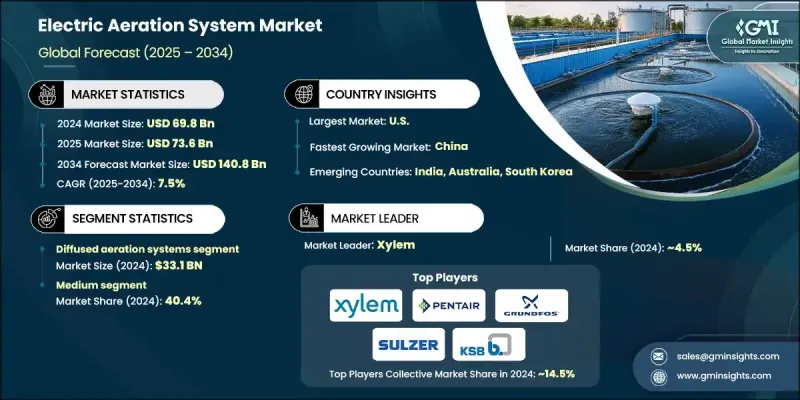
세계의 전기 폭기 시스템 시장은 2024년에 698억 달러로 평가되었고, CAGR 7.5%로 성장할 전망이며, 2034년에는 1,408억 달러에 이를 것으로 예측됩니다.
폭기 공정에서 에너지 소비가 증가함에 따라 에너지 효율적인 시스템에 대한 수요가 크게 증가하고 있습니다. 산업 및 유틸리티 사업자는 에너지 비용을 줄이고 이산화탄소 배출량을 줄이기 위해 스마트 폭기 기술을 우선하고 있습니다. 운전 효율이 가장 큰 관심사가 됨에 따라 업계는 실시간 모니터링 및 자동화를 이용한 정밀한 폭기 방법으로 축발을 옮겨가고 있습니다. 이러한 진보는 유입량과 처리 요구에 따라 산소 공급을 최적화하고 보다 효율적인 시스템 성능을 보장하는 데 도움이 됩니다. 가변 주파수 드라이브, AI를 활용한 제어, 모델 기반 전략, 컴퓨팅 유체 역학 등 혁신적인 기술의 도입이 진행되고 있습니다. 게다가 유럽에서는 규제 프레임워크가 강화되고 산소 이동 측정이 표준화됨에 따라 제조업체 각사는 제품의 성능과 비교 가능성을 향상시킬 필요가 있습니다. 이러한 동향은 시대에 뒤떨어진 폐수 인프라를 현대화하고 지속 가능한 목표를 달성하기 위한 폭넓은 노력과 함께 세계의 정세를 크게 바꾸고 있습니다.
시장 범위
시작 연도
2024년
예측 연도
2025-2034년
시장 규모
698억 달러
예측 금액
1,408억 달러
CAGR
7.5%
확산 폭기 시스템 분야는 2024년 331억 달러를 창출했으며, 2034년까지 예상 CAGR은 7.2%로 전망됩니다. 그 이점은 에너지 효율적인 운전과 효과적인 산소 이동으로 인한 것입니다. 이러한 시스템에 필수적인 미세 기포 디퓨저는 공기와 물의 접촉을 극대화하고 지자체와 산업 환경 모두에 이상적입니다. 그 확장성 및 다양한 탱크 설계에 적합한 능력은 특히 에너지 절약과 성능이 중요한 우선순위인 경우 이 시스템의 광범위한 적용을 지원합니다.
중가격대 시스템 분야는 2024년 281억 달러에 이르렀고, 40.4%의 점유율을 차지했습니다. 이 시스템은 성능, 최신 기능 및 비용 효율성의 균형을 맞춘 종합적인 패키지를 제공합니다. 통합 디지털 제어, 모듈 기능 및 에너지 절약 기술을 갖춘 이러한 시스템은 중규모 산업 시설, 농업, 지방 자치 단체 등 비용 의식이 높은 분야에 호소하고 있습니다. 폐수 처리 및 양식 등 다양한 용도에 유연하게 대응할 수 있으므로 가치와 신뢰성을 요구하는 사용자에게 인기가 있습니다.
미국의 전기 폭기 시스템 시장은 2024년에 194억 달러를 창출했으며, 2025-2034년 연평균 복합 성장률(CAGR) 6.8%로 성장할 것으로 예측됩니다. 치료 인프라 노후화, 환경 컴플라이언스 수요 증가, 연방 정부 및 주에서 엄청난 자금을 지원하는 것은 모두 미국에서의 업그레이드에 박차를 가하고 있습니다. 클린 워터 이니셔티브를 지원하는 프로그램은 제어 강화, 에너지 사용 감소, 신뢰성 향상을 제공하는 전기 폭기 시스템으로의 이동을 가속화하고 있습니다. 현대화 솔루션의 추진으로 이러한 시스템은 물 인프라 프로젝트의 최전선에 위치하고 있습니다.
세계 전기 폭기 시스템 시장의 주요 기업으로는 Danner Manufacturing, SUEZ Water Technologies, Carrier Global, Aqua-Aerobic Systems, Tran Technologies, Sulzer Ltd, Johnson Controls, KSB Group, Pentair plc, Evoqua Water Technologies, Daikin Industries, Veolia Water Technologies, Xylem Inc., Honeywell, Grundfos, Sanitaire 등이 있습니다. 전기 폭기 시스템 시장의 주요 기업은 AI, 실시간 센서, SCADA 시스템 등 스마트 기술을 통합하여 시스템 효율성 및 모니터링 능력을 높이는 데 주력하고 있습니다. 제품의 혁신은 변화하는 부하 조건에 적응하고 에너지 소비를 줄이는 시스템에 대한 수요에 의해 추진되고 있습니다. 기업은 연구개발 예산을 확대하고 광범위한 고객층에 대응하는 모듈식으로 확장 가능한 시스템을 개발하고 있습니다. 또한 많은 기업들이 장기적인 인프라 프로젝트를 위해 지자체 및 산업계 고객과 파트너십을 맺고 있습니다.
목차
제1장 조사 방법 및 범위
제2장 주요 요약
제3장 업계 인사이트
생태계 분석
공급자의 상황
이익률
각 단계에서의 부가가치
밸류체인에 영향을 주는 요인
혁신
업계에 미치는 영향요인
성장 촉진요인
업계의 잠재적 위험 및 과제
기회
성장 가능성 분석
가격 분석(2024년)
지역 및 제품별
원재료 비용
향후 시장 동향
리스크 평가 및 경감책
규제 준수 위험
생산 능력 제약의 영향 분석
기술 전환 위험
가격 변동 위험 및 비용 상승 위험
Porter's Five Forces 분석
PESTEL 분석
제4장 경쟁 구도
서문
기업의 시장 점유율 분석
지역별
기업 매트릭스 분석
주요 시장 기업의 경쟁 분석
경쟁 포지셔닝 매트릭스
주요 발전
합병 및 인수
파트너십
신제품 발표
확장 계획
제5장 시장 추계 및 예측 : 제품별(2021-2034년)
주요 동향
확산 폭기 시스템
표면 폭기 시스템
서브서피스 폭기 시스템
벤츄리 폭기 시스템
압축공기 시스템
하이브리드 폭기 시스템
제6장 시장 추계 및 예측 : 기술별(2021-2034년)
주요 동향
기계 폭기 기술
공기 폭기 기술
전기화학 폭기
하이브리드 기술 시스템
스마트 및 IoT 대응 시스템
제7장 시장 추계 및 예측 : 가격대별(2021-2034년)
주요 동향
저
중
고
제8장 시장 추계 및 예측 : 용도별(2021-2034년)
주요 동향
도시 폐수 처리
대규모 시설(50 MGD 초과)
중규모 시설(5-50 MGD)
소규모 및 분산형 시스템(5 MGD 미만)
산업용 공정 수처리
제조업
화학처리
음식 및 식품 산업
의약품
기타
주택용
상업용
제9장 시장 추계 및 예측 : 운전 모드별(2021-2034년)
주요 동향
자율주행
반자동
매뉴얼
제10장 시장 추계 및 예측 : 유통 채널별(2021-2034년)
주요 동향
직접 판매
간접 판매
제11장 시장 추계 및 예측 : 지역별(2021-2034년)
주요 동향
북미
미국
캐나다
유럽
독일
영국
프랑스
이탈리아
스페인
네덜란드
아시아태평양
중국
인도
일본
한국
호주
라틴아메리카
브라질
멕시코
아르헨티나
중동 및 아프리카
아랍에미리트(UAE)
사우디아라비아
남아프리카
제12장 기업 프로파일
Carrier Global
Daikin Industries
Danner Manufacturing
Evoqua Water Technologies
Grundfos
Honeywell
Johnson Controls
KSB Group
Pentair plc
Sanitaire
SUEZ Water Technologies
Sulzer Ltd
Trane Technologies
Veolia Water Technologies
Xylem Inc.
AJY
영문 목차
영문목차
The Global Electric Aeration Systems Market was valued at USD 69.8 billion in 2024 and is estimated to grow at a CAGR of 7.5% to reach USD 140.8 billion by 2034.
Increasing energy consumption in aeration processes has significantly boosted demand for energy-efficient systems. Industrial operators and utilities are prioritizing smart aeration technologies to reduce energy expenses and lower their carbon footprint. As operational efficiency becomes a top concern, the industry is pivoting toward precision aeration methods that utilize real-time monitoring and automation. These advancements help optimize oxygen delivery based on inflow and treatment needs, ensuring more efficient system performance. Innovations such as variable frequency drives, AI-powered controls, model-based strategies, and computational fluid dynamics are being increasingly implemented. Additionally, enhanced regulatory frameworks and standardized oxygen transfer measurements in Europe have pushed manufacturers to improve product performance and comparability. These trends, combined with broader efforts to modernize outdated wastewater infrastructure and meet sustainability goals, are transforming the electric aeration systems landscape worldwide.
Market Scope
Start Year
2024
Forecast Year
2025-2034
Start Value
$69.8 Billion
Forecast Value
$140.8 Billion
CAGR
7.5%
The diffused aeration systems segment generated USD 33.1 billion in 2024, with an anticipated CAGR of 7.2% through 2034. Their dominance stems from their energy-efficient operation and effective oxygen transfer. Fine bubble diffusers, which are integral to these systems, maximize air-to-water contact, making them ideal for both municipal and industrial settings. Their scalability and ability to fit various tank designs support their widespread application, especially where energy savings and performance are key priorities.
The medium-priced systems segment reached USD 28.1 billion in 2024, holding a 40.4% share. These systems offer a well-rounded package that balances performance, modern features, and cost-effectiveness. With integrated digital controls, modular capabilities, and energy-saving technologies, these systems appeal to cost-conscious sectors such as mid-sized industrial facilities, agriculture, and local municipalities. Their flexibility across multiple applications, including wastewater treatment and aquaculture, makes them a popular choice among users looking for value and reliability.
U.S. Electric Aeration Systems Market generated USD 19.4 billion in 2024 and is projected to grow at a CAGR of 6.8% between 2025 and 2034. Aging treatment infrastructure, rising environmental compliance demands, and significant federal and state funding are all fueling upgrades across the country. Programs that support clean water initiatives are accelerating the shift toward electric aeration systems that offer enhanced control, reduced energy use, and better reliability. The push for modernized solutions has placed these systems at the forefront of water infrastructure projects.
Key players in the Global Electric Aeration Systems Market include Danner Manufacturing, SUEZ Water Technologies, Carrier Global, Aqua-Aerobic Systems, Trane Technologies, Sulzer Ltd, Johnson Controls, KSB Group, Pentair plc, Evoqua Water Technologies, Daikin Industries, Veolia Water Technologies, Xylem Inc., Honeywell, Grundfos, and Sanitaire. Leading companies in the Electric Aeration Systems Market are focusing on integrating smart technologies such as AI, real-time sensors, and SCADA systems to boost system efficiency and monitoring capabilities. Product innovation is being driven by demand for systems that adapt to variable load conditions and reduce energy consumption. Firms are expanding R&D budgets to develop modular, scalable systems that cater to a wider customer base. Many are also forming partnerships with municipal and industrial clients for long-term infrastructure projects.
Table of Contents
Chapter 1 Methodology & Scope
1.1 Market scope and definition
1.2 Research design
1.2.1 Research approach
1.2.2 Data collection methods
1.3 Data mining sources
1.3.1 Global
1.3.2 Regional/Country
1.4 Base estimates and calculations
1.4.1 Base year calculation
1.4.2 Key trends for market estimation
1.5 Primary research and validation
1.5.1 Primary sources
1.6 Forecast model
1.7 Research assumptions and limitations
Chapter 2 Executive Summary
2.1 Industry 360° synopsis
2.2 Key market trends
2.2.1 Product trends
2.2.2 Technology trends
2.2.3 Price range trends
2.2.4 Application trends
2.2.5 Operation mode trends
2.2.6 Distribution channel trends
2.2.7 Regional trends
2.3 CXO perspective: Strategic imperatives
2.3.1 Key decision points for industry executives
2.3.2 Critical success factors for market players
2.4 Future outlook and strategic recommendations
2.5 Strategic recommendations
2.5.1 Supply chain diversification strategy
2.5.2 Product portfolio enhancement
2.5.3 Partnership and alliance opportunities
2.5.4 Cost management and pricing strategy
2.6 Decision framework
2.6.1 Investment priority matrix
2.6.2 Risk-adjusted ROI analysis
Chapter 3 Industry Insights
3.1 Industry ecosystem analysis
3.1.1 Supplier Landscape
3.1.2 Profit Margin
3.1.3 Value addition at each stage
3.1.4 Factor affecting the value chain
3.1.5 Disruptions
3.2 Industry Impact forces
3.2.1 Growth drivers
3.2.2 Industry pitfalls & challenges
3.2.3 Opportunities
3.3 Growth potential analysis
3.4 Pricing analysis, 2024
3.4.1 By region and product
3.4.2 Raw material cost
3.5 Future market trends
3.6 Risk assessment and mitigation
3.6.1 Regulatory compliance risks
3.6.2 Capacity constraint impact analysis
3.6.3 Technology transition risks
3.6.4 Pricing volatility and cost escalation risks