환경 관리 시스템 시장 : 시장 기회, 성장 촉진요인, 산업 동향 분석, 예측(2025-2034년)
Environmental Management System Market Opportunity, Growth Drivers, Industry Trend Analysis, and Forecast 2025 - 2034
상품코드:1844261
리서치사:Global Market Insights Inc.
발행일:2025년 09월
페이지 정보:영문 220 Pages
라이선스 & 가격 (부가세 별도)
ㅁ Add-on 가능: 고객의 요청에 따라 일정한 범위 내에서 Customization이 가능합니다. 자세한 사항은 문의해 주시기 바랍니다.
한글목차
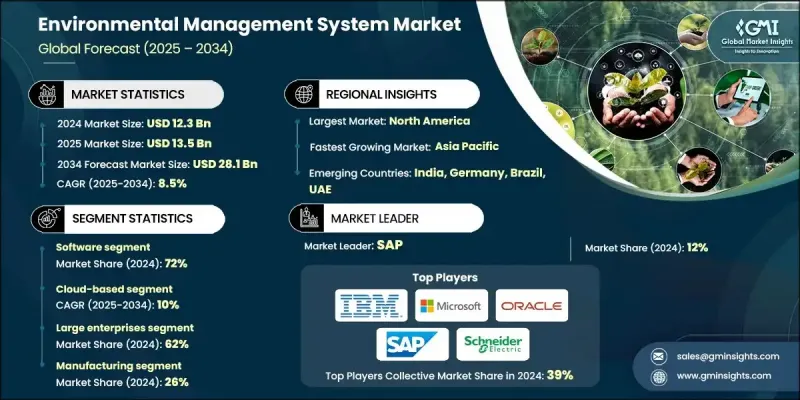
세계의 환경 관리 시스템 시장 규모는 2024년에 123억 달러로 평가되었고, CAGR 8.5%로 성장할 전망이며, 2034년에는 281억 달러에 이를 것으로 예측되고 있습니다.
환경 관리 시스템 솔루션은 기업이 환경 책임과 규제 준수를 강화하기 위해 노력함에 따라 채택이 증가하고 있습니다. 이러한 시스템은 환경 책임을 효율적으로 관리하기 위한 구조화된 프레임워크 및 디지털 플랫폼을 제공합니다. ISO14001 및 EMAS와 같은 세계 표준을 기반으로 개발된 EMS 솔루션은 기업이 정책을 수립하고, 업무 관리를 계획하고 시행하며, 성능을 모니터링하고, 규제와의 일관성을 유지하기 위한 검토를 수행할 수 있도록 지원합니다.
시장 범위
시작 연도
2024년
예측 연도
2025-2034년
시장 규모
123억 달러
예측 금액
281억 달러
CAGR
8.5%
시장 성장의 원동력은 컴플라이언스 요구 사항 강화, 기업의 지속가능성 목표, 부문에 관계없이 환경 성과를 추적하는 디지털 솔루션에 대한 요구가 커지고 있습니다. 기업은 EMS를 활용하여 투명성을 보여주고 환경 리스크를 관리하며 ESG 우선순위를 업무에 통합하고 있습니다. 에너지, 건설에서 제조업, 공공 서비스에 이르기까지 EMS 툴은 다양한 부서에서 절차를 표준화하고 환경에 미치는 영향을 줄이기 위해 도입되었습니다. 규제 당국이나 이해관계자로부터 엄격한 환경 목표 달성을 요구할 수 있는 가운데, 기업은 EMS를 보다 광범위한 사업 전략과 정합시키고, 그 과정에서 효율성 및 장기적인 지속가능성을 향상시키고 있습니다.
2024년에는 소프트웨어 분야가 72%의 점유율을 차지했습니다. 이러한 플랫폼은 환경 데이터 수집의 간소화, 컴플라이언스 보고 자동화, 보다 나은 의사결정을 위한 주요 지표의 중앙 집중화를 위해 설계되었습니다. 기업 소프트웨어, IoT 센서, 클라우드 시스템과 통합하면 여러 곳에서 실시간 성능 모니터링이 가능합니다. 소프트웨어 기반 EMS는 조직이 환경 규제를 준수하면서 리소스 사용 및 운영 워크플로우를 최적화하는 데 도움이 됩니다. ISO14001 및 기타 표준을 준수하는 기업들은 기록 유지, 잠재적인 문제 예측, 복잡한 업무에 걸친 지속가능성 이니셔티브 조정에 EMS 소프트웨어에 크게 의존하고 있습니다.
클라우드 EMS 솔루션 분야는 2025-2034년 연평균 복합 성장률(CAGR) 10%로 성장할 것으로 예측됩니다. 이러한 플랫폼은 확장 가능하고 인터넷 호스팅 환경을 제공하여 신속한 전개 및 모든 위치에서 원격으로 액세스할 수 있습니다. 클라우드 EMS는 많은 양의 선행 투자를 필요로 하지 않으며 실시간 추적을 위한 IoT 디바이스와의 원활한 통합을 지원합니다. 구독을 통해 자본 비용을 줄이고 중앙 집중식 시스템을 통해 사이트 간 협업, 분석 및 자동 업데이트를 지원합니다. 또한 클라우드 인프라스트럭처는 재해 복구, 유지보수 및 버전 관리를 향상시켜 팀이 다양한 지역에 걸쳐 보다 민첩하게 대응할 수 있도록 합니다.
미국의 환경 관리 시스템 시장은 2024년에 38억 달러를 창출했습닌다. 미국에서의 EMS 플랫폼의 도입은 연방 및 주 차원에서 환경정책의 시행과 지속가능성에 대한 헌신을 뒷받침하고 증가의 길을 따라가고 있습니다. 각 부처는 배출량 감소, 폐기물 관리 개선, 환경 공평성 향상을 추진하고 있으며, 컴플라이언스를 확보하기 위한 구조화 시스템에 대한 수요를 창출하고 있습니다. 유틸리티, 제조업, 에너지 산업 등 업계에서는 배출량 모니터링, 자원 관리, 컴플라이언스 보고의 간소화를 위해 EMS를 이용하는 경향이 강해지고 있습니다.
세계의 환경 관리 시스템 시장을 형성하는 주요 기업으로는 Thermofisher Scientific, SAP, IBM, Veolia Environment, Schneider Electric, Oracle, Microsoft, Siemens, Honeywell International 및 Emerson Electric 등이 있습니다. 환경 관리 시스템 시장의 주요 기업은 시장에서의 지위를 강화하기 위해 제품 혁신, 클라우드 통합, 데이터 중심의 인사이트에 주력하고 있습니다. 대부분은 예측 분석, 실시간 보고서 및 자동 컴플라이언스 추적을 가능하게 하는 AI 기반 플랫폼을 개발하고 있습니다. ERP 및 IoT 공급업체와의 제휴로 EMS 솔루션을 기업 운영에 통합하는 것이 더욱 원활해집니다. 기업은 또한 지역 사무실, 클라우드 기반 서비스 및 다국어 지원 시스템을 통해 세계 도달 범위를 확대하고 있습니다. 사이버 보안에 대한 지속적인 투자는 데이터의 안전한 취급을 보장하고 확장성이 높은 구독 모델이 광범위한 고객을 유치합니다.
목차
제1장 조사 방법
시장의 범위 및 정의
조사 디자인
조사 접근
데이터 수집 방법
데이터 마이닝 소스
세계
지역 및국가
기본 추정 및 계산
기준 연도 계산
시장 예측의 주요 동향
1차 조사 및 검증
1차 정보
예보
조사의 전제 및 한계
제2장 주요 요약
제3장 업계 인사이트
생태계 분석
공급자의 상황
이익률 분석
비용 구조
각 단계에서의 부가가치
밸류체인에 영향을 주는 요인
혁신
업계에 미치는 영향요인
성장 촉진요인
규제 준수 요건 강화
기업의 지속가능성 및 ESG 프로그램 확대
환경 데이터 관리에서 디지털 플랫폼의 이용 증가
공공 부문의 환경 감시 시스템 확대
ISO 14001 및 EMAS 등의 국제 규격의 채용
업계의 잠재적 위험 및 과제
기존 엔터프라이즈 시스템과의 복잡한 통합
조직 내의 전문 지식의 부족
시장 기회
IoT, 클라우드, 분석 플랫폼과의 통합
라이프사이클 자원 효율에 대한 주목 증가
성장 가능성 분석
규제 상황
북미
유럽
아시아태평양
라틴아메리카
중동 및 아프리카
Porter's Five Forces 분석
PESTEL 분석
기술 및 혁신의 상황
현재의 기술 동향
신흥 기술
코스트 내역 분석
소프트웨어 라이선싱 및 구독 비용
하드웨어 및 센서에 대한 투자
구현 및 통합 비용
교육 및 변경 관리 비용
지속적인 유지보수 및 지원
컴플라이언스 및 감사 비용
특허 분석
지속가능성 및 환경 측면
그린 IT 구현
탄소 중립 기술 운용
지속 가능한 소프트웨어 개발
기술이 환경에 미치는 영향
순환형 경제의 원칙
넷 제로 기술 목표
이용 사례 및 용도
최상의 시나리오
위험 평가 프레임워크
환경 컴플라이언스 위험
기술 도입 위험
데이터 보안 및 개인 정보 보호 위험
벤더 의존 위험
규제 변경 위험
업무 중단 위험
평판 및 브랜드 리스크
투자 상황 분석
환경 기술의 벤처 캐피탈
기업의 지속가능성 투자
정부의 환경 자금
그린본드 및 지속가능한 금융
ESG 투자 동향
투자 유형별 ROI 분석
기후 기술 자금
제4장 경쟁 구도
서문
기업의 시장 점유율 분석
북미
유럽
아시아태평양
라틴아메리카
중동 및 아프리카
주요 시장 기업의 경쟁 분석
경쟁 포지셔닝 매트릭스
전략적 전망 매트릭스
주요 발전
합병 및 인수
파트너십 및 협업
신제품 발매
확장계획 및 자금조달
제5장 시장 추계 및 예측 : 컴포넌트별(2021-2034년)
주요 동향
소프트웨어
서비스
제6장 시장 추계 및 예측 : 전개별(2021-2034년)
주요 동향
온프레미스
클라우드
제7장 시장 추계 및 예측 : 기업 규모별(2021-2034년)
주요 동향
대기업
중소기업
제8장 시장 추계 및 예측 : 최종 용도별(2021-2034년)
주요 동향
제조업
건설
에너지 및 유틸리티
화학약품
자동차
의약품
식품 및 음료
정부 및 공공 부문
기타
제9장 시장 추계 및 예측 : 지역별(2021-2034년)
주요 동향
북미
미국
캐나다
유럽
독일
영국
프랑스
이탈리아
스페인
북유럽 국가
러시아
아시아태평양
중국
인도
일본
호주
한국
동남아시아
라틴아메리카
브라질
멕시코
아르헨티나
중동 및 아프리카
남아프리카
사우디아라비아
아랍에미리트(UAE)
제10장 기업 프로파일
세계 기업
Emerson Electric
Honeywell
IBM
Microsoft
Oracle
SAP
Schneider Electric
Siemens
Thermo Fisher Scientific
Veolia Environnement
지역 기업
ABB
APEVA
AspenTech
Bentley Systems
Dassault Systemes
GE Digital
Hexagon
Rockwell Automation
Trimble
Yokogawa Electric
신흥 기업 및 혁신자
EcoOnline
Enablon
Gensuite
Intelex Technologies
ProcessMAP
Quentic
SafetySync
SHE Software
Sphera Solutions
VelocityEHS
AJY
영문 목차
영문목차
The Global Environmental Management System Market was valued at USD 12.3 billion in 2024 and is estimated to grow at a CAGR of 8.5% to reach USD 28.1 billion by 2034.
Environmental Management System solutions are seeing increased adoption as businesses work toward stronger environmental accountability and regulatory compliance. These systems provide structured frameworks and digital platforms to manage environmental responsibilities efficiently. Built on global standards such as ISO 14001 and EMAS, EMS solutions help organizations develop policies, plan and implement operational controls, monitor performance, and conduct reviews to maintain regulatory alignment.
Market Scope
Start Year
2024
Forecast Year
2025-2034
Start Value
$12.3 Billion
Forecast Value
$28.1 Billion
CAGR
8.5%
Market growth is fueled by tightening compliance demands, corporate sustainability objectives, and the rising need for digital solutions that track environmental performance across sectors. Businesses are leveraging EMS to demonstrate transparency, manage environmental risks, and integrate ESG priorities into their operations. From energy and construction to manufacturing and public sector services, EMS tools are deployed to standardize procedures and reduce environmental impact across various functions. With mounting pressure from regulators and stakeholders to meet strict environmental goals, companies are aligning EMS with wider business strategies, improving efficiency and long-term sustainability in the process.
In 2024, the software segment held a 72% share. These platforms are designed to streamline environmental data collection, automate compliance reporting, and centralize key metrics for better decision-making. Integration with enterprise software, IoT sensors, and cloud systems enables real-time performance monitoring across multiple locations. Software-based EMS helps organizations adhere to environmental regulations while optimizing their resource usage and operational workflows. Companies following ISO 14001 and other standards rely heavily on EMS software to maintain records, predict potential issues, and coordinate sustainability initiatives across complex operations.
The cloud-based EMS solutions segment is forecasted to grow at a CAGR of 10% from 2025 to 2034. These platforms offer scalable, internet-hosted environments that enable rapid deployment and remote access from any location. Cloud EMS eliminates the need for heavy upfront investment and supports seamless integration with IoT devices for real-time tracking. Subscriptions help reduce capital costs, while centralized systems support cross-site collaboration, analytics, and automated updates. Cloud infrastructure also enhances disaster recovery, maintenance, and version control, allowing teams to operate with greater agility and responsiveness across different regions.
United States Environmental Management System Market generated USD 3.8 billion in 2024. Adoption of EMS platforms in the US continues to rise, driven by environmental policy enforcement and sustainability commitments across federal and state levels. Agencies promote reducing emissions, improving waste control, and enhancing environmental equity, creating demand for structured systems to ensure compliance. Industries such as utilities, manufacturing, and energy are increasingly turning to EMS to monitor emissions, manage resources, and streamline compliance reporting.
Key players shaping the Global Environmental Management System Market include Thermo Fisher Scientific, SAP, IBM, Veolia Environnement, Schneider Electric, Oracle, Microsoft, Siemens, Honeywell International, and Emerson Electric. Leading companies in the Environmental Management System Market are focusing on product innovation, cloud integration, and data-driven insights to strengthen their market position. Many are developing AI-powered platforms that enable predictive analytics, real-time reporting, and automated compliance tracking. Partnerships with ERP and IoT vendors allow for smoother integration of EMS solutions into enterprise operations. Businesses are also expanding global reach through regional offices, cloud-based services, and multilingual support systems. Ongoing investment in cybersecurity ensures secure data handling, while scalable subscription models attract a wider range of clients.