Aircraft Seating Market Opportunity, Growth Drivers, Industry Trend Analysis, and Forecast 2025 - 2034
상품코드:1801913
리서치사:Global Market Insights Inc.
발행일:2025년 08월
페이지 정보:영문 185 Pages
라이선스 & 가격 (부가세 별도)
ㅁ Add-on 가능: 고객의 요청에 따라 일정한 범위 내에서 Customization이 가능합니다. 자세한 사항은 문의해 주시기 바랍니다.
한글목차
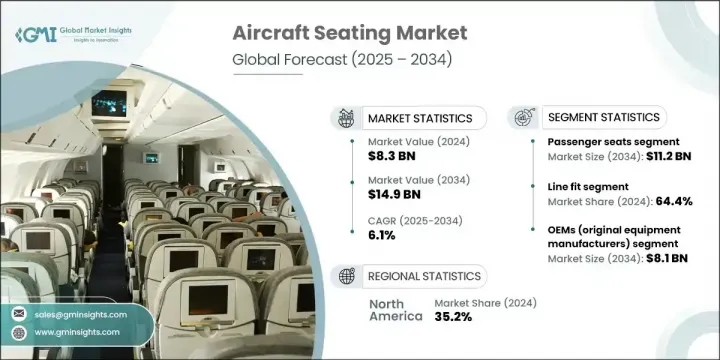
세계 항공기 좌석 시장은 2024년 83억 달러로 평가되었으며 CAGR 6.1%로 성장하여, 2034년 149억 달러에 이를 것으로 추정됩니다.
디지털 기술과 스마트 캐빈 솔루션의 진보와 함께 세계 항공 여행 증가가 이러한 상승 추세에 기여하고 있습니다. 항공사는 연결성과 편안함을 모두 향상시키는 지능형 좌석을 통합하여 승객의 기대에 부응하고 있습니다. 재활용 가능한 경량 소재를 사용한 지속 가능한 좌석 설계의 혁신은 환경 기준과 비용 절감 목표를 반영하여 기세를 늘리고 있습니다.
수리, 재활용 및 맞춤화가 용이한 모듈식 좌석 시스템은 전체 공급망의 제품 개발 전략을 재구성합니다. 보다 많은 기능이 요구되는 차세대 항공기에서는 좌석 시스템에 센서, 디지털 인터페이스, 헬스 모니터링 기능이 탑재되는 경우가 많아, 기내에서의 체험이 더욱 풍부해지고 있습니다. 항공사가 승객 만족도를 높이면서 운항 효율을 높이는 방법을 모색하는 가운데 수요는 기술통합과 인체공학적 성능의 균형을 맞춘 선진적인 좌석구성으로 옮겨가고 있습니다.
시장 범위
시작 연도
2024년
예측 연도
2025-2034년
시작금액
83억 달러
예측 금액
149억 달러
CAGR
6.1%
승객 좌석 분야는 2034년까지 112억 달러에 달할 것입니다. 승객의 건강과 쾌적성을 촉진하는 기능을 갖춘 인체공학에 근거한 커스터마이즈 가능한 좌석에 대한 수요 증가가 이 부문의 진화를 형성하고 있습니다. 객실 효율성을 높이고 프리미엄 클래스와 이코노미 클래스의 다양한 요구를 충족시키기 위해 항공사의 경량 구조와 스마트 기술의 통합은 현재 최우선 과제입니다. 시트 설계자는 이러한 요구를 충족시키기 위해 유연성, 사용자 친화적인 인터페이스 및 연비를 줄이는 소재에 주력합니다.
2024년 라인핏 부문의 점유율은 64.6%로 OEM이 항공기의 설계 효율을 지원하고 인증 프로세스를 가속화하는 내장형 첨단 좌석 시스템을 우선하고 있기 때문입니다. 생산 워크플로우의 합리화와 중량 최적화된 좌석은 이러한 추세를 형성하는 중요한 요소입니다. 이 분야에서 선도하는 것을 목표로 하는 제조업체는 항공기 제조업체와의 협력 관계를 강화해, 제조 단계에서의 통합이 용이한 플러그 앤 플레이의 모듈러 시스템을 제공합니다.
미국 항공기 좌석 2024년 시장 규모는 25억 달러에 달했습니다. 여객 수의 급증, 기체의 확대, 빈번한 객실의 개수에 의해 이용률이 높은 항공기에 맞춘 좌석 솔루션 수요가 증가하고 있습니다. 제조업체에게 이것은 대기업과 바쁜 허브 공항의 운영 요구를 충족시키는 적응성이 뛰어나고 가볍고 확장 가능한 시트 디자인을 제공한다는 것을 의미합니다.
항공기 좌석 시장에서 활약하는 주요 기업은 Recaro 항공기 좌석 GmbH & Co.KG, Collins Aerospace, Jamco Corporation, Thomson Aero Seating, Safran SA 등입니다. 항공기 좌석 각 회사는 시장에서의 존재감을 높이기 위해 경량 소재, 스마트 기능, 모듈 설계의 지속적인 혁신에 주력하고 있습니다. 각 회사는 인체 공학적 이점, 통합 엔터테인먼트 시스템 및 실시간 승객 건강 피드백을 제공하는 맞춤형 좌석을 제공하기 위해 연구 개발에 투자합니다. OEM과의 전략적 파트너십을 통해 항공기 설계에 조기에 참여하고 원활한 라인으로 통합할 수 있습니다. 제조업체 각 사는 재활용 가능한 소재를 도입하고 순환형 설계의 원칙을 채용함으로써 지속 가능한 개발을 목표로 하고 있습니다. 현지 생산 부문과 합작 투자를 통한 세계 확장은 지역 시장에 대한 서비스 향상에 도움이 됩니다.
목차
제1장 조사 방법
시장의 범위와 정의
조사 디자인
조사 접근
데이터 수집 방법
데이터 마이닝 소스
세계
지역/국가
기본 추정과 계산
기준연도 계산
시장 예측의 주요 동향
1차 조사와 검증
1차 정보
예측 모델
조사의 전제와 한계
제2장 주요 요약
제3장 업계 인사이트
생태계 분석
공급자의 상황
이익률 분석
비용 구조
각 단계에서의 부가가치
밸류체인에 영향을 주는 요인
혁신
업계에 미치는 영향요인
성장 촉진요인
증가하는 항공 여객 교통
프리미엄 캐빈 시트 수요 증가
저렴한 항공사와 지역 항공사의 성장
비즈니스 제트와 프라이빗 제트의 성장
디지털 통합 및 스마트 좌석 솔루션
업계의 잠재적 위험 및 과제
고급 좌석 시스템의 고비용
엄격한 규제 및 인증 요건
시장 기회
도시형 항공 모빌리티와 eVTOL 수요 급증 항공기 좌석
시트의 커스터마이즈와 프로토타이핑을 위한 3D 프린팅의 진보
스마트 텍스타일과 온도 조절 시트의 개발
장애인을 배려한, 접근하기 쉬운 좌석 디자인에 대한 주목이 높아진다
성장 가능성 분석
규제 상황
북미
유럽
아시아태평양
라틴아메리카
중동 및 아프리카
Porter's Five Forces 분석
PESTEL 분석
기술과 혁신의 상황
현재의 기술 동향
신흥기술
새로운 비즈니스 모델
컴플라이언스 요건
국방예산 분석
세계의 방위비 동향
지역 방위 예산 배분
북미
유럽
아시아태평양
중동 및 아프리카
라틴아메리카
주요 방위 근대화 프로그램
예산 예측(2025-2034)
업계의 성장에 미치는 영향
국가별 방위 예산
공급 체인의 탄력
지정학적 분석
인재 분석
디지털 변혁
합병, 인수, 전략적 제휴의 상황
위험 평가 및 관리
주요 계약 체결(2021-2024)
제4장 경쟁 구도
소개
기업의 시장 점유율 분석
지역별
북미
유럽
아시아태평양
라틴아메리카
중동 및 아프리카
주요 기업의 경쟁 벤치마킹
재무실적의 비교
수익
이익률
연구개발
제품 포트폴리오 비교
제품 라인업의 넓이
기술
혁신
지리적 존재의 비교
세계 실적 분석
서비스 네트워크의 범위
지역별 시장 침투율
경쟁 포지셔닝 매트릭스
리더
도전자
팔로워
틈새 기업
전략적 전망 매트릭스
주요 발전, 2021-2024
합병과 인수
파트너십 및 협업
기술적 진보
확대 및 투자 전략
디지털 변혁의 대처
신흥기업/스타트업기업경쟁 구도
제5장 시장 추정 및 예측 : 좌석 유형별, 2021년-2034년
주요 동향
승객의 좌석
퍼스트 클래스 좌석
비즈니스 클래스 좌석
프리미엄 이코노미 클래스 좌석
이코노미 클래스 좌석
파일럿과 승무원의 좌석
제6장 시장 추정 및 예측 : 기종별, 2021년-2034년
주요 동향
협폭동체 항공기
와이드 바디 항공기
지역 항공기
비즈니스 제트기
제7장 시장 추정 및 예측 : 규격별, 2021년-2034년
주요 동향
9G
16G
21G
제8장 시장 추정 및 예측 : 설치별, 2021년-2034년
주요 동향
LINE-FIT
레트로 핏
제9장 시장 추정 및 예측 : 최종 용도별, 2021년-2034년
주요 동향
OEM
애프터마켓
제10장 시장 추정 및 예측 : 지역별, 2021년-2034년
주요 동향
북미
미국
캐나다
유럽
독일
영국
프랑스
이탈리아
스페인
네덜란드
아시아태평양
중국
인도
일본
호주
한국
라틴아메리카
브라질
멕시코
아르헨티나
중동 및 아프리카
남아프리카
사우디아라비아
아랍에미리트(UAE)
제11장 기업 프로파일
세계 주요 기업
Safran
Collins Aerospace
Recaro Aircraft Seating
Thompson Aero Seating
Jamco Corporation
지역의 주요 기업
북미
LifePort
Elevate Aircraft Seating
Martin-Baker Aircraft
유럽
Aviointeriors
Geven
Ipeco Holdings
아시아태평양
Hong Kong Aircraft Engineering Company
STELIA Aerospace
ZIM Aircraft Seating
틈새 기업/Disruptors
Acro Aircraft Seating
Expliseat
Mirus Aircraft Seating
UNUM Aerospace
SHW
영문 목차
영문목차
The Global Aircraft Seating Market was valued at USD 8.3 billion in 2024 and is estimated to grow at a CAGR of 6.1% to reach USD 14.9 billion by 2034. Rising global air travel, coupled with advancements in digital technology and smart cabin solutions, is contributing to this upward trend. Airlines are increasingly responding to passenger expectations by incorporating intelligent seating that improves both connectivity and comfort. Innovations in sustainable seating designs using recyclable, lightweight materials are also gaining momentum, reflecting both environmental standards and cost-saving objectives.
Modular seating systems that enable easy repair, recycling, or customization are reshaping product development strategies across the supply chain. With next-generation aircraft requiring more functionality, seating systems now often include sensors, digital interfaces, and health-monitoring features, further enriching the in-flight experience. As airlines seek ways to enhance operational efficiency while boosting passenger satisfaction, demand continues to shift toward advanced seating configurations that balance technology integration with ergonomic performance.
Market Scope
Start Year
2024
Forecast Year
2025-2034
Start Value
$8.3 Billion
Forecast Value
$14.9 Billion
CAGR
6.1%
The passenger seat segment will reach USD 11.2 billion by 2034. Increasing demand for ergonomic, customizable seating with features that promote passenger health and comfort is shaping this segment's evolution. Lightweight construction and smart technology integration are now top priorities for airlines aiming to boost cabin efficiency and meet varying needs across premium and economy classes. Seat designers are focusing on flexibility, user-friendly interfaces, and fuel-saving materials to meet these needs.
The line fit segment accounted for 64.6% share in 2024, driven by OEMs prioritizing in-built, advanced seating systems that support aircraft design efficiency and speed up certification processes. Streamlined production workflows and weight-optimized seating are essential factors shaping this trend. Manufacturers aiming to lead in this space are intensifying their cooperation with aircraft makers to deliver plug-and-play modular systems that are simple to integrate during the manufacturing phase.
U.S. Aircraft Seating Market was valued at USD 2.5 billion in 2024. A surge in passenger numbers, fleet expansion, and frequent cabin refurbishments are driving demand for seating solutions tailored for high-utilization aircraft. For manufacturers, this means delivering adaptable, lightweight, and scalable seat designs that meet the operational needs of major carriers and busy hub airports.
Key companies active in the Aircraft Seating Market include Recaro Aircraft Seating GmbH & Co. KG, Collins Aerospace, Jamco Corporation, Thompson Aero Seating, and Safran SA. To strengthen their market presence, aircraft seating companies are focusing on continuous innovation in lightweight materials, smart functionality, and modular designs. Firms are investing in R&D to deliver customizable seating that offers ergonomic benefits, integrated entertainment systems, and real-time passenger health feedback. Strategic partnerships with OEMs ensure early involvement in aircraft design, allowing seamless line-fit integration. Manufacturers are also targeting sustainable development by incorporating recyclable materials and adopting circular design principles. Global expansion through local production units and joint ventures is helping players better serve regional markets.
Table of Contents
Chapter 1 Methodology
1.1 Market scope and definition
1.2 Research design
1.2.1 Research approach
1.2.2 Data collection methods
1.3 Data mining sources
1.3.1 Global
1.3.2 Regional/Country
1.4 Base estimates and calculations
1.4.1 Base year calculation
1.4.2 Key trends for market estimation
1.5 Primary research and validation
1.5.1 Primary sources
1.6 Forecast model
1.7 Research assumptions and limitations
Chapter 2 Executive Summary
2.1 Industry 3600 synopsis, 2021 - 2034
2.2 Key market trends
2.2.1 Seat type trends
2.2.2 Aircraft type trends
2.2.3 Standard trends
2.2.4 Fit trends
2.2.5 End use trends
2.2.6 Regional trends
2.3 TAM analysis, 2025-2034
2.4 CXO perspectives: Strategic imperatives
2.4.1 Executive decision points
2.4.2 Critical success factors
2.5 Future outlook and strategic recommendations
Chapter 3 Industry Insights
3.1 Industry ecosystem analysis
3.1.1 Supplier landscape
3.1.2 Profit margin analysis
3.1.3 Cost structure
3.1.4 Value addition at each stage
3.1.5 Factor affecting the value chain
3.1.6 Disruptions
3.2 Industry impact forces
3.2.1 Growth drivers
3.2.1.1 Growing air passenger traffic
3.2.1.2 Increasing demand for premium cabin seats
3.2.1.3 Growth of low-cost carriers and regional airlines
3.2.1.4 Growth in business and private jet segments
3.2.1.5 Digital integration and smart seating solutions
3.2.2 Industry pitfalls and challenges
3.2.2.1 High cost of advanced seating systems
3.2.2.2 Stringent regulatory and certification requirements
3.2.3 Market opportunities
3.2.3.1 Surge in demand for urban air mobility and eVTOL aircraft seating
3.2.3.2 Advancements in 3D printing for seat customization and prototyping
3.2.3.3 Development of smart textiles and temperature-controlled seats
3.2.3.4 Growing focus on disability-friendly and accessible seating designs
3.3 Growth potential analysis
3.4 Regulatory landscape
3.4.1 North America
3.4.2 Europe
3.4.3 Asia Pacific
3.4.4 Latin America
3.4.5 Middle East & Africa
3.5 Porter’s analysis
3.6 PESTEL analysis
3.7 Technology and innovation landscape
3.7.1 Current technological trends
3.7.2 Emerging technologies
3.8 Emerging business models
3.9 Compliance requirements
3.10 Defense budget analysis
3.11 Global defense spending trends
3.12 Regional defense budget allocation
3.12.1 North America
3.12.2 Europe
3.12.3 Asia Pacific
3.12.4 Middle East and Africa
3.12.5 Latin America
3.13 Key defense modernization programs
3.14 Budget forecast (2025-2034)
3.14.1 Impact on industry growth
3.14.2 Defense budgets by country
3.15 Supply chain resilience
3.16 Geopolitical analysis
3.17 Workforce analysis
3.18 Digital transformation
3.19 Mergers, acquisitions, and strategic partnerships landscape
3.20 Risk assessment and management
3.21 Major contract awards (2021-2024)
Chapter 4 Competitive Landscape, 2024
4.1 Introduction
4.2 Company market share analysis
4.2.1 By region
4.2.1.1 North America
4.2.1.2 Europe
4.2.1.3 Asia Pacific
4.2.1.4 Latin America
4.2.1.5 Middle East & Africa
4.3 Competitive benchmarking of key players
4.3.1 Financial performance comparison
4.3.1.1 Revenue
4.3.1.2 Profit margin
4.3.1.3 R&D
4.3.2 Product portfolio comparison
4.3.2.1 Product range breadth
4.3.2.2 Technology
4.3.2.3 Innovation
4.3.3 Geographic presence comparison
4.3.3.1 Global footprint analysis
4.3.3.2 Service network coverage
4.3.3.3 Market penetration by region
4.3.4 Competitive positioning matrix
4.3.4.1 Leaders
4.3.4.2 Challengers
4.3.4.3 Followers
4.3.4.4 Niche players
4.3.5 Strategic outlook matrix
4.4 Key developments, 2021-2024
4.4.1 Mergers and acquisitions
4.4.2 Partnerships and collaborations
4.4.3 Technological advancements
4.4.4 Expansion and investment strategies
4.4.5 Digital transformation initiatives
4.5 Emerging/ startup competitors landscape
Chapter 5 Market Estimates and Forecast, By Seat Type, 2021 - 2034 (USD Billion & Thousand Units)
5.1 Key trends
5.2 Passenger seats
5.2.1 First class seats
5.2.2 Business class seats
5.2.3 Premium economy class seats
5.2.4 Economy class seats
5.3 Pilot & crew seats
Chapter 6 Market Estimates and Forecast, By Aircraft Type, 2021 - 2034 (USD Billion & Thousand Units)
6.1 Key trends
6.2 Narrow-body aircraft
6.3 Wide-body aircraft
6.4 Regional aircraft
6.5 Business jets
Chapter 7 Market Estimates and Forecast, By Standard, 2021 - 2034 (USD Billion & Thousand Units)
7.1 Key trends
7.2 9G
7.3 16G
7.4 21G
Chapter 8 Market Estimates and Forecast, By Fit, 2021 - 2034 (USD Billion & Thousand Units)
8.1 Key trends
8.2 Line fit
8.3 Retro fit
Chapter 9 Market Estimates and Forecast, By End Use, 2021 - 2034 (USD Billion & Thousand Units)