산업용 목재 상자 시장 기회, 성장 촉진요인, 산업 동향 분석 및 예측(2025-2034년)
Industrial Wooden Crates Market Opportunity, Growth Drivers, Industry Trend Analysis, and Forecast 2025 - 2034
상품코드:1773432
리서치사:Global Market Insights Inc.
발행일:2025년 06월
페이지 정보:영문 190 Pages
라이선스 & 가격 (부가세 별도)
ㅁ Add-on 가능: 고객의 요청에 따라 일정한 범위 내에서 Customization이 가능합니다. 자세한 사항은 문의해 주시기 바랍니다.
한글목차
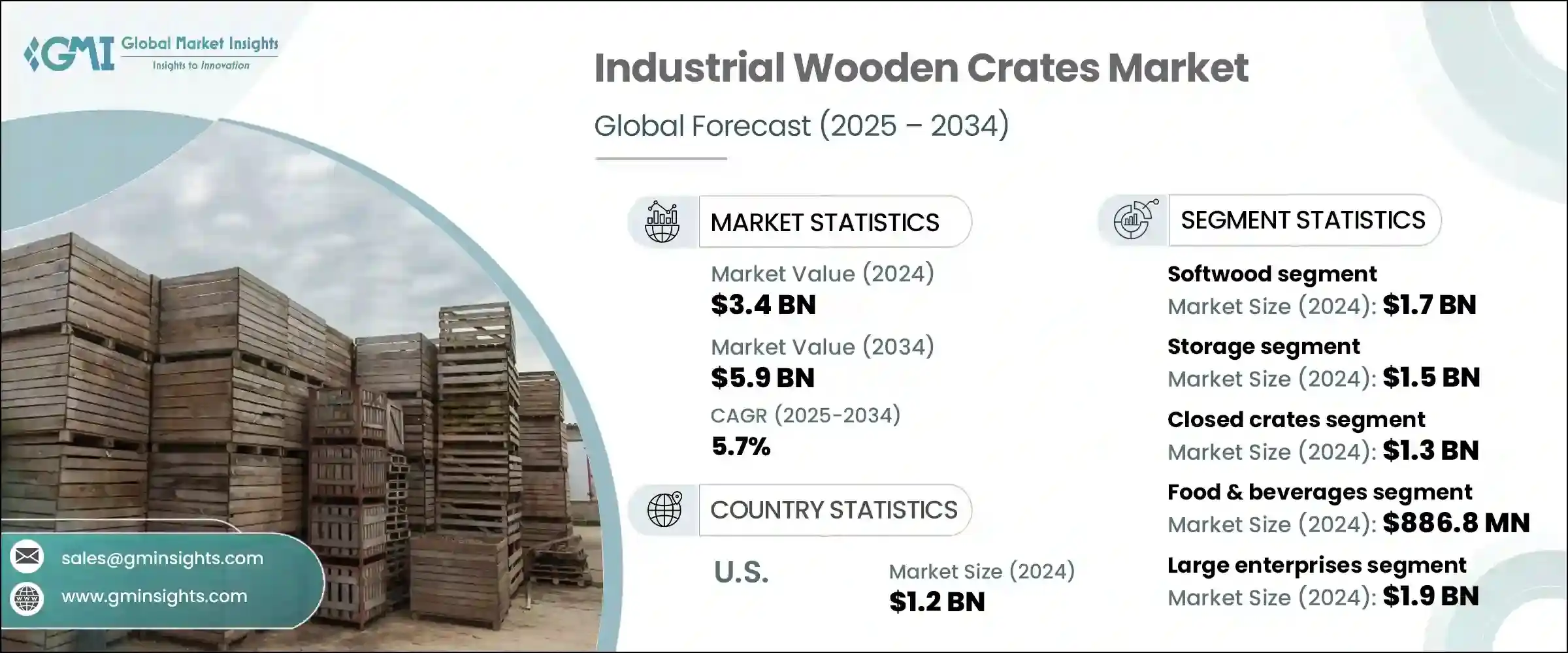
산업용 목재 상자 세계 시장 규모는 2024년에는 34억 달러로 평가되었고, CAGR 5.7%로 성장하여 2034년에는 59억 달러에 이를 것으로 예측됩니다.
산업용 목재 상자 시장의 성장은 특히 농업, 자동차, 산업기계 등의 분야에서 세계 무역 및 수출 업무의 급증과 같은 몇 가지 중요한 요인에 기인합니다. 이러한 산업에서 나무 상자는 상품을 안전하고 효율적으로 취급하기 위해 필수적입니다.
또한 지속 가능한 포장 솔루션에 대한 선호도가 높아지면서 재활용성과 생분해성이 높은 나무 상자의 매력은 점점 더 커지고 있습니다. 또한, 기업들은 친환경 포장재를 선택하여 탄소 배출량을 줄이기 위해 많은 노력을 기울이고 있으며, 이는 목재 상자에 대한 수요를 증가시키고 있습니다. 제조업체들은 또한 상자 생산자 물가지수(PPI)의 상승으로 이익을 얻고 있으며, 이는 고품질 포장 솔루션에 대한 프리미엄을 기꺼이 지불할 의향이 있는 고객층이 확대되고 있다는 것을 보여줍니다.
시장 범위
개시 연도
2024년
예측 연도
2025-2034년
개시 금액
34억 달러
예측 금액
59억 달러
CAGR
5.7%
이러한 추세는 제품을 안전하고 안전하게 운송하고 운송 중 파손 위험을 줄이는 것에 대한 중요성이 강조되고 있음을 보여줍니다. 공급망이 점점 더 복잡해지고 세계화됨에 따라 기업들은 제품을 보호할 뿐만 아니라 전반적인 고객 경험을 향상시키는 포장 솔루션을 사용하는 것이 중요하다는 것을 인식하고 있습니다. 다양한 산업 분야에서 경쟁이 치열해지면서 포장재는 내구성과 효율성을 모두 갖춰야 하며, 궁극적으로 제품의 무결성을 보호하고 값비싼 손실을 방지해야 합니다.
2024년 침엽수 부문은 17억 달러에 달할 것으로 예측됩니다. 소나무, 전나무, 가문비나무와 같은 침엽수 품종은 풍부함, 저렴한 가격, 가벼운 무게로 인해 시장을 독점하고 있으며, 목재 상자 생산에 이상적입니다. 미국 농무부(USDA)는 특히 미국 남부에서 침엽수 제재목의 지속적인 공급을 보고하고 있으며, 이는 목재 상자 제조업체에게 안정적인 원료 공급을 보장합니다.
운송 부문은 시장에서 가장 빠르게 성장하는 부문으로 2034년까지 6.1%의 연평균 복합 성장률(CAGR)을 보일 것으로 예측됩니다. 나무 상자는 내구성이 뛰어나고 운송 중에도 제품의 품질을 유지할 수 있기 때문에 상품, 특히 신선식품의 운송에 선호됩니다. 전 세계적으로 신선식품에 대한 수요가 증가함에 따라 나무 상자와 같은 신뢰할 수 있고 효율적인 포장 솔루션에 대한 수요도 증가하고 있습니다.
미국의 산업용 목재 상자 미국은 물류 인프라가 발달하고 친환경 포장에 대한 관심이 높아짐에 따라 2024년 시장 개척액은 12억 달러에 달했습니다. 미국 임업국은 또한 경목의 가용성이 향상되어 목재 상자 제조업체의 안정적인 원자재 공급을 지원하고 있다고 지적했습니다. 또한, 미국 농무부가 농산물 수출용 목재 포장을 권장하고 있는 것도 미국 내 산업용 목재 상자에 대한 수요를 더욱 촉진하고 있습니다.
산업용 목재 상자 산업의 주요 기업으로는 Brambles Limited(CHEP), Greif Inc., Interlake Mecalux, Poole & Sons, Universal Forest Products Inc. 등이 있습니다. 시장 지위를 강화하기 위해 산업용 목재상자 시장의 기업들은 생산 능력 강화와 원자재 공급망 확대에 주력하고 있습니다. 물류 및 운송 회사와의 전략적 제휴 및 협력 관계를 통해 유통망을 강화하여 적시에 배송하고 시장에 도달 할 수 있도록 보장합니다. 또한, 제조업체는 지속 가능한 생산 관행에 투자하고, 친환경 소재를 도입하고, 진화하는 환경 규제를 준수하고 있습니다. 증가하는 수요에 대응하기 위해 기업들은 농업, 자동차, 제약 등 특정 산업의 요구에 맞는 맞춤형 패키징 솔루션을 개발하여 제품을 다양화하고 있습니다.
목차
제1장 조사 방법과 범위
제2장 주요 요약
제3장 업계 인사이트
생태계 분석
공급업체 상황
이익률
비용 구조
각 단계에서의 부가가치
밸류체인에 영향을 미치는 요인
트럼프 정권 관세에 의한 혼란
무역에 대한 영향
무역량 혼란
보복 조치
업계에 대한 영향
공급측 영향
주요 부품 가격 변동
공급망 재구축
생산비용에 대한 영향
수요측 영향(판매 가격)
최종 시장에의 가격 전달
시장 점유율 동향
소비자 반응 패턴
영향을 받는 주요 기업
전략적인 업계 대응
공급망 재구성
가격 결정과 제품 전략
정책 관여
전망과 향후 검토사항
업계에 대한 영향요인
성장 촉진요인
업계의 잠재적 리스크&과제
성장 가능성 분석
규제 상황
북미
유럽
아시아태평양
라틴아메리카
중동 및 아프리카
Porter's Five Forces 분석
PESTEL 분석
기술 및 혁신 상황
현재 기술 동향
신기술
가격 동향
과거 가격 분석(2021-2024)
가격 동향 요인
지역에 의한 가격차
가격 예측(2025-2034)
가격 전략
새로운 비즈니스 모델
컴플라이언스 요건
지속가능성 대책
지속가능재료 평가
탄소발자국 분석
순환형 경제 실현
지속가능성 인증과 기준
지속가능성 ROI 분석
세계의 소비자 감정 분석
특허 분석
제4장 경쟁 구도
서론
기업의 시장 점유율 분석
주요 시장 기업의 경쟁 분석
경쟁 포지셔닝 매트릭스
전략 대시보드
제5장 시장 추산·예측 : 제품 유형별, 2021년-2034년
주요 동향
오픈 크레이트
클로즈드 크레이트
슬레이트 크레이트
커스텀 크레이트
제6장 시장 추산·예측 : 재료별, 2021년-2034년
주요 동향
침엽수
소나무
스프루스
삼나무
기타
하드우드
오크
단풍나무
자작나무
기타
엔지니어드 우드
합판
OSB(배향성 스트랜드 보드)
적층 베니아재
제7장 시장 추산·예측 : 기능별, 2021년-2034년
주요 동향
스토리지
운송
국내 물류
국제 수출
제8장 시장 추산·예측 : 산업별, 2021년-2034년
주요 동향
농업
제조업
식품 및 음료
의약품
물류 및 배송
기타
제9장 시장 추산·예측 : 최종 용도별, 2021년-2034년
주요 동향
중소기업
대기업
제10장 시장 추산·예측 : 지역별, 2021년-2034년
주요 동향
북미
미국
캐나다
유럽
독일
영국
프랑스
스페인
이탈리아
네덜란드
아시아태평양
중국
인도
일본
호주
한국
라틴아메리카
브라질
멕시코
아르헨티나
중동 및 아프리카
사우디아라비아
남아프리카공화국
아랍에미리트(UAE)
제11장 기업 개요
Brambles Limited(CHEP)
C&K Box Company
FoamCraft Packaging Inc
Greif Inc.
Herwood Inc
Interlake Mecalux
LJB Timber Packaging Pty
Loscam Ltd.
Nelson Company LLC
Ongna Wood Products
PalletOne Inc.
PGS Group
Poole &Sons
Tree Brand Packaging
Universal Forest Products Inc.
LSH
영문 목차
영문목차
The Global Industrial Wooden Crates Market was valued at USD 3.4 billion in 2024 and is estimated to grow at a CAGR of 5.7% to reach USD 5.9 billion by 2034. The growth of the industrial wooden crates market can be attributed to several key factors, including the surge in global trade and export operations, especially in sectors such as agriculture, automotive, and industrial machinery. In these industries, wooden crates are essential for the safe and efficient handling of goods.
Another contributing factor is the growing preference for sustainable packaging solutions, with wooden crates becoming increasingly appealing due to their recyclability and biodegradability. In addition, companies are making significant efforts to reduce their carbon footprints by opting for eco-friendly packaging materials, which is boosting demand for wooden crates. Manufacturers are also benefiting from the rise in the Producer Price Index (PPI) for wood boxes and crates, indicating a growing customer base willing to pay a premium for high-quality packaging solutions.
Market Scope
Start Year
2024
Forecast Year
2025-2034
Start Value
$3.4 Billion
Forecast Value
$5.9 Billion
CAGR
5.7%
This trend highlights the growing emphasis on ensuring that products are transported safely and securely, reducing the risks of damage during transit. As supply chains become more complex and global, businesses are recognizing the importance of using packaging solutions that not only protect their goods but also enhance the overall customer experience. With heightened competition in various industries, there is a growing expectation for packaging to offer both durability and efficiency, ultimately safeguarding the integrity of the product and preventing costly losses.
In 2024, the softwood segment generated USD 1.7 billion. Softwood varieties like pine, fir, and spruce dominate the market due to their abundance, affordability, and lightweight nature, making them ideal for use in wooden crate production. The U.S. Department of Agriculture (USDA) reports a continuous strong supply of softwood lumber, especially from the Southern U.S., ensuring a steady raw material flow for crate manufacturers.
The transportation sector is the fastest-growing segment in the market, expected to grow at a CAGR of 6.1% through 2034. Wooden crates are favored for transporting goods, particularly fresh produce, due to their durability and ability to maintain product quality during transit. As global demand for fresh produce increases, the need for reliable and efficient packaging solutions, like wooden crates, is also on the rise.
United States Industrial Wooden Crates Market generated USD 1.2 billion in 2024 due to its well-developed logistics infrastructure and growing focus on eco-friendly packaging. The U.S. Forest Service has also noted improved availability of hardwood, which supports a steady supply of raw materials for crate manufacturers. Additionally, the USDA's endorsement of wooden packaging for agricultural exports further drives the demand for industrial wooden crates in the country.
Key players in the Industrial Wooden Crates Industry include Brambles Limited (CHEP), Greif Inc., Interlake Mecalux, Poole & Sons, and Universal Forest Products Inc. To strengthen their market position, companies in the industrial wooden crates market are focusing on increasing their production capacity and expanding their raw material supply chains. Strategic partnerships and collaborations with logistics and transportation firms are enhancing their distribution networks, ensuring timely delivery and market reach. Moreover, manufacturers are investing in sustainable production practices, incorporating eco-friendly materials, and complying with evolving environmental regulations, which positions them favorably in an eco-conscious market. To meet the growing demand, companies are also diversifying their product offerings by developing custom packaging solutions tailored to specific industry needs, such as agriculture, automotive, and pharmaceuticals.
Table of Contents
Chapter 1 Methodology and Scope
1.1 Market scope and definition
1.2 Research design
1.2.1 Research approach
1.2.2 Data collection methods
1.3 Data mining sources
1.3.1 Global
1.3.2 Regional/Country
1.4 Base estimates and calculations
1.4.1 Base year calculation
1.4.2 Key trends for market estimation
1.5 Primary research and validation
1.5.1 Primary sources
1.6 Forecast model
1.7 Research assumptions and limitations
Chapter 2 Executive Summary
2.1 Industry snapshot
2.2 Key market trends
2.2.1 Business trends
2.2.2 Product type trends
2.2.3 Material trends
2.2.4 Function trends
2.2.5 Industry trends
2.2.6 End use trends
2.2.7 Regional
2.3 TAM Analysis, 2025-2034 (USD Billion)
2.4 CXO perspectives: Strategic imperatives
2.4.1 Executive decision points
2.4.2 Critical success factors
2.5 Future outlook and strategic recommendations
Chapter 3 Industry Insights
3.1 Industry ecosystem analysis
3.1.1 Supplier landscape
3.1.2 Profit margin
3.1.3 Cost structure
3.1.4 Value addition at each stage
3.1.5 Factor affecting the value chain
3.2 Disruptions Trump administration tariffs
3.2.1 Impact on trade
3.2.1.1 Trade volume disruptions
3.2.1.2 Retaliatory measures
3.2.2 Impact on the industry
3.2.2.1 Supply-side impact
3.2.2.1.1 Price volatility in key components
3.2.2.1.2 Supply chain restructuring
3.2.2.1.3 Production cost implications
3.2.2.2 Demand-side impact (selling price)
3.2.2.2.1 Price transmission to end markets
3.2.2.2.2 Market share dynamics
3.2.2.2.3 Consumer response patterns
3.2.3 Key companies impacted
3.2.4 Strategic industry responses
3.2.4.1 Supply chain reconfiguration
3.2.4.2 Pricing and product strategies
3.2.4.3 Policy engagement
3.2.5 Outlook and future considerations
3.3 Industry impact forces
3.3.1 Growth drivers
3.3.1.1 Rising global trade and export activities
3.3.1.2 Growing demand from logistics and warehousing sectors
3.3.1.3 Sustainability and recyclability of wooden packaging
3.3.1.4 Increased use in heavy machinery and automotive shipments
3.3.1.5 Cost-effectiveness and high load-bearing capacity
3.3.2 Industry pitfalls and challenges
3.3.2.1 Fluctuating timber prices and supply chain volatility
3.3.2.2 Strict agricultural biosecurity norms and regulatory obligations
3.4 Growth potential analysis
3.5 Regulatory landscape
3.5.1 North America
3.5.2 Europe
3.5.3 Asia Pacific
3.5.4 Latin America
3.5.5 Middle East & Africa
3.6 Porter's analysis
3.7 PESTEL analysis
3.8 Technology and innovation landscape
3.8.1 Current technological trends
3.8.2 Emerging technologies
3.9 Price trends
3.9.1 Historical price analysis (2021-2024)
3.9.2 Price trend drivers
3.9.3 Regional price variations
3.9.4 Price forecast (2025-2034)
3.10 Pricing strategies
3.11 Emerging business models
3.12 Compliance requirements
3.13 Sustainability measures
3.13.1 Sustainable materials assessment
3.13.2 Carbon footprint analysis
3.13.3 Circular economy implementation
3.13.4 Sustainability certifications and standards
3.13.5 Sustainability ROI analysis
3.14 Global consumer sentiment analysis
3.15 Patent analysis
Chapter 4 Competitive Landscape, 2024
4.1 Introduction
4.2 Company market share analysis
4.3 Competitive analysis of major market players
4.4 Competitive positioning matrix
4.5 Strategy dashboard
Chapter 5 Market Estimates and Forecast, By Product Type, 2021 - 2034 (USD Million & Million Units)
5.1 Key trends
5.2 Open crates
5.3 Closed crates
5.4 Slatted crates
5.5 Customized crates
Chapter 6 Market Estimates and Forecast, By Material, 2021 - 2034 (USD Million & Million Units)
6.1 Key trends
6.2 Softwood
6.2.1 Pine
6.2.2 Spruce
6.2.3 Cedar
6.2.4 Other
6.3 Hardwood
6.3.1 Oak
6.3.2 Maple
6.3.3 Birch
6.3.4 Others
6.4 Engineered Wood
6.4.1 Plywood
6.4.2 OSB (Oriented Strand Board)
6.4.3 Laminated veneer lumber
Chapter 7 Market Estimates and Forecast, By Function, 2021 - 2034 (USD Million & Million Units)
7.1 Key trends
7.2 Storage
7.3 Transportation
7.3.1 Domestic logistics
7.3.2 International export
Chapter 8 Market Estimates and Forecast, By Industry, 2021 - 2034 (USD Million & Million Units)
8.1 Key trends
8.2 Agriculture
8.3 Manufacturing
8.4 Food and beverages
8.5 Pharmaceuticals
8.6 Logistics and shipping
8.7 Others
Chapter 9 Market Estimates and Forecast, By End Use, 2021 - 2034 (USD Million & Million Units)
9.1 Key trends
9.2 Small & medium enterprises
9.3 Large enterprises
Chapter 10 Market Estimates and Forecast, By Region, 2021 - 2034 (USD Million & Million Units)