


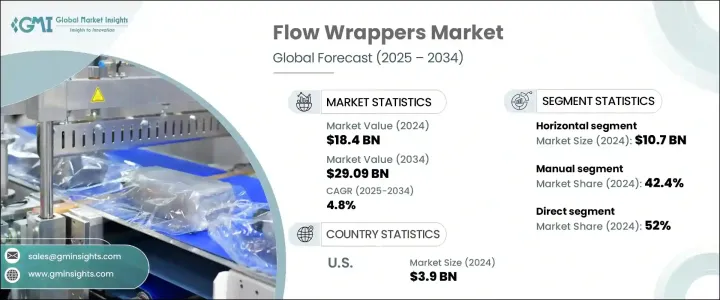
세계의 플로우 랩핑기 시장 규모는 2024년 184억 달러로 평가되었고, 2034년에는 290억 9,000만 달러에 이르며, CAGR은 4.8%를 나타낼 것으로 전망됩니다.
플로우 랩핑기는 최소한의 오퍼레이터 조작으로 고속 연속 운전이 가능하기 때문에 안정된 생산량, 제품의 보존, 다운타임의 삭감이 요구되는 생산 라인에 최적입니다. 이후 점점 더 두드러지고 있으며, 제조업체들은 오염과 습기로부터 보호하면서 유통 기한을 연장하는 포장 솔루션의 채택을 추진하고 있습니다.
플로우 랩핑기는 매장에서도 온라인에서도 소비자의 관심을 끄는 부정 개봉 방지, 외형의 아름다움, 쌓을 수 있는 포장의 작성에 도움이 됩니다. 크기와 형식을 수용할 수 있도록 설계되었으며 FDA 및 EU와 같은 국제 표준을 준수하면서 제조업체가 진화하는 시장 요구 사항을 충족할 수 있도록 지원합니다.
| 시장 범위 | |
|---|---|
| 시작 연도 | 2024년 |
| 예측 연도 | 2025-2034년 |
| 시작 금액 | 184억 달러 |
| 예측 금액 | 290억 9,000만 달러 |
| CAGR | 4.8% |
수평 플로우 랩핑기 부문은 2024년에 107억 달러를 차지했으며 2025년부터 2034년까지 연평균 복합 성장률(CAGR) 5.3%를 나타낼 것으로 예측됩니다. 크기의 제품 포장이 뛰어나 제조업체는 1대의 기계로 여러 작업을 할 수 있기 때문에 비용 절감으로 이어집니다.
수동 플로우 랩핑기 부문은 2024년 42.4%의 점유율로 시장을 선도했고 2025년부터 2034년까지 연평균 복합 성장률(CAGR) 4.1%를 나타낼 것으로 예측됩니다. 수동 플로우 랩핑기는 저렴한 가격, 단순성, 특히 신흥 국가의 중소 제조업체에 적합하기 때문에 여전히 인기가 높습니다.
미국의 플로우 랩핑기 시장은 2024년 39억 달러로 평가되었고 2034년까지 연평균 복합 성장률(CAGR) 6.1%를 나타낼 것으로 예측됩니다. 이와 더불어 강력한 제약업계와 퍼스널케어업계가 시장의 지속적인 성장에 공헌하고 있습니다.
플로우 랩핑기 시장에서 활약하는 주요 기업은 Gebo Cermex, Matrix Packaging Machinery, MULTIVAC Group, Ilapak International, Haysen Flexible Systems, Nichrome India, Paxiom Group, Theegarten-Pactec, Syntegon Technology, Fuji Machinery, PAC Machinery Group, Rovema, MesPack 등이 있습니다. 시장에서의 존재감을 높이기 위해 플로우 랩핑기 업계의 기업은 기술 혁신에 중점을 두고 자동화, 에너지 효율, 스마트 기술의 통합을 강화한 기계를 도입하여 보다 빠르고 보다 신뢰성 높은 포장 솔루션에 대한 수요의 고조에 대응하고 있습니다. 프로세스의 개발을 추진해, 환경 문제에 임하고 있습니다. 애프터 서비스와 기술 서포트의 확대에 의해 장기적인 고객 관계와 충성도를 구축합니다.
The Global Flow Wrappers Market was valued at USD 18.4 billion in 2024 and is estimated to grow at a CAGR of 4.8% to reach USD 29.09 billion by 2034. Flow wrapping machines are favored for their ability to operate at high speeds continuously with minimal operator involvement, making them ideal for production lines that demand consistent output, product preservation, and reduced downtime. The importance of food safety and hygiene has become increasingly prominent, especially after the COVID-19 pandemic, pushing manufacturers to adopt packaging solutions that protect against contamination and moisture while extending shelf life. Regulatory bodies like the U.S. Food and Drug Administration emphasize the role of safe packaging in preventing foodborne illnesses.
Flow wrappers help produce tamper-evident, visually appealing, and stackable packaging that captures consumer interest both in stores and online. Rising consumer demand for single-serve, portion-controlled, and convenient packaging formats drives innovation in flow wrapper technology. These machines are also designed to accommodate various package sizes and formats, helping manufacturers meet evolving market requirements while adhering to international standards such as those from the FDA and the European Union. Equipped with accessories like label printers and barcode scanners, flow wrappers assist manufacturers in maintaining regulatory compliance and optimizing production efficiency.
| Market Scope | |
|---|---|
| Start Year | 2024 |
| Forecast Year | 2025-2034 |
| Start Value | $18.4 Billion |
| Forecast Value | $29.09 Billion |
| CAGR | 4.8% |
The horizontal flow wrappers segment accounted for USD 10.7 billion in 2024 and is forecasted to grow at a CAGR of 5.3% from 2025 to 2034. This segment is popular due to its versatility, cost-effectiveness, and adaptability to shifting industry needs. These machines package products rapidly and continuously, serving diverse sectors such as food and beverages, pharmaceuticals, personal care, and industrial goods. Horizontal flow wrappers excel at packaging products of varying shapes and sizes and allow manufacturers to perform multiple operations with a single machine, resulting in cost savings. The increasing consumption of packaged and ready-to-eat foods, along with a rise in e-commerce, has boosted demand for clean, efficient, and attractive packaging solutions-areas where horizontal flow wrappers are particularly effective.
Manual flow wrappers segment led the market in 2024 with a 42.4% share and is anticipated to grow at a CAGR of 4.1% between 2025 and 2034. Manual flow wrappers remain popular due to their affordability, simplicity, and suitability for small to medium-sized manufacturers, especially in developing countries. These machines require minimal investment and technical skill, making them ideal for businesses with limited automation or new product lines in the packaged goods sector. Small-scale producers, snack manufacturers, and local bakeries often prefer manual flow wrappers because their production volumes are modest, and they demand high levels of customization.
United States Flow Wrappers Market was valued at USD 3.9 billion in 2024 and is projected to grow at a CAGR of 6.1% through 2034. The U.S. leads due to its vast food and beverage processing sector, which demands fast and consistent packaging solutions. Advanced manufacturing facilities and the widespread adoption of automation technology enhance the efficiency of horizontal flow wrappers in the country. Additionally, strong pharmaceutical and personal care industries contribute to sustained market growth. U.S. manufacturers benefit from a well-established service and maintenance infrastructure and are increasingly adopting green and smart packaging technologies, reinforcing the nation's leadership in the region.
Key companies active in the Flow Wrappers Market include Gebo Cermex, Matrix Packaging Machinery, MULTIVAC Group, Ilapak International, Hayssen Flexible Systems, Nichrome India, Paxiom Group, Theegarten-Pactec, Syntegon Technology, Fuji Machinery, PAC Machinery, ULMA Packaging, IMA Group, Rovema, and MesPack. To strengthen their market presence, companies in the flow wrappers industry focus heavily on innovation, introducing machines with enhanced automation, energy efficiency, and smart technology integration to meet the growing demand for faster, more reliable packaging solutions. Emphasis on sustainability drives the development of eco-friendly packaging materials and processes, addressing environmental concerns. Expanding after-sales services and technical support helps build long-term customer relationships and loyalty. Strategic partnerships and collaborations with food and pharmaceutical manufacturers enable tailored solutions, while investments in research and development ensure continuous improvements in machine versatility and compliance with international packaging standards.