


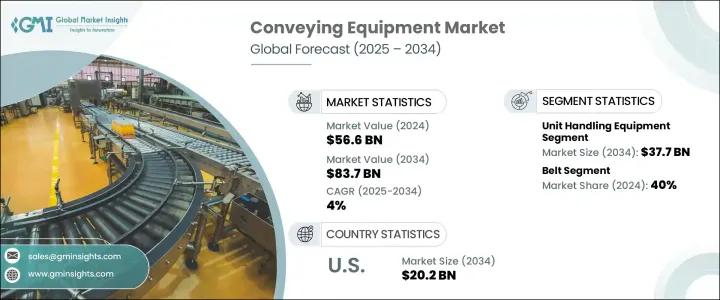
세계의 컨베이어 장비 시장 규모는 2024년에는 566억 달러로 평가되었고, 2034년에는 837억 달러에 이를 것으로 예측되며, CAGR 4%로 성장할 전망입니다.
이 안정적인 성장은 산업의 급속한 발전, 자동화 기술의 지속적인 혁신, 물류 및 공급망 네트워크 내 수요의 변화에 의해 주도되고 있습니다. 산업들이 운영 규모를 확대하고 더 효율적인 생산 모델로 전환함에 따라 신뢰성, 효율성, 지능형 컨베이어 시스템에 대한 수요가 급증하고 있습니다. 생산성, 지속 가능성, 운영 유연성에 대한 강조가 산업 전반에 걸쳐 강화되면서 장비 제조업체와 시스템 통합업체에게 상당한 기회가 창출되고 있습니다.
식품 및 음료, 자동차, 광업, 제약 등 산업 분야는 프로세스 최적화를 최우선 과제로 삼고 있으며, 이는 고급 컨베이어 솔루션의 통합을 포함합니다. 이러한 분야는 높은 처리량, 인간 개입 감소, 안전성 강화 등을 요구하며, 기업들은 자동화 시스템에 투자하고 있습니다. 지역별 스마트 제조 및 디지털화 지원 정책은 현대적 물류 처리 기술의 채택을 가속화하고 있습니다. 무결점 운영을 향한 추세와 주요 시장에서 지속되는 인력 부족은 기업들이 정확성을 향상시키고 가동 중단 시간을 줄이는 자동화 컨베이어 시스템으로 수동 처리 작업을 대체하도록 촉진하고 있습니다. 디지털 전환이 생산 및 창고 환경을 재편하는 가운데, 컨베이어 장비는 중단 없는 재료 흐름을 유지하고 병목 현상을 줄이는 데 필수적입니다.
| 시장 범위 | |
|---|---|
| 시작 연도 | 2024년 |
| 예측 연도 | 2025-2034년 |
| 시작금액 | 566억 달러 |
| 예측 금액 | 837억 달러 |
| CAGR | 4% |
제품 부문별로 보면, 시장은 벌크 취급 장비, 단위 취급 장비, 부품 및 액세서리로 분류됩니다. 이 부문의 빠른 성장은 전자 상거래 부문의 확대, 창고 활동의 증가, 경공업의 부흥에 기인합니다. 단위 취급 시스템은 상자, 소포, 컨테이너와 같은 개별 품목을 운반하는 데 이상적이며, 주문 처리 센터 및 유통 허브에서 필수적인 역할을 합니다. 소매업체와 물류업체들은 증가하는 배송 물량과 더 엄격해진 배송 일정을 따라잡기 위해 첨단 컨베이어 시스템에 투자하고 있습니다.
정밀도, 위생 및 제품 무결성이 요구되는 분야에서도 단위 컨베이어의 채택이 확대되고 있습니다. 제약, 식품 가공 및 소비재 등 산업에서는 오염 제어 및 클린룸 호환성을 제공하는 시스템에 대한 수요가 촉진되고 있습니다. 품질 및 안전 기준에 대한 기대가 높아짐에 따라 기업들은 신뢰성과 유연성을 갖춘 단위 취급 컨베이어로 눈을 돌리고 있습니다. 또한 우편 및 택배 서비스 전반에 걸친 자동화 투자 증가로 속도와 정확성이 향상되고 처리량이 많은 시스템을 요구하는 수요가 증가하고 있습니다.
장비 유형에 따라 컨베이어 장비 시장은 롤러, 벨트, 팔레트, 체인 컨베이어, 오버헤드, 기타로 분류됩니다. 2024년 기준 벨트 컨베이어가 시장 점유율의 40%를 차지했으며, 2034년까지 연평균 성장률(CAGR) 4.3%를 초과해 성장할 것으로 예상됩니다. 이 컨베이어는 다양한 재료와 거리를 컨베이어할 수 있는 다목적성과 유연성으로 널리 사용됩니다. 경사면에서 작동하고 복잡한 지형을 탐색할 수 있는 능력은 지속적인 재료 흐름이 필수적인 환경에 적합합니다.
벨트 컨베이어는 대량 또는 포장된 물품의 지속적인 이동이 필요한 산업에서 강력한 존재감을 보이고 있습니다. 수동 처리 감소, 생산성 향상, 특정 재료 처리 요구사항에 대한 적응성은 그들의 광범위한 도입을 계속 지원하고 있습니다. 제조 및 보관 시설에서는 실시간 모니터링과 시스템 최적화를 위한 스마트 기술을 통합한 에너지 효율적인 벨트 시스템에 대한 관심이 증가하고 있습니다.
2024년 미국은 글로벌 시장에서 주요 기여국으로 부상하며 131억 달러의 매출을 기록했으며, 2034년까지 202억 달러로 증가할 것으로 전망됩니다. 미국 시장은 제조, 창고, 물류 운영 전반에 걸친 자동화 확대에서 혜택을 받고 있습니다. 인건비 상승과 운영 효율성 요구로 기업들은 가동 중단 시간을 최소화하고 안전성을 향상시키며 처리량을 증대할 수 있는 컨베이어 시스템을 찾고 있습니다. 산업이 디지털 통합으로 이동함에 따라 예측 유지보수 및 실시간 데이터 추적 기능을 제공하는 컨베이어 솔루션이 표준으로 자리 잡고 있습니다.
재투자와 국내 생산 확대로의 전환은 자동화 물류 시스템에 대한 수요를 더욱 강화하고 있습니다. 기업들이 시설 현대화와 물류 인프라 강화에 투자함에 따라 컨베이어 장비는 이 전환을 지원하는 핵심 역할을 담당하고 있습니다. 자동차, 소비재, 식품 가공 등 주요 산업 분야의 강력한 수요는 미국 시장 전망을 형성하고 있으며, 혁신과 운영 효율성이 구매 결정의 핵심 요인으로 부상하고 있습니다.
세계의 컨베이어 장비 산업의 주요 기업은 EZ Loader, Boatmate Trailers, Hydrotrans, Kropf Industrial, Karavan Trailers, Load Rite Trailers, Midwest, Magic Tilt Trailers, TRIGANO, Venture Trailers 등이 있습니다. 이들 기업은 혁신을 통해 제품 기능을 강화하고 전략적 파트너십 및 타겟 투자로 시장 점유율을 확대하는 데 집중하고 있습니다.
The Global Conveying Equipment Market was valued at USD 56.6 billion in 2024 and is estimated to grow at a CAGR of 4% to reach USD 83.7 billion by 2034. This steady growth is being shaped by rapid industrial development, constant innovation in automation technologies, and evolving demands within logistics and supply chain networks. As industries scale operations and adapt to more streamlined production models, the need for reliable, efficient, and intelligent conveying systems is accelerating. The rising emphasis on productivity, sustainability, and operational flexibility across sectors is creating substantial opportunities for equipment manufacturers and system integrators.
Industrial sectors such as food and beverage, automotive, mining, and pharmaceuticals are prioritizing process optimization, which includes the integration of advanced conveying solutions. These sectors demand high throughput, reduced human intervention, and enhanced safety, prompting organizations to invest in automated systems. Government support for smart manufacturing and digitization across regions is adding momentum to the adoption of modern material handling technologies. The push toward seamless operations and the ongoing labor shortages in key markets are also prompting enterprises to replace manual handling tasks with automated conveyor systems that improve accuracy and reduce downtime. As digital transformation reshapes production and warehouse environments, conveying equipment remains critical to maintaining uninterrupted material flow and reducing bottlenecks.
| Market Scope | |
|---|---|
| Start Year | 2024 |
| Forecast Year | 2025-2034 |
| Start Value | $56.6 Billion |
| Forecast Value | $83.7 Billion |
| CAGR | 4% |
In terms of product segmentation, the market is categorized into bulk handling equipment, unit handling equipment, and parts & accessories. Among these, unit handling equipment led the market in 2024 with a revenue of USD 25.5 billion and is anticipated to reach USD 37.7 billion by 2034. The fast-paced growth of this segment is attributed to the expanding e-commerce sector, increased warehousing activities, and a rise in light manufacturing operations. Unit handling systems are ideal for transporting individual items such as boxes, parcels, and containers-making them indispensable in order fulfillment centers and distribution hubs. Retailers and logistics providers are investing in advanced conveyor systems to keep pace with rising shipment volumes and tighter delivery timelines.
The adoption of unit conveyors is also expanding in sectors that require precision, hygiene, and product integrity. Industries, including pharmaceuticals, food processing, and consumer goods, are driving demand for systems that offer contamination control and cleanroom compatibility. As expectations for quality and safety standards increase, companies are turning to unit handling conveyors for their reliability and flexibility. Furthermore, growing investment in automation across postal and courier services is propelling demand for systems that can handle higher volumes with increased speed and accuracy.
Based on equipment type, the conveying equipment market is categorized into roller, belt, pallet, chain conveyors, overhead, and others. In 2024, belt conveyors accounted for 40% of the market and are projected to grow at a CAGR exceeding 4.3% through 2034. These conveyors are widely used due to their versatility and capability to transport a wide range of materials over varied distances. Their ability to operate on inclines and navigate complex terrain makes them well-suited for environments where continuous material flow is essential.
Belt conveyors have a strong presence in industries that require the constant movement of goods-whether bulk or packaged. Their role in reducing manual handling, enhancing productivity, and adapting to specific material handling needs continues to support their widespread deployment. In manufacturing and storage facilities, there is increasing interest in energy-efficient belt systems that integrate smart technologies for real-time monitoring and system optimization.
In 2024, the United States emerged as a key contributor to the global market, generating revenue of USD 13.1 billion, with projections indicating it will climb to USD 20.2 billion by 2034. The US market is benefiting from increased automation across manufacturing, warehousing, and logistics operations. With rising labor costs and the need for operational efficiency, businesses are seeking to convey systems that can minimize downtime, improve safety, and enhance throughput. As industries move toward digital integration, conveying solutions that offer predictive maintenance and real-time data tracking are becoming standard.
The shift toward reshoring and expanding domestic production is further strengthening the demand for automated material handling systems. As companies invest in modernizing facilities and enhancing logistics infrastructure, conveying equipment is playing a crucial role in supporting this transformation. Strong demand from sectors like automotive, consumer goods, and food processing continues to shape the US market outlook, with innovation and operational efficiency at the forefront of purchasing decisions.
Leading players in the global conveying equipment industry include EZ Loader, Boatmate Trailers, Hydrotrans, Kropf Industrial, Karavan Trailers, Load Rite Trailers, Midwest, Magic Tilt Trailers, TRIGANO, and Venture Trailers. These companies are focused on enhancing product capabilities through innovation and expanding their market footprint through strategic partnerships and targeted investments.