


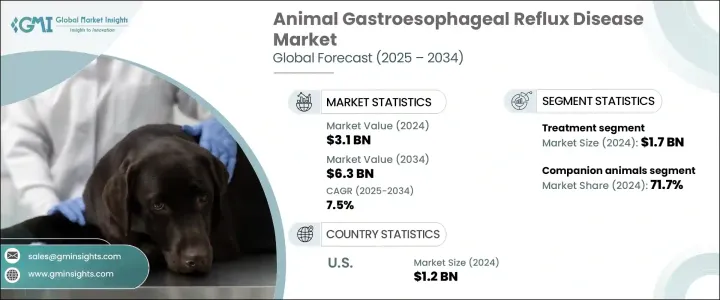
세계의 동물 위식도 역류질환 시장은 2024년에는 31억 달러로 평가되었고, 반려동물과 가축 동물 모두에서 GERD의 유병률 증가, 수의 진단 및 치료의 진보에 견인되어 CAGR 7.5%로 성장할 전망이며, 2034년에는 63억 달러에 이를 것으로 추정됩니다.
고령화, 비만, 위장 감염 등의 치료 요인이 동물의 GERD 개발에 기여하고 있으며, 효과적인 치료 옵션에 대한 수요가 높아지고 있습니다. 이 시장은 제산제, H2 길항제, 양성자 펌프 저해제를 포함한 다양한 진단 툴 및 치료적 개입이 이용 가능한 것을 특징으로 하고 있으며, 이들은 GERD의 증상을 관리하기 위해 동물 의료에서 널리 사용되고 있습니다. 이 약제들은 위산을 감소시키는 기능이 있으며 동물의 안전성과 유효성이 증명되어 있기 때문에 일반적으로 처방되고 있습니다.

게다가, 내시경에 의한 화상 진단, 고도의 혈액 검사, 초음파 기술 등의 동물용 진단법의 진보에 의해 수의사는 보다 빠르고, 보다 정확하게 GERD를 발견하기 쉬워지고 있습니다. 그 결과, 조기 개입 전략이 증가해, 예 나중에 상당히 개선하고 장기적인 합병증을 줄일 수 있게 되었습니다. 소화기 질환이 반려동물 전체의 건강에 미치는 영향에 대한 주인의 의식 고조도 시판약과 처방약 모두의 수요를 가속화시키고 있습니다.
| 시장 범위 | |
|---|---|
| 시작 연도 | 2024년 |
| 예측 연도 | 2025-2034년 |
| 시작 금액 | 31억 달러 |
| 예측 금액 | 63억 달러 |
| CAGR | 7.5% |
동물 위식도 역류질환 시장의 치료 부문은 2024년에 17억 달러를 창출했습니다. 제산제, H2 길항제, 양성자 펌프 저해제 등의 약제는 동물에서 위산 감소에 일관된 유효성을 보이고 있으며, GERD 증상 조절에 매우 중요합니다. 이러한 약제는 사람용, 동물용 모두 널리 판매되고 있으며, 그 안전성과 부작용이 적어 오랜 세월에 걸쳐 동물 의료에 사용되고 있습니다.
반려동물 세분화은 2024년에 71.7%의 최대 점유율을 차지했습니다. 반려동물의 비만은 증가 추세이며, 많은 반려동물의 영양 부족으로 이어지고 있습니다. 식생활 문제는 종종 산역류 발병으로 이어져 GERD 치료 옵션의 필요성을 높이고 있습니다. 퍼그, 불독, 복서 등의 특정 견종은 그 독특한 해부학적 특징 때문에 특히 GERD에 걸리기 쉽습니다.
미국의 동물 위식도 역류질환 2024년 시장 규모는 12억 달러였습니다. 반려동물 주인과 가축 사육자들 사이에서 소화관 건강의 중요성과 그것이 동물 전체의 행복에 미치는 영향에 관한 인식이 높아지고 있습니다. 질병 예방과 동물 복지에 초점을 맞춘 정부의 노력이 시장의 성장을 더욱 뒷받침하고 있습니다.
세계의 동물 위식도 역류질환 시장의 주요 기업은 Boehringer Ingelheim, Zoetis, Merck, Elanco, Hill's Pet Nutrition, IDEXX Laboratories, Kerry Group, Vetcare, Vetoquinol, 및 Virbac 등입니다. 이러한 기업은 동물의 GERD에 대처하기 위한 다양한 진단 및 치료 솔루션의 개발과 제공에 적극적으로 임하고 있습니다. 이러한 기업의 노력은, 이환 동물의 QOL을 향상시켜, 수의학 분야에 있어서의 효과적인 치료에 대한 수요의 고조에 응하는 것을 목적으로 하고 있습니다. 시장에서의 위상을 강화하기 위해 동물용 GERD 시장의 기업들은 다양한 전략을 채택하고 있습니다. 혁신적인 진단 툴이나 치료법을 도입하기 위한 연구 개발에 주력하고 있습니다. 동물 병원이나 연구 기관과의 제휴는, 제품 라인 업의 충실 및 시장 확대를 위해서 진행되고 있습니다.
The Global Animal Gastroesophageal Reflux Disease Market was valued at USD 3.1 billion in 2024 and is estimated to grow at a CAGR of 7.5% to reach USD 6.3 billion by 2034, driven by the increasing prevalence of GERD among both companion and livestock animals, as well as advancements in veterinary diagnostics and treatments. Factors such as aging populations, obesity, and gastrointestinal infections contribute to the development of GERD in animals, leading to a higher demand for effective treatment options. The market is characterized by the availability of various diagnostic tools and therapeutic interventions, including antacids, H2 antagonists, and proton pump inhibitors, which are widely used in veterinary medicine to manage GERD symptoms. These medications help reduce stomach acid and are commonly prescribed due to their proven safety and efficacy profiles in animals.
In addition, advancements in veterinary diagnostics, such as endoscopic imaging, advanced blood panels, and ultrasound technologies, are making it easier for veterinarians to detect GERD earlier and with greater precision. This has led to an uptick in early intervention strategies, which can significantly improve outcomes and reduce long-term complications. The increasing awareness among pet owners about the impact of digestive disorders on overall pet health is also accelerating demand for both over-the-counter and prescription solutions.
| Market Scope | |
|---|---|
| Start Year | 2024 |
| Forecast Year | 2025-2034 |
| Start Value | $3.1 Billion |
| Forecast Value | $6.3 Billion |
| CAGR | 7.5% |
The treatment segment in the animal gastroesophageal reflux disease market generated USD 1.7 billion in 2024. Medications such as antacids, H2 antagonists, and proton pump inhibitors have shown consistent effectiveness in reducing stomach acid in animals, which is crucial for controlling GERD symptoms. These medications are widely available in both human and veterinary formulations and have been used in veterinary medicine for years due to their safety and minimal side effects.
The companion animals segment held the largest share of 71.7% in 2024. Obesity in pets is on the rise, leading to nutritional deficits in many companion animals. Dietary issues often lead to the development of acid reflux, increasing the need for GERD treatment options. Certain dog breeds, such as pugs, bulldogs, and boxers, are particularly susceptible to GERD due to their unique anatomical features.
United States Animal Gastroesophageal Reflux Disease Market was valued at USD 1.2 billion in 2024, owing to the increasing number of pet ownership and the growing demand for veterinary services. There is a rising awareness among pet owners and livestock breeders regarding the importance of gastrointestinal health and its impact on overall animal well-being. Government initiatives focusing on disease prevention and animal welfare further support market growth.
Key players in the Global Animal Gastroesophageal Reflux Disease Market include Boehringer Ingelheim, Zoetis, Merck, Elanco, Hill's Pet Nutrition, IDEXX Laboratories, Kerry Group, Vetcare, Vetoquinol, and Virbac. These companies are actively involved in developing and offering a range of diagnostic and therapeutic solutions to address GERD in animals. Their efforts aim to improve the quality of life for affected animals and meet the growing demand for effective treatments in the veterinary sector. To strengthen their market position, companies in the animal GERD market are adopting various strategies. They are focusing on research and development to introduce innovative diagnostic tools and treatment options. Collaborations with veterinary clinics and research institutions are being pursued to enhance product offerings and expand market reach.