


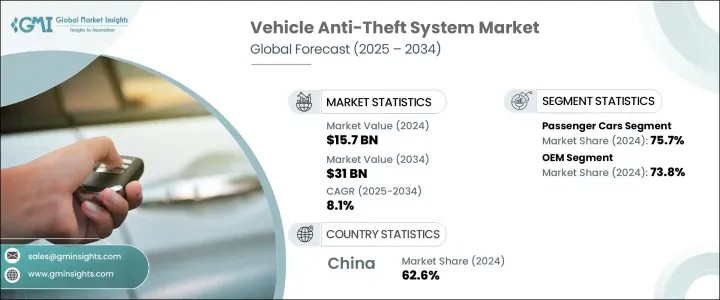
세계의 차량 도난 방지 시스템 시장 규모는 2024년에는 157억 달러로 평가되었고, CAGR 8.1%로 성장할 전망이며, 2034년에는 310억 달러에 이를 것으로 예측됩니다.
자동차의 안전성에 대한 소비자의 의식이 높아짐에 따라 다양한 지역에서 차량 도난 사건이 증가하고 있으며, 고도의 도난 방지 솔루션에 대한 수요가 높아지고 있습니다. 기술이 진화하고 소비자의 기대가 보다 스마트하고 통합된 보안 시스템으로 이동함에 따라 시장은 급속한 변모를 이루고 있습니다. 기본적인 잠금 및 표준적인 알람으로는 더 이상 충분하지 않고, 운전자는 GPS 기반의 추적, 생체 인증, 원격 이모빌라이제이션과 같은 하이테크 보안 기능을 요구하게 되어 있습니다. 이러한 기능은 신차에 표준 장착되는 것이 증가하고 있어 차세대 자동차 보안을 형성하고 있습니다.
이러한 수요에 부응하기 위해 제조업체는 센서와 전자제어 유닛을 사용하여 도난 방지 솔루션을 자동차의 핵심 전자 시스템에 통합하여 프로액티브 보안 대응을 가능하게 하고 있습니다. 전기자동차 및 커넥티드카의 대두는 효율성과 신뢰성을 겸비한 컴팩트하고 저전력 도난 방지 시스템의 필요성을 더욱 높이고 있습니다. 이러한 새로운 솔루션은, 조작 방지 소재를 사용해 구축되어 장기적인 내구성과 다양한 환경 조건하에서의 성능 향상을 실현하고 있습니다. 자동차가 보다 커넥티드하고 자율적인 시스템으로 이행함에 따라 도난 방지 기술의 역할은 기본적인 억제력에서 보안과 원활한 사용자 경험을 위해 설계된 세련된 내장 디지털 레이어로 확대되고 있습니다.
| 시장 범위 | |
|---|---|
| 시작 연도 | 2024년 |
| 예측 연도 | 2025-2034년 |
| 시작 금액 | 157억 달러 |
| 예측 금액 | 310억 달러 |
| CAGR | 8.1% |
다양한 자동차 카테고리 중 승용차는 2024년 총 판매량의 약 75.7%를 차지하며 시장을 독점했습니다. 이 부문은 예측 기간 동안 CAGR 8.4%를 넘는 성장이 예상됩니다. 이 부문의 호조는, 특히 소형차 및 중형차에 있어서, 다층적인 보안 기능에 대한 소비자의 기호가 높아지고 있는 것에 기인하고 있습니다. 센서 기반의 전자 이모빌라이저와 같은 기술은 특히 승용차에 보급되어 있습니다. 암호화 키 인증, 모션 센싱, 자동 엔진 컷오프 기구를 이용하는 이러한 시스템은 높은 신뢰성 및 원격 시작 및 모바일 컨트롤 잠금과 같은 다른 스마트 기능과의 호환성을 제공합니다.
2024년 시장 점유율은 주문자상표부착생산(OEM)이 73.8%로 판매 채널 부문을 선도했으며, 2034년까지 연평균 복합 성장률(CAGR)은 8.4% 이상으로 성장할 것으로 예측되고 있습니다. OEM 업체들은 규제 및 보험 기준 강화에 대응하기 위해 선진적인 도난 방지 기술을 차량 설계에 직접 접목하고 있습니다. 이러한 시스템을 처음부터 포함시킴으로써 제조사는 차량 아키텍처와의 통합을 강화하고 고장률을 감소시켜 전체적인 보안을 향상시키고 있습니다. OEM 탑재 솔루션에는 이모빌라이저, 키리스 엔트리 블로커, 디지털 인증 시스템이 공장에서 통합되는 경우가 많아 소비자 신뢰와 재판매 가치를 높이고 있습니다.
제품 세분화 측면에서 저렴한 가격, 다양성 및 소비자에게 널리 받아들여지므로 알람 기반 시스템이 계속 우위를 차지하고 있습니다. 사이렌, 모션 센서, 심플한 제어 모듈 등을 포함한 이러한 시스템은, 공장 설치형 및 애프터 마켓형 양쪽 모두에서 인기를 유지하고 있습니다. 소리와 시각에 의한 억제는 도난율이 높은 지역에서는 특히 효과적입니다. 기술 혁신이 진행됨에 따라 이들 시스템은 현재 충격 감지, 자동 휴대 경고, 강화된 동체 감지 기능 등의 추가 기능을 제공하고 있습니다.
아시아태평양에서는 중국이 시장의 리더로서 대두해 62.6%라는 압도적인 점유율을 차지했으며, 2024년에는 약 44억 달러의 수익을 창출했습니다. 이러한 우위는 방대한 자동차 생산량, 자동차 보유 대수 증가, 차세대 보안 기능에 대한 소비자들의 강한 관심 때문입니다. 국내외 기업은 이러한 급성장 시장의 진화하는 요구에 대응하기 위해, AI를 활용한 도난 방지, 디지털 키 액세스, 생체 인증 도입에 주력하고 있습니다.
자동차의 디지털화와 및 자율화에 따라 도난 방지 시스템도 병행하여 진화하고 있습니다. 제조사는 현재 최신 도난 수법에 대항하기 위해 내탬퍼성 키포브, 실시간 차량 추적, 첨단 암호화 프로토콜을 채택하고 있습니다. 차량 도난 방지 모듈은 전기차 플랫폼과 매끄럽게 기능하도록 조정돼 고전압 적합성 및 내열성 등의 과제에 대처하고 있습니다. 고성능 열가소성 플라스틱이나 내부식성 금속과 같은 소재는 내구성과 경년 열화의 최소화를 보장하기 위해 사용되고 있습니다. 정확도를 향상시키기 위해, 제조사는 키리스 시스템의 캘리브레이션을 자동화하고, AI를 사용해 VATS를 최신의 차량 에코 시스템에 통합하고 있습니다. 보안 컴포넌트 간의 안전한 통신을 유지하고 신호 간섭에 의한 위험을 줄이기 위해 신호 차폐 강화와 EMI 내성 코팅도 채택되었습니다.
The Global Vehicle Anti-Theft System Market was valued at USD 15.7 billion in 2024 and is estimated to grow at a CAGR of 8.1% to reach USD 31 billion by 2034. The rise in vehicle theft cases across various regions, paired with increased consumer awareness about automotive safety, is pushing the demand for advanced anti-theft solutions. As technology evolves and consumer expectations shift toward smarter, more integrated security systems, the market is undergoing rapid transformation. Basic locks and standard alarms are no longer sufficient; drivers now demand high-tech security features such as GPS-based tracking, biometric authentication, and remote immobilization. These features are increasingly becoming standard in new vehicles, shaping the next generation of automotive security.
In response to these demands, manufacturers are integrating anti-theft solutions with the vehicle's core electronic systems, using sensors and electronic control units to enable proactive security responses. The rise of electric and connected vehicles is further driving the need for compact, low-energy anti-theft systems that are both efficient and reliable. These new solutions are built using tamper-resistant materials to offer long-term durability and enhanced performance in different environmental conditions. As vehicles transition into more connected and autonomous systems, the role of anti-theft technology is expanding from a basic deterrent to a sophisticated, built-in digital layer designed for both security and seamless user experience.
| Market Scope | |
|---|---|
| Start Year | 2024 |
| Forecast Year | 2025-2034 |
| Start Value | $15.7 Billion |
| Forecast Value | $31 Billion |
| CAGR | 8.1% |
Among the various vehicle categories, passenger cars dominated the market in 2024, accounting for approximately 75.7% of total sales. This segment is projected to grow at a CAGR exceeding 8.4% during the forecast timeline. The strong performance in this segment can be attributed to growing consumer preference for multi-layered security features, particularly in compact and mid-size vehicles. Technologies like sensor-based electronic immobilizers have become especially popular in passenger vehicles. These systems, which utilize encrypted key verification, motion sensing, and automatic engine cut-off mechanisms, offer high reliability and compatibility with other smart features such as remote start and mobile-controlled locking.
Original equipment manufacturers (OEMs) led the sales channel segment in 2024 with a 73.8% market share and are projected to grow at a CAGR of more than 8.4% through 2034. OEMs are incorporating advanced anti-theft technologies directly into vehicle designs during manufacturing to meet increasing regulatory and insurance standards. By embedding these systems from the outset, manufacturers ensure stronger integration with the vehicle's architecture, reducing failure rates and increasing overall security. OEM-installed solutions now often include factory-integrated immobilizers, keyless entry blockers, and digital authentication systems, boosting both consumer trust and resale value.
In terms of product segmentation, alarm-based systems continue to dominate due to their affordability, versatility, and widespread consumer acceptance. These systems, which include sirens, motion sensors, and simple control modules, remain popular across both factory-installed and aftermarket options. Their audible and visual deterrents are particularly effective in regions with higher theft rates. As innovation continues, these systems now offer added functionalities such as shock detection, automatic mobile alerts, and enhanced motion detection capabilities.
China emerged as the market leader within the Asia Pacific region, holding a commanding 62.6% share and generating approximately USD 4.4 billion in revenue in 2024. This dominance is driven by massive vehicle production volumes, rising vehicle ownership, and strong consumer interest in next-gen security features. Local and international players are focusing on incorporating AI-driven theft prevention, digital key access, and biometric verification to cater to the evolving needs of this fast-growing market.
As vehicles become more digital and autonomous, anti-theft systems are evolving in parallel. Manufacturers are now employing tamper-resistant key fobs, real-time vehicle tracking, and advanced encryption protocols to combat modern theft methods. Vehicle anti-theft modules are being tailored to function seamlessly with electric vehicle platforms, addressing challenges such as high-voltage compatibility and heat resistance. Materials like high-performance thermoplastics and corrosion-proof metals are used to ensure durability and minimal wear over time. To improve precision, manufacturers are automating the calibration of keyless systems and using AI to better integrate VATS into modern vehicle ecosystems. Enhanced signal shielding and EMI-resistant coatings are also being adopted to maintain secure communication between security components, reducing risks from signal interference.