


세계의 멸균 장비 시장은 2024년에는 92억 달러로 평가되었고, CAGR 7.7%로 성장할 전망이며, 2034년에는 193억 달러에 이를 것으로 예측됩니다.
이 성장의 원동력이 되고 있는 것은 헬스케어 관련 감염(HAI)에 대한 의식의 고조이며, 그 결과, 고도의 멸균 시스템에 대한 수요가 급증하고 있습니다. 병원, 연구소, 의약품 제조 현장, 식품 가공 시설이 위생 기준을 높이는 가운데 무균 상태를 유지하고 오염을 회피하며 전체적인 안전성을 확보하기 위해 효율적인 멸균 도구 사용이 필수적입니다. 멸균 장비는 도구, 환경, 표면에서 박테리아, 바이러스, 아포, 진균을 포함한 모든 형태의 미생물 생명체를 제거하기 위해 필수적인 역할을 합니다. 복잡하고 재사용 가능한 의료기구의 사용이 특히 헬스케어 환경에서 증가하는 가운데, 세계의 안전 프로토콜에 적합한 신뢰성 높은 멸균 방법이 급선무가 되고 있습니다. 지난 몇 년간 감염관리 기준의 진화 및 환자의 안전 요구 고조가 많은 의료기관의 초점 형태를 바꾸면서 멸균 장비와 관련 소모품 모두에 대한 투자 증가로 이어지고 있습니다. HAI 증례의 일관된 증가는 산업계가 더 나은 멸균 관행을 채택하도록 독려하고 있으며, 이것이 나아가 제품 혁신을 자극해 여러 지역에서 시장 가치의 급상승으로 이어지고 있습니다.
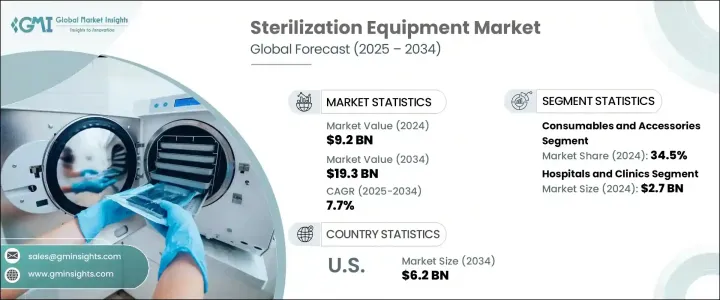
시장 세분화에서 시장에는 가열 멸균기, 저온 멸균기, 방사선 멸균기, 멸균 멤브레인 필터, 광범위한 소모품 및 액세서리가 포함됩니다. 이 중 소모품과 부속품은 2024년 세계 시장을 선도했으며, 34.5%의 최고 수익 점유율에 기여했습니다. 멸균 랩, 파우치, 인디케이터, 트레이, 생물학적 모니터를 포함한 이 아이템들은 사실상 모든 멸균 사이클에 사용되는 기본 구성 요소입니다. 이러한 소모품에 대한 수요의 급증은, 다양한 의료 처치 및 용도에서 무균 상태를 유지하는 데 있어서 중요한 기능을 완수하는 것에 기인하고 있습니다. 재사용 가능한 의료 기구, 진단 기기, 의약품은 모두 사용 전에 안전성과 위생 기준을 충족하는지 확인하기 위해 이러한 부속품에 크게 의존하고 있습니다. 이러한 소모품은 사용 빈도가 높고 정기적으로 교체해야 하기 때문에 의료 및 산업 분야 전체에서 수요가 지속되고 있습니다.
| 시장 범위 | |
|---|---|
| 시작 연도 | 2024년 |
| 예측 연도 | 2025-2034년 |
| 시작 금액 | 92억 달러 |
| 예측 금액 | 193억 달러 |
| CAGR | 7.7% |
시장의 최종 사용자 세분화에 따르면 병원 및 클리닉이 2024년 매출 공헌의 최상위에 부상하여 약 27억 달러를 창출했습니다. 이 부문의 우위성은 재사용 가능한 기기 및 수술기구의 관리에서 멸균에 대한 의존도가 높아지고 있는 것에 기인하고 있습니다. 이러한 시설은 엄격한 감염관리 방침을 준수하여 환자의 건강을 지켜야 한다는 압박에 항상 노출되어 있습니다. 병원에서는 더 많은 수기를 지원하고 교차 오염 위험을 최소화하기 위해 최신 멸균 솔루션에 대한 투자가 증가하고 있기 때문에, 이 부문은 향후 수년간 선두를 유지할 것으로 예상됩니다. 게다가 비용 대비 효과로부터 재사용 가능한 의료 기구를 선호하는 경향이 강해지고 있는 것도, 효과적인 멸균 시스템의 수요를 한층 더 끌어올리고 있습니다.
지역별로는 북미가 현저한 성장 가능성을 나타내고 있으며, 미국의 멸균 장비 시장은 2034년까지 62억 달러에 달할 전망이며, CAGR 7.4%로 성장할 것으로 예측됩니다. 엄격한 위생프로토콜의 일관된 시행과 헬스케어 시설에서의 높은 감염 발생률이 맞물려 의료기관은 보다 스마트하고 세련된 멸균 기술을 채택하게 되었습니다. 이 지역의 성숙한 헬스케어 인프라 및 감염 예방 중시는, 시장 확대에 기여하는 주된 요인입니다. 자동화 시스템, 스마트 인디케이터, 실시간 감시 장치에 대한 투자가 북미 멸균 장비의 발전을 계속 형성하고 있습니다.
멸균 장비 업계는 치열한 경쟁을 특징으로 하며, 다국적 대기업과 틈새 시장 중 약 70%가 신뢰성과 효율성을 높이기 위해 연구 개발에 주력하는 소수의 주요 기업에 의해 지배되고 있습니다. 기술 혁신은 저온 멸균 시스템, 고급 모니터링 도구, 속도와 안전성을 향상시키는 자동화 솔루션 등의 분야에 특히 집중되어 있습니다. 의료기관 및 연구그룹과의 협업도 비용 효율이 높은 제품을 도입하면서 제조사가 급증하는 수요에 대응하는 데 도움이 되고 있습니다. 규제 프로세스의 합리화와 신기술 승인에 대한 지원 강화는 이 고성장 시장에서 발자취를 늘리려는 기업에 좋은 조건을 만들어 내고 있습니다.
The Global Sterilization Equipment Market was valued at USD 9.2 billion in 2024 and is estimated to grow at a CAGR of 7.7% to reach USD 19.3 billion by 2034. This growth is being driven by a rising awareness of healthcare-associated infections (HAIs), which has resulted in an urgent demand for advanced sterilization systems. As hospitals, laboratories, pharmaceutical production sites, and food processing facilities increase their hygiene standards, the use of efficient sterilization tools has become critical to maintain sterility, avoid contamination, and ensure overall safety. Sterilization equipment plays an essential role in eliminating all forms of microbial life-including bacteria, viruses, spores, and fungi-from tools, environments, and surfaces. With the growing use of complex and reusable medical instruments, especially in healthcare settings, there is a pressing need for reliable sterilization practices that meet global safety protocols. Over the past few years, evolving infection control standards and increasing patient safety requirements have reshaped the focus of many institutions, leading to higher investments in both sterilization devices and related consumables. The consistent rise in HAI cases is prompting industries to adopt better sterilization practices, and this in turn is stimulating product innovation and a surge in market value across multiple regions.
In terms of product segmentation, the market includes heat sterilizers, low-temperature sterilizers, radiation-based sterilizers, sterile membrane filters, and a wide range of consumables and accessories. Among these, consumables and accessories led the global market in 2024, contributing to the highest revenue share of 34.5%. These items, which include sterilization wraps, pouches, indicators, trays, and biological monitors, are fundamental components used in virtually every sterilization cycle. The surge in demand for these consumables stems from their critical function in maintaining sterility across various medical procedures and applications. Reusable medical instruments, diagnostic devices, and pharmaceutical products all rely heavily on these accessories to ensure they meet safety and hygiene standards before use. The frequency of usage and necessity of replacing these consumables regularly have resulted in sustained demand across medical and industrial sectors.
| Market Scope | |
|---|---|
| Start Year | 2024 |
| Forecast Year | 2025-2034 |
| Start Value | $9.2 Billion |
| Forecast Value | $19.3 Billion |
| CAGR | 7.7% |
The end-user segmentation of the market shows that hospitals and clinics emerged as the top contributors to revenue in 2024, generating around USD 2.7 billion. This segment's dominance is attributed to the increased reliance on sterilization for managing reusable equipment and surgical tools. These facilities are under constant pressure to comply with strict infection control policies and safeguard patient health. As hospitals increasingly invest in modern sterilization solutions to support a higher volume of procedures and minimize cross-contamination risks, this segment is expected to maintain its lead in the coming years. Furthermore, the growing preference for reusable medical instruments due to cost-effectiveness is further driving the demand for effective sterilization systems.
Regionally, North America is showing notable growth potential, with the U.S. sterilization equipment market projected to hit USD 6.2 billion by 2034, advancing at a CAGR of 7.4%. The consistent enforcement of strict hygiene protocols, combined with the high incidence rate of infections in healthcare facilities, has pushed institutions to adopt smarter and more sophisticated sterilization technologies. This region's mature healthcare infrastructure and emphasis on infection prevention are major factors contributing to market expansion. Investment in automated systems, smart indicators, and real-time monitoring devices continues to shape the development of sterilization equipment in North America.
The sterilization equipment industry is marked by fierce competition, featuring both multinational giants and smaller niche companies. Around 70% of the market is controlled by a few key players who are focused on R&D to enhance the reliability and efficiency of their offerings. Innovations are particularly concentrated in areas such as low-temperature sterilization systems, advanced monitoring tools, and automated solutions that improve speed and safety. Collaborations with medical institutions and research groups are also helping manufacturers meet the surging demand while introducing cost-efficient products. Streamlined regulatory processes and increased support for new technology approvals are creating favorable conditions for companies seeking to expand their footprint in this high-growth market.