


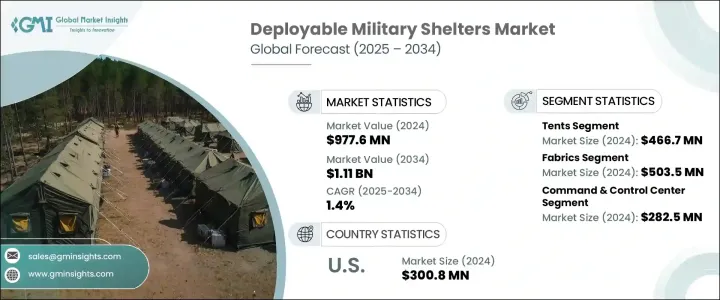
세계의 설치형 군용 쉘터 시장 규모는 2024년 9억 7,760만 달러였고, CAGR 1.4%로 성장하여 2034년까지 11억 1,000만 달러에 이를 것으로 예측되고 있습니다. 세계 국방군은 진화하는 전장과 후방 지원 요건에 대응하기 위해 범용성이 높고 견고한 쉘터 시스템에 지속적으로 투자하고 있습니다. 군과 정부가 신속한 기동성과 실시간 작전 능력을 우선시하는 가운데, 컴팩트하고 내구성이 있어 쉽게 전개할 수 있는 쉘터에 대한 수요는 증가 경향에 있습니다. 다수의 작전 영역에 걸친 예측 불가능한 위협에 대한 즉각적인 태세의 강화를 목표로 하는 중, 시장은 기세를 늘리고 있습니다.
최근 무역 정책의 변화는 배치형 쉼터의 비용 구조에 현저한 영향을 미쳤습니다. 이로 인해 전반적인 가격을 밀어 올렸습니다. 그 결과 제조업체는 조달 전략의 전환을 강요받아 북미와 관세의 영향을 받지 않는 지역 공급업체를 선호하게 되었습니다.
| 시장 범위 | |
|---|---|
| 시작 연도 | 2024년 |
| 예측 연도 | 2025-2034년 |
| 시작 금액 | 9억 7,760만 달러 |
| 예측 금액 | 11억 1,000만 달러 |
| CAGR | 1.4% |
제품 부문별로는 쉘터는 텐트, 컨테이너형 유닛, 기타 구조로 분류됩니다. 단기간의 전개에 최적입니다. 현대의 텐트는 내화성, 자외선 내성, 적외선 검지 등의 고급 보호 기능을 제공하는 강화 재료로 진화하고 있습니다.
재료 선택은 대피소의 성능, 특히 작전 스트레스 하에서 중요한 역할을 합니다. 난연성 코팅, UV 차단 기능, 적외선 위장과 같은 섬유 제품의 기술적 진보로 직물은 전술 환경에 적합한 선택이 되고 있습니다.
용도별로는 시장은 지휘통제센터, 의료시설, 정비부대, 인도적 전개, 거주구로 구분됩니다. 통신, 위성 링크, 실시간 의사결정 도구를 지원할 수 있는 쉼터 시스템의 필요성이 계속 증가하고 있습니다.
미국은 2024년 평가 금액 3억 80만 달러로 세계 시장을 선도했습니다. 긴급 사태 관리 기관은 전개 가능한 쉘터의 주요 채용자이며, 국내외의 다양한 임무로 쉘터를 사용하고 있습니다.
제조업체 각사는 모듈식 설계, 통합형 솔라 기능, 통신 인프라를 포함한 쉘터 등 차세대의 혁신에 주력하고 있습니다. 이를 통해 다양한 운영 수요에 유연성과 탄력성을 제공하는 확장 가능한 솔루션으로 향하고 있습니다.
The Global Deployable Military Shelters Market was valued at USD 977.6 million in 2024 and is estimated to grow at a CAGR of 1.4% to reach USD 1.11 billion by 2034. This steady growth is fueled by rising global defense budgets and an increasing need for mobile infrastructure during emergency and humanitarian operations. Defense forces across the globe are continually investing in versatile and robust shelter systems to meet evolving battlefield and logistical requirements. These shelters are no longer used solely for military needs; they now support civil applications during disaster response and recovery missions. As militaries and governments prioritize rapid mobility and real-time operational capabilities, the demand for compact, durable, and easily deployable shelters is witnessing an upward trend. This includes mobile field hospitals, operational command centers, and emergency housing units. Moreover, the market is gaining momentum as nations aim to enhance readiness for unpredictable threats across multiple operational domains-land, air, sea, cyber, and space. In response, manufacturers are innovating rapidly to design systems that can withstand harsh climates, offer efficient energy solutions, and be swiftly deployed in both combat and crisis situations.
Trade policy changes in recent years have had a noticeable impact on the cost structure of deployable shelters. The introduction of tariffs under Section 232 and Section 301 significantly increased the costs of vital raw materials, including steel, aluminum, and advanced technical fabrics. These tariffs disrupted established international supply chains that relied on imported components, causing delays in procurement and driving up overall prices. As a result, manufacturers were compelled to shift sourcing strategies, favoring suppliers from North America or regions unaffected by the tariffs. Although the policies aimed to boost domestic manufacturing, they created short-term instability and exposed vulnerabilities in the production and delivery networks of deployable shelters.
| Market Scope | |
|---|---|
| Start Year | 2024 |
| Forecast Year | 2025-2034 |
| Start Value | $977.6 Million |
| Forecast Value | $1.11 Billion |
| CAGR | 1.4% |
In terms of product segmentation, shelters are categorized into tents, container-based units, and other structures. Among these, tents represented the largest market segment in 2024, valued at USD 466.7 million. Their versatility and rapid setup capability make them ideal for tactical use and short-term deployments. Modern tents have evolved with enhanced materials that offer advanced protection features, such as resistance to fire, UV rays, and infrared detection. These innovations support stealth and safety in operational zones, improving the reliability and security of shelter deployments in diverse conditions.
Material selection plays a crucial role in shelter performance, especially under operational stress. The fabric segment led the market in 2024, with a value of USD 503.5 million. Lightweight and flexible, these materials meet the growing need for efficient, mobile logistics. Technological advancements in textiles-like flame-retardant coatings, UV blocking capabilities, and infrared camouflage-have made fabrics a preferred choice for tactical environments. The focus on maximizing durability while minimizing weight makes these fabrics suitable for fast-moving, high-volume deployment needs.
By application, the market is segmented into command and control centers, medical facilities, maintenance units, humanitarian deployments, and living quarters. The command and control center segment dominated the market with a valuation of USD 282.5 million in 2024. As global defense forces shift toward integrated multi-domain operations, the need for shelter systems that can support secure communications, satellite links, and real-time decision-making tools continues to grow. These shelters are being developed with built-in electromagnetic interference shielding and hardened communication modules to ensure they remain operational in contested environments.
The United States led the global market with a valuation of USD 300.8 million in 2024. This leadership is driven by its expansive military presence, increasing demand for mobile infrastructure, and a proactive approach to defense modernization. The country's rapid deployment forces and emergency management agencies are key adopters of deployable shelters, using them in a variety of domestic and international missions. Budget allocations and investments in advanced shelter technologies have further strengthened its market position.
Manufacturers are focusing on next-generation innovations such as modular designs, integrated solar capabilities, and shelters with embedded communication infrastructure. These features align with the need for sustainability, quick deployment, and adaptability in extreme environments. The industry is moving toward scalable solutions that offer flexibility and resilience for a wide range of operational demands, from battlefield coordination to disaster response. As the requirement for climate-resistant, energy-efficient, and easily transportable structures continues to rise, the deployable military shelters market is expected to evolve rapidly to meet new and complex challenges.