


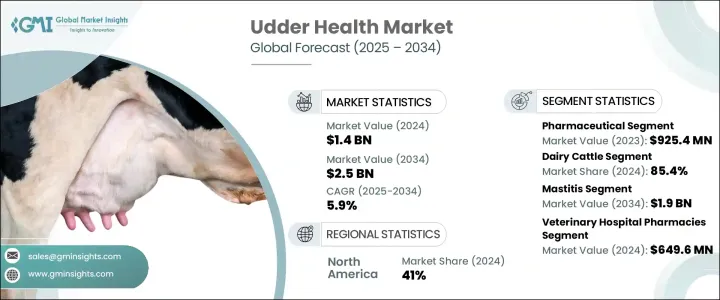
세계의 유방 건강 시장은 2024년에는 14억 달러로 평가되었고 유방 질환, 특히 유방염에 대한 우려 증가와 유제품에 대한 세계 수요의 급증으로 CAGR 5.9%를 나타내 2034년에는 25억 달러에 달할 것으로 예측되고 있습니다.
낙농경영이 세계적으로 확대·격화하는 가운데, 사전 예방적 관리의 중요성이 지금까지 이상으로 높아지고 있습니다. 낙농가는 수익성과 동물복지를 유지하기 위해 조기 발견과 예방에 더욱 힘을 쏟고 있습니다.
주요 낙농 생산국의 규제기관은 항균제의 사용에 대해 보다 엄격한 규제를 실시하고 있으며, 혁신적인 치료법, 백신, 프로바이오틱스, 면역 강화 솔루션 수요를 더욱 가속화하고 있습니다. 치료기술은 낙농가의 유방 건강에 대한 대처방법을 재구축하고 있습니다.윤리적으로 조달된 항생제 미사용 유제품에 대한 소비자 수요가 높아지는 가운데, 기술 혁신, 진화하는 농법, 동물복지와 식품안전에 대한 의식의 고조의 조합에 힘입어 시장은 앞으로 10년간 강력합니다.
| 시장 범위 | |
|---|---|
| 시작 연도 | 2024년 |
| 예측 연도 | 2025-2034년 |
| 시작 금액 | 14억 달러 |
| 예측 금액 | 25억 달러 |
| CAGR | 5.9% |
유방염은 낙농우군에서 자주 발생하는 우려 사항으로, 효과적인 진단, 치료, 예방 솔루션에 대한 수요가 계속 높아지고 있습니다. 표적 항생제 및 비 침습적 치료법과 같은 새로운 치료법이 개발되었습니다. 최신 백신은 유방염 및 기타 유방 감염의 예방에 매우 효과적이되고 있으며, 프로바이오틱스와 면역 자극 요법은 젖소의 마이크로 바이옴을 건강하게합니다. 완전히 유지하기 위해 매우 중요하다는 것이 증명되고 있습니다. 이 진보는 동물의 복지를 향상시킬뿐만 아니라 항생제에 대한 의존도를 낮추는 것으로보다 지속 가능한 낙농을 촉진하고 있습니다.
시장은 의약품과 보충제로 구분됩니다. 의약품 부문은 2023년에 9억 2,540만 달러를 창출해, 유방 감염증의 발생률 증가와 항균제 내성에 대한 우려 증가에 밀어졌습니다.
동물 유형별로는 젖소가 2024년의 점유율 85.4%로 시장을 독점했습니다. 세계의 항생제 규제 가운데, 낙농가는 프로바이오틱스와 면역요법약의 채용을 늘리고 있으며, AI를 활용한 모니터링과 자동 착유 시스템이 인기를 끌고 있습니다.
2024년 북미의 유방 건강 시장은 세계 매출의 41%를 차지했으며 2025년부터 2034년까지 연평균 복합 성장률(CAGR) 5.8%를 나타낼 것으로 예측됩니다. 미국에서는 원유 생산이 호조로 정밀 툴과 지속 가능한 관리 전략 등 선진적인 유방 위생 솔루션에 대한 수요가 높아지고 있습니다.
세계의 유방 건강 업계 주요 기업은 머크, 보마틱, AHV 인터내셔널, 앨버트 케르블, 보링거 인겔하임, 세바 산테 애니메이션, 에코랩, 엘란코 동물 건강, 딜라발, G 셰퍼드 동물 Health, Virbac, Zoetis 등입니다. 이들 기업은 항균제 내성의 우려에 대처하기 위한 혁신적인 치료법에 대한 투자, 진단을 위한 AI와 자동화 기능의 확대, 제품 채용을 개선하기 위한 동물 병원과 농가와의 제휴, 친환경 제품 개발과 농가 교육 이니셔티브를 통한 지속가능성 노력을 강화하고 있습니다.
The Global Udder Health Market was valued at USD 1.4 billion in 2024 and is estimated to grow at a CAGR of 5.9% to reach USD 2.5 billion by 2034, driven by rising concerns over udder diseases, especially mastitis, along with the surging global demand for dairy products. As dairy farming operations expand and intensify worldwide, the importance of proactive udder health management is becoming more critical than ever. Mastitis remains one of the most common and costly diseases affecting dairy cows, leading to significant losses in milk production, increased veterinary expenses, and long-term herd health issues. Farmers are focusing more on early detection and prevention to maintain profitability and animal welfare. Moreover, the global push for sustainable farming practices is transforming the udder health market, encouraging the adoption of alternatives to traditional antibiotics.
Regulatory bodies across major dairy-producing nations are enforcing stricter controls on antimicrobial use, further accelerating the demand for innovative treatments, vaccines, probiotics, and immune-boosting solutions. Technologies such as AI-driven health monitoring, precision treatment platforms, and advanced herd management systems are reshaping how farmers approach udder health. With consumer demand rising for ethically sourced and antibiotic-free dairy products, the market is set to experience robust growth over the next decade, supported by a combination of technological innovations, evolving farming practices, and increasing awareness about animal welfare and food safety.
| Market Scope | |
|---|---|
| Start Year | 2024 |
| Forecast Year | 2025-2034 |
| Start Value | $1.4 Billion |
| Forecast Value | $2.5 Billion |
| CAGR | 5.9% |
Mastitis, a frequent concern in dairy herds, continues to drive demand for effective diagnostic, therapeutic, and preventive solutions. As dairy farming grows more intensive, new treatments such as targeted antibiotics and non-invasive therapies are being developed to minimize antimicrobial resistance. Breakthroughs in vaccines, probiotics, and immunotherapies are significantly improving herd health by reducing chronic infections and boosting milk yields. Modern vaccines are becoming highly effective at preventing mastitis and other udder infections, while probiotics and immune-stimulant therapies are proving crucial for maintaining a healthy microbiome in dairy cows. These advancements are not only enhancing animal welfare but are also promoting more sustainable dairy farming by lowering antibiotic reliance.
The market is segmented into pharmaceutical products and supplements. The pharmaceutical segment generated USD 925.4 million in 2023, fueled by the growing incidence of udder infections and heightened concerns over antimicrobial resistance. The rising adoption of AI-powered prescription systems is enhancing treatment precision and herd health, further supporting growth in the pharmaceutical sector.
In terms of animal type, dairy cattle dominated the market with an 85.4% share in 2024. Rising investments in early diagnostic technologies, genetics, and disease resistance are reshaping herd management practices. Farmers are increasingly adopting probiotics and immunotherapy drugs amid global antibiotic restrictions, with AI-driven monitoring and automated milking systems gaining traction.
North America Udder Health Market accounted for 41% of global revenue in 2024 and is projected to grow at a CAGR of 5.8% from 2025 to 2034. Strong milk production across the U.S. is fueling the demand for advanced udder health solutions, including precision tools and sustainable management strategies. Regulatory pushes to reduce antibiotic use, led by the FDA and USDA, are further boosting the uptake of vaccines, probiotics, and immune-stimulant therapies.
Major players in the global udder health industry include Merck, BouMatic, AHV International, Albert Kerbl, Boehringer Ingelheim, Ceva Sante Animale, Ecolab, Elanco Animal Health, DeLaval, G Shepherd Animal Health, Virbac, and Zoetis. These companies are investing in innovative treatments to address antimicrobial resistance concerns, expanding AI and automation capabilities for diagnostics, partnering with veterinary clinics and farmers to improve product adoption, and enhancing sustainability efforts through eco-friendly product development and farmer education initiatives.