


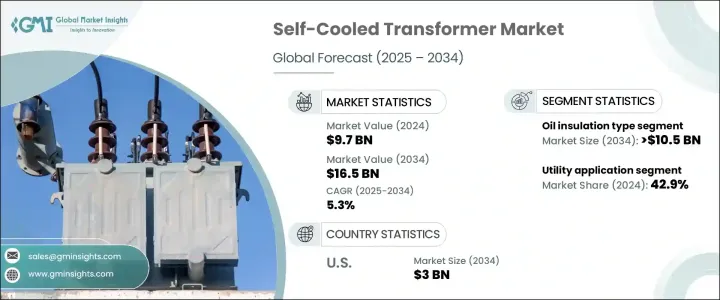
세계의 자냉식 변압기 시장 규모는 2024년에는 97억 달러에 달하고, CAGR 5.3%로 성장하여 2034년까지 165억 달러에 이를 것으로 예측되고 있습니다.
이러한 예상되는 성장은 특히 중저전압 인프라와 관련된 용도에서 에너지 효율이 높고 유지보수가 적은 전력 솔루션에 대한 수요가 증가함을 보여주고 있습니다. 보다 변동하는 부하를 실시간으로 관리할 수 있는 스마트하고 적응력 있는 솔루션이 요구되는 현대의 송전망에 있어서 이상적인 옵션이 되고 있습니다.
자냉식 변압기의 제조는 철강, 알루미늄, 고품위 전기 부품 등의 불가결한 원재료에 의존하고 있어 그 대부분은 국제적으로 조달되고 있습니다. 그 결과, 최근 도입된 무역 관세가 제조 비용을 한층 더 압박하고 있습니다. 현지 제조업체는 수입 경쟁의 감소로부터 일시적인 혜택을 받을지도 모르지만, 자본 코스트의 상승과 무역 관계의 긴장이, 시장 전체의 확대 페이스를 밀어 내릴 것으로 예측됩니다.
| 시장 범위 | |
|---|---|
| 시작 연도 | 2024년 |
| 예측 연도 | 2025-2034년 |
| 시작 금액 | 97억 달러 |
| 예측 금액 | 165억 달러 |
| CAGR | 5.3% |
자냉식 변압기 시장의 단열재 부문은 석유, 고체 및 기타 단열재로 구성되어 있습니다. 업계에 영향을 미치고 대체 솔루션의 모색과 채용이 진행되고 있습니다. 최근에는 실리콘 기반의 절연유가 극단적인 온도에 대한 내성과 강력한 화재 안전성의 특성으로 인기를 끌고 있습니다.
응용 분야에 따라 시장의 성숙도와 미래는 다양합니다. 상업 및 산업 분야도 업무 집약형 시설에 의한 전력 수요 증가에 의해 유망한 성장 기회를 가져오고 있습니다.
미국 시장은 꾸준한 성장을 보여주며, 평가액은 2022년에 14억 달러, 2023년에 15억 달러, 2024년에 16억 달러가 됩니다. 필요성에 의해 크게 좌우됩니다. 에너지의 회복력을 확보해, 이산화탄소 배출량을 삭감해, 그리드의 인텔리전스를 향상시키는 것에 중점을 두고 있습니다.
이 시장의 주요 기업에는 2024년 시점에서 세계 시장 점유율의 40% 이상을 차지하는 유력 기업 6사가 포함되어 있습니다. 라인, 다양한 포트폴리오, 지속가능성에 대한 헌신으로 업계 선두의 1사가 프런트 러너로서 부상했습니다.
The Global Self-Cooled Transformer Market was valued at USD 9.7 billion in 2024 and is estimated to grow at a CAGR of 5.3% to reach USD 16.5 billion by 2034. This anticipated growth reflects the rising demand for energy-efficient and low-maintenance power solutions, especially in applications involving medium and low voltage infrastructure. As electrical grids evolve to meet rising urban and industrial power needs, the role of self-cooled transformers becomes increasingly significant. Their compatibility with digital technologies positions them as an ideal choice for modern grids that demand smart, adaptive solutions capable of managing fluctuating loads in real time. These systems are built to provide dependable service with reduced operational oversight, which adds to their appeal in a market moving toward automation and sustainability.
The construction of self-cooled transformers depends on essential raw materials such as steel, aluminum, and high-grade electrical components, many of which are sourced internationally. As a result, trade tariffs introduced in recent years have placed additional pressure on production costs. This cost escalation has added strain to already fragile global supply chains, driving up final product prices and squeezing manufacturer margins. While local manufacturers may benefit temporarily from reduced import competition, higher capital costs, and strained trade relations are expected to weigh down the broader market's expansion pace. Nevertheless, the long-term potential remains strong, especially as demand rises for smart, resilient power infrastructure.
| Market Scope | |
|---|---|
| Start Year | 2024 |
| Forecast Year | 2025-2034 |
| Start Value | $9.7 Billion |
| Forecast Value | $16.5 Billion |
| CAGR | 5.3% |
The insulation segment within the self-cooled transformer market comprises oil, solid, and other insulation materials. Among these, oil insulation leads the market and is projected to exceed USD 10.5 billion by 2034. This dominance is largely due to the cost efficiency and thermal performance characteristics of conventional insulating oils. While mineral oils have traditionally been the most widely used, shifts in environmental policy are gradually influencing the industry to explore and adopt alternative solutions. More recently, silicone-based insulating fluids have gained traction due to their resistance to extreme temperatures and strong fire-safety attributes. At the same time, bio-based insulating oils are attracting attention for their biodegradability and environmental safety, offering a sustainable pathway for transformer innovation without compromising performance.
Different application sectors reflect varying degrees of market maturity and future potential. Utility-based installations accounted for 42.9% of the global self-cooled transformer market in 2024 and are expected to grow at a CAGR exceeding 4% through 2034. These transformers play a central role in modernizing electrical grids and accommodating renewable energy sources, which makes them essential to utility providers. The commercial and industrial segment also presents promising growth opportunities, driven by increasing electricity demands from operationally intensive facilities. In urban zones, there's a growing preference for transformers that combine reliability with low maintenance-attributes central to self-cooled models. This is especially relevant in areas undergoing rapid infrastructure expansion and electrification.
The U.S. market has shown steady growth, with valuations at USD 1.4 billion in 2022, USD 1.5 billion in 2023, and USD 1.6 billion in 2024. The segment is anticipated to surpass USD 3 billion by 2034. Growth in the region is largely driven by the expansion of renewable energy projects and the need to replace aging electric infrastructure. There is a heightened focus on ensuring energy resilience, reducing carbon footprints, and improving grid intelligence. Smart grid investments and policy support for sustainable energy practices are accelerating the adoption of self-cooled transformer systems across both utility and industrial sectors.
Leading players in the market include six dominant companies that collectively held over 40% of the global market share in 2024. These companies have carved out strong reputations through their investment in advanced technologies, high-efficiency products, and global supply capabilities. One major industry player has emerged as the front-runner due to its innovative product lines, diverse portfolio, and commitment to sustainability. Their extensive focus on self-cooled transformer development, combined with smart grid integration capabilities, reinforces their leadership position in a competitive and fast-evolving landscape.