


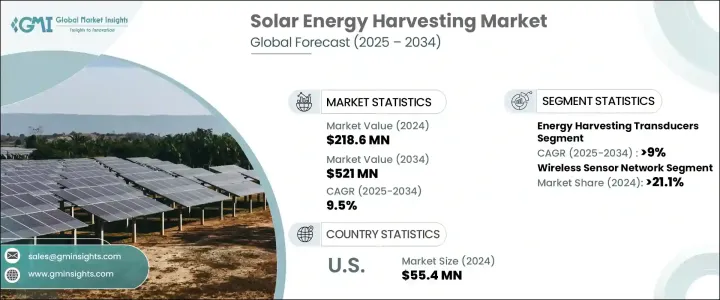
세계의 태양 에너지 수확 시장은 2024년에는 2억 1,860만 달러에 달했고, CAGR 9.5%를 나타내 2034년에는 5억 2,100만 달러에 달할 것으로 예측되고 있습니다. 화석 연료 고갈에 대한 우려가 높아지는 가운데 태양 에너지는 장기적인 실행 가능성과 최소한의 환경 발자국으로 주목을 받고 있습니다. 이러한 용도를 위한 실용적이고 저렴한 솔루션으로 자리매김하고 있습니다. 리얼타임 모니터링 기능을 태양열 시스템에 통합함으로써 성능이 향상되고 태양 에너지가 역동적인 사용자 수요에 적응하기 쉽습니다.
태양광 패널 기술과 에너지 저장 시스템의 지속적인 발전으로 시스템 전체의 효율성이 향상되고 투자 회수 기간이 크게 단축되고 있습니다. 가격 저하와 함께 태양광 수확 시스템은 보다 폭넓은 사용자층에 있어서 점점 이용하기 쉬워지고 경제적으로도 실현 가능하게 되어 왔습니다.
| 시장 범위 | |
|---|---|
| 시작 연도 | 2024년 |
| 예측 연도 | 2025-2034년 |
| 시작 금액 | 2억 1,860만 달러 |
| 예측 금액 | 5억 2,100만 달러 |
| CAGR | 9.5% |
주요 구성 요소 중에서도 에너지 수확 트랜스 듀서는 가혹한 환경 조건에서도 태양 광을 사용 가능한 전기로 변환할 수 있기 때문에 수요가 증가하고 있습니다. 기술은 지금까지 도달할 수 없었던 시장에 침투하고 있습니다. 이 컨버터는 최소한의 유지 보수로 중단없는 오프 그리드 에너지 생성을 용이하게하기 때문에 기존 시스템에서는 불충분 한 모바일 및 원격 위치에서 사용하기에 이상적입니다.
무선 센서 네트워크는 2024년 시장 점유율 21.1%를 차지했으며, 태양 에너지 수확은 배터리 교체 없이 기능 확장을 가능하게 합니다. 따라서 산업 자동화, 환경 모니터링, 스마트 시티 인프라에 매우 적합합니다. 소비자 일렉트로닉스에서 웨어러블, 스마트폰, 노트북 등의 태양광 파워 디바이스는 자체 충전 기능과 유지 보수를 줄여 부가가치를 제공합니다. 지속가능성에 대한 의식이 높아짐에 따라 태양광 대응 소비자용 장비는 친환경 기술 분야에서 틈새 시장을 구축하고 있습니다.
미국의 태양 에너지 수확 시장은 2024년에 5,540만 달러에 이르렀고, 유리한 세제 우대 조치, 리베이트 프로그램, 스마트 그리드 통합 및 태양전지 기술 혁신에 대한 지속적인 투자에 지지를 받고 있습니다. 이 시장 주요 기업(ZF Friedrichshafen AG, ABB, Perpetua Power, Powercast Corporation, Honeywell, Texas Instruments Incorporated, STMicroelectronics 등이 있습니다. 이 기업들은 마이크로 에너지 기술 혁신, 컴팩트한 컨버터 설계, OEM 및 IoT 개발 기업과의 제휴에 주력하여 빌딩 자동화, 산업 제어, 커넥티드 소비자 제품 등의 용도로 성장을 가속하고 있습니다.
The Global Solar Energy Harvesting Market was valued at USD 218.6 million in 2024 and is estimated to grow at a CAGR of 9.5% to reach USD 521 million by 2034. As the global push toward sustainable energy intensifies, solar energy harvesting technologies are rapidly emerging as critical components in the clean energy transition. With mounting concerns over climate change, energy security, and fossil fuel depletion, solar energy continues to attract attention for its long-term viability and minimal environmental footprint. Advances in photovoltaic (PV) technology, combined with decreasing costs of solar modules and inverters, have positioned solar energy harvesting systems as practical and affordable solutions for diverse applications. The market is experiencing robust interest from residential users, industrial players, and governmental bodies alike, spurred by policy incentives, tax credits, and an increasing preference for decentralized power systems. Additionally, the integration of AI, IoT, and real-time monitoring capabilities into solar systems is enhancing performance and making solar energy more adaptable to dynamic user demands. This momentum is also being reinforced by the growing prevalence of microgrids and the need for off-grid solutions in remote locations.
Ongoing advancements in solar panel technologies and energy storage systems continue to increase overall system efficiency while significantly reducing the payback period. These innovations are accelerating the widespread adoption of solar energy across residential, commercial, and industrial sectors. Both government entities and private institutions remain actively involved in promoting the transition to clean energy. Coupled with the declining prices of solar components, solar harvesting systems are becoming increasingly accessible and financially viable for a wider user base. As the global appetite for renewable and self-sustaining power sources rises, the market is drawing attention from both emerging players and established industry giants seeking to expand their portfolios.
| Market Scope | |
|---|---|
| Start Year | 2024 |
| Forecast Year | 2025-2034 |
| Start Value | $218.6 Million |
| Forecast Value | $521 Million |
| CAGR | 9.5% |
Among the key components, energy harvesting transducers are witnessing increasing demand due to their ability to convert sunlight into usable electricity even under harsh environmental conditions. Their durability and capacity to perform in extreme temperatures or rugged terrains allow solar technologies to penetrate previously unreachable markets. These transducers facilitate uninterrupted, off-grid energy generation with minimal maintenance, making them ideal for use in mobile and remote deployments where conventional systems fall short.
Wireless sensor networks accounted for a 21.1% market share in 2024, with solar energy harvesting enabling extended functionality without the need for battery replacements. This makes them highly suitable for industrial automation, environmental monitoring, and smart city infrastructure. In consumer electronics, solar-powered devices such as wearables, smartphones, and laptops offer added value through self-charging capabilities and reduced maintenance. As awareness around sustainability grows, solar-enabled consumer devices are carving out a niche in the eco-friendly tech segment.
The U.S. Solar Energy Harvesting Market reached USD 55.4 million in 2024, supported by favorable tax incentives, rebate programs, and ongoing investment in smart grid integration and solar cell innovation. Leading companies in the market-including ZF Friedrichshafen AG, ABB, Perpetua Power, Powercast Corporation, Honeywell, Texas Instruments Incorporated, and STMicroelectronics-are focusing on innovation in micro-energy technologies, compact transducer designs, and partnerships with OEMs and IoT developers to drive growth across applications such as building automation, industrial control, and connected consumer products.