


세계의 에탄올 바이오연료 시장 규모는 2024년 725억 달러로 평가되었고, CAGR 11%를 나타내 2034년에는 2,061억 달러에 이를 것으로 예측됩니다. 저탄소 경제로의 이행이 급무가 되어 바이오연료 인프라에 대한 투자가 세계적으로 활발해지고 있습니다. 시스템 강화, 석유 가격 상승 및 기후 변화에 대한 소비자 의식이 증가함에 따라 에탄올 바이오연료는 성능과 지속가능성의 균형을 이루는 전략적 에너지 자원으로 부상하고 있습니다. 이와 같은 깨끗한 혼합연료에 대한 수요 증가가 시장의 매력을 더욱 높여주고 있습니다. 또한 효소기술과 발효 프로세스의 진보에 의해 생산비용이 절감되고 변환효율이 향상되고 있기 때문에 각 지역에서 에탄올 바이오연료의 상업적 실현 가능성이 높아지고 있습니다.
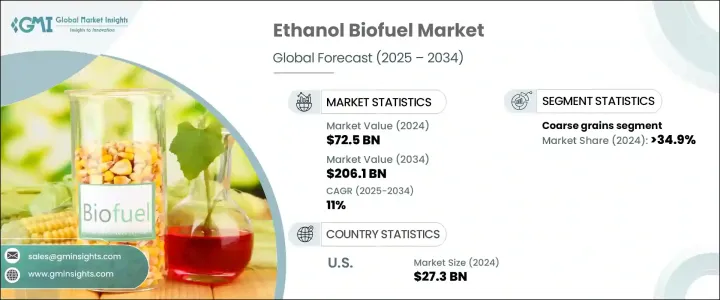
에탄올 바이오연료 에탄올은 가솔린을 대체하는 보다 깨끗하고 지속 가능한 대체연료로서 특히 운송분야에서 널리 인지되고 있습니다. 이러한 장점으로 인해 E10(에탄올 10%) 및 E85(에탄올 85%)와 같은 에탄올 혼합 연료는 차량 성능 저하 없이 환경 영향을 줄이는 것을 목표로 하는 소비자와 정부 모두에게 매력적인 선택입니다.
| 시장 범위 | |
|---|---|
| 시작 연도 | 2024년 |
| 예측 연도 | 2025-2034년 |
| 시작 금액 | 725억 달러 |
| 예측 금액 | 2,061억 달러 |
| CAGR | 11% |
항공업계에서는 에탄올을 원료로 하는 지속가능한 항공연료(SAF)로의 전환이 진행되고 있습니다. 가능한 가능성이 입증되었으며, 항공 운송의 탈탄소화를 위한 실행 가능하고 확장 가능한 경로가 되고 있습니다.
이 시장은 거친 곡물, 설탕 작물, 식물성 기름 등 원료의 유형에 따라 분류됩니다. 제품은 발효가능한 설탕으로 쉽게 전환되기 때문에 바이오연료 생산에 특히 효율적입니다.
미국의 에탄올 바이오연료 시장은 2024년에 273억 달러로 평가되었습니다. 재생 가능 연료 기준(RFS)은 연간 150억 갤런의 에탄올 혼합을 의무화하고 있으며, 안정적인 수요와 지속적인 성장을 보장하고 있습니다.
주요 시장 진출기업은 ADM, BP, 카길, 셰브론, 코덱스, 듀폰, 그린 플레인스, 로얄 더치 쉘, 발레로 에너지, 리온 델 바셀 인더스트리 등이 있습니다. 기업은 생산능력 확대, 선진 바이오연료 기술 투자, 장기원료계약 체결에 주력하고 있습니다.
The Global Ethanol Biofuel Market was valued at USD 72.5 billion in 2024 and is estimated to grow at a CAGR of 11% to reach USD 206.1 billion by 2034. Ethanol biofuel continues to gain traction worldwide as countries look for sustainable alternatives to fossil fuels. The growing urgency to reduce carbon emissions, meet renewable energy targets, and transition toward low-carbon economies has intensified global investments in biofuel infrastructure. Ethanol, derived primarily from renewable biomass like coarse grains and sugar crops, offers a reliable and environmentally responsible solution for the transportation sector. With increasing government mandates, rising oil prices, and heightened consumer awareness about climate change, ethanol biofuel emerges as a strategic energy resource that balances performance with sustainability. Its compatibility with existing vehicle engines and infrastructure, combined with rising demand for cleaner fuel blends like E10 and E85, is further fueling its market appeal. Additionally, advances in enzyme technology and fermentation processes are reducing production costs and improving conversion efficiencies, boosting the commercial viability of ethanol biofuels across regions.
Ethanol biofuel is being widely recognized as a cleaner and more sustainable alternative to gasoline, especially in transportation. When blended with gasoline, ethanol helps lower harmful emissions, such as carbon monoxide and particulate matter, while also increasing octane levels. These benefits make ethanol blends like E10 (10% ethanol) and E85 (85% ethanol) attractive choices for both consumers and governments, aiming to reduce environmental impact without compromising vehicle performance. The flexibility of ethanol to be integrated into existing fuel systems positions it as a practical short- and mid-term solution to emissions reduction goals.
| Market Scope | |
|---|---|
| Start Year | 2024 |
| Forecast Year | 2025-2034 |
| Start Value | $72.5 Billion |
| Forecast Value | $206.1 Billion |
| CAGR | 11% |
The aviation industry is increasingly shifting toward sustainable aviation fuel (SAF) produced from ethanol, which supports net-zero carbon initiatives. Ethanol-based SAF has demonstrated the potential to cut lifecycle emissions by up to 80% compared to conventional jet fuel, making it a viable and scalable path for decarbonizing air travel. This growing application further strengthens ethanol's position in the global fuel market.
The market is categorized based on feedstock types, including coarse grains, sugar crops, and vegetable oils. In 2024, the coarse grains segment accounted for a 34.9% share of the ethanol biofuel market. High starch content makes coarse grains particularly efficient for biofuel production, as they are easily converted into fermentable sugars. Supportive government policies, including blending mandates and subsidies for agricultural producers, have significantly encouraged the use of coarse grains in ethanol production.
The U.S. Ethanol Biofuel Market was valued at USD 27.3 billion in 2024. The Renewable Fuel Standard (RFS) mandates the blending of 15 billion gallons of ethanol annually, ensuring steady demand and continued growth. Ethanol remains a key player in the country's strategy to advance sustainability and energy security.
Leading market participants include ADM, BP, Cargill, Chevron, Codexis, DuPont, Green Plains, Royal Dutch Shell, Valero Energy, and LyondellBasell Industries. These companies are focusing on expanding production capacity, investing in advanced biofuel technologies, and entering long-term feedstock agreements. Many are also working to minimize their carbon footprints while delivering renewable fuels that align with global sustainability goals.