


세계 지속가능한 건축자재 시장은 2024년에 3,016억 달러로 평가되었으며, 2025년부터 2034년까지 11.9%의 연평균 복합 성장률(CAGR)로 성장할 것으로 예상됩니다.
세계 정부와 조직이 이산화탄소 배출을 억제하고 폐기물을 최소화하고 에너지 소비를 줄이기 위해 규제를 강화하는 가운데 건설 업계는 친환경 솔루션으로 크게 전환하고 있습니다. 비율의 의무화 등 보다 엄격한 건축 기준과 환경 정책이 건설업자와 개발업자에게 지속 가능한 재료의 채용을 촉구하고 있습니다.

또한 기후 변화와 건설활동이 환경에 미치는 영향에 대한 소비자의 의식이 높아지면서 녹색건축재 수요를 촉진하고 있습니다. 빌딩 시스템, 첨단 단열재, 에너지 효율적인 재료 등 혁신적인 기술을 포함한 지속 가능한 건설의 기술 통합은 시장의 잠재력을 확대하고 있습니다.
| 시장 범위 | |
|---|---|
| 시작 연도 | 2024년 |
| 예측 연도 | 2025-2034년 |
| 시작 금액 | 3,016억 달러 |
| 예측 금액 | 9,071억 달러 |
| CAGR | 11.9% |
이 시장에는 대나무, 코르크, 대마 콘크리트, 프리 캐스트 콘크리트 등 다양한 소재가 포함되어 있지만 대나무는 급속한 성장, 재생 가능성, 환경 발자국 프린트의 낮음에서 유력한 선택 대안으로 떠오르고 있습니다. 2024년에 685억 달러로 평가된 대나무 부문은 2034년에는 2,143억 달러에 이를 것으로 예측됩니다. 때문에 종래의 활엽수를 대신하는 재생 가능성이 높은 소재입니다.그 내구성과 유연성에 의해 구조 용도, 바닥재, 벽 패널재에 적합하고, 지속 가능한 건설 프로젝트에 널리 채용되고 있습니다. 대나무의 다용도성과, 구조적인 완전성을 유지하면서 구조물의 미적 매력을 높이는 그 능력에 의해 대나무는 그린 빌딩의 실천을
지속가능한 건축자재의 유통은 직접 채널과 간접 채널로 분류되며, 간접 부문은 시장을 독점하고 있습니다. 2024년에 2,083억 달러로 평가된 간접 부문은 2025년부터 2034년까지 연평균 성장률(CAGR) 9.6%로 성장할 것으로 예상됩니다. 건설 회사들은 대량 구매 시 할인된 가격으로 제공되는 다양한 지속 가능한 자재를 제공하기 때문에 간접 채널을 선호합니다
미국의 지속가능한 건축자재 시장의 2024년 시장 규모는 842억 달러로 평가되었으며, 2025년부터 2034년까지의 성장률은 10.8%를 나타낼 전망입니다. 지속적인 인프라에 대한 투자 증가와 환경 부하의 저감에 대한 노력은 미국 시장의 성장을 견인해, 미국을 지속 가능한 건설 관행으로의 세계적 시프트에 있어 중요한 선수로 자리매김하고 있습니다.
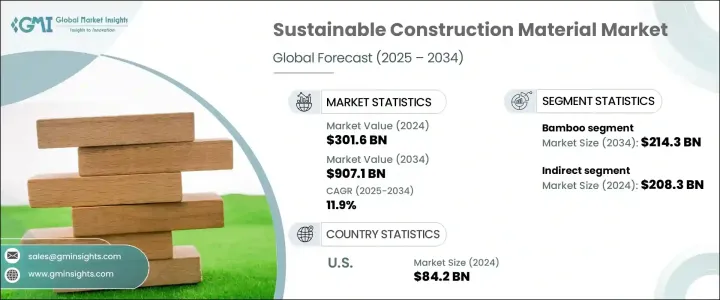
The Global Sustainable Construction Materials Market was valued at USD 301.6 billion in 2024 and is projected to grow at a CAGR of 11.9% between 2025 and 2034. As governments and organizations around the world tighten regulations to curb carbon emissions, minimize waste, and reduce energy consumption, the construction industry is undergoing a significant shift toward eco-friendly solutions. Stricter building codes and environmental policies, such as green certifications and energy efficiency mandates, are encouraging builders and developers to adopt sustainable materials. Financial incentives, including tax breaks, subsidies, and grants, are making it easier for companies to transition to eco-friendly practices.
Additionally, rising consumer awareness about climate change and the environmental impact of construction activities is driving demand for green building materials. Developers are increasingly prioritizing sustainable solutions that not only reduce carbon footprints but also offer long-term cost savings through improved energy efficiency and lower maintenance costs. The integration of technology in sustainable construction, including innovations in smart building systems, advanced insulation, and energy-efficient materials, is expanding the market's potential. As urbanization accelerates, the emphasis on constructing green buildings to meet evolving environmental standards is expected to further fuel the demand for sustainable construction materials globally.
| Market Scope | |
|---|---|
| Start Year | 2024 |
| Forecast Year | 2025-2034 |
| Start Value | $301.6 Billion |
| Forecast Value | $907.1 Billion |
| CAGR | 11.9% |
The market includes diverse materials such as bamboo, cork, hempcrete, and precast concrete, with bamboo emerging as a leading choice due to its rapid growth, renewability, and low environmental footprint. Valued at USD 68.5 billion in 2024, the bamboo segment is expected to reach USD 214.3 billion by 2034. Bamboo matures in just 3 to 5 years, making it a highly renewable alternative to traditional hardwoods. Its durability and flexibility make it suitable for structural applications, flooring, and wall paneling, contributing to its widespread adoption in sustainable construction projects. The versatility of bamboo and its ability to enhance the aesthetic appeal of structures while maintaining structural integrity have made it a preferred material for architects and developers focused on green building practices.
The distribution of sustainable construction materials is categorized into direct and indirect channels, with the indirect segment dominating the market. Valued at USD 208.3 billion in 2024, the indirect segment is expected to grow at a CAGR of 9.6% from 2025 to 2034. This segment comprises wholesalers, third-party distributors, and retailers, offering extensive reach and competitive pricing. Construction firms prefer indirect channels because they provide a broad range of sustainable materials, often available at discounted rates for bulk purchases. Established supply chains and streamlined procurement processes enable developers to access high-quality materials efficiently, supporting the widespread adoption of sustainable construction practices.
The U.S. sustainable construction materials market was valued at USD 84.2 billion in 2024, with an estimated growth rate of 10.8% between 2025 and 2034. The U.S. market benefits from strong government policies promoting sustainability, heightened environmental awareness, and a growing emphasis on green building standards. Regulations such as LEED certification have accelerated the adoption of eco-friendly materials, with the construction sector actively incorporating recycled, bio-based, and energy-efficient materials into projects. Increased investment in sustainable infrastructure and a commitment to reducing environmental impact continue to drive the growth of the U.S. market, positioning the country as a key player in the global shift toward sustainable construction practices.