


세계의 바이오 기반 플라스틱 포장 시장은 2024년에 198억 달러에 달하며, 2025-2034년에 17.7%의 CAGR로 견고하게 성장할 것으로 예측됩니다.
이러한 놀라운 성장의 주요 요인은 바이오플라스틱의 생산량 증가와 업계 전반에서 지속가능한 포장 솔루션에 대한 수요 증가에 기인합니다. 환경에 대한 관심이 높아짐에 따라 이산화탄소 배출량이 많고 전 세계 오염에 크게 기여하는 기존 석유 기반 플라스틱을 대체할 수 있는 대안을 찾는 산업이 증가하고 있습니다. 옥수수 전분, 사탕수수, 기타 식물성 재료와 같은 재생한 자원에서 추출한 바이오 플라스틱은 지속가능성에 대한 요구가 증가함에 따라 실행 가능하고 환경 친화적인 솔루션을 제공합니다. 또한 세계 각국 정부는 플라스틱 사용에 대한 규제를 강화하고 지속가능한 관행의 채택을 장려하고 있습니다. 플라스틱 폐기물을 줄이기 위한 정책은 보다 친환경적인 대안으로 전환하는 기업에 대한 인센티브와 함께 바이오 플라스틱 포장의 채택을 가속화하고 있습니다. 또한 생명공학 및 고분자 과학의 발전으로 바이오 포장재의 성능과 내구성이 향상되어 제조업체와 소비자 모두에게 더욱 매력적인 선택이 되고 있습니다.
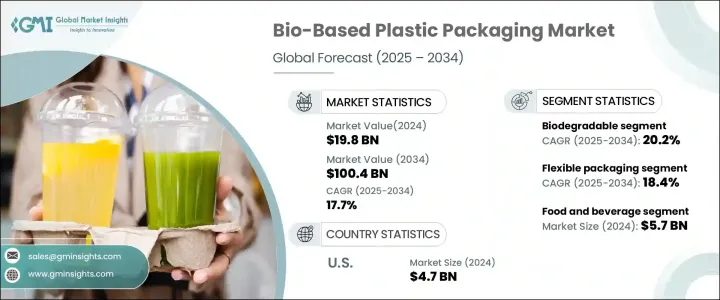
시장은 재료의 유형에 따라 생분해성 플라스틱과 비생분해성 플라스틱으로 구분됩니다. 생분해성 분야는 소비자의 선호도 변화와 플라스틱 폐기물이 환경에 미치는 영향에 대한 인식이 높아짐에 따라 2034년까지 연평균 20.2%의 고성장이 예상됩니다. 소비자들이 생분해성 제품을 선호함에 따라 기업은 시장 동향에 맞추어 혁신적이고 지속가능한 포장 솔루션을 제공하기 위해 연구개발에 투자하고 있습니다. 플라스틱 오염을 줄이고 생분해성 소재의 사용을 촉진하려는 정부의 구상은 이러한 성장 궤도에 더욱 박차를 가하고 있습니다.
| 시장 범위 | |
|---|---|
| 시작연도 | 2024년 |
| 예측연도 | 2025-2034년 |
| 시작 금액 | 198억 달러 |
| 예상 금액 | 1,004억 달러 |
| CAGR | 17.7% |
포장 유형에 따라 시장은 연포장 및 경질 포장 시장으로 나뉩니다. 연포장 분야는 2025-2034년 18.4%의 연평균 복합 성장률(CAGR)을 보이고, 괄목할 만한 성장이 예상됩니다. 경량성, 비용 효율성, 다용도로 알려진 연포장재는 친환경 포장에 대한 수요 증가에 대응하기 위해 바이오소재를 사용하여 생산되는 경우가 증가하고 있습니다. 개발업체들은 지속가능성을 중시하는 단체들과 협력하여 환경에 미치는 영향을 최소화하면서 업계 표준을 충족하는 퇴비화 가능한 연포장 옵션을 개발하고 있습니다. 이러한 친환경 포장에 대한 요구가 증가함에 따라 제조업체들은 플라스틱 폐기물을 줄이고 세계 지속가능성 목표에 부합하는 혁신적인 솔루션을 모색하고 있습니다.
미국의 바이오 플라스틱 포장 시장 규모는 2024년 47억 달러로 평가되며 향후 10년간 큰 폭의 성장이 예상됩니다. 미국에서 친환경 포장 솔루션에 대한 수요가 증가하는 이유는 소비자의 인식이 높아지고 지속가능한 제품에 대한 선호도가 높아졌기 때문입니다. 소비자들은 더 많은 정보에 입각한 선택을 하고 있으며, 환경 보호에 대한 의지를 보여주는 브랜드를 선호하고 있습니다. 이러한 요구에 부응하기 위해 기업은 환경 목표와 소비자의 기대에 부합하는 혁신적이고 지속가능한 포장 솔루션을 도입하고 있습니다. 지속가능성이 구매 결정에 있으며, 중요한 요소로 떠오르면서 미국 바이오 플라스틱 포장재 시장은 환경에 민감한 소비자들의 진화하는 요구에 부응하기 위해 노력하는 제조업체들과 함께 크게 성장할 것으로 예측됩니다.
The Global Bio-Based Plastic Packaging Market reached USD 19.8 billion in 2024 and is projected to grow at a robust CAGR of 17.7% from 2025 to 2034. This impressive growth is primarily fueled by the rising production of bioplastics and the increasing demand for sustainable packaging solutions across industries. As environmental concerns take center stage, more industries are seeking alternatives to traditional petroleum-based plastics, which have a high carbon footprint and contribute significantly to global pollution. Bio-based plastics, derived from renewable resources such as corn starch, sugarcane, and other plant-based materials, offer a viable and eco-friendly solution to meet the growing sustainability requirements. Furthermore, governments worldwide are imposing stricter regulations on plastic usage and promoting the adoption of sustainable practices. Policies aimed at reducing plastic waste, along with incentives for companies that shift toward greener alternatives, are accelerating the adoption of bio-based plastic packaging. Additionally, advancements in biotechnology and polymer science are enhancing the performance and durability of bio-based packaging materials, making them a more attractive choice for manufacturers and consumers alike.
The market is segmented by material type into biodegradable and non-biodegradable plastics. The biodegradable segment is expected to grow at a strong CAGR of 20.2% through 2034, driven by a shift in consumer preferences and heightened awareness about the environmental impact of plastic waste. As consumers increasingly favor biodegradable options, companies are responding by investing in research and development to offer innovative, sustainable packaging solutions that align with market trends. Government initiatives aimed at reducing plastic pollution and promoting the use of biodegradable materials are further supporting this growth trajectory.
| Market Scope | |
|---|---|
| Start Year | 2024 |
| Forecast Year | 2025-2034 |
| Start Value | $19.8 Billion |
| Forecast Value | $100.4 Billion |
| CAGR | 17.7% |
In terms of packaging type, the market is divided into flexible and rigid packaging. The flexible packaging segment is anticipated to witness notable growth, with a projected CAGR of 18.4% from 2025 to 2034. Flexible packaging, known for its lightweight, cost-efficiency, and versatility, is being increasingly produced using bio-based materials to cater to the rising demand for environmentally friendly packaging. Companies are collaborating with sustainability-focused organizations to develop compostable flexible packaging options that meet industry standards while minimizing environmental impact. This growing trend toward eco-friendly packaging is prompting manufacturers to explore innovative solutions that reduce plastic waste and align with global sustainability goals.
The U.S. bio-based plastic packaging market was valued at USD 4.7 billion in 2024 and is poised for substantial growth over the coming decade. The rising demand for eco-friendly packaging solutions in the United States is driven by increasing consumer awareness and a growing preference for sustainable products. Consumers are making more informed choices, prioritizing brands that demonstrate a commitment to environmental stewardship. To meet this demand, companies are introducing innovative, sustainable packaging solutions that align with both environmental goals and consumer expectations. As sustainability becomes a critical factor in purchasing decisions, the U.S. market for bio-based plastic packaging is expected to witness significant expansion, with manufacturers striving to meet the evolving needs of environmentally conscious consumers.