


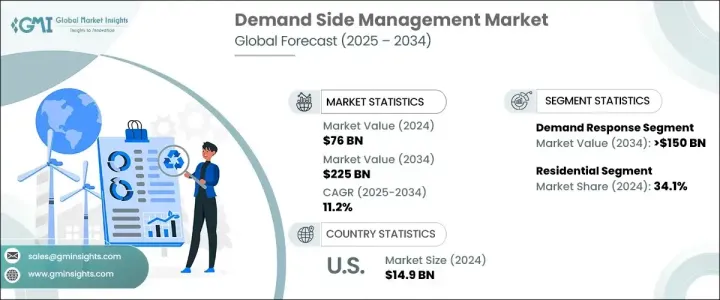
세계의 수요관리(DSM) 시장은 2024년에 760억 달러로 평가되었습니다. 에너지 효율, 지속가능성, 그리드 최적화가 중시되게 된 것을 배경으로 2025년부터 2034년에 걸쳐 CAGR 11.2%를 나타낼 것으로 예측됩니다.
정부와 에너지 공급업체가 전력 소비 관리를 강화하기 위해 노력하는 동안 고급 수요관리(DSM) 솔루션의 통합은 현대 에너지 에코시스템의 중요한 측면이 되고 있습니다.
디지털화와 IoT 대응 에너지 솔루션의 대두는 세계 에너지 관리 관행을 재구성하고 있습니다. 에너지 비용이 상승을 계속하는 가운데, 산업계와 주택 소비자는 지속가능성의 목표를 달성하면서 운영 경비를 삭감하기 위해서 수요관리(DSM) 프로그램에 눈을 돌리고 있습니다.
| 시장 범위 | |
|---|---|
| 시작 연도 | 2024년 |
| 예측 연도 | 2025-2034년 |
| 시작 금액 | 760억 달러 |
| 예측 금액 | 2,250억 달러 |
| CAGR | 11.2% |
2024년 수요 반응 분야는 수요관리(DSM) 시장의 대부분을 차지했고 2034년에는 1,500억 달러에 이를 것으로 예측되고 있습니다. 효율적인 배전을 가능하게 하는 실시간 에너지 감시 시스템에 투자하고 있으며, 송전망의 혼잡을 완화하고, 신뢰성을 향상시키고 있습니다.
수요관리(DSM) 시장은 최종 사용자별로 주택, 상업, 산업분야로 구분됩니다. 점점 더 많은 솔루션을 받아들이고 있습니다. 신흥 국가 시장을 중심으로 한 산업화 및 상업 인프라 개발도 수요관리(DSM) 솔루션 수요 증가에 기여하고 있습니다.
미국에서는 스마트 그리드의 도입과 전기자동차(EV)의 보급을 촉진하는 정부의 대처가 원동력이 되어 수요관리(DSM) 시장은 2024년에 149억 달러를 창출했습니다. 전력회사는 자동 그리드 관리 기술에 많은 투자를 하고 있습니다. 지속가능성이 최우선 사항이 되고 있는 가운데, 재생가능에너지 통합과 수요측 효율화 프로그램에 대한 주목의 고조는 주택, 상업, 공업의 각 분야에서 계속 시장 수요를 강화하고 있습니다.
The Global Demand Side Management Market, valued at USD 76 billion in 2024, is projected to grow at a CAGR of 11.2% between 2025 and 2034, driven by increasing emphasis on energy efficiency, sustainability, and grid optimization. With governments and energy providers striving to enhance power consumption management, the integration of advanced DSM solutions is becoming a crucial aspect of modern energy ecosystems. This growth trajectory reflects a surge in initiatives focused on reducing energy waste, improving grid stability, and mitigating the environmental impact of conventional power generation.
Digitalization and the rise of IoT-enabled energy solutions are reshaping energy management practices worldwide. Smart grid technologies, AI-driven analytics, and real-time monitoring systems are allowing utilities to optimize energy distribution while enabling consumers to gain better control over their energy usage. Governments and regulatory bodies are introducing stringent policies to promote DSM adoption, incentivizing businesses and households to implement intelligent energy solutions. As energy costs continue to rise, industries and residential consumers are turning to DSM programs to cut operational expenses while meeting sustainability goals. The increasing deployment of smart meters, automated demand response mechanisms, and energy storage integration are further reinforcing market expansion.
| Market Scope | |
|---|---|
| Start Year | 2024 |
| Forecast Year | 2025-2034 |
| Start Value | $76 Billion |
| Forecast Value | $225 Billion |
| CAGR | 11.2% |
In 2024, the demand response segment accounted for a significant portion of the DSM market, and it is expected to reach USD 150 billion by 2034. The ongoing modernization of power grids, coupled with advancements in automation and AI-driven demand response technologies, is fueling this growth. Utilities and energy providers are investing in real-time energy monitoring systems that enable more efficient power distribution, reducing grid congestion and improving reliability. Smart meters and intelligent energy management platforms are playing a vital role in optimizing energy demand and enhancing overall efficiency.
The DSM market is segmented by end users into residential, commercial, and industrial sectors. In 2024, the residential segment captured a 34.1% market share, driven by the growing adoption of smart home technologies and energy-efficient appliances. Consumers are increasingly embracing home automation solutions that provide real-time energy tracking and cost-saving benefits. Expanding industrialization and commercial infrastructure development, particularly in emerging markets, are also contributing to increased demand for DSM solutions. Businesses are prioritizing energy efficiency to reduce operational costs and align with environmental regulations, further accelerating market expansion.
In the United States, the DSM market generated USD 14.9 billion in 2024, driven by government initiatives promoting smart grid implementation and electric vehicle (EV) adoption. Federal and state policies encouraging energy conservation are accelerating the shift toward advanced DSM strategies, with utilities investing heavily in automated grid management technologies. As sustainability remains a top priority, the growing focus on renewable energy integration and demand-side efficiency programs continues to strengthen market demand across residential, commercial, and industrial sectors.