


세계의 젖소 유방염 시장은 2024년 20억 달러로 평가되었으며, 2025년부터 2034년까지 연평균 복합 성장률(CAGR) 6.3%를 나타낼 것으로 예측됩니다.
이 시장 확대는 젖소 유방염의 발생률 증가, 동물 건강에 대한 의식 증가, 세계 유제품 수요 증가 등 몇 가지 중요한 요인에 의해 초래됩니다.

낙농가와 낙농 생산자는 소의 건강과 생산성 향상을 더욱 중시하고 있으며, 진보된 진단 도구와 혁신적인 치료 솔루션에 대한 투자에 박차를 가하고 있습니다. 또한 지속 가능한 낙농업에 대한 관심이 높아지면서 시장 참여자들은 항생제 내성을 완화하는 동시에 유방염 문제를 해결하기 위해 프로바이오틱스 및 백신과 같은 비항생제 치료법을 모색하고 있습니다.
| 시장 범위 | |
|---|---|
| 시작 연도 | 2024년 |
| 예측 연도 | 2025-2034년 |
| 시작 금액 | 20억 달러 |
| 예측 금액 | 37억 달러 |
| CAGR | 6.3% |
시장은 의약품과 진단제로 구분됩니다. 의약품 부문에는 젖소의 감염증 대책을 목적으로 한 항생제, 백신 및 기타 치료 솔루션이 포함됩니다. 낙농가가 신속하고 효과적인 해결책을 요구하는 가운데 제약회사는 항생제 내성을 줄이고 이환소의 회복률을 향상시키기 위해 약제제제의 개량에 주력하고 있습니다.
젖소 유방염 시장은 심지어 유형별로 임상성 유방염과 불현성 유방염으로 분류됩니다. 우유 생산에 큰 영향으로 인한 것 임상 유방염에 수반되는 직접적인 경제적 손실은 낙농가와 수의사에게 최우선 사항이되고 있습니다. 가능한 치료법의 선택이 넓어진 것이 시장의 성장을 지지하고 있습니다.동시에 항균제 내성에 대한 우려가 업계를 대체 치료 접근으로 향하게 하고 있습니다.
미국 젖소 유방염 산업의 2024년 시장 규모는 6억 8,300만 달러였으며 최근의 일관된 성장을 반영하고 있습니다. 중시하는 낙농가는 보다 정교한 치료 솔루션과 정밀 축산 기술을 채용하고 있습니다.
The Global Bovine Mastitis Market, valued at USD 2 billion in 2024, is projected to grow at a CAGR of 6.3% from 2025 to 2034. This expansion is driven by several key factors, including the rising incidence of bovine mastitis, increasing awareness about animal health, and a growing demand for dairy products worldwide. As the dairy industry continues to scale up operations to meet the surging global demand, the need for effective disease management solutions has intensified.
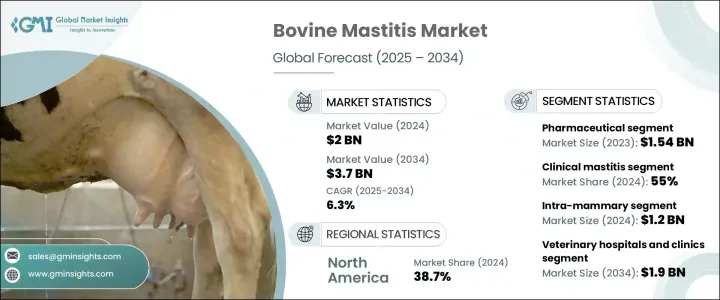
Farmers and dairy producers are placing greater emphasis on improving cattle health and productivity, which is fueling investments in advanced diagnostic tools and innovative treatment solutions. Additionally, the heightened focus on sustainable dairy farming is prompting market players to explore non-antibiotic therapies, such as probiotics and vaccines, to address mastitis concerns while mitigating antimicrobial resistance. These industry-wide efforts are fostering a robust market landscape, making bovine mastitis treatment a critical area of growth in veterinary medicine.
| Market Scope | |
|---|---|
| Start Year | 2024 |
| Forecast Year | 2025-2034 |
| Start Value | $2 Billion |
| Forecast Value | $3.7 Billion |
| CAGR | 6.3% |
The market is segmented into pharmaceuticals and diagnostics. The pharmaceutical segment includes antibiotics, vaccines, and other treatment solutions aimed at combating infections in dairy cattle. Antibiotics such as penicillin and cephalosporin remain widely used for mastitis treatment, while ongoing innovations in intramammary infusion therapies are enhancing treatment efficacy. With dairy producers seeking fast and effective solutions, pharmaceutical companies are focusing on improving drug formulations to reduce antibiotic resistance and improve recovery rates in affected cattle. Meanwhile, the diagnostics segment is experiencing steady growth due to the increasing adoption of early detection methods, allowing for timely intervention and better herd management.
The bovine mastitis market is further categorized by type into clinical and subclinical mastitis. In 2024, clinical mastitis accounted for 55% of the market, primarily due to its visible symptoms and the significant impact on milk production. The immediate economic losses associated with clinical mastitis make it a top priority for dairy farmers and veterinarians. Growing awareness about the condition, along with a wider range of available treatment options, is supporting market growth. At the same time, concerns over antimicrobial resistance are pushing the industry towards alternative treatment approaches. Non-antibiotic therapies, including probiotics, vaccines, and herbal formulations, are gaining traction as sustainable solutions that align with regulatory shifts and consumer demand for antibiotic-free dairy products.
The U.S. Bovine Mastitis Industry was valued at USD 683 million in 2024, reflecting consistent growth over recent years. The country's large livestock population, coupled with increasing demand for high-quality milk, is driving expansion in dairy farming and veterinary services. With a strong emphasis on cattle health, dairy farmers are adopting more sophisticated treatment solutions and precision livestock farming technologies. This trend is expected to further accelerate advancements in bovine mastitis management, reinforcing the U.S. market's leadership in veterinary innovation and dairy productivity.