


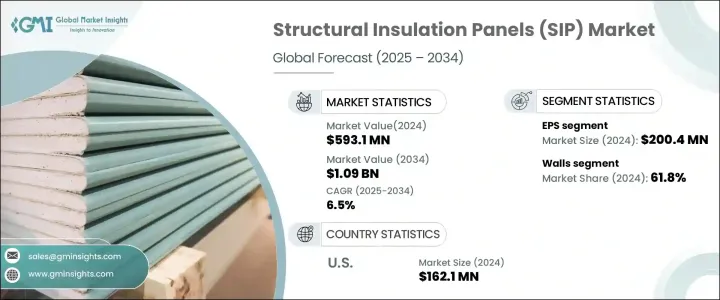
세계의 구조용 단열 패널 시장은 2024년에 5억 9,310만 달러로 평가되었고, 2025년부터 2034년까지 CAGR 6.5%로 확대될 전망입니다.
이 꾸준한 성장의 배경은 에너지 효율적인 건축자재에 대한 수요 증가 및 지속 가능한 건설로의 산업 전반적인 변화입니다. 세계 각국의 정부는 그린 빌딩 인증을 장려하고 엄격한 에너지 규범을 도입하고 있으며 SIP 채용을 더욱 촉진하고 있습니다. 도시화가 진행되고, 저렴한 주택에 대한 요구가 높아지는 가운데, SIP는 에너지 효율을 높이면서 건설을 가속시키는 능력으로 인기를 끌고 있습니다.
재료 과학 및 제조의 기술적 진보로 SIP는 적응성이 높고 비용 효율적이어서 다양한 건축 용도 분야에서 맞춤형 솔루션이 가능해졌습니다. 지속가능성이 세계의 우선순위가 됨에 따라 산업과 소비자들은 이산화탄소 배출량을 줄이는 친환경 건축 방법을 선호하게 되었습니다. SIP 패널 시장 확대는 이러한 동향을 반영하며, SIP 패널은 우수한 단열성, 구조적 무결성, 신속한 시공을 실현하여 인건비와 재료비를 절감합니다. 또한 SIP는 상당한 에너지 절약에 기여하기 때문에 주택, 상업 및 산업 프로젝트에 매력적인 솔루션이 되었습니다.
| 시장 범위 | |
|---|---|
| 시작 연도 | 2024년 |
| 예측 연도 | 2025-2034년 |
| 시작 금액 | 5억 9,310만 달러 |
| 예측 금액 | 10억 9,000만 달러 |
| CAGR | 6.5% |
시장은 유형별로 스톤 울, 글라스울, XPS, 페놀, PU/PIR, EPS, 연질 단열재로 구분됩니다. EPS(발포 폴리스티렌) 부문은 2024년 평가액이 2억 40만 달러로 시장을 선도하였고, 2034년 CAGR은 7.4%로 성장할 것으로 예측됩니다. EPS는 우수한 단열성, 경량성 및 비용 효율성으로 인해 여전히 선호되고 있습니다. 주택, 상업, 공업의 현장에서 널리 이용되어 냉난방 비용을 낮추는 에너지 절약 건물 외벽을 만들어 내고 있습니다. EPS 단열재는 다목적이기 때문에 다양한 기후 조건에 적합하며 신축 및 개수 프로젝트에서의 채용이 증가하고 있습니다.
용도별로 SIP 시장은 벽, 지붕, 바닥으로 분류됩니다. 벽 부문은 2024년에 61.8%의 점유율을 차지했으며, 2025년부터 2034년까지 CAGR 7%로 성장할 것으로 예측됩니다. 지붕 부문은 동기화 동안 CAGR 5.9%로 성장할 것으로 예상됩니다. 에너지 효율이 높은 건축 기준에 대한 규제 준수 증가가 단열 벽 패널 채용의 주요 촉진요인이 되고 있습니다. 이 패널은 열전도를 크게 줄이고 구조 내구성을 높이고 에너지 소비를 최적화하기 위해 신규 개발 및 리노베이션 프로젝트 모두에서 필수적인 요소가 되었습니다.
미국에서는 구조용 단열 패널 시장이 2024년 1억 6,210만 달러 규모에 이르렀으며, 2034년 CAGR 7.1%로 성장할 것으로 보입니다. 에너지 효율적인 건물을 홍보하는 연방 정부의 우대 조치가 수요를 강화하고 SIP는 건설업체에게 가장 중요한 옵션이 되었습니다. 극단적인 기상 조건의 지역에서 SIP는 우수한 내열성과 내구성을 제공하여 장기적인 에너지 절약을 보장합니다. 모듈형 및 조립식 건축물에 대한 선호도 증가는 고성능 기준을 유지하면서 신속한 조립을 가능하게 하는 SIP의 채택을 더욱 강화하고 있습니다. 친환경 건축 기법과 에너지 효율적인 기술에 대한 의식이 높아짐에 따라 미국 SIP 시장의 성장을 뒷받침하고 지속 가능한 건축 솔루션의 미래에 대한 역할을 확고하게 합니다.
The Global Structural Insulation Panels Market, valued at USD 593.1 million in 2024, is set to expand at a CAGR of 6.5% between 2025 and 2034. This steady growth is fueled by rising demand for energy-efficient building materials and an industry-wide shift toward sustainable construction. Governments worldwide are encouraging green building certifications and implementing stringent energy codes, further driving the adoption of SIPs. With urbanization on the rise and a growing need for affordable housing, SIPs are gaining popularity for their ability to accelerate construction while enhancing energy efficiency.
Technological advancements in material science and manufacturing have made SIPs more adaptable and cost-effective, allowing for customized solutions across various architectural applications. As sustainability becomes a global priority, industries and consumers are favoring eco-friendly construction methods that help lower carbon footprints. The expanding market for SIPs reflects this trend, as these panels offer superior insulation, structural integrity, and faster installation, reducing labor and material costs. Additionally, SIPs contribute to significant energy savings, making them an attractive solution for residential, commercial, and industrial projects.
| Market Scope | |
|---|---|
| Start Year | 2024 |
| Forecast Year | 2025-2034 |
| Start Value | $593.1 Million |
| Forecast Value | $1.09 Billion |
| CAGR | 6.5% |
The market is segmented by type into Stone Wool, Glass Wool, XPS, Phenolics, PU/PIR, EPS, and Flexible Insulation. The EPS (Expanded Polystyrene) segment led the market with a valuation of USD 200.4 million in 2024 and is projected to grow at a CAGR of 7.4% through 2034. EPS remains a preferred choice due to its exceptional thermal insulation, lightweight nature, and cost efficiency. It is widely utilized in residential, commercial, and industrial settings to create energy-efficient building envelopes that lower heating and cooling costs. The versatility of EPS insulation makes it suitable for various climate conditions, increasing its adoption in new construction and retrofit projects.
By application, the SIP market is categorized into Walls, Roofs, and Floors. The walls segment dominated with a 61.8% share in 2024 and is expected to grow at a CAGR of 7% between 2025 and 2034. The roof segment is anticipated to grow at a CAGR of 5.9% over the same period. Increasing regulatory compliance with energy-efficient construction standards is a key driver behind the adoption of insulated wall panels. These panels significantly reduce heat transfer, enhance structural durability, and optimize energy consumption, making them an essential component for both new developments and renovation projects.
In the United States, the structural insulation panels market was worth USD 162.1 million in 2024 and is set to grow at a CAGR of 7.1% through 2034. Federal incentives promoting energy-efficient buildings have strengthened demand, positioning SIPs as a top choice for contractors. In regions with extreme weather conditions, SIPs provide superior thermal resistance and durability, ensuring long-term energy savings. The growing preference for modular and prefabricated buildings further drives the adoption of SIPs, as they facilitate quick assembly while maintaining high-performance standards. The rising awareness of green construction practices and energy-efficient technologies continues to propel the growth of the U.S. SIPs market, solidifying its role in the future of sustainable building solutions.